Is Industrial 3D Printing Ready for End-Use Parts?
As manufacturers push for faster innovation, lighter components, and more resilient supply chains, industrial 3d printing is moving beyond prototyping into serious production discussions. But is the technology truly ready for end-use parts at scale? This article examines the materials, quality standards, cost dynamics, and sector-specific realities that enterprise decision-makers must evaluate before making strategic adoption decisions.
What Industrial 3D Printing Means in the End-Use Parts Context
For enterprise leaders, industrial 3d printing should not be viewed as a single machine category or a universal replacement for machining, molding, or casting. In practice, it refers to production-grade additive manufacturing systems that build components layer by layer using qualified polymers, metals, ceramics, or composite feedstocks under controlled process conditions. The key distinction is not whether a part can be printed, but whether it can meet the performance, repeatability, compliance, and cost expectations of real operating environments over a lifecycle measured in months or years.
This distinction matters because the phrase “end-use part” carries a high burden. A prototype can tolerate cosmetic inconsistency, wider dimensional drift, or limited material traceability. An end-use part cannot. It may face thermal cycling, chemical exposure, vibration, pressure, fatigue loads, or sterilization routines. In many sectors, qualification is not about a one-time successful build. It is about process windows, documented inspection steps, and stable output over 10, 100, or 10,000 units.
That is why industrial 3d printing readiness depends on application boundaries. A customized surgical guide, a low-volume aerospace bracket, a spare part for legacy equipment, and a mass-produced consumer enclosure all place different demands on throughput and risk tolerance. Decision-makers should therefore frame additive manufacturing as a selective production capability rather than a broad manufacturing doctrine.
How the readiness question should be framed
A practical evaluation begins with four questions: what material properties are required, what quality thresholds must be met, what annual volume is expected, and how much design freedom creates actual business value. In many cases, industrial 3d printing is already ready for end-use parts at low-to-medium volumes, especially where part consolidation, lightweighting, rapid iteration, or decentralized supply carry measurable commercial benefits.
- If annual demand is below roughly 500 to 5,000 units, additive methods can be commercially attractive depending on geometry and finishing needs.
- If design changes are expected every 3 to 12 months, avoiding tooling rework can significantly improve project economics.
- If a part benefits from internal channels, lattice structures, or consolidation of 3 to 20 subcomponents into one build, the value proposition often strengthens.
- If qualification requirements involve strict validation, traceability, and repeatability across sites, readiness depends as much on process control as on printer capability.
For TNP’s audience of procurement directors, supply chain managers, and enterprise decision-makers, the central issue is not hype versus skepticism. It is fit-for-purpose deployment. Industrial 3d printing becomes strategically relevant when it solves a cost-of-complexity problem, a lead-time constraint, or a supply continuity risk that traditional production cannot address efficiently.
Why More Industries Are Taking Industrial 3D Printing Seriously
Several structural forces are accelerating interest in industrial 3d printing. First, product lifecycles in advanced manufacturing and smart electronics are shortening. Teams are under pressure to compress development windows from 18 months to 9 months or less. Second, global supply chains remain vulnerable to geopolitical shifts, component shortages, and logistics disruptions. Third, sustainability targets increasingly favor material efficiency, lightweighting, and localized production where practical.
This is especially visible in sectors aligned with TradeNexus Pro’s focus. In healthcare technology, customization and patient-specific geometries create natural use cases. In advanced manufacturing, spare parts, tooling inserts, and complex assemblies can justify additive economics. In green energy, low-volume high-performance components may benefit from rapid design changes. Even in supply chain software conversations, industrial 3d printing matters because digital inventory and distributed production models affect sourcing strategies and service models.
However, serious interest does not mean universal readiness. Many companies have already moved from experimentation to selective deployment, but most still operate within defined guardrails. The winning organizations are usually those that identify 5 to 20 target applications first, validate process capability second, and scale only after commercial and technical thresholds are proven.
The table below outlines why industrial 3d printing has become a board-level topic in multiple sectors and where the strongest decision drivers typically emerge.
The pattern is consistent: industrial 3d printing gains traction where geometry complexity is high, volumes are moderate, and delays are expensive. It is less compelling where demand exceeds tens of thousands of identical units and conventional tooling can spread cost over long production runs.
Strategic relevance beyond the factory floor
Enterprise teams should also see industrial 3d printing as a supply chain design option. Digital part files, regional service bureaus, and shorter qualification loops can reduce dependency on hard tooling or single-source legacy suppliers. That can be valuable when a replacement component has a 16-week conventional lead time but can be additively produced and post-processed within 5 to 15 business days.
Still, distributed production raises governance questions. File control, version management, approved materials, inspection protocols, and serialization all become critical. For regulated or safety-sensitive parts, decentralized printing without disciplined quality architecture can create more risk than resilience. That is why readiness is always both technical and organizational.
Organizations that benefit most tend to integrate engineering, sourcing, quality, and operations early. Industrial 3d printing decisions made only at the R&D level often stall. Decisions tied to measurable business outcomes such as inventory reduction, faster qualification, or lower assembly count move forward more successfully.
Materials, Quality Standards, and Production Limits
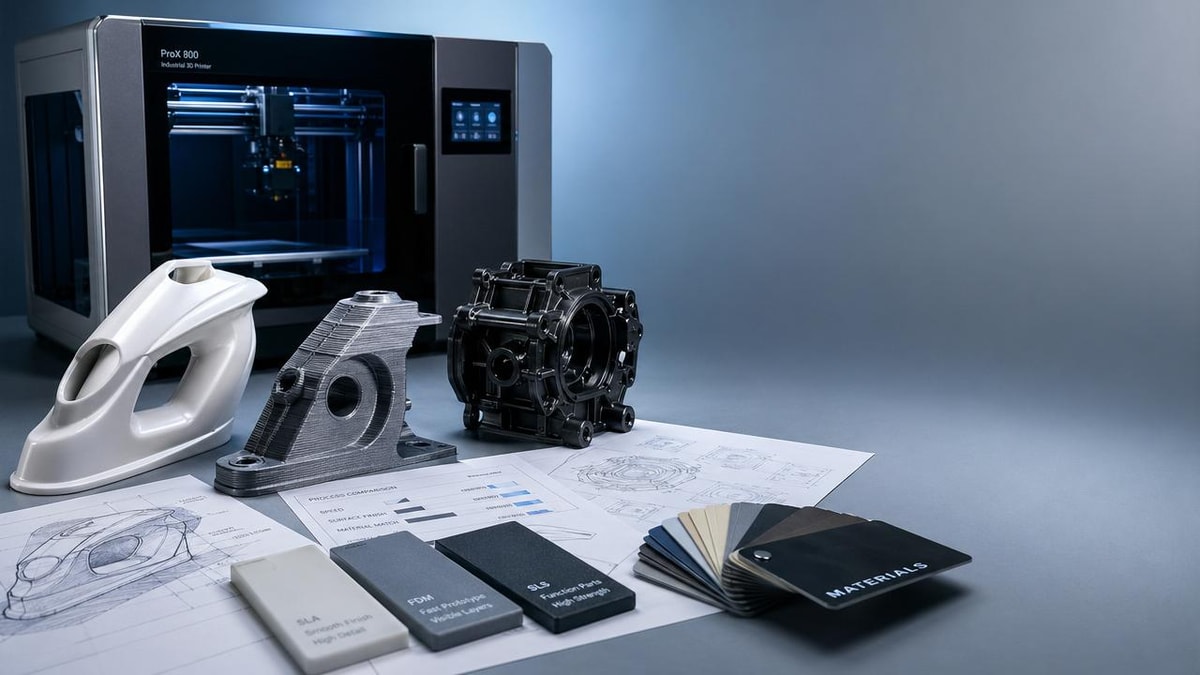
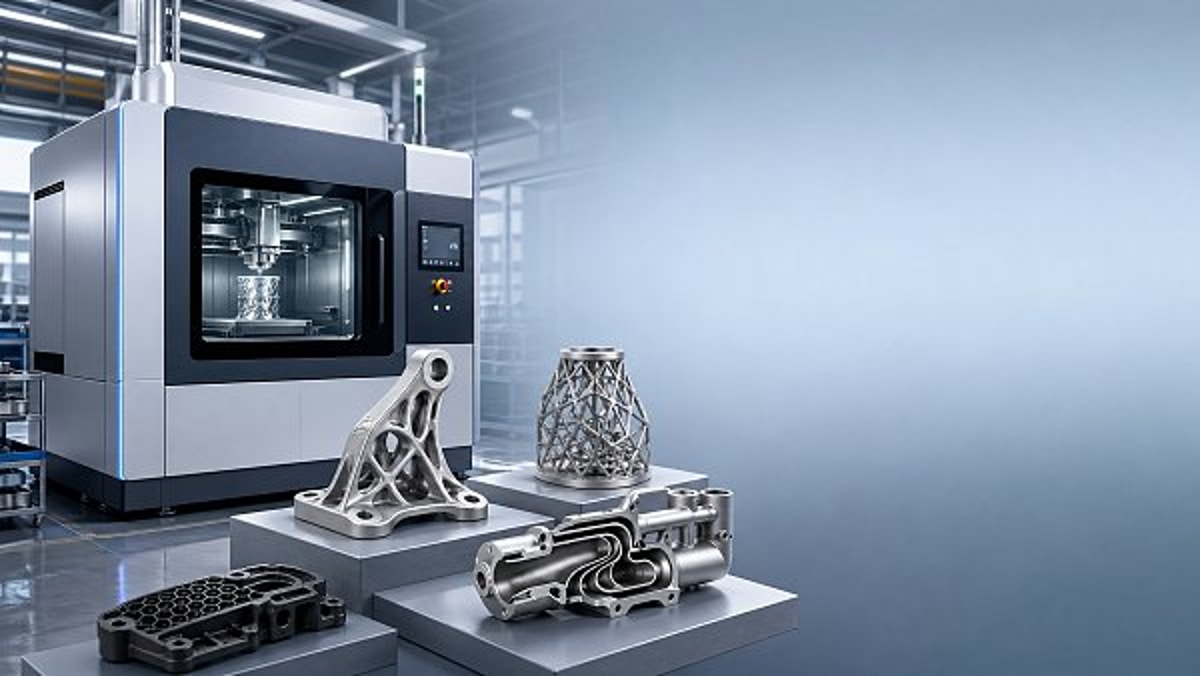
Whether industrial 3d printing is ready for end-use parts depends heavily on the material-process combination. Common polymer routes include powder bed fusion, material extrusion, and photopolymer-based methods, while metal production often relies on powder bed fusion or directed energy approaches. Each route creates a distinct profile for mechanical performance, surface finish, anisotropy, throughput, and post-processing requirements.
For example, engineering polymers may be suitable for housings, ducts, clips, jigs, and non-structural functional components. Metal additive manufacturing can support brackets, manifolds, heat exchangers, and geometrically complex performance parts. But suitability is never guaranteed by material name alone. Build orientation, wall thickness, support strategy, thermal distortion control, heat treatment, machining allowance, and inspection methods can all influence whether the final part performs as intended.
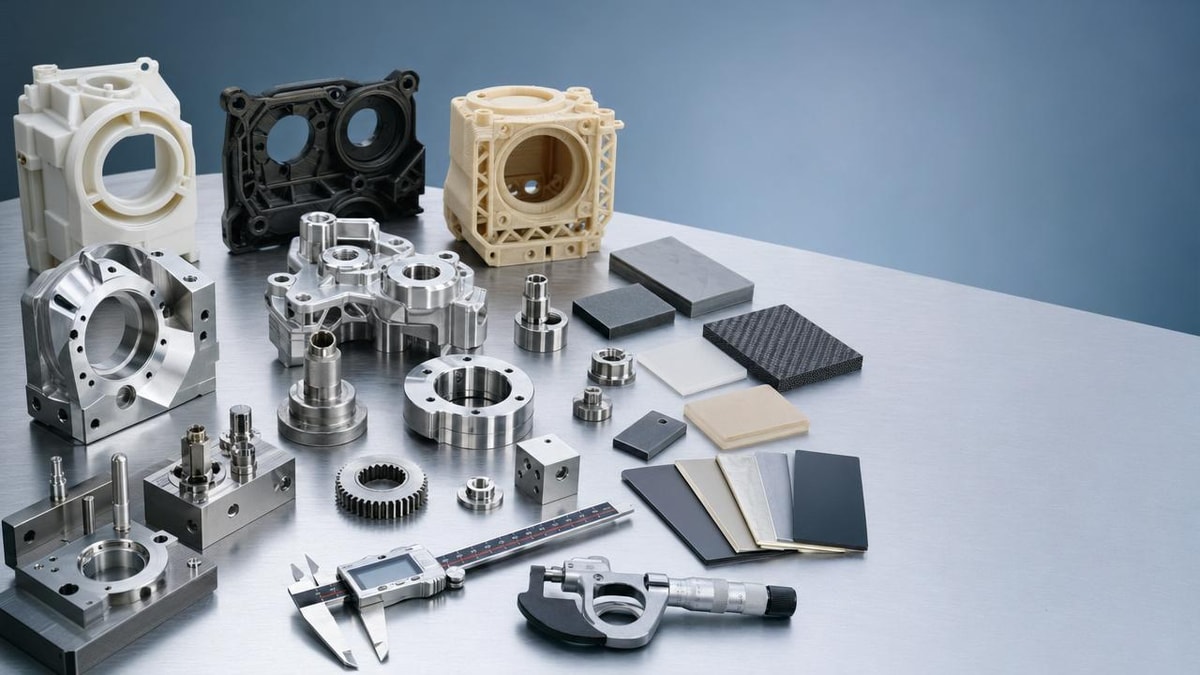
Quality expectations are also different from prototyping. End-use parts often require dimensional verification, lot traceability, material documentation, and process qualification evidence. In many industrial settings, tolerance expectations may fall within a range such as ±0.1 mm to ±0.5 mm depending on part size and process, while critical surfaces may still require secondary machining. Surface roughness, porosity risk, and fatigue performance must be evaluated in relation to actual service conditions rather than marketing specifications.
A practical view of technology readiness
The following overview helps decision-makers compare common industrial 3d printing pathways for end-use applications. It is not a ranking, but a reminder that “readiness” varies by requirement set.
The table shows why no single answer fits every use case. Industrial 3d printing is ready today for many end-use parts, but not for every material class, stress profile, or production volume. Readiness rises when material behavior is well characterized and post-processing steps are tightly standardized.
Quality checkpoints enterprise teams should require
- Defined part requirements, including mechanical loads, temperature range, chemical exposure, and expected service life.
- Documented material batch control and build parameter governance for repeatability across production runs.
- Inspection plans covering dimensional checks, visual review, and where necessary, density, porosity, or non-destructive evaluation.
- Post-processing validation, especially for heat treatment, machining, support removal, sealing, or surface finishing.
- Clear acceptance criteria tied to applicable internal standards or general frameworks such as ISO or ASTM-related additive manufacturing guidance.
In many organizations, quality maturity is the deciding factor. A part that performs well in one pilot build may still fail a production business case if inspection costs become excessive or if yield drops below viable thresholds. Decision-makers should therefore assess total process capability rather than print capability alone.
Business Value and Cost Logic for Enterprise Adoption
The cost discussion around industrial 3d printing is often misunderstood because it is compared too narrowly with unit cost from mature conventional processes. For end-use parts, the better comparison includes tooling expense, engineering change frequency, assembly labor, inventory risk, supplier dependency, and time-to-market. A printed part that costs more per unit can still create a stronger business case if it removes a mold, eliminates six fasteners, cuts a 12-week tooling timeline, or prevents line downtime from a hard-to-source spare component.
This is why procurement and operations teams should separate direct piece price from total landed value. In low-volume and high-mix environments, industrial 3d printing often competes on flexibility rather than pure throughput. In medium-volume situations, the economics may improve if multiple parts are consolidated or if recurring design changes would otherwise trigger new tools. In very high-volume production, conventional methods still tend to dominate unless complexity or customization creates an exceptional additive advantage.
Lead time can be equally strategic. A conventional path involving tooling, supplier queue time, and offshore shipping may run 8 to 20 weeks. A validated additive route may compress that to 1 to 4 weeks for low-volume batches, or even faster for urgent service parts. For sectors where downtime costs are measured hourly, that speed can outweigh a higher part price.
Where industrial 3d printing usually creates measurable value
- Low-to-medium volume production where tooling amortization is hard to justify.
- Products with frequent design revisions, often every quarter or every 1 to 2 product generations.
- Assemblies that can be reduced from multiple parts to one printed component.
- Spare parts for legacy systems with uncertain demand or obsolete tooling.
- High-value components where performance gains from weight reduction or flow optimization create downstream savings.
Enterprise adoption becomes more likely when these value drivers are quantified before the pilot starts. A mature evaluation often models at least 3 scenarios: current-state conventional sourcing, hybrid manufacturing with additive for selected parts, and additive-first design for a new component family. This lets decision-makers see when industrial 3d printing is a tactical supplement and when it deserves a larger role in the production strategy.
The hidden cost factors that can weaken the business case
Not every additive business case survives detailed review. Support removal, powder handling, heat treatment, machining, surface finishing, labor-intensive inspection, and lower-than-expected yield can all increase actual production cost. In some cases, a printed part may need 4 to 7 process steps after the build is complete before it is ready for deployment. If those steps are not mapped early, cost and lead time assumptions can become unrealistic.
There is also an organizational learning curve. Teams need design-for-additive skills, vendor qualification discipline, and digital part data management. Initial implementation often takes 3 to 9 months before a company has a stable shortlist of validated use cases. That is normal. The strongest programs do not force the technology into unsuitable parts just to justify investment.
For many enterprises, a phased model works best: outsource first, qualify applications second, and consider in-house production only after build volumes, quality requirements, and internal capability needs are clear. This approach reduces capital exposure while preserving strategic optionality.
Where End-Use Adoption Is Most Realistic Today
The most realistic end-use opportunities for industrial 3d printing are usually found where complexity is high and standardization pressure is manageable. That includes jigs and fixtures used in production, customized healthcare components, lightweight brackets, replacement parts for installed equipment, and fluid or airflow parts that benefit from internal geometry not feasible with traditional methods. In these applications, additive manufacturing is not replacing all conventional production. It is solving a defined performance or responsiveness problem.
By contrast, highly price-sensitive parts produced in annual volumes above 50,000 units often remain poor candidates unless there is significant customization or a compelling redesign opportunity. Similarly, components with extremely tight fatigue, sealing, or surface requirements may still need hybrid workflows where printing is followed by substantial machining and verification. The point is not that industrial 3d printing lacks capability, but that fit varies sharply by application profile.
For decision-makers, the best path is to categorize candidate parts by value logic rather than by enthusiasm level. Parts should be screened based on complexity, annual volume, criticality, qualification burden, and expected lead-time benefit. This avoids broad programs with weak returns and helps operations teams focus on the 10% to 20% of the portfolio where additive methods can create outsized impact.
Common end-use part categories by adoption maturity
The table below summarizes where industrial 3d printing tends to be most mature for end-use adoption and where caution remains necessary.
This classification highlights a recurring lesson: industrial 3d printing is strongest where traditional production is constrained by complexity, low demand predictability, or customization. It is weakest where conventional scale economics remain overwhelmingly favorable.
A sensible first-wave shortlist
- Service and maintenance parts with intermittent demand and long historical lead times.
- Parts requiring lightweighting, airflow channels, or reduced assembly count.
- Custom-fit or application-specific components where one-size-fits-all design creates waste.
- Pilot production parts needed in batches of 20 to 2,000 before final volume is proven.
Starting with these categories helps organizations build confidence with industrial 3d printing while avoiding the most difficult qualification and volume economics too early. It also creates more useful internal data for future scale decisions.
How Enterprise Teams Should Evaluate Adoption
A disciplined adoption approach usually outperforms technology-first enthusiasm. The first step is part portfolio screening, not equipment selection. Teams should identify where conventional sourcing causes friction: excessive lead times, repeated engineering changes, inventory write-offs, expensive tooling, or complex assemblies. From there, a shortlist can be built around commercial impact, technical feasibility, and qualification effort.
The second step is structured validation. This includes design review, material selection, prototype and pilot builds, post-processing definition, inspection planning, and limited field deployment where appropriate. Depending on criticality, this phase may take 4 to 12 weeks for relatively simple polymer parts or several months for regulated or high-performance metal components. The goal is to learn where industrial 3d printing truly improves the operating model, not just where it produces an acceptable sample.
The third step is sourcing model selection. Some organizations will stay with specialized external partners. Others will build a hybrid approach with internal design control and external production. A smaller subset with recurring demand, sensitive IP, or fast-turn operational needs may justify in-house systems. The right model depends on annual build demand, staffing capability, part criticality, and the cost of delay.
A practical enterprise checklist
- Define candidate parts by function, annual volume, and service environment.
- Estimate value from lead-time reduction, tooling avoidance, part consolidation, or inventory optimization.
- Map quality requirements, including tolerance bands, traceability, and validation evidence.
- Pilot with 3 to 10 representative parts rather than a broad unfocused portfolio.
- Review whether outsourced, hybrid, or in-house production best supports scale and governance.
This sequence keeps industrial 3d printing aligned with business outcomes. It also creates a stronger internal case for investment because technical claims are linked to procurement, quality, and supply chain metrics that executive teams already understand.
Why work with a sector-focused intelligence partner
For enterprise decision-makers, one of the hardest challenges is filtering signal from noise. Additive manufacturing discussions often mix genuine production capability with broad promotional claims. TradeNexus Pro helps global sourcing and strategy teams assess industrial 3d printing through a sector-informed lens, connecting technical understanding with supplier landscape analysis, application relevance, and market timing across advanced manufacturing, green energy, smart electronics, healthcare technology, and supply chain software ecosystems.
Because adoption decisions affect sourcing models, inventory strategy, quality systems, and long-term product architecture, they should not be made in isolation. A high-value decision framework considers supplier maturity, likely qualification burden, regional manufacturing options, and the commercial profile of each target part family. That is where informed market intelligence becomes as important as machine specifications.
Industrial 3d printing is ready for end-use parts in many specific, high-value scenarios today. The leaders who benefit most are not those who ask whether the technology is universally ready. They are the ones who ask where it is ready, under what conditions, and how it changes cost, resilience, and speed across the business.
Why Choose Us
TradeNexus Pro supports enterprise teams that need more than surface-level commentary. We help decision-makers interpret industrial 3d printing through the realities of supply chain execution, application fit, and sector-specific adoption patterns. If you are evaluating end-use part potential, we can help you narrow the right questions before major capital, sourcing, or qualification decisions are made.
Contact us to discuss practical topics such as parameter confirmation for target applications, production model selection, expected lead-time ranges, candidate part screening, customization pathways, supplier evaluation logic, and general certification or documentation considerations. We can also support early-stage benchmarking for samples, quotation discussions, and market-oriented implementation planning.
If your organization is exploring industrial 3d printing for end-use parts, now is the right time to move from broad interest to structured assessment. Reach out to TradeNexus Pro to review your application shortlist, compare sourcing options, and build a more informed path toward resilient, production-grade adoption.
Get weekly intelligence in your inbox.
No noise. No sponsored content. Pure intelligence.
 May 01, 2026Beijing’s New E-Bike Rules Trigger Dual-Certification Demand for China’s Swappable Battery CabinetsBeijing’s New E-Bike Rules Trigger Dual-Certification Demand for China’s Swappable Battery Cabinets
 May 01, 2026GNA’s GEO Service Assessment Elevates AI Search as Digital Procurement Metric for Chinese ExportersGNA’s GEO Service Assessment Elevates AI Search as Digital Procurement Metric for Chinese Exporters
 May 01, 20262026 China Cycle Expo: Chinese EPS Systems Achieve UL 2849:2026 Full Certification2026 China Cycle Expo: Chinese EPS Systems Achieve UL 2849:2026 Full Certification
 May 01, 2026GB 42236-2026 Enforces EV Charger Efficiency & Overload Protection from May 2026GB 42236-2026 Enforces EV Charger Efficiency & Overload Protection from May 2026
 May 01, 2026GB/T 43790-2026 Drone EMC Standard Effective May 2026GB/T 43790-2026 Drone EMC Standard Effective May 2026
 May 01, 20262026 Foshan Tanzhou Auto Industry Expo Opens2026 Foshan Tanzhou Auto Industry Expo Opens
 May 01, 2026China’s New Hazardous Chemicals Safety Law Takes Effect May 2026China’s New Hazardous Chemicals Safety Law Takes Effect May 2026
 May 01, 2026New Maritime and Fisheries Laws Take Effect May 1, 2026New Maritime and Fisheries Laws Take Effect May 1, 2026
 May 01, 2026Supply Chain Automation Works Best Where Delays RepeatSupply Chain Automation Works Best Where Delays Repeat
 May 01, 2026High Strength Steel Forgings: What Should Be Tested First?High Strength Steel Forgings: What Should Be Tested First?
 May 01, 2026Automotive Steel Forging: Cost Pressure vs Part ReliabilityAutomotive Steel Forging: Cost Pressure vs Part Reliability
 May 01, 2026Why High Durability Steel Forgings Fail Earlier Than ExpectedWhy High Durability Steel Forgings Fail Earlier Than Expected
 May 01, 2026Construction Aluminum Extrusions: Which Finish Lasts Longer?Construction Aluminum Extrusions: Which Finish Lasts Longer?
 May 01, 2026Lightweight Aluminum Extrusions: Where Savings Really HappenLightweight Aluminum Extrusions: Where Savings Really Happen
 May 01, 2026Aerospace Aluminum Extrusions Need More Than Low WeightAerospace Aluminum Extrusions Need More Than Low Weight
 May 01, 2026Precision Lathe Turning Problems That Show Up After AssemblyPrecision Lathe Turning Problems That Show Up After Assembly
 May 01, 2026High Precision Lathe Turning: Tolerance Claims to VerifyHigh Precision Lathe Turning: Tolerance Claims to Verify
 May 01, 2026When CNC Lathe Turning Is Better Than General MachiningWhen CNC Lathe Turning Is Better Than General Machining
 May 01, 2026Medical Device Prototyping Needs More Than SpeedMedical Device Prototyping Needs More Than Speed
 May 01, 20263D Printing Prototyping: Fast Turnaround or Better Finish?3D Printing Prototyping: Fast Turnaround or Better Finish?
 May 01, 2026Low Cost Rapid Prototyping: Where Quality Gets LostLow Cost Rapid Prototyping: Where Quality Gets Lost
 May 01, 2026Quick EV Charger Installation Still Needs Site ChecksQuick EV Charger Installation Still Needs Site Checks
 May 01, 2026Public Parking EV Chargers: What Slows Installation DownPublic Parking EV Chargers: What Slows Installation Down
 May 01, 2026Choosing a Lithium Ion Battery Manufacturer in ChinaChoosing a Lithium Ion Battery Manufacturer in China
 May 01, 2026How to Vet a Lithium Ion Battery OEM SupplierHow to Vet a Lithium Ion Battery OEM Supplier
 May 01, 2026EV Lithium Ion Batteries: Range Is Not the Only MetricEV Lithium Ion Batteries: Range Is Not the Only Metric
 May 01, 2026Lithium Ion ESS Batteries: Safety Details Worth CheckingLithium Ion ESS Batteries: Safety Details Worth Checking