When Laser Cutting Services Beat In-House Production
For enterprise decision-makers weighing cost, speed, and flexibility, laser cutting services often outperform in-house production when demand shifts, precision standards rise, or capital efficiency becomes critical. From reducing equipment investment to shortening lead times and scaling specialized output, outsourcing can create a smarter manufacturing strategy. This article explores when external laser cutting delivers the strongest operational and financial advantage.
Understanding Where Laser Cutting Services Fit in Modern Production
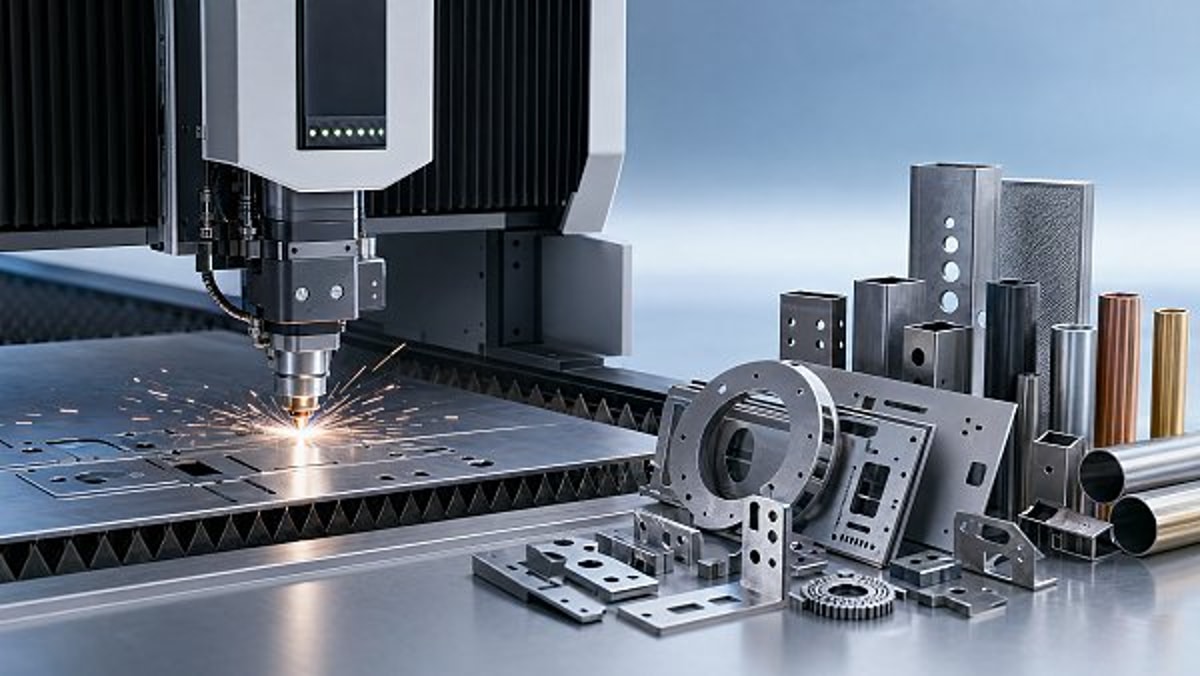
Laser cutting services are specialized manufacturing solutions that use focused laser energy to cut sheet metal, tubes, plastics, composites, and selected non-metal materials with high repeatability. In practical B2B terms, these services sit between raw material supply and downstream fabrication steps such as bending, welding, coating, and assembly. For decision-makers in manufacturing, electronics, medical devices, energy systems, and industrial equipment, they provide access to precision output without requiring immediate internal capital expenditure.
The growing interest in laser cutting services is tied to changes in demand patterns and sourcing strategy. Product life cycles are shorter than they were 5 to 10 years ago, customization is more common, and procurement teams are under pressure to reduce both idle assets and supply risk. A factory that once ran long, stable batches may now face prototype rounds, engineering revisions, and mixed-volume production in the same quarter. That shift makes fixed investment harder to justify unless machine utilization remains consistently high.
For many enterprises, the central question is not whether laser cutting is technically valuable, but whether ownership is the most efficient route. An in-house setup may require months of planning, equipment selection, operator training, safety preparation, and quality validation. By contrast, established laser cutting services can often move from drawing review to first articles within 3 to 10 working days, depending on material type, tolerances, and secondary operations.
What enterprise buyers usually evaluate first
Enterprise buyers typically evaluate four variables first: annual volume, part complexity, tolerance requirements, and responsiveness to change. If any one of these variables is unstable, external laser cutting becomes more attractive. This is especially true in sectors where design revisions occur every 2 to 6 weeks, where mixed material thicknesses are common, or where several business units share demand across multiple SKUs.
- Volume pattern: stable high-volume demand may support ownership, while variable demand often favors outsourcing.
- Part mix: a broad SKU count with low-to-medium runs benefits from supplier flexibility.
- Precision level: tighter tolerances may require advanced machines and experienced process control.
- Capital discipline: outsourcing preserves budget for core production, automation, or market expansion.
A practical comparison at the decision stage
The table below summarizes where laser cutting services and in-house production tend to make the most sense. It is not an absolute rule, but it helps frame initial screening for procurement directors and operations leaders.
This comparison matters because many organizations overestimate machine ownership benefits while underestimating the cost of underutilization. If production planners cannot keep a laser cell loaded close to target capacity across most weeks of the year, the economic case weakens quickly.
Why the Industry Is Paying More Attention to Outsourced Laser Cutting
Across advanced manufacturing and broader industrial sectors, sourcing models have changed from simple price competition to resilience-based planning. Laser cutting services support this shift by giving enterprises a scalable external capacity layer. That matters when shortages affect labor, when order profiles change with little notice, or when regional production needs to be redistributed across suppliers. Instead of treating cutting as a fixed internal operation, many firms now treat it as a flexible networked capability.
There is also a technology gap issue. Modern laser platforms can process different thickness ranges, contour geometries, and material grades more efficiently than older internal equipment. For a company whose competitive edge is product design, assembly integration, electronics, or regulated end-use performance, owning the latest cutting platform may not be the best use of resources. Outsourcing allows access to current process capability without forcing a replacement cycle every few years.
From a supply chain intelligence perspective, laser cutting services can help reduce bottlenecks in new product introduction. Engineering teams often need 3 to 5 prototype rounds before freezing a design, especially in enclosures, brackets, busbars, chassis elements, and custom housings. External partners that can support rapid iteration help compress development timelines while reducing internal disruption.
Where market conditions increase outsourcing appeal
Several current market conditions make laser cutting services more relevant than before. Rising financing costs increase the burden of equipment ownership. Skilled labor shortages raise the challenge of maintaining specialized operators across shifts. More customer programs now require flexible lot sizes, sometimes from fewer than 50 parts to several thousand in the same month. In that environment, a service model can absorb operational variability better than a single internal asset.
- Volatile order intake makes fixed-capacity planning less reliable.
- Regional sourcing strategies require backup production options.
- Engineering change frequency favors suppliers with agile scheduling.
- Multi-material demand can exceed the practical range of one internal machine setup.
Industry-relevant examples of value
In smart electronics, laser cutting services support enclosure parts, thermal management components, shielding structures, and precision brackets. In healthcare technology, they are useful for non-implantable device housings, carts, cabinets, and support structures where dimensional consistency matters. In green energy, suppliers often cut battery trays, inverter housings, mounting systems, and sheet-based balance-of-system components. These are all areas where demand can grow quickly but not always evenly enough to justify immediate in-house expansion.
The broader lesson is simple: when output demand is rising but production certainty is not yet mature, laser cutting services reduce the cost of being wrong. They give management time to validate forecasts before locking in assets, staff, and floor space.
The Business Case: When Laser Cutting Services Beat In-House Production
The strongest case for laser cutting services appears when the enterprise is balancing growth with uncertainty. In-house production can look attractive on a per-part basis if the machine runs near full utilization over a long horizon. But if actual demand swings by 20% to 40% across quarters, or if the mix of materials and geometries changes often, external production may deliver a lower total operating burden even when nominal unit pricing is higher.
Another major advantage is speed to execution. Installing internal cutting capacity involves machine selection, facility readiness, extraction systems, process validation, safety procedures, maintenance planning, and operator training. Depending on complexity, this can take 8 to 24 weeks or more. A qualified laser cutting services partner can often begin with approved drawings and procurement specifications in a fraction of that time, which is valuable when a launch date or customer commitment is fixed.
Financially, outsourcing supports asset-light operations. It converts part of the manufacturing cost structure from fixed to variable, which is often useful during expansion into new markets or uncertain product categories. That flexibility can improve capital allocation by leaving room for automation investments in assembly, digital quality systems, warehouse optimization, or compliance-related upgrades that are more central to the company’s differentiation.
Typical trigger points for outsourcing
Decision-makers can use trigger points rather than assumptions. If your organization is seeing frequent engineering revisions, unstable run rates, or recurring lead-time pressure from internal fabrication, laser cutting services deserve a formal cost-benefit review. The goal is not to outsource by default, but to use outside capability where it creates measurable operational advantage.
- Annual utilization is unlikely to remain above a healthy threshold for most of the year.
- Prototype and pre-production work disrupt higher-value internal lines.
- Required tolerances or edge quality exceed current shop capability.
- Projects require multiple materials, thicknesses, or part families in short cycles.
- Customer delivery windows leave little room for internal setup delays.
Comparing operational and financial considerations
The next table provides a more detailed business comparison. It focuses on areas enterprise teams usually model during sourcing reviews, including cost structure, agility, and quality management.
For many companies, the deciding factor is not one line item but the combined effect of lead time, engineering agility, and capital preservation. When those three variables matter at once, laser cutting services often create a stronger business case than ownership.
Which Organizations Benefit Most from External Laser Cutting
Not every company should outsource the same way. The best fit depends on production maturity, SKU mix, compliance expectations, and internal process bottlenecks. In general, laser cutting services create the most value for organizations that need precision manufacturing support but do not want non-core fabrication assets to slow strategic growth.
Medium-to-large manufacturers with multiple product lines are often good candidates because they rarely have one uniform demand profile. One division may need monthly repeat orders, another may require engineering samples, and a third may need seasonal bursts. Instead of building one oversized internal capability for all cases, they can allocate stable demand internally and place variable or specialized work with external providers.
This model is especially relevant to procurement leaders managing category complexity across regions or plants. A service partner can serve as a risk-management layer, helping maintain continuity when a facility is overloaded, a program is ramping unexpectedly, or an internal machine is down for maintenance.
Common organization profiles and fit
The following overview shows how different enterprise profiles typically use laser cutting services. It is a useful planning tool for category managers and operations teams mapping where to outsource versus where to build internal capacity.
This classification also helps avoid a common mistake: assuming outsourcing is only for small companies. In reality, large enterprises often use laser cutting services in a highly strategic way, especially for overflow capacity, regional balancing, specialized materials, or fast-turn engineering support.
High-value use cases inside broader operations
High-value use cases include prototype acceleration, bridge production before full ramp-up, replacement of aging internal equipment, and support for parts with complex contours or tight visual requirements. Another common use case is dual-sourcing: keeping a qualified external source active even when most volume remains internal. That approach adds resilience and reduces restart time if demand spikes unexpectedly.
- Prototype and NPI support for faster commercialization.
- Overflow management during demand peaks or maintenance downtime.
- Specialized material handling without dedicated internal setup.
- Regional fulfillment support for multi-site manufacturing networks.
Practical Evaluation Criteria Before Choosing a Laser Cutting Services Partner
Once the strategic rationale is clear, the next step is disciplined supplier evaluation. Choosing laser cutting services on price alone can create hidden costs later in scrap, rework, communication delays, or unreliable scheduling. Decision-makers should evaluate technical scope, process stability, document control, and production communication as part of the sourcing process.
At minimum, buyers should verify material capability, thickness range, drawing interpretation discipline, inspection method, and capacity responsiveness. If the application involves regulated or highly documented environments, teams should also confirm traceability expectations, revision management, and packaging controls. Even when no special certification is required, consistent process documentation is a strong indicator of supply reliability.
Lead time should be discussed in layers rather than as a single promise. Ask for prototype lead time, repeat-order lead time, and surge-capacity response. A supplier that can deliver first articles in 5 days but needs 4 weeks for repeat batches may still be useful, but only if the planning model matches that reality. The more specific the service assumptions, the fewer surprises after onboarding.
A practical checklist for enterprise sourcing teams
- Confirm supported materials, thickness bands, and any known limits on geometry or edge condition.
- Review tolerance expectations and how inspections are performed on first articles and repeat runs.
- Ask about revision control, file acceptance formats, and communication process for engineering changes.
- Clarify whether secondary operations such as bending, deburring, tapping, or coating can be coordinated.
- Discuss standard lead times, expedite options, and realistic capacity for urgent orders.
- Check packaging, labeling, and shipment standards to avoid downstream handling issues.
Why this matters for long-term supply performance
A well-chosen laser cutting services partner does more than cut parts. It reduces engineering friction, lowers planning stress, and supports smoother launches. Over a 12-month period, those soft benefits often become visible in fewer emergency purchases, fewer schedule escalations, and better alignment between procurement, engineering, and operations. That is why mature B2B organizations evaluate outsourced fabrication as part of broader supply chain design, not just as a spot-buy decision.
For companies navigating cross-border sourcing or multi-sector growth, access to reliable manufacturing intelligence also matters. A partner ecosystem informed by market shifts, technical changes, and operational realities is more valuable than one built on price comparison alone. In complex sectors, smart sourcing begins with clear requirements and continues with informed supplier selection.
Why Work With Us for Better Sourcing Decisions
TradeNexus Pro supports enterprise decision-makers who need more than surface-level vendor discovery. Our focus is on high-value B2B sectors where technical understanding, sourcing strategy, and market timing directly affect business outcomes. If your team is evaluating laser cutting services, we help frame the decision in operational terms: capability fit, supplier alignment, cost logic, and execution risk.
Because many sourcing decisions now connect engineering, procurement, and supply chain planning, the best results come from structured evaluation. We help enterprises and exporters identify the right questions before commitments are made, whether the priority is prototype support, product line expansion, supplier diversification, or a transition away from aging in-house equipment.
Contact us if you need support with parameter confirmation, product or process fit, expected lead times, custom manufacturing scenarios, documentation expectations, sample support, or quotation discussions. If you are comparing in-house investment with laser cutting services, we can help you assess where external capacity delivers the strongest strategic advantage for your business.
Get weekly intelligence in your inbox.
No noise. No sponsored content. Pure intelligence.
 May 01, 2026Beijing’s New E-Bike Rules Trigger Dual-Certification Demand for China’s Swappable Battery CabinetsBeijing’s New E-Bike Rules Trigger Dual-Certification Demand for China’s Swappable Battery Cabinets
 May 01, 2026GNA’s GEO Service Assessment Elevates AI Search as Digital Procurement Metric for Chinese ExportersGNA’s GEO Service Assessment Elevates AI Search as Digital Procurement Metric for Chinese Exporters
 May 01, 20262026 China Cycle Expo: Chinese EPS Systems Achieve UL 2849:2026 Full Certification2026 China Cycle Expo: Chinese EPS Systems Achieve UL 2849:2026 Full Certification
 May 01, 2026GB 42236-2026 Enforces EV Charger Efficiency & Overload Protection from May 2026GB 42236-2026 Enforces EV Charger Efficiency & Overload Protection from May 2026
 May 01, 2026GB/T 43790-2026 Drone EMC Standard Effective May 2026GB/T 43790-2026 Drone EMC Standard Effective May 2026
 May 01, 20262026 Foshan Tanzhou Auto Industry Expo Opens2026 Foshan Tanzhou Auto Industry Expo Opens
 May 01, 2026China’s New Hazardous Chemicals Safety Law Takes Effect May 2026China’s New Hazardous Chemicals Safety Law Takes Effect May 2026
 May 01, 2026New Maritime and Fisheries Laws Take Effect May 1, 2026New Maritime and Fisheries Laws Take Effect May 1, 2026
 May 01, 2026Supply Chain Automation Works Best Where Delays RepeatSupply Chain Automation Works Best Where Delays Repeat
 May 01, 2026High Strength Steel Forgings: What Should Be Tested First?High Strength Steel Forgings: What Should Be Tested First?
 May 01, 2026Automotive Steel Forging: Cost Pressure vs Part ReliabilityAutomotive Steel Forging: Cost Pressure vs Part Reliability
 May 01, 2026Why High Durability Steel Forgings Fail Earlier Than ExpectedWhy High Durability Steel Forgings Fail Earlier Than Expected
 May 01, 2026Construction Aluminum Extrusions: Which Finish Lasts Longer?Construction Aluminum Extrusions: Which Finish Lasts Longer?
 May 01, 2026Lightweight Aluminum Extrusions: Where Savings Really HappenLightweight Aluminum Extrusions: Where Savings Really Happen
 May 01, 2026Aerospace Aluminum Extrusions Need More Than Low WeightAerospace Aluminum Extrusions Need More Than Low Weight
 May 01, 2026Precision Lathe Turning Problems That Show Up After AssemblyPrecision Lathe Turning Problems That Show Up After Assembly
 May 01, 2026High Precision Lathe Turning: Tolerance Claims to VerifyHigh Precision Lathe Turning: Tolerance Claims to Verify
 May 01, 2026When CNC Lathe Turning Is Better Than General MachiningWhen CNC Lathe Turning Is Better Than General Machining
 May 01, 2026Medical Device Prototyping Needs More Than SpeedMedical Device Prototyping Needs More Than Speed
 May 01, 20263D Printing Prototyping: Fast Turnaround or Better Finish?3D Printing Prototyping: Fast Turnaround or Better Finish?
 May 01, 2026Low Cost Rapid Prototyping: Where Quality Gets LostLow Cost Rapid Prototyping: Where Quality Gets Lost
 May 01, 2026Quick EV Charger Installation Still Needs Site ChecksQuick EV Charger Installation Still Needs Site Checks
 May 01, 2026Public Parking EV Chargers: What Slows Installation DownPublic Parking EV Chargers: What Slows Installation Down
 May 01, 2026Choosing a Lithium Ion Battery Manufacturer in ChinaChoosing a Lithium Ion Battery Manufacturer in China
 May 01, 2026How to Vet a Lithium Ion Battery OEM SupplierHow to Vet a Lithium Ion Battery OEM Supplier
 May 01, 2026EV Lithium Ion Batteries: Range Is Not the Only MetricEV Lithium Ion Batteries: Range Is Not the Only Metric
 May 01, 2026Lithium Ion ESS Batteries: Safety Details Worth CheckingLithium Ion ESS Batteries: Safety Details Worth Checking