Where Custom Sheet Metal Fabrication Adds Hidden Cost
Custom sheet metal fabrication often looks cost-efficient at quote stage, yet hidden expenses can quickly reshape the financial case. For budget owners and approvers, understanding where design complexity, tooling changes, material waste, tolerance demands, and supplier coordination add cost is essential to preventing margin erosion. This article highlights the less visible cost drivers that influence total project value and procurement decisions.
Why Scenario Differences Matter More Than the Initial Quote
For financial approvers, the risk in custom sheet metal fabrication is rarely the visible unit price alone. The larger exposure usually sits in the gap between a supplier’s first quotation and the full landed cost after revisions, yield loss, secondary processing, schedule changes, and quality control escalation. In practical sourcing environments, a part that appears 8% cheaper on paper can become 12% to 20% more expensive once hidden cost layers emerge across the production cycle.
This matters because different business scenarios place very different pressure on fabrication economics. A prototype for smart electronics may tolerate higher per-piece cost but cannot absorb repeated engineering delays. A healthcare technology enclosure may demand tighter documentation and traceability, adding process steps that do not show clearly in a simple material-plus-labor quote. An advanced manufacturing bracket for a heavy-duty assembly may look straightforward until forming complexity increases scrap rates from 5% to 15%.
In cross-border procurement, hidden cost also increases when communication loops stretch across 2 to 4 approval layers, or when supplier interpretation of drawings differs from engineering intent. For decision-makers in global B2B environments, the key question is not whether custom sheet metal fabrication is valuable. The better question is which scenario justifies customization, and under what controls the total project cost remains stable.
Common sources of hidden cost before production starts
- Design revisions after quotation, especially hole relocation, bend sequence changes, and late tolerance tightening.
- Material substitution due to availability, minimum order quantities, or surface finish constraints.
- Tooling, fixtures, and setup time spread across low-volume orders of 50 to 500 units.
- Secondary processes such as deburring, welding, PEM insertion, coating, and assembly verification.
- Supplier coordination overhead across engineering, quality, logistics, and compliance teams.
For a finance team, these drivers should be evaluated as scenario-specific multipliers. They rarely affect every order equally. The same custom sheet metal fabrication supplier may be cost-effective for repeat cabinet panels but inefficient for highly iterative prototype housings. That is why scenario-based review leads to better approval decisions than a unit-price comparison alone.
Three Typical Business Scenarios Where Hidden Cost Builds Differently
The most effective way to assess custom sheet metal fabrication is to separate it by application context. Cost behavior changes significantly depending on whether the project is a prototype, a regulated product enclosure, or a repeat industrial component. The table below gives financial approvers a quick comparison framework.
The comparison shows why a single sourcing rule does not work across every custom sheet metal fabrication purchase. In low-volume pilot orders, flexibility often matters more than nominal unit cost. In regulated applications, the hidden cost of a field failure or non-conforming batch can far exceed the savings from selecting the cheapest quote. In scale production, the real value comes from controlling cumulative loss across thousands of parts rather than negotiating a small upfront discount.
Scenario 1: Prototype and pilot-stage products
This scenario is common in smart electronics, healthcare technology devices, and new green energy components. Volumes may range from 5 units to 200 units, but revision frequency is high. Hidden cost appears when each design change triggers a new flat pattern, a revised bend deduction, a different fastening method, or a new finishing requirement. A three-round prototype cycle can easily double setup-related expenses if revision control is weak.
Financially, the risk is not that prototype parts are expensive by nature. The risk is uncontrolled iteration. If engineering, sourcing, and manufacturing do not freeze a review checkpoint after round one or round two, custom sheet metal fabrication can keep absorbing micro-changes that look harmless individually but accumulate rapidly in labor hours, sample freight, and scrap. A low quote is less meaningful when the process allows unlimited design drift.
Approvers should ask whether the supplier has a clear prototype workflow: drawing review within 24 to 72 hours, design-for-manufacturability feedback before cutting, and a documented path for revision pricing. These controls reduce hidden cost more effectively than negotiating a lower first-piece rate.
Scenario 2: Precision or documentation-heavy enclosures
In applications such as healthcare technology housings, industrial control boxes, or electronics shielding assemblies, custom sheet metal fabrication often includes stricter tolerance and finish expectations. Hidden cost grows when quality requirements are written late or interpreted inconsistently. For example, a tolerance shift from general fabrication standard to a tighter band on critical interfaces can increase inspection time, raise rejection rates, and force more manual rework.
Another hidden layer is documentation. If the project requires batch labeling, dimensional records, material certificates, or finish verification, the administrative and quality burden may add 3% to 10% depending on order size and complexity. This is especially relevant when one fabricated part becomes part of a larger audited assembly or exported equipment package.
Budget owners should evaluate whether these costs are proportionate to business risk. In many cases they are justified, but only if they are visible early. The problem begins when the supplier prices basic fabrication while the buyer later expects precision production discipline without a corresponding scope definition.
Scenario 3: Repeat industrial parts and multi-site supply
Advanced manufacturing equipment, energy support frames, and supply chain infrastructure often require repeat custom sheet metal fabrication in batches from 500 to 20,000 units annually. Here, hidden cost behaves differently. It is usually tied to material utilization, fixture maintenance, production balancing, packaging, and logistics synchronization across plants or warehouses.
A part design that wastes even 6% more sheet area may look trivial in a one-time order, but over 12 months it can erode margin materially. The same applies to changeover time. If a supplier runs too many low-efficiency setups because the design family is not standardized, the buyer may eventually absorb the inefficiency through pricing adjustments or unreliable lead times.
In this scenario, approvers should focus on annualized cost rather than line-item quote savings. Questions around nesting efficiency, process repeatability, stocking agreements, and delivery cadence often reveal more value than a small discount per unit.
Where Custom Sheet Metal Fabrication Commonly Hides Cost in Each Process Step
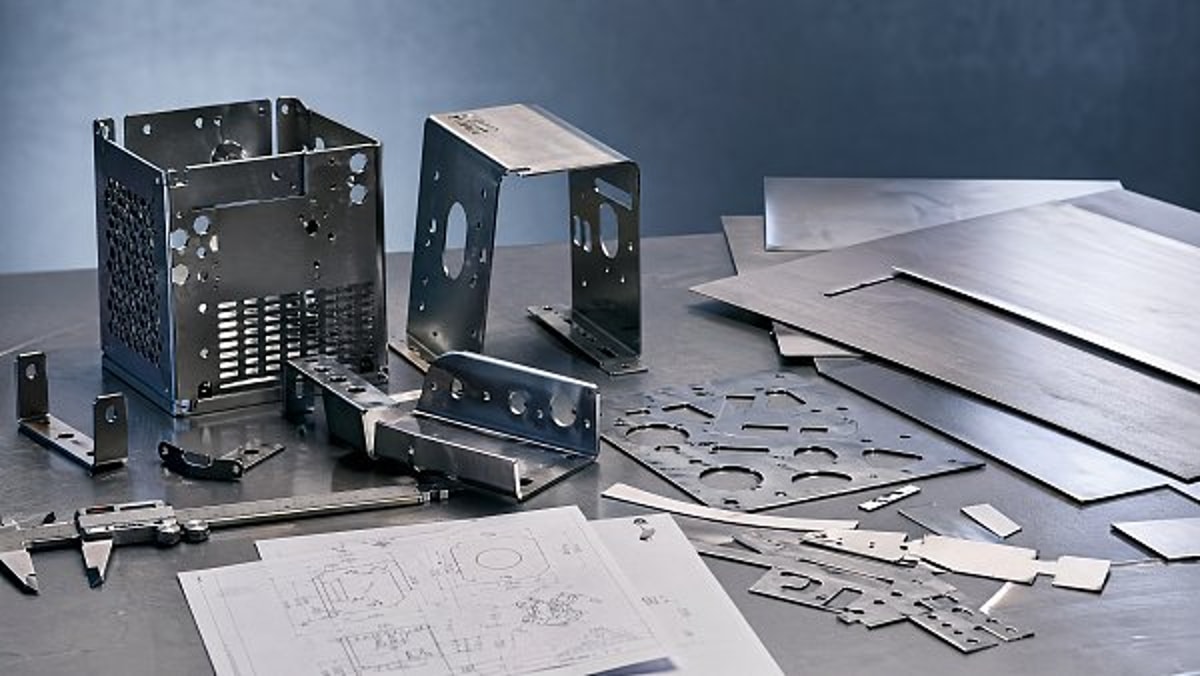
To approve a project with confidence, it helps to map hidden cost to process stages rather than treat fabrication as a single spend line. In many procurement reviews, 70% of attention goes to material and machining rate, while the remaining 30% of process detail creates the majority of budget surprises. The following breakdown is useful across industries from green energy to supply chain equipment.
Design and engineering translation
The first cost trap appears when CAD intent does not match shop-floor practicality. Features such as tight inside bend radii, clustered holes near bends, unnecessary cosmetic edges, or conflicting assembly access can force manual intervention. In custom sheet metal fabrication, every manual workaround tends to add labor, setup delay, or quality variability.
A finance-friendly control is requiring a manufacturability review before final approval. Even a 30-minute engineering clarification can prevent repeated non-value-added operations later. If a supplier does not challenge questionable details early, the buyer often pays for the silence through rework and lead-time slippage.
This is particularly important when multiple teams contribute to one assembly. In a 3-team review chain involving product design, sourcing, and operations, undocumented assumptions can multiply cost faster than material inflation.
Material and yield management
Material cost is not only about alloy type or thickness. It also includes how efficiently the part nests on the sheet, whether grain direction matters, and how much drop material becomes unusable. Stainless steel, aluminum, galvanized steel, and specialty coated materials can behave very differently in yield planning, especially in mixed-volume programs.
For repeat orders, a scrap variance of 4% to 8% can outweigh small labor rate differences between suppliers. Buyers should ask whether the quote assumes standard sheet sizes, alternate stock availability, or premium sourcing during short supply windows. These factors influence total spend even before the first bend is made.
Secondary operations and finishing
Secondary steps are among the biggest hidden cost zones in custom sheet metal fabrication. Deburring, hardware insertion, welding, grinding, powder coating, anodizing, silk screening, and sub-assembly can each be reasonable individually. Combined, they can transform a simple fabricated part into a process chain with several queue points, each carrying labor, handling, and quality risk.
If the finish requirement includes cosmetic surfaces, color matching, or corrosion resistance expectations, the cost impact may increase further through masking, inspection, packaging protection, and reject replacement. For a finance approver, the correct question is not whether finishing is needed, but whether all finishing steps are necessary at the current product stage.
Cost checkpoints by process stage
The table below converts process detail into approval checkpoints. It helps identify where custom sheet metal fabrication moves from controlled production to cost leakage.
This stage-by-stage view is especially useful when comparing suppliers whose pricing formats differ. One may look more expensive initially because secondary costs are included transparently. Another may look cheaper because the same items are left open, to be charged later through change orders, delays, or quality claims.
How Financial Approvers Can Judge Fit by Business Need
Not every application deserves the same level of custom sheet metal fabrication complexity. The best approval decisions come from matching fabrication approach to commercial purpose. For example, a market-test product may justify simpler finishes and looser cosmetic expectations, while a customer-facing enclosure may require stronger appearance control even at lower volumes.
A useful review model is to separate projects into three value bands: short-term validation, controlled launch, and repeat production. Each band has different tolerance for NRE, tooling, documentation, and supplier integration. Once the project is classified, the buyer can avoid overbuying process rigor or underbuying quality protection.
For many B2B organizations, hidden cost also comes from internal misalignment. Engineering may optimize for performance, operations for lead time, procurement for price, and finance for cash discipline. Custom sheet metal fabrication decisions improve when these priorities are translated into a ranked list rather than left to supplier interpretation.
A practical approval checklist
- Confirm annual or phase volume: fewer than 100 units, 100 to 1,000 units, or more than 1,000 units usually changes the right costing model.
- Identify critical tolerances versus general tolerances so inspection cost is applied selectively, not broadly.
- Clarify which secondary operations are mandatory now and which can be deferred to a later product stage.
- Require a revision and re-quote mechanism before prototype changes begin.
- Evaluate whether logistics, packaging, and labeling are included, especially for export or multi-site delivery.
These steps reduce ambiguity, which is one of the biggest hidden cost drivers in custom sheet metal fabrication. In many cases, better scoping can protect more margin than aggressive price negotiation.
When to be cautious before approving customization
Caution is warranted when order volume is still uncertain, when multiple design owners can change the specification, or when the part combines demanding finish, tight fit, and compressed lead time. These three conditions together often produce the highest likelihood of budget overrun. A project with all three should trigger deeper review before purchase order release.
Another caution point is fragmented sourcing. If cutting, bending, coating, and assembly are split across several parties without a single accountable coordinator, hidden cost may appear in freight loops, schedule drift, and defect attribution disputes. One integrated supplier is not always necessary, but one accountable process owner usually is.
Common Misjudgments That Inflate Total Cost
In cross-sector B2B procurement, several repeated misjudgments cause custom sheet metal fabrication to underperform financially. The first is assuming that complexity is visible from the drawing. In reality, two parts with similar dimensions may have very different production costs due to bend accessibility, fixture stability, or finish sensitivity.
The second is treating every tolerance as equally important. Over-specifying the entire part instead of controlling 2 to 4 critical features often raises inspection and reject cost without improving functional value. The third is ignoring supplier communication overhead. A low quote can lose its advantage quickly if clarification cycles consume one to two extra weeks and delay downstream assembly.
The fourth misjudgment is evaluating custom sheet metal fabrication only at part level. Financial approvers should review the assembly context as well. A fabricated component that is slightly more expensive but easier to assemble, easier to ship, or less prone to cosmetic rejection can be the lower-cost choice in total program terms.
Questions worth asking before sign-off
- What percentage of quoted cost is sensitive to design revisions after approval?
- Which process steps are outsourced, and how does that affect lead time and accountability?
- Are there cost differences between prototype, pilot, and production batches that need staged approval?
- What assumptions were made about packaging, labeling, certificates, and incoming inspection requirements?
- Can the supplier recommend a lower-cost geometry or finish without changing functional performance?
These questions help move the discussion beyond price and into value protection. For procurement leaders and finance controllers, that shift often determines whether custom sheet metal fabrication supports margin discipline or becomes a recurring source of avoidable variance.
Why Work With a Strategic B2B Intelligence Partner
When hidden cost is spread across design decisions, supplier capability, quality planning, and delivery coordination, better information becomes a direct financial advantage. TradeNexus Pro supports procurement directors, supply chain managers, and enterprise decision-makers who need clearer visibility into sourcing logic across advanced manufacturing, green energy, smart electronics, healthcare technology, and supply chain SaaS-linked operations.
For companies evaluating custom sheet metal fabrication, the most valuable support often begins before final sourcing. That includes comparing scenario fit, identifying likely cost escalators, and clarifying whether a project is best treated as prototype, controlled launch, or repeat production. It also includes better supplier discussion around lead times, tolerance strategy, secondary processing, and documentation expectations.
If you are reviewing a current project or preparing a future RFQ, contact us to discuss parameter confirmation, application fit, lead-time expectations, supplier coordination risks, customized sourcing pathways, sample planning, and quotation communication. We can help you frame the right questions early, so your custom sheet metal fabrication decision is based on full business value rather than a narrow line-item quote.
Get weekly intelligence in your inbox.
No noise. No sponsored content. Pure intelligence.
 May 01, 2026Beijing’s New E-Bike Rules Trigger Dual-Certification Demand for China’s Swappable Battery CabinetsBeijing’s New E-Bike Rules Trigger Dual-Certification Demand for China’s Swappable Battery Cabinets
 May 01, 2026GNA’s GEO Service Assessment Elevates AI Search as Digital Procurement Metric for Chinese ExportersGNA’s GEO Service Assessment Elevates AI Search as Digital Procurement Metric for Chinese Exporters
 May 01, 20262026 China Cycle Expo: Chinese EPS Systems Achieve UL 2849:2026 Full Certification2026 China Cycle Expo: Chinese EPS Systems Achieve UL 2849:2026 Full Certification
 May 01, 2026GB 42236-2026 Enforces EV Charger Efficiency & Overload Protection from May 2026GB 42236-2026 Enforces EV Charger Efficiency & Overload Protection from May 2026
 May 01, 2026GB/T 43790-2026 Drone EMC Standard Effective May 2026GB/T 43790-2026 Drone EMC Standard Effective May 2026
 May 01, 20262026 Foshan Tanzhou Auto Industry Expo Opens2026 Foshan Tanzhou Auto Industry Expo Opens
 May 01, 2026China’s New Hazardous Chemicals Safety Law Takes Effect May 2026China’s New Hazardous Chemicals Safety Law Takes Effect May 2026
 May 01, 2026New Maritime and Fisheries Laws Take Effect May 1, 2026New Maritime and Fisheries Laws Take Effect May 1, 2026
 May 01, 2026Supply Chain Automation Works Best Where Delays RepeatSupply Chain Automation Works Best Where Delays Repeat
 May 01, 2026High Strength Steel Forgings: What Should Be Tested First?High Strength Steel Forgings: What Should Be Tested First?
 May 01, 2026Automotive Steel Forging: Cost Pressure vs Part ReliabilityAutomotive Steel Forging: Cost Pressure vs Part Reliability
 May 01, 2026Why High Durability Steel Forgings Fail Earlier Than ExpectedWhy High Durability Steel Forgings Fail Earlier Than Expected
 May 01, 2026Construction Aluminum Extrusions: Which Finish Lasts Longer?Construction Aluminum Extrusions: Which Finish Lasts Longer?
 May 01, 2026Lightweight Aluminum Extrusions: Where Savings Really HappenLightweight Aluminum Extrusions: Where Savings Really Happen
 May 01, 2026Aerospace Aluminum Extrusions Need More Than Low WeightAerospace Aluminum Extrusions Need More Than Low Weight
 May 01, 2026Precision Lathe Turning Problems That Show Up After AssemblyPrecision Lathe Turning Problems That Show Up After Assembly
 May 01, 2026High Precision Lathe Turning: Tolerance Claims to VerifyHigh Precision Lathe Turning: Tolerance Claims to Verify
 May 01, 2026When CNC Lathe Turning Is Better Than General MachiningWhen CNC Lathe Turning Is Better Than General Machining
 May 01, 2026Medical Device Prototyping Needs More Than SpeedMedical Device Prototyping Needs More Than Speed
 May 01, 20263D Printing Prototyping: Fast Turnaround or Better Finish?3D Printing Prototyping: Fast Turnaround or Better Finish?
 May 01, 2026Low Cost Rapid Prototyping: Where Quality Gets LostLow Cost Rapid Prototyping: Where Quality Gets Lost
 May 01, 2026Quick EV Charger Installation Still Needs Site ChecksQuick EV Charger Installation Still Needs Site Checks
 May 01, 2026Public Parking EV Chargers: What Slows Installation DownPublic Parking EV Chargers: What Slows Installation Down
 May 01, 2026Choosing a Lithium Ion Battery Manufacturer in ChinaChoosing a Lithium Ion Battery Manufacturer in China
 May 01, 2026How to Vet a Lithium Ion Battery OEM SupplierHow to Vet a Lithium Ion Battery OEM Supplier
 May 01, 2026EV Lithium Ion Batteries: Range Is Not the Only MetricEV Lithium Ion Batteries: Range Is Not the Only Metric
 May 01, 2026Lithium Ion ESS Batteries: Safety Details Worth CheckingLithium Ion ESS Batteries: Safety Details Worth Checking