Why Laser Cutting Quotes Vary More Than Expected
Why do quotes for laser cutting services differ so sharply, even for seemingly similar parts? For procurement professionals, the gap often comes down to more than material and machine time. Tolerances, setup complexity, batch size, lead times, finishing needs, and supplier capabilities all shape the final price. Understanding these hidden cost drivers is essential for comparing vendors accurately and making smarter sourcing decisions.
Why similar laser cutting services can produce very different quotes
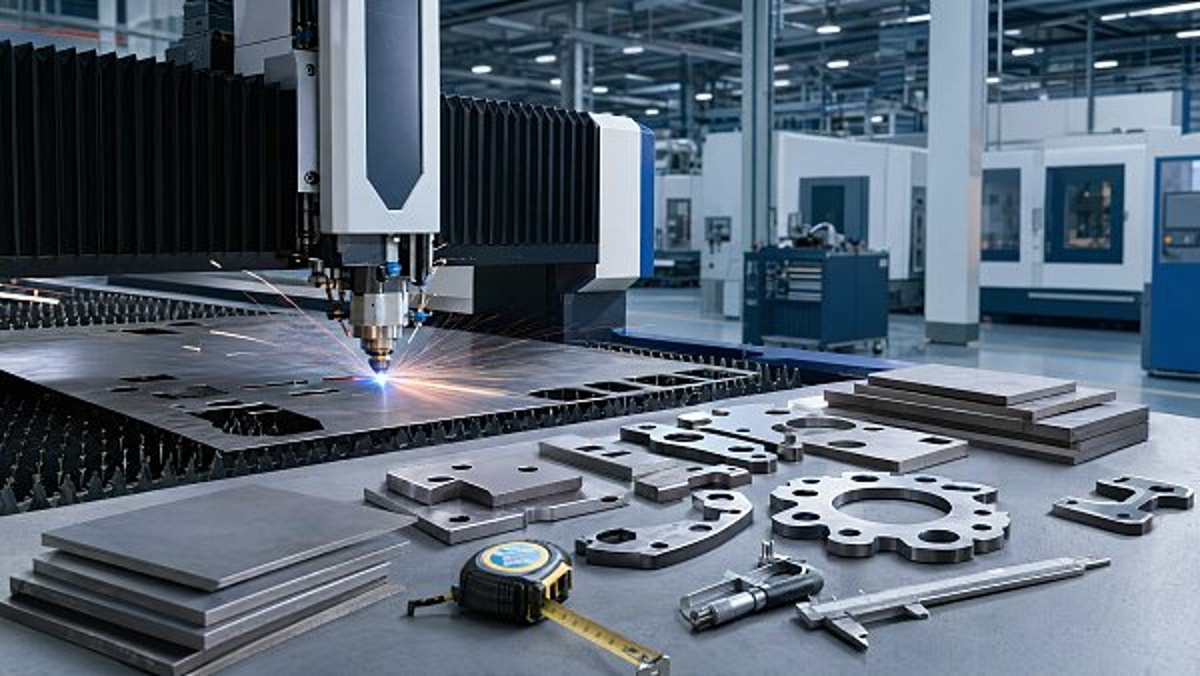
Many buyers expect laser cutting services to be priced like a commodity: same drawing, same metal, similar thickness, similar quote. In practice, that assumption often fails. Two suppliers may review the same RFQ and still arrive at noticeably different pricing because they are not costing the same production reality. One may optimize for throughput on standard 1.0 mm to 6.0 mm sheet, while another may anticipate extra handling, secondary deburring, or low machine utilization caused by the part geometry.
For procurement teams working across advanced manufacturing, smart electronics enclosures, healthcare device brackets, green energy components, or warehouse automation hardware, quote variability matters because it affects landed cost, supplier risk, and delivery confidence. The cheapest number is not always the lowest total cost. A quote that looks 8% lower can become more expensive after scrap, rework, expediting, or inspection delays are added.
Another reason for variation is quoting maturity. Some suppliers quote only visible inputs such as sheet price and estimated cutting minutes. Others build in a fuller model that includes nesting efficiency, consumables, programming time, material certification handling, inspection labor, and packaging requirements. When buyers compare laser cutting services without normalizing these assumptions, the comparison is uneven from the start.
At TradeNexus Pro, this is exactly where structured market intelligence helps. Procurement leaders do not just need supplier lists. They need a way to decode what a quote includes, what it omits, and which variables are likely to change after PO release. That distinction is especially important when sourcing across multiple regions, where labor rates, raw material access, lead-time buffers, and production standards can differ within a 2–4 week planning window.
The hidden layers behind a unit price
Laser cutting services are affected by more than machine hourly rate. Buyers should expect price movement when any of the following change: material grade, thickness range, edge quality expectations, hole-to-thickness ratio, tolerance stack-up, quantity breaks, or revision frequency. Even minor drawing changes can alter nesting yield and setup burden enough to shift pricing by a meaningful margin.
- Material utilization: A supplier quoting from full-sheet nesting may achieve very different yield than one using remnant stock or smaller-format sheets.
- Programming complexity: Fine features, dense perforation patterns, and frequent pierces increase engineering time before cutting begins.
- Post-processing burden: Deburring, tapping, bending coordination, powder coating preparation, and labeled packaging all add labor and queue time.
- Commercial risk: Short lead times, volatile materials, and uncertain forecast volumes may be priced with contingency.
This means a buyer evaluating laser cutting services should look beyond piece price and ask: what assumptions are embedded, what capacities are constrained, and what downstream processes are included? Those questions often explain the largest quote gaps.
Which cost drivers matter most when procurement compares suppliers?
The most reliable way to compare laser cutting services is to break the quote into a few operational cost buckets. This makes supplier pricing more transparent and prevents hidden differences from being mistaken for margin padding. In most RFQ reviews, 5 core drivers shape the majority of quote variation: material input, cut time, setup and programming, secondary processing, and delivery commitment.
The table below provides a practical procurement view of where price divergence usually comes from. It is especially useful when sourcing mixed-part batches, engineering prototypes, or production runs that may range from tens of pieces to several thousand units.
A structured review like this helps buyers avoid a common mistake: comparing one supplier’s fully burdened turnkey quote with another supplier’s cut-only quote. When laser cutting services are evaluated line by line, the quote spread usually becomes easier to explain and easier to negotiate.
How part design changes quote economics
Procurement often inherits drawings without seeing how strongly design details influence manufacturing cost. Small holes in thick material, tight inside radii, high edge-count geometries, and cosmetic-facing surfaces can slow cycle time or trigger secondary work. A part cut from 3.0 mm stainless steel with generous tolerances may price very differently from a visually similar part requiring cleaner edges and tighter dimensional control.
In practical terms, 3 design factors deserve early review: tolerance strategy, feature density, and post-cut functionality. If only 2 dimensions drive assembly fit, not every edge needs the same tolerance. If a bracket will be hidden inside an enclosure, premium cosmetic finishing may not be necessary. Procurement can often lower total quote value by aligning engineering intent with manufacturing reality rather than asking every supplier to guess the requirement.
Questions buyers should send with the RFQ
- Which dimensions are critical to function, and what tolerance band is actually required, such as ±0.1 mm or ±0.5 mm?
- Is edge burr level acceptable as-cut, or is mechanical deburring required before assembly?
- Will the supplier be responsible only for cutting, or also for tapping, forming, labeling, and kitting?
- Does the quoted volume represent a prototype batch of 10–50 pieces, a pilot batch of 100–500, or repeat production above 1,000?
These clarifications reduce quote variance and shorten the back-and-forth that slows sourcing decisions. They also help laser cutting services suppliers commit to realistic lead times rather than defensive estimates.
How should buyers compare laser cutting services beyond the price tag?
A smart sourcing decision balances cost, delivery, quality, and resilience. In sectors such as healthcare technology and smart electronics, a supplier that meets dimensional consistency and document control requirements may create more value than a lower-cost option with limited traceability. In green energy or advanced manufacturing, capacity stability and sheet stock availability may matter just as much as cut rate.
The comparison table below is useful when procurement teams shortlist 2–4 laser cutting services vendors. It shifts the decision from “Who quoted lowest?” to “Who best fits the commercial and operational risk profile of this project?”
For procurement, this matrix is especially helpful in cross-border sourcing. A quote can be competitive on paper but still expose the business to schedule instability, customs delays, communication gaps, or weak engineering support. TradeNexus Pro helps decision-makers surface those less visible risks by focusing on supplier capability context, not just the initial price point.
A 4-step normalization method for RFQ evaluation
- Standardize the RFQ package. Include drawing revision, material callout, finish requirement, batch size, and delivery window.
- Separate one-time and recurring charges. Programming or fixturing should not distort long-run piece price.
- Clarify in-scope operations. Cutting, deburring, tapping, forming, and packaging should each be visible.
- Score commercial risk. Evaluate lead-time credibility, revision responsiveness, and quality communication alongside cost.
Using a normalization method like this usually improves quote accuracy and reduces award-cycle delays. It also creates better leverage in negotiations because procurement can challenge assumptions with specifics rather than general price pressure.
What common sourcing mistakes make laser cutting services seem overpriced?
In many organizations, the problem is not that laser cutting services are overpriced. It is that the RFQ package is incomplete, inconsistent, or commercially misaligned. When buyers request “best price and fastest lead time” without confirming tolerances, finish level, or shipment configuration, suppliers compensate by adding uncertainty buffers. Those buffers can widen quote spreads significantly.
Another common issue is using annualized volume assumptions for a project that will actually release in uneven monthly batches. A supplier pricing 5,000 units as one production run may appear much cheaper than a supplier who assumes ten releases of 500 each. Both quotes can be reasonable, but they describe different operating models.
Procurement teams also underestimate the cost of quality transitions. If a supplier receives limited feedback on burr levels, flatness expectations, or packaging damage criteria, first articles may require one or two correction loops. That adds days, not just dollars. In fast-moving sectors, even a 3–7 day slip can outweigh a small quote advantage.
Typical misconceptions to avoid
- “Same material means same price.” In reality, sheet format, certification, and market availability change purchasing cost.
- “Low quantity only changes total spend.” Small lots often carry a much higher per-part setup burden.
- “Lead time is just logistics.” Short lead times may force schedule reshuffling, overtime, or premium material sourcing.
- “All suppliers inspect the same way.” Some inspect key dimensions only, while others include first-article documentation or staged in-process checks.
FAQ for procurement teams reviewing laser cutting services
The questions below address real sourcing concerns that often arise when comparing quotes, validating scope, or planning volume transitions.
How many quotes should a buyer collect?
For most projects, 3 qualified quotes are enough to identify the market range if the RFQ package is consistent. More than 4 or 5 quotes can create noise unless the project spans different regions, materials, or process scopes. The priority is quote comparability, not quote quantity.
What is a normal lead time for laser cutting services?
Typical lead times vary by complexity and secondary operations. Simple cut-only parts may move in 5–10 business days, while orders requiring deburring, forming, or coating may run 7–15 business days or longer. Buyers should always distinguish standard lead time from expedited lead time.
When should procurement ask for design-for-manufacture feedback?
Ask for it before final quote award, especially for prototypes, cosmetic parts, or assemblies with tight fit requirements. A short DFM review can identify cost-saving changes in hole size, corner radius, tab placement, or tolerance allocation before those issues become repeated production costs.
Is the lowest quote ever the right choice?
Sometimes yes, but only when the scope, inspection standard, material source, and delivery promise have been normalized. If the lowest quote excludes finishing, assumes a looser tolerance, or carries a fragile lead-time commitment, the apparent savings may disappear quickly.
How TradeNexus Pro helps buyers source laser cutting services with more confidence
Procurement leaders do not need more noise. They need sharper decision support. TradeNexus Pro is built for exactly that requirement across advanced manufacturing, green energy, smart electronics, healthcare technology, and supply chain software-linked procurement workflows. Our approach emphasizes deep sector context, supplier capability intelligence, and practical sourcing interpretation rather than generic marketplace volume.
When evaluating laser cutting services, buyers often need help in 6 concrete areas: parameter confirmation, quote normalization, supplier comparison, lead-time planning, compliance alignment, and custom sourcing strategy. That is especially valuable when projects involve multi-process parts, cross-border suppliers, or fast-moving engineering revisions.
We support smarter commercial discussions by helping teams clarify what should be asked before a PO is issued. That includes material and thickness confirmation, tolerance prioritization, finish scope, batch strategy, inspection expectations, sample needs, and delivery window logic. In many sourcing cycles, better upstream clarification is the fastest path to better pricing.
Why choose us
TradeNexus Pro connects procurement professionals with decision-grade industry insight, not shallow directory listings. If you are reviewing laser cutting services for prototype runs, repeat production, or multi-supplier benchmarking, we can help you frame the right comparison criteria and reduce hidden sourcing risk.
- Need support confirming part parameters? We can help structure the RFQ around thickness, tolerances, finish, and secondary processes.
- Need supplier selection guidance? We can help compare quotes based on scope, lead time, capability fit, and operational risk.
- Need delivery planning insight? We can help assess standard versus expedited timelines and identify where schedule assumptions affect price.
- Need custom sourcing support? We can help map requirements for samples, low-volume pilots, repeat releases, and compliance-sensitive applications.
If your team is comparing laser cutting services and wants clearer visibility into cost drivers, quote gaps, supplier fit, or timeline risk, contact TradeNexus Pro for a more structured sourcing conversation. The right discussion can cover parameter confirmation, volume strategy, certification expectations, sample support, and quotation alignment before commercial issues become production problems.
Get weekly intelligence in your inbox.
No noise. No sponsored content. Pure intelligence.
 May 01, 2026Beijing’s New E-Bike Rules Trigger Dual-Certification Demand for China’s Swappable Battery CabinetsBeijing’s New E-Bike Rules Trigger Dual-Certification Demand for China’s Swappable Battery Cabinets
 May 01, 2026GNA’s GEO Service Assessment Elevates AI Search as Digital Procurement Metric for Chinese ExportersGNA’s GEO Service Assessment Elevates AI Search as Digital Procurement Metric for Chinese Exporters
 May 01, 20262026 China Cycle Expo: Chinese EPS Systems Achieve UL 2849:2026 Full Certification2026 China Cycle Expo: Chinese EPS Systems Achieve UL 2849:2026 Full Certification
 May 01, 2026GB 42236-2026 Enforces EV Charger Efficiency & Overload Protection from May 2026GB 42236-2026 Enforces EV Charger Efficiency & Overload Protection from May 2026
 May 01, 2026GB/T 43790-2026 Drone EMC Standard Effective May 2026GB/T 43790-2026 Drone EMC Standard Effective May 2026
 May 01, 20262026 Foshan Tanzhou Auto Industry Expo Opens2026 Foshan Tanzhou Auto Industry Expo Opens
 May 01, 2026China’s New Hazardous Chemicals Safety Law Takes Effect May 2026China’s New Hazardous Chemicals Safety Law Takes Effect May 2026
 May 01, 2026New Maritime and Fisheries Laws Take Effect May 1, 2026New Maritime and Fisheries Laws Take Effect May 1, 2026
 May 01, 2026Supply Chain Automation Works Best Where Delays RepeatSupply Chain Automation Works Best Where Delays Repeat
 May 01, 2026High Strength Steel Forgings: What Should Be Tested First?High Strength Steel Forgings: What Should Be Tested First?
 May 01, 2026Automotive Steel Forging: Cost Pressure vs Part ReliabilityAutomotive Steel Forging: Cost Pressure vs Part Reliability
 May 01, 2026Why High Durability Steel Forgings Fail Earlier Than ExpectedWhy High Durability Steel Forgings Fail Earlier Than Expected
 May 01, 2026Construction Aluminum Extrusions: Which Finish Lasts Longer?Construction Aluminum Extrusions: Which Finish Lasts Longer?
 May 01, 2026Lightweight Aluminum Extrusions: Where Savings Really HappenLightweight Aluminum Extrusions: Where Savings Really Happen
 May 01, 2026Aerospace Aluminum Extrusions Need More Than Low WeightAerospace Aluminum Extrusions Need More Than Low Weight
 May 01, 2026Precision Lathe Turning Problems That Show Up After AssemblyPrecision Lathe Turning Problems That Show Up After Assembly
 May 01, 2026High Precision Lathe Turning: Tolerance Claims to VerifyHigh Precision Lathe Turning: Tolerance Claims to Verify
 May 01, 2026When CNC Lathe Turning Is Better Than General MachiningWhen CNC Lathe Turning Is Better Than General Machining
 May 01, 2026Medical Device Prototyping Needs More Than SpeedMedical Device Prototyping Needs More Than Speed
 May 01, 20263D Printing Prototyping: Fast Turnaround or Better Finish?3D Printing Prototyping: Fast Turnaround or Better Finish?
 May 01, 2026Low Cost Rapid Prototyping: Where Quality Gets LostLow Cost Rapid Prototyping: Where Quality Gets Lost
 May 01, 2026Quick EV Charger Installation Still Needs Site ChecksQuick EV Charger Installation Still Needs Site Checks
 May 01, 2026Public Parking EV Chargers: What Slows Installation DownPublic Parking EV Chargers: What Slows Installation Down
 May 01, 2026Choosing a Lithium Ion Battery Manufacturer in ChinaChoosing a Lithium Ion Battery Manufacturer in China
 May 01, 2026How to Vet a Lithium Ion Battery OEM SupplierHow to Vet a Lithium Ion Battery OEM Supplier
 May 01, 2026EV Lithium Ion Batteries: Range Is Not the Only MetricEV Lithium Ion Batteries: Range Is Not the Only Metric
 May 01, 2026Lithium Ion ESS Batteries: Safety Details Worth CheckingLithium Ion ESS Batteries: Safety Details Worth Checking