Why Reach Trucks Wholesale Pricing Varies So Much
Why do reach trucks wholesale quotes differ so dramatically from one supplier to another? For procurement teams, operators, technical evaluators, and finance approvers, the answer goes far beyond unit price. From OEM sourcing standards and component quality to logistics, certification, customization, and after-sales risk, this article breaks down the real cost drivers behind wholesale pricing so buyers can compare offers with greater confidence and strategic clarity.
In B2B material handling procurement, a low quote can look attractive during the first round of comparison, yet become expensive once downtime, spare parts lead time, battery performance, and site adaptation are included. Reach trucks are capital assets used in high-density warehousing, manufacturing plants, distribution centers, and cold chain operations, so wholesale pricing often reflects much more than the chassis and mast.
For buyers evaluating global supply options, the practical question is not simply “Which supplier is cheapest?” but “Which quote delivers the best operational value over 3 to 7 years?” That shift in perspective helps operators, project managers, distributors, and financial approvers assess the true economics behind reach truck wholesale pricing.
What Wholesale Reach Truck Pricing Actually Includes
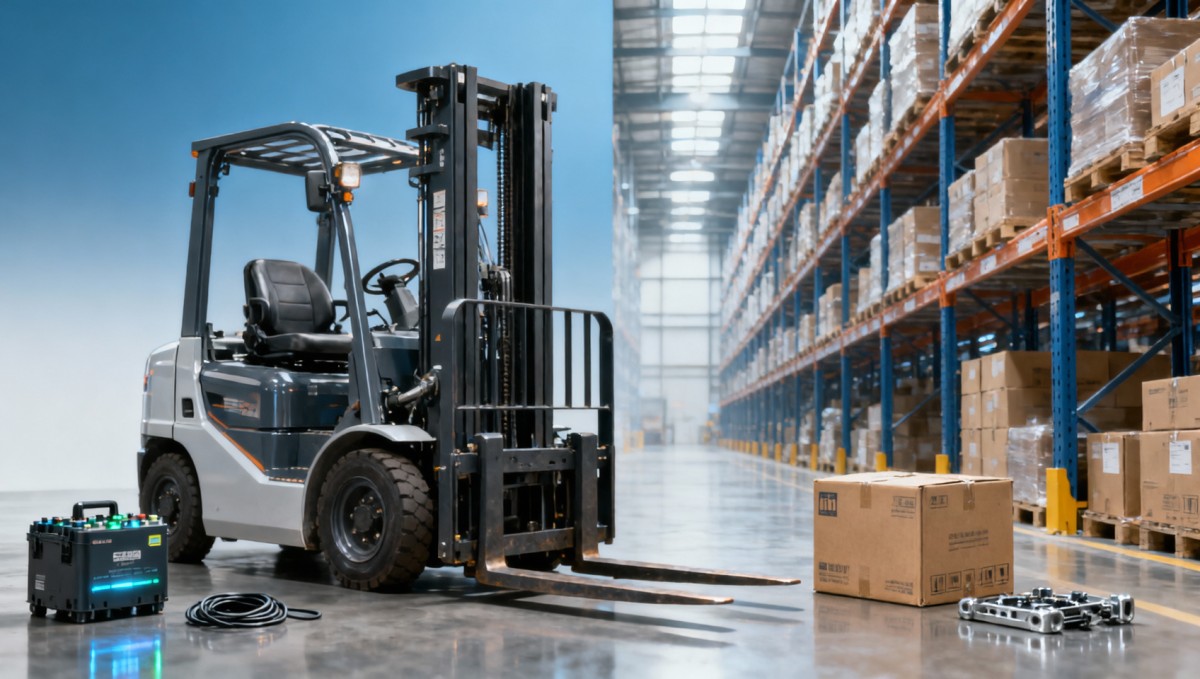
A wholesale quote can cover very different scopes depending on the supplier. One vendor may price only the standard truck body, while another includes battery, charger, side shift, telematics, operator display upgrades, and export packaging. On paper, the first quote may appear 12% to 25% lower, but the total delivered cost can end up higher after add-ons are applied.
In most procurement cycles, reach truck wholesale pricing is shaped by 5 core layers: base vehicle specification, power system, mast and load handling options, compliance or documentation, and after-sales support terms. When one of these layers is missing from the quote, comparison becomes distorted and approval risk increases.
This is especially relevant for operations with lift heights of 6 to 12 meters, load capacities from 1.4 to 2.5 tons, and multi-shift usage of 8 to 16 hours per day. A unit configured for light warehouse use will not cost the same as one intended for continuous industrial duty, even if both are described simply as reach trucks.
Common items hidden behind the same product name
Two suppliers may both offer a “1.8-ton electric reach truck,” yet one uses a higher-grade controller, stronger mast channels, thicker fork carriage steel, and imported bearings. The other may use more price-sensitive components intended for moderate duty cycles. For distributors and technical teams, these differences directly affect stability, maintenance intervals, and resale confidence.
Battery type alone can create major price variation. Lead-acid systems often reduce entry price, while lithium-ion options increase initial cost but can improve charging flexibility, reduce watering needs, and support opportunity charging. In some tenders, the battery package changes the final quote by 15% to 30%.
Key quote elements buyers should isolate
- Truck body specification: rated load, lift height, turning radius, aisle suitability, and drive motor output.
- Battery and charger package: chemistry, voltage, amp-hour rating, charging time, and replacement expectations.
- Attachments and mast options: side shift, fork positioning, camera systems, cold storage package, or height-limit features.
- Documentation and compliance: manuals, parts lists, testing records, and destination-market conformity requirements.
- Warranty and service scope: parts-only warranty, labor support, remote diagnostics, and spare parts availability within 48 to 72 hours.
The table below shows why two wholesale quotations can look similar at first glance yet represent very different commercial realities.
The key takeaway is simple: wholesale pricing varies because suppliers are not always quoting the same scope. Serious buyers should request a line-by-line commercial breakdown before comparing any offer purely on unit price.
How Manufacturing Quality and Component Sourcing Change the Price
A reach truck’s wholesale price is heavily influenced by how it is built and where core components come from. Structural steel grade, mast welding consistency, controller brand, hydraulic sealing quality, drive wheel material, and electronic harness protection all affect reliability. These differences may not be obvious in catalog images, but they become visible after 1,000 to 2,500 operating hours.
OEMs that follow tighter incoming inspection procedures, documented torque control, and multi-stage load testing typically carry higher production costs. For procurement teams, that can mean a 10% to 20% price premium upfront. However, for fleets operating in narrow aisles or high-bay storage, better build quality can lower service disruption and reduce accidental damage costs.
Suppliers also differ in their sourcing strategies. Some use globally recognized electrical or hydraulic components, while others depend on lower-cost local substitutions. This does not automatically mean local components are unsuitable, but it does require verification of duty cycle, replacement availability, and compatibility with the target operating environment.
Why technical teams ask deeper specification questions
Technical evaluators and safety managers usually look beyond brochure-level parameters. They want to know the mast deflection behavior at full height, the braking response under rated load, the degree of protection for electrical systems, and the thermal performance during continuous operation. These details affect whether the truck is suitable for 1 shift, 2 shifts, or peak-season 24-hour logistics cycles.
For project managers fitting trucks into new facilities, small differences also matter. A reduced turning radius, a tighter overall width, or improved battery side extraction can change warehouse throughput. In many warehouse designs, saving even 100 to 150 mm in operational clearance can improve aisle efficiency enough to justify a higher purchase price.
Questions that reveal quality differences
- What testing is performed before shipment: no-load, rated-load, lift stability, braking, and travel test?
- How many operating hours is the drive system intended to support between major service intervals?
- Which components are standardized and which may vary by batch or market?
- Are spare wear parts available locally or through export dispatch within 7 to 14 days?
The next comparison table helps illustrate how build choices influence price and procurement risk.
For distributors and enterprise buyers, the lesson is not that higher price always means better value. It means pricing often reflects measurable differences in component life, operating precision, and serviceability, which should be validated before negotiation moves to final approval.
Logistics, Compliance, and Customization Are Major Price Drivers
Global wholesale pricing often changes after the equipment leaves the factory. Packaging method, export crating, battery shipping classification, ocean freight volatility, inland delivery, destination customs handling, and insurance can significantly affect landed cost. A reach truck ordered for one port may cost materially more when routed to an inland industrial zone with extra transshipment steps.
Lead time is another hidden variable. Standard configurations may ship in 2 to 5 weeks, while customized mast heights, freezer-ready packages, special fork dimensions, or non-standard chargers may extend production to 6 to 10 weeks. If a project launch depends on a strict deadline, expedited manufacturing or alternative freight can raise the final quote.
Compliance adds further cost. Different markets may require translated manuals, safety labels, electrical compatibility, specific inspection documentation, or market-entry certification processes. Even when the truck base model is identical, the documentation and preparation package can alter the wholesale price enough to affect finance approval.
Typical customization requests that change wholesale offers
In real B2B transactions, customization is common rather than exceptional. Buyers may ask for lower overhead guard dimensions, camera systems for lifts above 8 meters, fork length adjustments, blue safety lights, speed limit settings, telematics access control, or cold-store adaptations for temperatures below 0°C. Each option changes sourcing, assembly, validation, or documentation workload.
For warehouse operators, these options may be operationally necessary, not luxury upgrades. A truck that fits the site and safety process from day one can reduce commissioning friction, training errors, and retrofit expense. That is why a higher quote may still offer stronger project economics.
Three areas where landed cost often surprises buyers
- Battery transport and dangerous goods handling can add cost and documentation complexity, especially for certain lithium configurations.
- Destination compliance preparation may require extra labels, local voltage adaptation, or inspection support before handover.
- Custom accessories can lengthen lead time by 2 to 4 weeks and trigger partial re-engineering or separate packing charges.
A practical way to evaluate offers is to split pricing into factory price, export-ready price, and landed operational price. That approach gives finance and procurement teams a clearer decision basis than comparing ex-works numbers alone.
After-Sales Risk, Warranty Terms, and Total Cost of Ownership
The largest pricing gap often appears not in the equipment itself, but in the support model behind it. Some wholesale suppliers focus on shipment volume and provide only limited post-sale engagement. Others include remote diagnostics, spare parts planning, commissioning guidance, operator training support, and structured warranty response. For enterprise buyers, that difference can determine whether a fleet remains productive or becomes a maintenance burden.
A lower-cost unit that sits idle for 5 to 10 days waiting for parts may cost more than a higher-priced truck backed by faster service response. In sectors such as advanced manufacturing, healthcare logistics, and e-commerce distribution, equipment downtime can disrupt receiving, replenishment, and order dispatch within hours. That operational risk should be priced into the procurement decision.
Total cost of ownership usually includes acquisition price, energy consumption, routine maintenance, tire and wheel wear, battery replacement planning, repair frequency, and residual value. For a 3-year to 5-year ownership window, even a 6% to 10% improvement in uptime can outweigh an apparently cheaper purchase quote.
How commercial teams should evaluate support commitments
Business evaluators and finance approvers should ask whether warranty covers key electrical assemblies, hydraulic systems, mast structures, and wearable parts under defined conditions. They should also confirm response times, claims procedures, and the practical meaning of “technical support.” A vague warranty statement has far less value than a shorter but well-defined support commitment.
Distributors and resellers should go one step further. They need service manuals, parts coding consistency, and predictable replenishment cycles. Without those, margin can be lost in post-sale troubleshooting, even when the original wholesale acquisition price looked competitive.
Useful TCO checkpoints before approval
- Estimate yearly usage hours, such as 1,500, 2,000, or 3,000 hours, because maintenance economics shift quickly across these ranges.
- Define the acceptable downtime threshold, for example less than 24 hours for critical sites or less than 72 hours for non-critical operations.
- Model battery replacement timing and charging infrastructure needs over the planned ownership cycle.
- Review spare parts lead times and whether local stocking is available for top-wear items.
When wholesale pricing varies, after-sales risk is often the reason. Buyers who include service quality in the comparison process are more likely to avoid false savings and secure sustainable fleet performance.
A Practical Framework for Comparing Reach Truck Wholesale Quotes
The most effective way to compare offers is to score them across a structured matrix rather than ranking by unit price alone. Procurement, technical, operational, and financial stakeholders often care about different metrics, so a shared evaluation framework helps prevent late-stage disagreement. In many companies, a 4-part review model works well: technical fit, commercial clarity, operational support, and risk exposure.
For example, a supplier may offer a price that is 8% lower but require longer lead times, weaker documentation, or uncertain spare parts access. Another supplier may be slightly higher in price yet better aligned with site conditions, delivery schedule, and maintenance planning. A weighted comparison makes those trade-offs visible.
This matters even more for cross-border sourcing. Different Incoterms, payment milestones, and acceptance criteria can distort price perception. A clear framework allows enterprise decision-makers to justify why a quote was selected based on operational logic rather than headline cost.
Recommended quote comparison model
The table below provides a practical evaluation structure that purchasing teams, quality managers, and finance approvers can adapt for tenders or supplier shortlists.
Using this type of matrix, buyers can assign weighted scores such as 30% for technical fit, 25% for delivered cost, 20% for support, and 25% for risk and compliance. The percentages can be adjusted, but the principle remains the same: compare value, not just quote totals.
Final procurement checklist
- Request a complete bill of included items and optional exclusions before negotiation.
- Confirm whether the quote is ex-works, FOB, CIF, or another trade basis affecting landed cost.
- Verify operating environment: ambient temperature, floor condition, racking height, and daily shift intensity.
- Ask for maintenance recommendations at 250-hour, 500-hour, or similar service intervals.
- Check if the supplier can support distributor service teams or end-user commissioning remotely.
Reach truck wholesale pricing varies so much because suppliers are rarely offering the same configuration, quality level, support scope, and risk profile. Buyers who evaluate battery systems, mast design, component sourcing, logistics, customization, compliance, and after-sales support together will make more reliable decisions than those who compare only the headline number.
For procurement teams, technical reviewers, distributors, and enterprise decision-makers, the best quote is the one that matches warehouse reality, protects uptime, and stays commercially transparent from factory to full operation. If you are assessing global suppliers or preparing a sourcing shortlist, TradeNexus Pro can help you explore deeper market intelligence, compare supplier positioning, and identify procurement signals that reduce hidden cost exposure.
Contact us to discuss your sourcing priorities, request a tailored comparison framework, or learn more solutions for data-driven material handling procurement.
Get weekly intelligence in your inbox.
No noise. No sponsored content. Pure intelligence.
 Apr 18, 2026TradeNexus Pro Launches Global Compliance RadarTradeNexus Pro Launches Global Compliance Radar
 Apr 18, 2026JIS T 2304:2026 Takes Effect June 1, 2026 for IVD SoftwareJIS T 2304:2026 Takes Effect June 1, 2026 for IVD Software
 Pathway for Rehab Devices with AI Modules") Apr 18, 2026FDA Updates 510(k) Pathway for Rehab Devices with AI ModulesFDA Updates 510(k) Pathway for Rehab Devices with AI Modules
Apr 18, 2026FDA Updates 510(k) Pathway for Rehab Devices with AI ModulesFDA Updates 510(k) Pathway for Rehab Devices with AI Modules Apr 18, 2026India BIS Approves 3 Chinese IoT Labs for IS 16444:2026 CertificationIndia BIS Approves 3 Chinese IoT Labs for IS 16444:2026 Certification
 Apr 18, 2026THE Alliance Launches Green Slot Priority for China PortsTHE Alliance Launches Green Slot Priority for China Ports
 Apr 18, 2026TÜV Rheinland Releases Dual-Standard ESS Certification Guide for ChinaTÜV Rheinland Releases Dual-Standard ESS Certification Guide for China
 Apr 18, 2026Vietnam Imposes AD Duties on Chinese Electronic ComponentsVietnam Imposes AD Duties on Chinese Electronic Components
 Apr 18, 2026SASO Launches PV Carbon Footprint Labeling from July 2026SASO Launches PV Carbon Footprint Labeling from July 2026
 Apr 18, 2026U.S. Adds 17 Smart Warehouse Robot Components to Export Control ListU.S. Adds 17 Smart Warehouse Robot Components to Export Control List
 Apr 18, 2026EU Enforces EN IEC 62443-4-2:2026 for Industrial Control Devices from 18 Apr 2026EU Enforces EN IEC 62443-4-2:2026 for Industrial Control Devices from 18 Apr 2026
 Apr 17, 2026Temperature data loggers drift unpredictably inside lithium-ion battery storage enclosuresTemperature data loggers drift unpredictably inside lithium-ion battery storage enclosures
 Apr 17, 2026Are solar microinverters really worth the extra cost?Are solar microinverters really worth the extra cost?
 Apr 17, 2026Bifacial solar panels: How much more energy can they generate?Bifacial solar panels: How much more energy can they generate?
 Apr 17, 2026Gear manufacturing: How to optimize production for high precision?Gear manufacturing: How to optimize production for high precision?
 Apr 17, 2026Why power transmission components fail earlier than expectedWhy power transmission components fail earlier than expected
 Apr 17, 2026Linear motion systems: belt drive or ball screw for speed?Linear motion systems: belt drive or ball screw for speed?
 Apr 17, 2026Industrial bearing suppliers: what signals reliable quality?Industrial bearing suppliers: what signals reliable quality?
 Apr 17, 2026When pneumatic valves wholesale gets expensive laterWhen pneumatic valves wholesale gets expensive later
 Apr 17, 2026Hydraulic cylinder fabrication mistakes that cause oil leaksHydraulic cylinder fabrication mistakes that cause oil leaks
 Apr 17, 2026Heavy equipment manufacturing delays often start hereHeavy equipment manufacturing delays often start here
 Apr 17, 2026Custom heatsinks: when a larger size solves nothingCustom heatsinks: when a larger size solves nothing
 Apr 17, 2026Electronic enclosure fabrication: steel or aluminum?Electronic enclosure fabrication: steel or aluminum?
 Apr 17, 2026Automotive parts machining tolerances that drive up scrapAutomotive parts machining tolerances that drive up scrap
 Apr 17, 2026Medical device manufacturing changes under tighter traceabilityMedical device manufacturing changes under tighter traceability
 Apr 17, 2026How to Choose Solid State Batteries in 2026How to Choose Solid State Batteries in 2026
 Apr 17, 2026Are Solid State Batteries Worth the Cost Yet?Are Solid State Batteries Worth the Cost Yet?
 Apr 17, 2026Commercial Energy Storage Sizing: What Matters Most?Commercial Energy Storage Sizing: What Matters Most?