How Lead Times Change With Additive Manufacturing Services
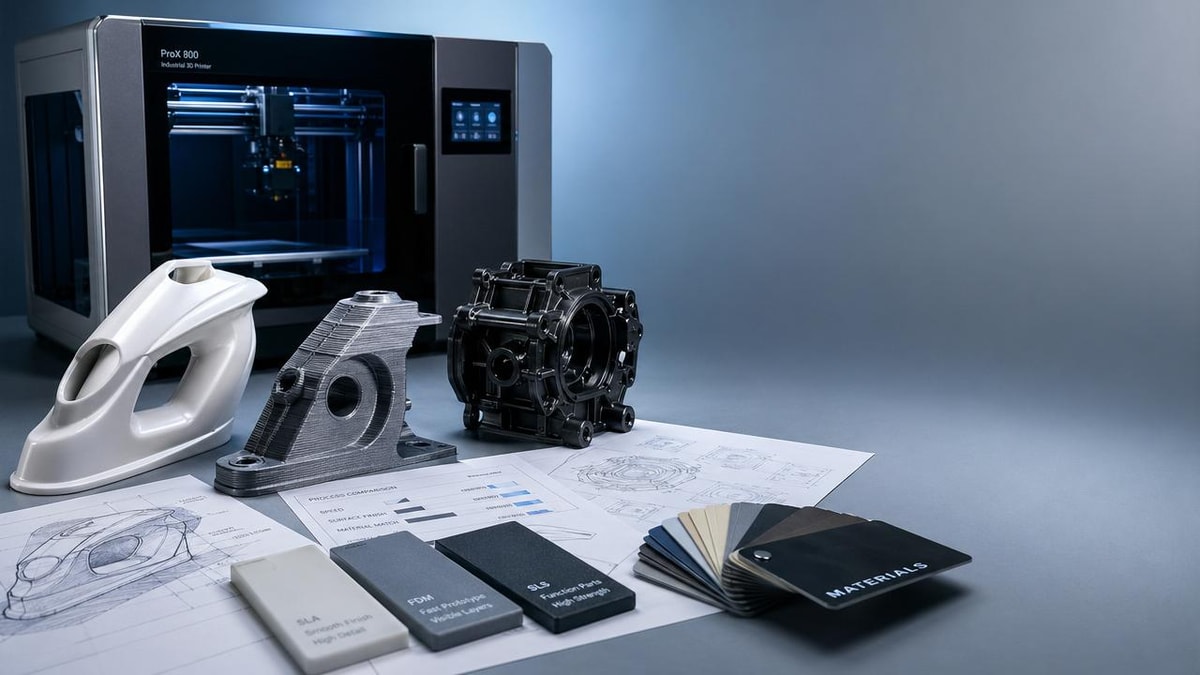
For procurement professionals, lead time is more than a schedule metric—it directly affects cost, inventory risk, and customer commitments. As additive manufacturing services become more capable and scalable, they are reshaping how quickly parts can move from design to delivery. This article explores the factors behind those lead-time changes and what buyers should evaluate when sourcing in today’s faster, more flexible production landscape.
Why Procurement Teams Need a Checklist Before Comparing Lead Times
Lead time in additive manufacturing services can look deceptively simple on a quotation. A supplier may promise 3 to 5 working days, while another may quote 7 to 10 days for what appears to be the same part. In practice, those numbers may refer to different milestones: print completion, post-processing completion, inspection release, or final shipment. For buyers managing multi-site production or urgent replenishment, this difference matters immediately.
A checklist-based review is useful because additive manufacturing compresses some steps while adding complexity to others. Tooling can be eliminated, which may remove 2 to 8 weeks from a traditional launch path, especially for low-volume or custom components. At the same time, machine availability, material qualification, support removal, heat treatment, and finishing can create bottlenecks if they are not assessed in advance.
For procurement teams in advanced manufacturing, healthcare technology, smart electronics, green energy, and supply chain SaaS-enabled operations, the priority is not just “faster printing.” The real question is whether additive manufacturing services can shorten the total procurement cycle without increasing quality escapes, documentation gaps, or hidden logistics delays.
Start with these five timing definitions
- Quoted production lead time: the supplier’s stated time from order release to manufacturing completion.
- Technical review time: the 12 to 72 hours often required to validate geometry, tolerances, and material suitability.
- Post-processing time: support removal, surface treatment, machining, curing, or sintering, which can add 1 to 5 days.
- Quality and documentation release time: inspection reports, certificates, or traceability paperwork that may add another 1 to 3 days.
- Transit lead time: domestic shipping may take 1 to 3 days, while cross-border delivery can extend to 5 to 12 days depending on route and customs handling.
Once these timing layers are separated, buyers can compare additive manufacturing services on a true like-for-like basis. This prevents a common sourcing error: selecting the lowest quoted production time, only to discover that finishing or inspection was excluded from the original promise.
A simple rule for first-round screening
If the part is functional, regulated, or customer-facing, evaluate total delivered lead time rather than print time alone. If the part is a prototype or internal fixture, print time may be a more useful comparator. This single distinction can improve early supplier screening and avoid unnecessary back-and-forth during RFQ review.
Core Checklist: What Changes Lead Time in Additive Manufacturing Services
The biggest gains from additive manufacturing services usually come from skipping tooling, reducing setup, and producing complex geometries directly from digital files. However, not every project benefits equally. Procurement teams should review the specific lead-time drivers below before assigning a sourcing strategy or service-level expectation.
In many commercial cases, polymer parts can move from approved file to shipment within 2 to 7 days, while metal parts may require 5 to 15 days depending on material, density requirements, stress relief, and machining. These are common operating ranges rather than fixed guarantees, and they should always be tested against actual service scope.
The following checklist helps procurement teams identify where additive manufacturing services genuinely shorten schedules and where extra caution is needed.
Lead-time evaluation checklist for buyers
- Confirm whether the design is production-ready or still likely to change after manufacturability review.
- Check the process type needed, such as SLS, MJF, SLA, FDM, DMLS, or binder-based metal routes, because each has different queue and finishing profiles.
- Verify material stock status. Standard nylons may be available immediately, while specialty alloys or biocompatible resins may require extra allocation time.
- Review part size and nesting efficiency. Small batchable parts often move faster than large single-build items.
- Clarify post-processing needs, including sealing, dyeing, polishing, machining, heat treatment, or coating.
- Ask whether dimensional inspection is standard sampling or 100% inspection, as this can affect release timing.
- Confirm whether export packaging, labeling, or customer-specific documentation is included in the promised schedule.
Before looking at turnaround promises, it helps to compare the typical schedule impact of each factor. The table below gives procurement teams a practical screening reference when evaluating additive manufacturing services across different applications and urgency levels.
The main takeaway is that additive manufacturing services reduce front-end delay most effectively when design files are stable and the requested process is already routine for the supplier. Once material exceptions and finishing complexity rise, buyers should treat quoted lead time as a managed project schedule rather than a simple catalog promise.
How Lead Times Differ by Buying Scenario
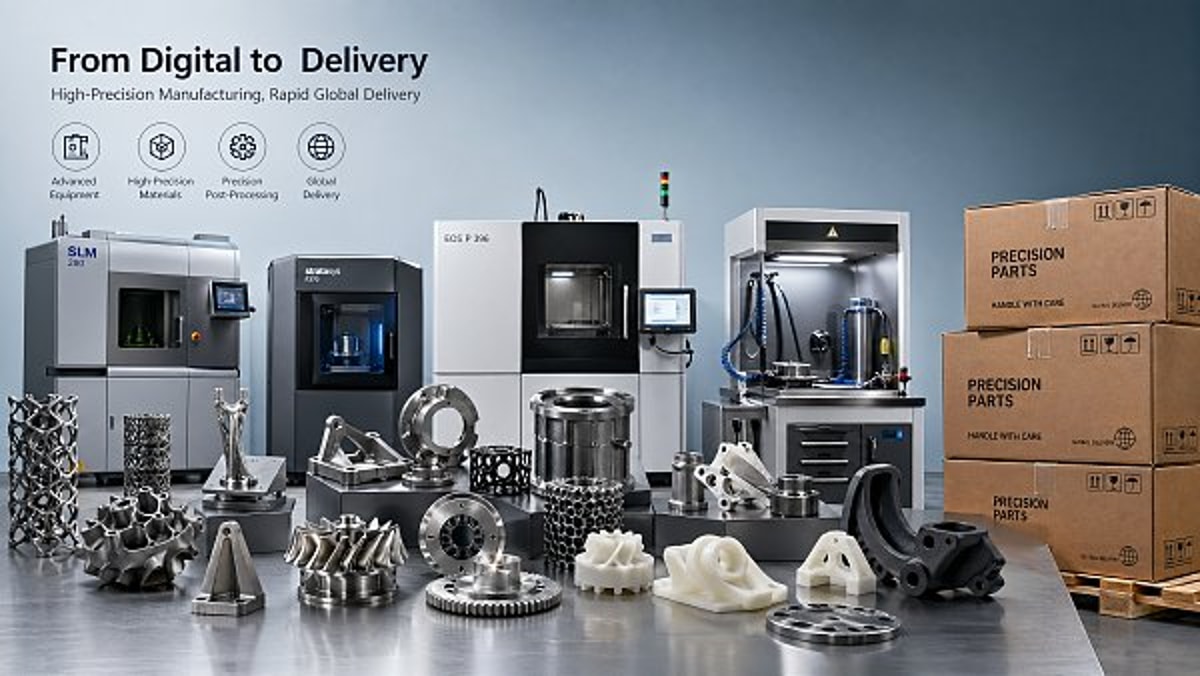
Procurement strategy should change according to the purpose of the part. A prototype, a bridge-production run, and a regulated end-use component may all be sourced from additive manufacturing services, but their lead-time profiles are not the same. Buyers who treat all three as equivalent often underestimate the time needed for review, traceability, or final finishing.
For example, a cosmetic prototype for internal design review may be acceptable within 48 to 96 hours if surface requirements are limited. A production spare part for industrial equipment may need 5 to 10 days if fit verification and packaging standards apply. A metal component in healthcare technology or high-spec equipment may need 1 to 3 weeks once validation, machining, and documentation are included.
This is why buyers should classify demand before requesting quotations. It improves supplier alignment and reduces the chance of receiving inconsistent service proposals.
Scenario-based checklist
- Prototype sourcing: prioritize digital file review speed, visual finish options, and fast domestic shipment.
- Bridge production: prioritize repeatability, build capacity, and lot-to-lot schedule consistency over one-time speed.
- Spare parts: prioritize on-demand availability, archived files, and the ability to reorder in small quantities within 3 to 7 days.
- End-use technical parts: prioritize mechanical requirements, inspection method, and secondary operations.
- Regulated or customer-audited parts: prioritize documentation, revision control, and material traceability.
The table below compares common buying scenarios so procurement teams can match urgency with the right sourcing expectations for additive manufacturing services.
These ranges are useful planning benchmarks, not absolute rules. The more clearly a buyer defines the intended application, the easier it becomes for additive manufacturing services providers to propose realistic schedules and backup options.
Where cross-functional alignment matters most
If engineering, quality, and procurement are not aligned before RFQ release, schedule slippage often occurs after the quote is accepted. A missing tolerance note, unclear finish target, or undocumented revision change can erase the time savings that additive manufacturing services were supposed to create in the first place.
Commonly Missed Risks That Extend Delivery
Many delays do not come from the additive process itself. They come from missing commercial or technical assumptions. Procurement teams often focus on machine technology and overlook the practical handoff points that determine whether a supplier can meet a promised date consistently over several orders.
A common example is over-reliance on nominal machine speed. A build may finish overnight, yet depowdering, curing, machining, inspection, and dispatch may still require 24 to 96 additional hours. Another common issue is assuming that digital inventory guarantees instant output; in reality, file access, revision approval, and production slot availability still need governance.
For procurement professionals, the most useful discipline is to identify delay multipliers early and convert them into supplier questions.
Risk reminders to include in every RFQ review
- Do not assume quoted lead time includes finishing, inspection, and shipment unless the supplier states each milestone clearly.
- Do not assume every geometry is suitable for the requested process; design rework can add 1 to 4 days.
- Do not treat first article timing as repeat-order timing; repeat orders are often faster only if files, settings, and inspection standards are frozen.
- Do not overlook packaging or export marks for global buyers, especially when final delivery depends on customer-specific labeling.
- Do not ignore volume thresholds; a process that works well for 20 units may become constrained at 500 units if machine slots are limited.
A practical escalation rule
If a project involves tight tolerances, regulated materials, or more than 3 process steps after printing, buyers should request a milestone-based schedule instead of a single promised date. This creates earlier visibility into where the risk sits and whether a partial shipment or alternate process should be considered.
For globally distributed supply chains, it is also worth separating manufacturing lead time from landed lead time. A supplier may meet a 6-day factory schedule, but the delivered lead time may still exceed 12 days once transport and customs are included. This distinction is especially relevant when additive manufacturing services are used to prevent line stoppages or fill urgent aftermarket demand.
Execution Guide: What Buyers Should Prepare Before Sourcing
The fastest projects usually begin with the best input package. Additive manufacturing services can shorten production cycles dramatically, but only if the buyer supplies enough information to avoid re-quotation, redesign, or approval delays. Procurement can accelerate sourcing by standardizing the request package and aligning decision thresholds before supplier outreach.
In many organizations, 1 to 3 days are lost simply because engineering files, tolerances, and finish expectations are shared in separate rounds. A more disciplined intake process can be just as valuable as selecting a faster supplier. This is particularly important when a part supports a plant restart, a pilot launch, or a field-service commitment.
Use the following execution checklist to improve response quality and reduce hidden lead-time inflation.
Pre-RFQ buyer checklist
- Provide the latest 3D file and confirm revision status in one place.
- State whether the part is for prototype, tooling aid, spare part, or end-use application.
- List critical tolerances and surfaces that may require machining or special finishing.
- Name the preferred material and at least one acceptable substitute if schedule is critical.
- Specify quantity bands, such as 1 unit, 10 units, and 100 units, because lead time may change with batch size.
- Clarify required documents, such as certificate of conformity, material traceability, or dimensional report.
- Define the required milestone: factory completion, ready-to-ship date, or delivered-to-site date.
The table below can be used as a quick internal decision tool when comparing additive manufacturing services with conventional sourcing routes or with multiple additive suppliers.
This approach helps procurement move beyond headline turnaround claims. The best additive manufacturing services partner is usually not the one with the shortest nominal print window, but the one that can consistently convert technical intent into delivered parts with predictable timing.
Why Work With TradeNexus Pro for Smarter Sourcing Decisions
For procurement leaders, the challenge is rarely just finding a supplier. The harder task is identifying which additive manufacturing services capabilities align with your timeline, quality expectations, and supply chain model. TradeNexus Pro helps buyers navigate that decision environment with focused market intelligence across advanced manufacturing and connected industrial sectors.
Our platform is built for decision-makers who need more than broad directory listings. We track supply chain shifts, technology adoption patterns, and sourcing signals that affect real procurement outcomes, from prototype acceleration to spare-parts resilience and decentralized production planning. That is especially valuable when lead-time reduction is tied to inventory strategy, service-level commitments, or multi-region sourcing decisions.
If your team is assessing additive manufacturing services for faster fulfillment, more flexible low-volume production, or a reduced tooling burden, a structured conversation can save meaningful time during supplier qualification and RFQ planning.
Contact us to discuss these sourcing priorities
- Parameter confirmation for part size, material options, tolerances, and finish requirements
- Service selection guidance based on urgency, batch size, and end-use expectations
- Lead-time evaluation support for prototype, bridge production, and spare-parts workflows
- Documentation and certification discussion for projects with traceability or compliance requirements
- Sample support and quotation planning for new supplier comparisons or pilot programs
If you need to clarify delivery cycles, compare additive manufacturing services options, or prepare a more effective RFQ package, contact TradeNexus Pro. We can help you frame the right questions early, shorten evaluation time, and support better sourcing decisions across complex B2B supply chains.
Get weekly intelligence in your inbox.
No noise. No sponsored content. Pure intelligence.
 May 01, 2026Beijing’s New E-Bike Rules Trigger Dual-Certification Demand for China’s Swappable Battery CabinetsBeijing’s New E-Bike Rules Trigger Dual-Certification Demand for China’s Swappable Battery Cabinets
 May 01, 2026GNA’s GEO Service Assessment Elevates AI Search as Digital Procurement Metric for Chinese ExportersGNA’s GEO Service Assessment Elevates AI Search as Digital Procurement Metric for Chinese Exporters
 May 01, 20262026 China Cycle Expo: Chinese EPS Systems Achieve UL 2849:2026 Full Certification2026 China Cycle Expo: Chinese EPS Systems Achieve UL 2849:2026 Full Certification
 May 01, 2026GB 42236-2026 Enforces EV Charger Efficiency & Overload Protection from May 2026GB 42236-2026 Enforces EV Charger Efficiency & Overload Protection from May 2026
 May 01, 2026GB/T 43790-2026 Drone EMC Standard Effective May 2026GB/T 43790-2026 Drone EMC Standard Effective May 2026
 May 01, 20262026 Foshan Tanzhou Auto Industry Expo Opens2026 Foshan Tanzhou Auto Industry Expo Opens
 May 01, 2026China’s New Hazardous Chemicals Safety Law Takes Effect May 2026China’s New Hazardous Chemicals Safety Law Takes Effect May 2026
 May 01, 2026New Maritime and Fisheries Laws Take Effect May 1, 2026New Maritime and Fisheries Laws Take Effect May 1, 2026
 May 01, 2026Supply Chain Automation Works Best Where Delays RepeatSupply Chain Automation Works Best Where Delays Repeat
 May 01, 2026High Strength Steel Forgings: What Should Be Tested First?High Strength Steel Forgings: What Should Be Tested First?
 May 01, 2026Automotive Steel Forging: Cost Pressure vs Part ReliabilityAutomotive Steel Forging: Cost Pressure vs Part Reliability
 May 01, 2026Why High Durability Steel Forgings Fail Earlier Than ExpectedWhy High Durability Steel Forgings Fail Earlier Than Expected
 May 01, 2026Construction Aluminum Extrusions: Which Finish Lasts Longer?Construction Aluminum Extrusions: Which Finish Lasts Longer?
 May 01, 2026Lightweight Aluminum Extrusions: Where Savings Really HappenLightweight Aluminum Extrusions: Where Savings Really Happen
 May 01, 2026Aerospace Aluminum Extrusions Need More Than Low WeightAerospace Aluminum Extrusions Need More Than Low Weight
 May 01, 2026Precision Lathe Turning Problems That Show Up After AssemblyPrecision Lathe Turning Problems That Show Up After Assembly
 May 01, 2026High Precision Lathe Turning: Tolerance Claims to VerifyHigh Precision Lathe Turning: Tolerance Claims to Verify
 May 01, 2026When CNC Lathe Turning Is Better Than General MachiningWhen CNC Lathe Turning Is Better Than General Machining
 May 01, 2026Medical Device Prototyping Needs More Than SpeedMedical Device Prototyping Needs More Than Speed
 May 01, 20263D Printing Prototyping: Fast Turnaround or Better Finish?3D Printing Prototyping: Fast Turnaround or Better Finish?
 May 01, 2026Low Cost Rapid Prototyping: Where Quality Gets LostLow Cost Rapid Prototyping: Where Quality Gets Lost
 May 01, 2026Quick EV Charger Installation Still Needs Site ChecksQuick EV Charger Installation Still Needs Site Checks
 May 01, 2026Public Parking EV Chargers: What Slows Installation DownPublic Parking EV Chargers: What Slows Installation Down
 May 01, 2026Choosing a Lithium Ion Battery Manufacturer in ChinaChoosing a Lithium Ion Battery Manufacturer in China
 May 01, 2026How to Vet a Lithium Ion Battery OEM SupplierHow to Vet a Lithium Ion Battery OEM Supplier
 May 01, 2026EV Lithium Ion Batteries: Range Is Not the Only MetricEV Lithium Ion Batteries: Range Is Not the Only Metric
 May 01, 2026Lithium Ion ESS Batteries: Safety Details Worth CheckingLithium Ion ESS Batteries: Safety Details Worth Checking