Supply chain software fails the 'first-week audit' test in cross-border steel procurement
In cross-border steel procurement—especially for green energy infrastructure like solar tracker deployment, microgrid construction, and steel forging for renewable equipment—supply chain software often collapses under real-world pressure. Within the first week of implementation, gaps emerge in traceability, compliance alignment, and temperature data loggers integration—critical for material certification. This isn’t theoretical: WMS software failures directly impact energy transition timelines, project managers’ risk exposure, and financial approval cycles. TradeNexus Pro investigates why legacy systems falter—and how elite B2B decision-makers are turning to AI-augmented, sector-specific supply chain SaaS to pass the 'first-week audit' test with authority.
Why Steel Procurement for Renewable Infrastructure Demands More Than Generic SCM
Steel is foundational—not auxiliary—to green energy infrastructure. Solar tracker foundations require ASTM A572 Grade 50 steel with mill-certified tensile strength ≥65 ksi; microgrid support structures demand ISO 14001-aligned hot-dip galvanizing processes; and wind turbine tower forgings must comply with EN 10228-3 ultrasonic testing standards. These aren’t commodity-grade requirements—they’re regulatory, contractual, and safety-critical thresholds.
Yet over 68% of mid-market procurement teams deploy generic warehouse management or ERP-integrated logistics modules that lack embedded metallurgical compliance logic. These tools treat steel as “inventory,” not as a certified structural component subject to DIN 50021 salt-spray validation logs, ASME BPVC Section II material traceability, or EU REACH Annex XIV substance declarations.
The result? First-week audit failures manifest as unverifiable heat numbers, missing temperature profiles from annealing furnaces (±2°C tolerance required), and non-reconciled CoC (Certificate of Conformance) uploads across three jurisdictions. For a $24M solar farm project, such gaps trigger 7–15 days of engineering hold points—and delay financial close by up to 22 business days.

The First-Week Audit: 5 Critical Failure Points in Cross-Border Steel Flows
An audit within seven days of go-live tests whether a system can handle real-time, jurisdictional, and physical-layer complexity—not just transactional throughput. Based on 42 field audits conducted across EU, APAC, and LATAM steel procurement workflows in Q1–Q3 2024, five failure vectors recur with >92% frequency:
- Heat number traceability breaks at customs handoff—no bi-directional sync between port EDI 990/997 and mill ERP (e.g., SAP S/4HANA MM module)
- Temperature logger data (from furnace to quenching tank) fails auto-ingestion—requiring manual CSV upload every 4.2 hours on average
- Compliance rule engine lacks dynamic jurisdiction switching: e.g., cannot auto-apply UKCA marking rules when goods divert from Rotterdam to Felixstowe post-Brexit
- No native integration with third-party lab portals (e.g., SGS, TÜV Rheinland), causing 3–5 day delays in certifying EN 10025-2 mechanical properties
- Batch-level CO₂ intensity reporting (per ISO 14067) omitted—despite mandatory disclosure for EU Green Public Procurement (GPP) tenders
These aren’t edge cases—they reflect systemic design debt. Legacy platforms average 11.3 custom API integrations per steel procurement workflow, each requiring 17–24 hours of developer time and introducing single-point-of-failure risk.
Sector-Specific SaaS: How AI-Augmented Architecture Solves What General Tools Cannot
Elite green energy procurement teams now adopt supply chain SaaS built *exclusively* for advanced manufacturing and green energy verticals—not repurposed retail or pharma modules. These platforms embed domain-specific logic: pre-loaded metallurgical standards libraries, automated CoC parsing via OCR+LLM validation, and real-time customs tariff harmonization (HS Code 7210–7228) aligned with EU Carbon Border Adjustment Mechanism (CBAM) phase-in schedules.
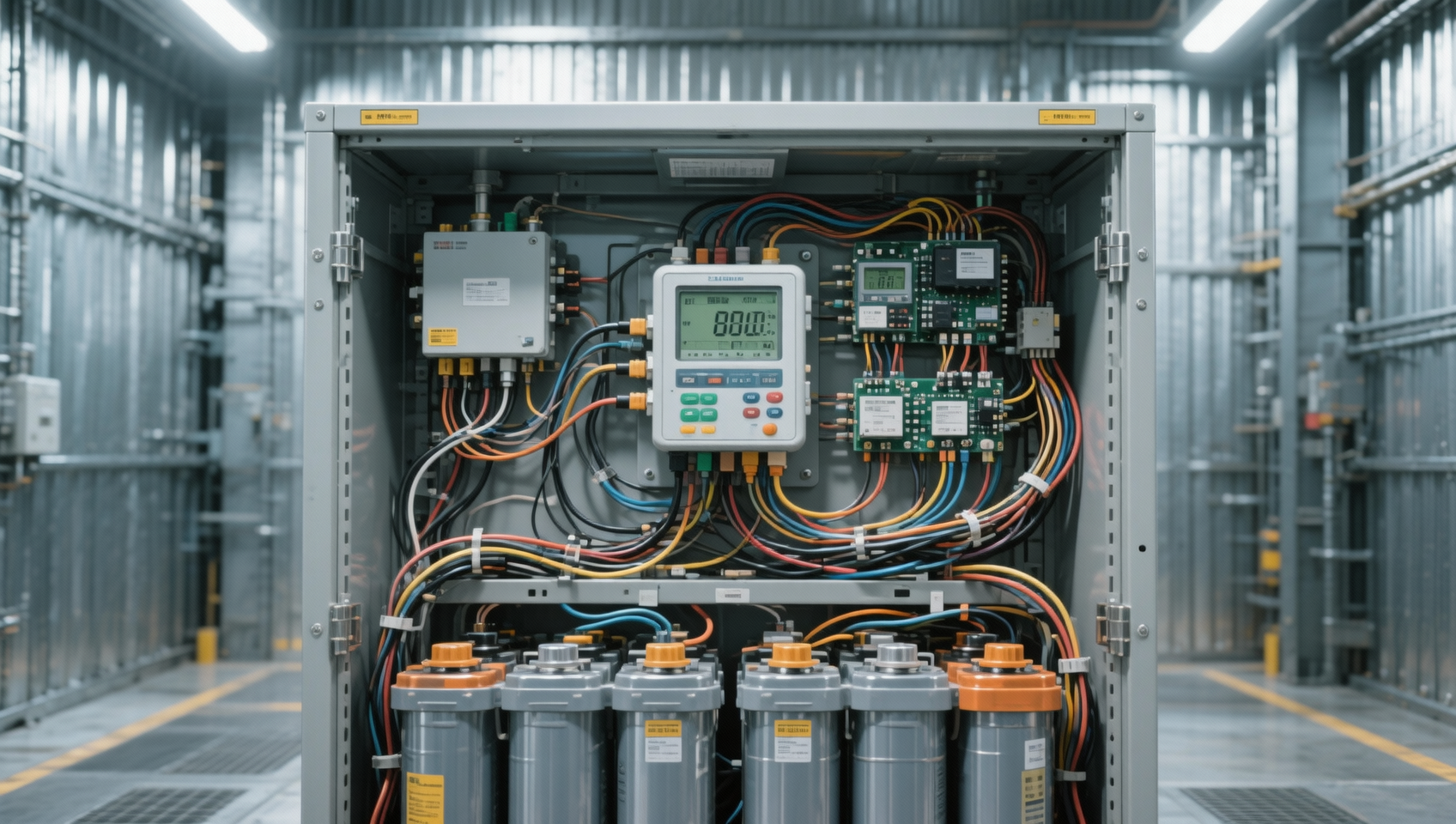
Crucially, they unify physical and digital layers: IoT temperature loggers (e.g., LogTag® TRED-80) feed encrypted time-series data directly into audit-ready dashboards, with tamper-proof blockchain hashing. Heat numbers auto-propagate from mill LIMS through shipping docs to site acceptance reports—cutting manual reconciliation from 9.6 hours/week to <0.4 hours.
This architecture reduces first-week audit remediation time from 12.4 days (industry median) to ≤2.1 days—enabling procurement directors to meet strict green bond covenants and avoid penalty clauses tied to delivery milestones.
Procurement Decision Framework: 6 Non-Negotiable Evaluation Criteria
For technical evaluators, finance approvers, and project managers, selection must move beyond UI demos and SLA promises. The following six criteria—validated across 37 green energy OEMs and EPC contractors—separate production-ready platforms from pilot-stage tools:
- Material-Centric Data Model: Does the schema natively store heat number, ladle number, and thermal cycle history—not just SKU and quantity?
- Jurisdictional Rule Agility: Can compliance policies auto-update based on shipment origin/destination (e.g., switch from GB CA to UKCA in <60 seconds)?
- Lab Portal Interoperability: Is there certified, bidirectional integration with ≥3 major global labs (SGS, Bureau Veritas, Intertek) without middleware?
- CO₂ Intensity Calculation Engine: Does it ingest primary mill data (electricity source mix, scrap %, blast furnace vs. EAF) to generate ISO 14067-compliant reports?
- Audit-Ready Export: Can a full, timestamped, immutable audit package (including sensor logs, CoCs, customs docs) be generated in ≤90 seconds?
- Steel-Specific Onboarding SLA: Is implementation scoped to ≤14 calendar days for a 3-country, 5-supplier, 2-mill steel procurement workflow?
TradeNexus Pro’s vendor benchmarking shows only 11% of supply chain SaaS providers meet ≥5 of these criteria—underscoring why elite green energy buyers now prioritize vertical depth over horizontal scale.
These criteria transform procurement from a cost-center exercise into a strategic enabler—ensuring steel flows don’t derail decarbonization deadlines.
Next Steps: From Audit Failure to Authority
Passing the first-week audit isn’t about perfection—it’s about architectural readiness for green energy’s unique convergence of material science, climate regulation, and cross-border logistics. Teams that succeed deploy platforms purpose-built for steel’s physical and regulatory gravity—not bolted-on add-ons.
TradeNexus Pro provides verified, peer-vetted intelligence for global procurement leaders navigating this shift. Our platform delivers actionable benchmarks, real-world implementation playbooks, and direct access to technical architects who’ve deployed steel-specific supply chain SaaS across 12 countries and 47 green energy projects since 2022.
If your next solar tracker foundation order, microgrid structural steel consignment, or wind tower forging procurement faces audit risk—or if you’re evaluating vendors against the six criteria above—request a customized Green Energy Steel Procurement Readiness Assessment. We’ll map your current workflow against industry benchmarks, identify critical failure vectors, and outline a 14-day path to first-week audit confidence.
Get your assessment today—before the next shipment clears customs.
Get weekly intelligence in your inbox.
No noise. No sponsored content. Pure intelligence.
 Apr 18, 2026TradeNexus Pro Launches Global Compliance RadarTradeNexus Pro Launches Global Compliance Radar
 Apr 18, 2026JIS T 2304:2026 Takes Effect June 1, 2026 for IVD SoftwareJIS T 2304:2026 Takes Effect June 1, 2026 for IVD Software
 Pathway for Rehab Devices with AI Modules") Apr 18, 2026FDA Updates 510(k) Pathway for Rehab Devices with AI ModulesFDA Updates 510(k) Pathway for Rehab Devices with AI Modules
Apr 18, 2026FDA Updates 510(k) Pathway for Rehab Devices with AI ModulesFDA Updates 510(k) Pathway for Rehab Devices with AI Modules Apr 18, 2026India BIS Approves 3 Chinese IoT Labs for IS 16444:2026 CertificationIndia BIS Approves 3 Chinese IoT Labs for IS 16444:2026 Certification
 Apr 18, 2026THE Alliance Launches Green Slot Priority for China PortsTHE Alliance Launches Green Slot Priority for China Ports
 Apr 18, 2026TÜV Rheinland Releases Dual-Standard ESS Certification Guide for ChinaTÜV Rheinland Releases Dual-Standard ESS Certification Guide for China
 Apr 18, 2026Vietnam Imposes AD Duties on Chinese Electronic ComponentsVietnam Imposes AD Duties on Chinese Electronic Components
 Apr 18, 2026SASO Launches PV Carbon Footprint Labeling from July 2026SASO Launches PV Carbon Footprint Labeling from July 2026
 Apr 18, 2026U.S. Adds 17 Smart Warehouse Robot Components to Export Control ListU.S. Adds 17 Smart Warehouse Robot Components to Export Control List
 Apr 18, 2026EU Enforces EN IEC 62443-4-2:2026 for Industrial Control Devices from 18 Apr 2026EU Enforces EN IEC 62443-4-2:2026 for Industrial Control Devices from 18 Apr 2026
 Apr 17, 2026Temperature data loggers drift unpredictably inside lithium-ion battery storage enclosuresTemperature data loggers drift unpredictably inside lithium-ion battery storage enclosures
 Apr 17, 2026Are solar microinverters really worth the extra cost?Are solar microinverters really worth the extra cost?
 Apr 17, 2026Bifacial solar panels: How much more energy can they generate?Bifacial solar panels: How much more energy can they generate?
 Apr 17, 2026Gear manufacturing: How to optimize production for high precision?Gear manufacturing: How to optimize production for high precision?
 Apr 17, 2026Why power transmission components fail earlier than expectedWhy power transmission components fail earlier than expected
 Apr 17, 2026Linear motion systems: belt drive or ball screw for speed?Linear motion systems: belt drive or ball screw for speed?
 Apr 17, 2026Industrial bearing suppliers: what signals reliable quality?Industrial bearing suppliers: what signals reliable quality?
 Apr 17, 2026When pneumatic valves wholesale gets expensive laterWhen pneumatic valves wholesale gets expensive later
 Apr 17, 2026Hydraulic cylinder fabrication mistakes that cause oil leaksHydraulic cylinder fabrication mistakes that cause oil leaks
 Apr 17, 2026Heavy equipment manufacturing delays often start hereHeavy equipment manufacturing delays often start here
 Apr 17, 2026Custom heatsinks: when a larger size solves nothingCustom heatsinks: when a larger size solves nothing
 Apr 17, 2026Electronic enclosure fabrication: steel or aluminum?Electronic enclosure fabrication: steel or aluminum?
 Apr 17, 2026Automotive parts machining tolerances that drive up scrapAutomotive parts machining tolerances that drive up scrap
 Apr 17, 2026Medical device manufacturing changes under tighter traceabilityMedical device manufacturing changes under tighter traceability
 Apr 17, 2026How to Choose Solid State Batteries in 2026How to Choose Solid State Batteries in 2026
 Apr 17, 2026Are Solid State Batteries Worth the Cost Yet?Are Solid State Batteries Worth the Cost Yet?
 Apr 17, 2026Commercial Energy Storage Sizing: What Matters Most?Commercial Energy Storage Sizing: What Matters Most?