What Poor Energy Analytics Data Quality Really Costs
Poor energy analytics data quality does more than distort reports—it quietly drains budgets, weakens forecasting, and exposes organizations to avoidable operational risk. For financial decision-makers, unreliable energy analytics can turn efficiency investments into costly blind spots. Understanding the true cost of bad data is the first step toward stronger control, better ROI, and more confident strategic planning.
Why does poor energy analytics data quality matter so much to financial approvers?
For a finance leader, energy analytics is not only an operational dashboard. It directly affects budgeting, capital planning, cost allocation, and the credibility of business cases for efficiency upgrades. When source data is incomplete, delayed, duplicated, or misclassified, the result is not merely a reporting issue. It changes the apparent economics of projects, often by 5% to 20% in modeled savings assumptions, depending on metering depth and site complexity.
Poor data quality can make a facility appear more efficient than it is, which causes underinvestment in urgent upgrades. It can also make a site appear less efficient, prompting spending on the wrong assets or the wrong timeline. In sectors such as advanced manufacturing, healthcare technology, and supply chain SaaS infrastructure, even a 2% to 4% variance in energy cost forecasting can distort quarterly planning when power-intensive operations, cold-chain equipment, or data-center loads are involved.
For financial approvers, the hidden danger is that weak energy analytics often survives internal review because the numbers look precise. Bad data does not always look chaotic. It often appears polished, with charts, trends, and cost summaries that seem decision-ready. That makes governance more important than visualization. If interval data is missing for 8 to 12 hours per week, tariff logic is outdated, or sensor calibration slips beyond acceptable thresholds, the dashboard may still look clean while the business case behind it is compromised.
What kinds of costs are usually underestimated?
Most organizations first notice direct utility overpayment, but that is only one layer. Financial loss usually spreads across four areas: avoidable consumption, bad investment timing, weak contract decisions, and internal labor waste. If sustainability and procurement teams spend 6 to 10 hours each month reconciling inconsistent energy analytics, that labor cost should be counted as part of data-quality failure, not as normal administration.
- Misstated baseline consumption that inflates or depresses expected project ROI.
- Incorrect tariff or demand-charge interpretation that weakens supplier negotiation.
- Delayed anomaly detection, allowing inefficient equipment to run for 30 to 90 days before intervention.
- Audit friction when cost allocations cannot be traced back to source meters, timestamps, or business units.
The finance consequence is cumulative. A single bad month of data may seem manageable. But repeated across a 12-month budget cycle, multiple plants, warehouses, clinics, or electronics lines, weak energy analytics can influence millions in capital prioritization, procurement timing, and operating margin assumptions.
A quick cost view for non-technical reviewers
The table below helps translate energy analytics data quality issues into financial language that approvers, controllers, and procurement leaders can evaluate more easily.
This view matters because financial approvers rarely need every technical detail. They need to know which energy analytics weaknesses turn into cost leakage quickly, which ones contaminate planning over 3 to 12 months, and which ones threaten accountability during review.
What does bad energy analytics data actually look like in real operations?
In practice, poor energy analytics rarely begins with dramatic system failure. More often, it enters through small inconsistencies: a meter replacement that was never reflected in the platform, time stamps drifting by 15 to 30 minutes, equipment labels that do not match the ERP or maintenance register, or utility tariff updates entered one quarter late. These issues are common across green energy assets, manufacturing lines, logistics hubs, and smart electronics facilities.
A finance team may receive monthly reports showing stable energy intensity per unit produced, while actual production mix changed sharply. If the analytics model does not normalize for throughput, weather, occupancy, or operating schedule, the reported trend can become misleading. This is especially risky when budget approval depends on proving a payback period of 18 to 36 months for automation, HVAC upgrades, battery systems, or process optimization programs.
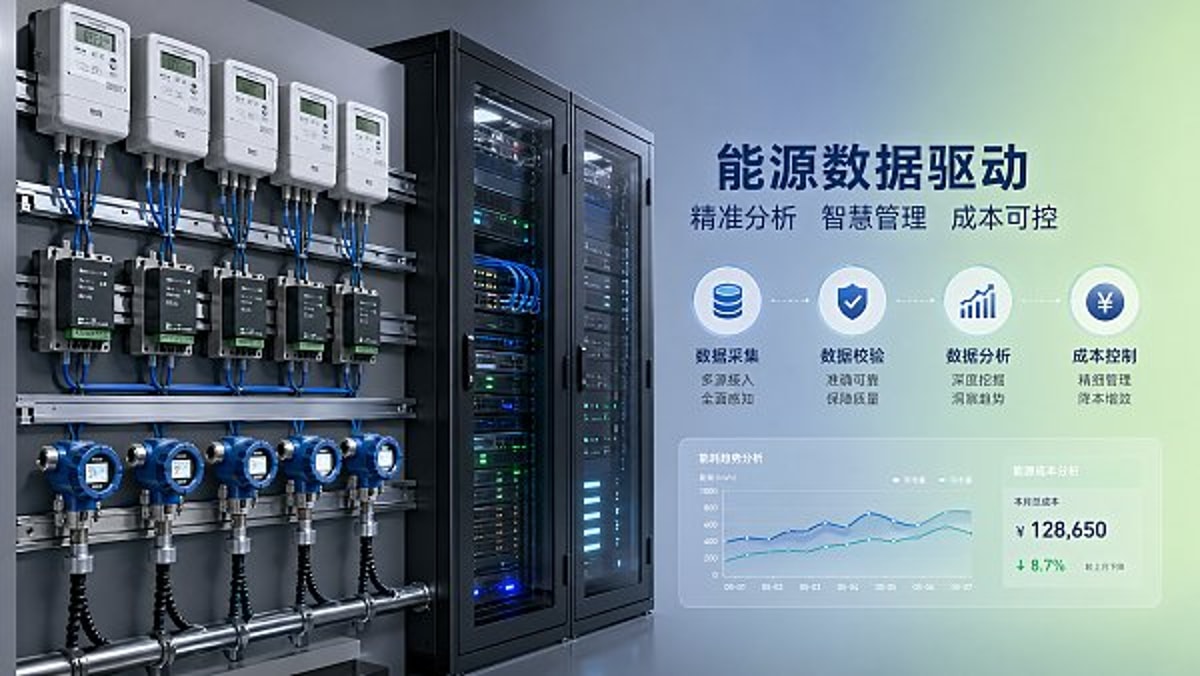
Another common issue is fragmented ownership. Engineering may own sensors, IT may own integration, sustainability may own reporting, and finance may own approvals. When no one owns the full chain from data capture to business interpretation, energy analytics degrades quietly. The result is a system that generates activity, but not dependable decision support.
Which warning signs should a financial reviewer look for?
Financial reviewers do not need to audit every data point. They do need a short list of warning signs that indicate whether energy analytics can be trusted for approval decisions.
- Savings claims change materially from month to month without a clear operational explanation.
- The baseline period is shorter than 6 months for a seasonal operation, or shorter than 12 months for a site with weather-sensitive demand.
- The report cannot trace major variances back to meter IDs, tariff assumptions, or equipment groups.
- Different departments present different energy totals for the same facility or quarter.
- Exception handling is undocumented, such as manual overrides, estimated readings, or gap-filling logic.
If two or more of these signals appear at once, the issue is usually not cosmetic. It suggests the energy analytics process lacks governance, and that weak data may already be affecting cost control or capital justification.
How do strong and weak setups differ?
The comparison below is useful when evaluating whether your current energy analytics environment supports financial-grade decisions or only operational visibility.
For financial approvers, the right side of the table matters because it reduces rework at approval stage. It also shortens the time needed to challenge assumptions, compare sites, and defend investment choices to leadership or procurement committees.
How does poor energy analytics affect ROI, budgeting, and capital allocation?
The most expensive consequence of bad energy analytics is not always excess utility spend. It is often capital misallocation. If data quality is weak, projects can be approved for the wrong reason, rejected despite real value, or sequenced poorly. For example, a site may pursue a high-visibility energy storage or automation project before fixing compressed air leakage, power quality losses, or load scheduling issues that would deliver faster payback in 6 to 18 months.
Budgeting also becomes less reliable when analytics cannot separate structural consumption from variable demand. In manufacturing and logistics operations, seasonality, throughput changes, shift patterns, and occupancy swings can materially affect energy profiles. If these factors are not normalized, forecast variance increases and budget buffers become larger than necessary. Over time, finance may either overreserve cash or underfund necessary efficiency measures.
A further issue is confidence erosion. Once one or two energy projects miss expected performance due to weak data, future proposals face higher internal skepticism. This raises the approval threshold for otherwise strong initiatives in green energy integration, healthcare facility optimization, and smart electronics production upgrades. In other words, poor energy analytics does not just damage one project. It can increase the cost of trust across the whole portfolio.
Which financial decisions are most vulnerable?
Not every decision carries the same exposure. Some are especially sensitive to poor data quality because they rely on baseline accuracy, tariff interpretation, and post-project verification.
- Approving equipment retrofits with expected payback under 24 months.
- Negotiating energy procurement contracts where load profile accuracy affects pricing tiers.
- Allocating costs across plants, business units, tenants, or service lines.
- Prioritizing decarbonization investments against operating-margin constraints.
- Verifying whether savings came from the project itself or from lower production activity.
If a proposal depends on narrow economics, such as a 10% to 15% savings range, then energy analytics quality should be reviewed as carefully as the technical specification. A small baseline error can erase the apparent advantage between two competing projects.
What approval questions should finance ask before signing off?
A disciplined approval process does not require finance to become an energy engineering team. It requires a repeatable question set that exposes weak assumptions early.
- What is the baseline period, and does it cover at least one representative operating cycle?
- How much source data was missing, estimated, or manually corrected during that period?
- Were tariffs, demand charges, and seasonal rates updated for the current contract term?
- How are production, occupancy, weather, or process changes normalized?
- What is the validation plan 30, 90, and 180 days after project commissioning?
These questions improve both approval quality and vendor accountability. They also help separate projects supported by robust energy analytics from projects built on optimistic assumptions.
What are the most common mistakes companies make when evaluating energy analytics?
One common mistake is assuming software sophistication equals data reliability. A platform may provide attractive dashboards, AI-based forecasts, and multi-site rollups, yet still rely on poorly governed source inputs. Financial approvers should remember that advanced visual layers cannot compensate for missing submeter coverage, inconsistent naming conventions, or uncontrolled manual edits.
A second mistake is focusing only on collection frequency. Fifteen-minute interval data sounds strong, but if 10% of intervals are routinely estimated, or if timestamps drift across systems, analytical confidence remains low. Quality is a combination of completeness, consistency, traceability, and business relevance. Frequency alone is not enough.
A third mistake is treating energy analytics as a sustainability function only. In reality, it is a cross-functional financial control tool. It affects sourcing, maintenance timing, capex ranking, and resilience planning. When ownership sits too narrowly in one team, the business often misses the broader cost implications.
Which evaluation criteria matter most before investment?
For companies across advanced manufacturing, green energy, healthcare technology, and supply chain SaaS operations, the most useful selection criteria are practical rather than promotional.
- Coverage depth: whether critical loads, utility feeds, and major process assets are actually metered.
- Data governance: whether there are rules for missing data, calibration intervals, and version-controlled assumptions.
- Financial traceability: whether cost models can be tied back to source intervals, tariffs, and cost centers.
- Integration readiness: whether analytics can align with ERP, procurement, CMMS, or reporting systems within a 4- to 12-week deployment phase.
- Verification discipline: whether project outcomes can be checked at regular milestones instead of only at year-end.
These factors help financial approvers avoid overpaying for tools that generate visibility without governance. The goal is not to buy more dashboards. It is to build energy analytics that can support decisions with defensible numbers.
A practical FAQ-style review table
Before approving a platform, upgrade, or consulting engagement, decision-makers can use the following review table to assess whether the proposed energy analytics approach is likely to reduce cost risk or simply shift it.
This kind of review table keeps the conversation grounded. It also helps procurement and finance compare providers, internal proposals, or site requests on the basis of control quality rather than presentation quality.
How can companies improve energy analytics data quality without overcomplicating the process?
The best improvement programs start with governance, not software expansion. Most organizations can reduce risk significantly by defining ownership, validation thresholds, and approval checkpoints before they attempt large-scale platform changes. In many cases, the first 30 to 60 days should focus on identifying critical meters, reconciling business mappings, and agreeing on what counts as decision-grade data.
A practical approach is to classify data into tiers. For example, Tier 1 data supports capex approval and supplier negotiation, Tier 2 supports operational monitoring, and Tier 3 supports exploratory analysis. This prevents non-critical data gaps from delaying all reporting, while ensuring high-value decisions rely only on strong energy analytics inputs.
Companies should also establish review cadence. Monthly checks may be enough for stable sites, while fast-changing facilities may need weekly exception review. Sensor calibration, tariff refresh, meter replacement logging, and asset mapping updates should not be ad hoc. Even a quarterly control cycle can materially improve the quality of forecasts and project verification.
What should the first improvement roadmap include?
A lean roadmap usually works better than an overengineered transformation. Financial approvers often prefer staged control gains with visible accountability.
- Identify the 10 to 20 most financially material meters, sites, or loads.
- Define acceptable missing-data thresholds and exception escalation rules.
- Reconcile meter names, asset IDs, and cost-center mappings across systems.
- Refresh tariff logic and document all assumptions used in savings models.
- Create a 90-day validation cycle for any project approved using energy analytics.
This sequence is valuable because it delivers decision benefits early. Instead of waiting 9 to 12 months for a full transformation, organizations can strengthen financial confidence within one or two reporting cycles.
Why does this matter for strategic B2B decision-making?
In globally connected sectors, energy analytics influences more than site efficiency. It affects supplier resilience, total landed cost, decarbonization readiness, and credibility in commercial discussions. Procurement directors, supply chain managers, and enterprise decision-makers increasingly need to compare facilities, partners, and investment options using data that can stand up to both internal review and external scrutiny.
That is why decision-makers benefit from intelligence environments that go beyond surface-level summaries. When complex energy, manufacturing, and supply chain changes intersect, the value lies in disciplined analysis, clear business framing, and decision support that respects both operational reality and capital discipline.
Who can help you assess energy analytics risk before it turns into budget leakage?
Financial approvers rarely need more noise. They need a clearer path to evaluate whether their current energy analytics setup is robust enough for budgeting, procurement, and investment planning. That means reviewing data quality thresholds, baseline logic, business mapping, integration touchpoints, and verification routines before larger commitments are made.
TradeNexus Pro supports global B2B decision-makers with deeper sector-focused intelligence across advanced manufacturing, green energy, smart electronics, healthcare technology, and supply chain SaaS. For organizations trying to understand how energy analytics quality affects real commercial outcomes, that sector depth matters. It helps connect technical signals to procurement impact, operating cost risk, and strategic planning.
If you need to move from uncertainty to a more defensible decision framework, the next conversation should be specific. Start by clarifying which facilities or business units drive the most energy cost, what approval decisions depend on current analytics, how much missing or estimated data is tolerated today, and where project ROI assumptions are most exposed.
Why choose us for the next step?
We focus on the decision layer that matters to enterprise buyers and financial reviewers. If you are comparing options, preparing approvals, or reassessing your current approach, we can help you frame the right questions around data quality, project selection, implementation timing, and cross-sector business relevance.
- Confirm evaluation parameters for your current energy analytics environment.
- Discuss selection criteria for platforms, integrations, or advisory partners.
- Review implementation cycles, validation checkpoints, and reporting expectations.
- Explore tailored approaches for manufacturing, healthcare, electronics, energy, or logistics operations.
- Start a more informed quotation and planning discussion based on operational and financial priorities.
If you want to reduce the hidden cost of weak energy analytics before it affects the next budget cycle, contact us to discuss your decision context, data concerns, implementation timeline, and the type of business case you need to support.
Get weekly intelligence in your inbox.
No noise. No sponsored content. Pure intelligence.
 May 01, 2026Beijing’s New E-Bike Rules Trigger Dual-Certification Demand for China’s Swappable Battery CabinetsBeijing’s New E-Bike Rules Trigger Dual-Certification Demand for China’s Swappable Battery Cabinets
 May 01, 2026GNA’s GEO Service Assessment Elevates AI Search as Digital Procurement Metric for Chinese ExportersGNA’s GEO Service Assessment Elevates AI Search as Digital Procurement Metric for Chinese Exporters
 May 01, 20262026 China Cycle Expo: Chinese EPS Systems Achieve UL 2849:2026 Full Certification2026 China Cycle Expo: Chinese EPS Systems Achieve UL 2849:2026 Full Certification
 May 01, 2026GB 42236-2026 Enforces EV Charger Efficiency & Overload Protection from May 2026GB 42236-2026 Enforces EV Charger Efficiency & Overload Protection from May 2026
 May 01, 2026GB/T 43790-2026 Drone EMC Standard Effective May 2026GB/T 43790-2026 Drone EMC Standard Effective May 2026
 May 01, 20262026 Foshan Tanzhou Auto Industry Expo Opens2026 Foshan Tanzhou Auto Industry Expo Opens
 May 01, 2026China’s New Hazardous Chemicals Safety Law Takes Effect May 2026China’s New Hazardous Chemicals Safety Law Takes Effect May 2026
 May 01, 2026New Maritime and Fisheries Laws Take Effect May 1, 2026New Maritime and Fisheries Laws Take Effect May 1, 2026
 May 01, 2026Supply Chain Automation Works Best Where Delays RepeatSupply Chain Automation Works Best Where Delays Repeat
 May 01, 2026High Strength Steel Forgings: What Should Be Tested First?High Strength Steel Forgings: What Should Be Tested First?
 May 01, 2026Automotive Steel Forging: Cost Pressure vs Part ReliabilityAutomotive Steel Forging: Cost Pressure vs Part Reliability
 May 01, 2026Why High Durability Steel Forgings Fail Earlier Than ExpectedWhy High Durability Steel Forgings Fail Earlier Than Expected
 May 01, 2026Construction Aluminum Extrusions: Which Finish Lasts Longer?Construction Aluminum Extrusions: Which Finish Lasts Longer?
 May 01, 2026Lightweight Aluminum Extrusions: Where Savings Really HappenLightweight Aluminum Extrusions: Where Savings Really Happen
 May 01, 2026Aerospace Aluminum Extrusions Need More Than Low WeightAerospace Aluminum Extrusions Need More Than Low Weight
 May 01, 2026Precision Lathe Turning Problems That Show Up After AssemblyPrecision Lathe Turning Problems That Show Up After Assembly
 May 01, 2026High Precision Lathe Turning: Tolerance Claims to VerifyHigh Precision Lathe Turning: Tolerance Claims to Verify
 May 01, 2026When CNC Lathe Turning Is Better Than General MachiningWhen CNC Lathe Turning Is Better Than General Machining
 May 01, 2026Medical Device Prototyping Needs More Than SpeedMedical Device Prototyping Needs More Than Speed
 May 01, 20263D Printing Prototyping: Fast Turnaround or Better Finish?3D Printing Prototyping: Fast Turnaround or Better Finish?
 May 01, 2026Low Cost Rapid Prototyping: Where Quality Gets LostLow Cost Rapid Prototyping: Where Quality Gets Lost
 May 01, 2026Quick EV Charger Installation Still Needs Site ChecksQuick EV Charger Installation Still Needs Site Checks
 May 01, 2026Public Parking EV Chargers: What Slows Installation DownPublic Parking EV Chargers: What Slows Installation Down
 May 01, 2026Choosing a Lithium Ion Battery Manufacturer in ChinaChoosing a Lithium Ion Battery Manufacturer in China
 May 01, 2026How to Vet a Lithium Ion Battery OEM SupplierHow to Vet a Lithium Ion Battery OEM Supplier
 May 01, 2026EV Lithium Ion Batteries: Range Is Not the Only MetricEV Lithium Ion Batteries: Range Is Not the Only Metric
 May 01, 2026Lithium Ion ESS Batteries: Safety Details Worth CheckingLithium Ion ESS Batteries: Safety Details Worth Checking