Industrial LED Drivers: What Causes Early Failure?
Industrial LED drivers often fail long before the luminaire reaches its rated life, creating hidden risks for product quality, electrical safety, and maintenance planning. For quality control and safety managers, understanding the root causes—from heat stress and voltage instability to poor component selection and environmental exposure—is essential to reducing downtime, preventing compliance issues, and improving system reliability.
Why do industrial LED drivers fail early in real operating environments?
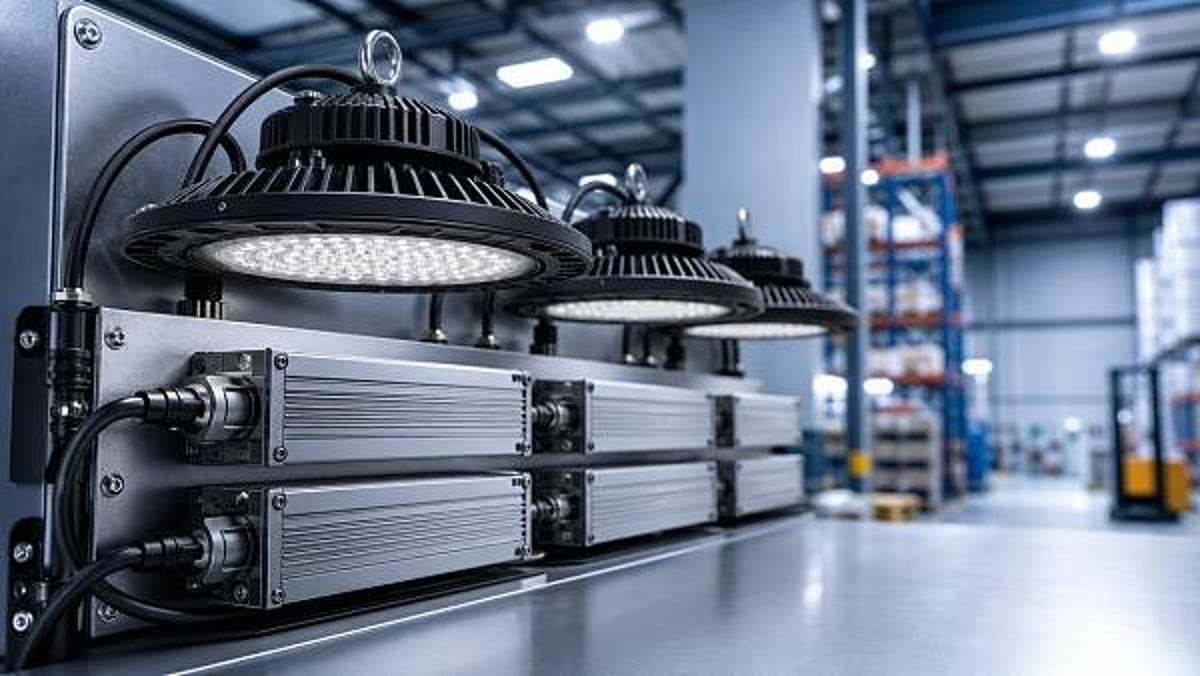
An industrial LED driver is the electrical control unit that converts incoming power into the regulated current or voltage required by an LED lighting system. In factories, warehouses, logistics centers, processing plants, and infrastructure projects, the driver is often the weakest link. The LEDs themselves may be rated for tens of thousands of hours, yet the driver can degrade much earlier if thermal, electrical, or environmental conditions are not tightly controlled.
For quality control teams, early failure rarely appears as a single random defect. It usually reflects a chain of preventable issues: oversized thermal load, unstable utility power, poor surge protection, weak sealing, under-specified capacitors, or inconsistent supplier quality. For safety managers, the concern goes beyond replacement cost. A failed industrial LED driver can trigger flicker, emergency lighting gaps, overheating, nuisance shutdowns, or non-compliance during audits.
In cross-sector industrial settings, the failure pattern also varies by application. A clean electronics facility faces different risks than a steel workshop, a cold chain warehouse, or a solar-integrated production plant. That is why root-cause analysis should focus on the operating profile, not just the catalog specification.
- High ambient temperature accelerates aging of electrolytic capacitors and insulation materials.
- Frequent voltage spikes from motors, welding equipment, or poor grid quality can damage input stages.
- Ingress of dust, oil mist, moisture, or corrosive gas undermines insulation and thermal dissipation.
- Mismatch between the industrial LED driver and the LED load can cause overcurrent, unstable dimming, or repeated restart cycles.
The main failure causes quality and safety managers should investigate first
When industrial LED drivers fail early, the root cause is often misdiagnosed as “poor quality” in general terms. A better approach is to break the problem into specific failure mechanisms. This improves supplier discussions, incoming inspection criteria, and corrective action plans.
1. Heat stress and thermal design limits
Heat is one of the most common reasons an industrial LED driver fails before its expected service life. Even a driver rated for harsh use can degrade rapidly if mounted in sealed housings, near process equipment, or above ceilings with poor airflow. Every increase in internal temperature can shorten component life, especially for capacitors and power semiconductors.
2. Voltage instability, surges, and poor power quality
Industrial sites often have unstable mains conditions. Large motors, compressors, variable frequency drives, welding stations, and switching events can introduce spikes, harmonic distortion, and short interruptions. If an industrial LED driver lacks robust surge immunity and input protection, repeated stress may not cause immediate failure but can weaken the circuit over time.
3. Inferior component selection or inconsistent supply chain control
Two drivers with similar nameplate ratings may perform very differently in the field. The difference often comes from capacitor endurance, transformer insulation quality, PCB layout, potting materials, and process consistency. For procurement and QC teams, a low initial price can hide higher failure exposure if supplier qualification does not include long-duration thermal and electrical stress review.
4. Moisture, dust, chemicals, and vibration
A driver used in food processing, wastewater facilities, chemical storage areas, or outdoor logistics yards faces far more than electrical load. Condensation, corrosive vapor, metal dust, and mechanical vibration can all contribute to insulation breakdown, connector loosening, and enclosure degradation.
5. Load mismatch and control incompatibility
An industrial LED driver must match the luminaire’s electrical behavior. Problems arise when the output current range is poorly chosen, the dimming protocol is incompatible, or the driver is operated near its maximum limit continuously. Repeated start-stop cycles, unstable dimming, or partial loading can create stress that shortens useful life.
The table below helps quality and safety managers connect visible field symptoms with likely failure causes in industrial LED drivers and the inspection actions that usually produce the fastest answers.
This symptom-based method is useful because it avoids overreliance on catalog life claims. For industrial LED drivers, real reliability depends on how closely the product design matches the site conditions and electrical profile.
Which industrial conditions create the highest failure risk?
Not all facilities expose industrial LED drivers to the same level of stress. A practical risk map helps teams prioritize where tighter specifications, extra testing, or preventive replacement plans are justified.
The following table compares common industrial environments and the stress factors that most often shorten driver life.
This comparison shows why one universal specification is rarely enough. The same industrial LED driver may perform well in a controlled electronics plant and fail early in a high-bay warehouse with unstable power and difficult service access.
What should buyers and inspectors check before approving a driver?
For procurement, QC, and EHS teams, selection should not stop at wattage, voltage range, and unit price. Early failure often begins with weak approval criteria. A more disciplined checklist improves the odds of getting the right industrial LED driver for the actual environment.
Core evaluation points
- Confirm ambient temperature rating under real enclosure conditions, not just open-air lab conditions.
- Review surge protection level relative to the site’s power quality and nearby inductive equipment.
- Check ingress protection and sealing strategy where dust, water spray, or condensation exists.
- Verify compatibility with dimming, sensors, control networks, and emergency lighting interfaces.
- Request consistency evidence for key components, production control, and batch traceability.
- Evaluate replacement logistics, warranty terms, and lead time risk for critical facilities.
A common mistake is selecting an industrial LED driver with minimal performance headroom. If the site regularly operates at high ambient temperature, near maximum load, and under unstable voltage, the practical life can be much shorter than the nominal life listed in sales documents.
A practical approval flow
- Map the operating environment, including heat, moisture, switching frequency, and nearby electrical disturbances.
- Match driver output characteristics to the LED load and control architecture.
- Screen compliance documents and confirm they align with the project’s geography and industry requirements.
- Run pilot installation or sample validation in the highest-risk zone before full rollout.
- Set incoming inspection and failure reporting rules that allow trend tracking by batch and location.
How do standards, compliance, and safety reviews affect failure risk?
Compliance does not guarantee long life, but it remains essential. For industrial LED drivers, safety reviews should consider electrical protection, insulation, temperature limits, electromagnetic behavior, and application-specific installation requirements. Depending on market and project type, teams may need to review common frameworks such as IEC or UL-related safety standards, EMC requirements, and environmental protection expectations.
For safety managers, the key question is not simply whether a driver is “certified.” It is whether the certification scope matches the actual use case. A driver approved for one class of environment may still be a poor fit in a facility with corrosive atmosphere, outdoor exposure, or emergency lighting integration.
- Check whether installation conditions in the project are more severe than the rated conditions.
- Review thermal test points and derating guidance, especially in enclosed luminaires.
- Confirm EMC and power quality performance where sensitive equipment or automation systems are present.
- Maintain traceable records for model, batch, installation zone, and replacement history to support audit response.
Common misconceptions about industrial LED drivers
“If the LEDs are rated for 50,000 hours, the driver will last the same.”
Not necessarily. In many installations, the driver’s life is shorter than the LED package life. Thermal aging, input stress, and environmental contamination usually determine maintenance intervals more than the LED chip rating alone.
“A higher wattage driver is always safer because it has reserve capacity.”
Oversizing without checking the operating window can create efficiency loss, poor dimming behavior, or unstable low-load operation. An industrial LED driver should be selected for appropriate headroom, not arbitrary excess capacity.
“Ingress protection alone solves harsh-environment reliability.”
Sealing is important, but it must be balanced with heat management and installation quality. A tightly sealed enclosure with inadequate thermal dissipation can still shorten driver life.
FAQ: what do teams ask most often before buying industrial LED drivers?
How can we tell whether early driver failure is a product issue or a site issue?
Start with failure pattern analysis. If the same industrial LED driver fails mainly in hot, wet, or electrically noisy zones, site stress is a strong factor. If failures cluster by batch across mixed locations, supplier consistency or component quality may be more likely. Reviewing temperature, mains events, installation method, and failure location together usually provides the clearest answer.
What are the most important parameters to request during sourcing?
Ask for output current range, input voltage tolerance, ambient operating range, case temperature limits, surge immunity, power factor, total harmonic distortion, dimming compatibility, ingress protection, and any derating guidance. For industrial LED drivers, these details matter more than headline wattage alone.
Should we standardize one driver model across all plants?
Standardization helps inventory control and maintenance training, but only when operating conditions are similar. If one site faces outdoor moisture, another has clean indoor automation, and a third has heavy electrical noise, a single industrial LED driver platform may create avoidable reliability gaps.
What is the biggest procurement mistake in industrial lighting retrofits?
The biggest mistake is approving products based on datasheet similarity and unit cost while ignoring environmental stress, control compatibility, and replacement access. A cheaper industrial LED driver can become more expensive if failures require lift access, production interruption, or emergency corrective work.
Why decision-makers use TradeNexus Pro for sourcing insight and risk reduction
Industrial LED driver selection is no longer just a component decision. It affects maintenance planning, safety exposure, uptime, and supplier resilience across advanced manufacturing, green energy, smart electronics, healthcare technology, and supply chain operations. TradeNexus Pro helps procurement directors, QC leaders, and safety managers evaluate these decisions with deeper market and technical context.
Instead of relying on broad, surface-level sourcing information, TNP focuses on the practical signals that matter in industrial buying: application fit, supply chain changes, technology shifts, and specification credibility. This is especially valuable when teams must compare industrial LED drivers across multiple factories, regions, or compliance frameworks.
- Clarify parameter requirements before RFQ release to avoid costly specification drift.
- Compare sourcing options with stronger attention to risk, not just initial price.
- Support cross-functional decisions involving procurement, engineering, quality, and EHS teams.
- Track sector-specific developments that influence component availability and lead times.
Why choose us for your next industrial LED driver evaluation?
If your team is reviewing industrial LED drivers for new projects, retrofits, or recurring field failures, TradeNexus Pro can support a more informed decision path. You can consult on parameter confirmation, application matching, supplier comparison, environmental risk points, expected delivery windows, and documentation needs for regulated or audit-sensitive facilities.
We also help decision-makers frame the right questions before sample approval: Which electrical protections are necessary for your site? How much thermal margin is realistic in the actual luminaire? Is one platform suitable across multiple plants? What certifications or compliance records should be verified before rollout? These are the questions that reduce rework and improve reliability.
Contact TradeNexus Pro if you need support with industrial LED driver selection, sample assessment, sourcing comparison, certification review, lead time evaluation, or quotation alignment across different industrial scenarios. Clearer technical screening at the start usually costs far less than replacing failed drivers after commissioning.
Get weekly intelligence in your inbox.
No noise. No sponsored content. Pure intelligence.
 May 07, 2026Sustainable Building Materials That Cut Carbon Without Cutting DurabilitySustainable Building Materials That Cut Carbon Without Cutting Durability
 May 07, 2026Green Hydrogen Production: What Decides Whether a Project ScalesGreen Hydrogen Production: What Decides Whether a Project Scales
 May 07, 2026Wind Turbine Blades: Why Repairs Cost More Than PlannedWind Turbine Blades: Why Repairs Cost More Than Planned
 May 07, 2026Folding Solar Chargers: What Real Output Looks Like OutdoorsFolding Solar Chargers: What Real Output Looks Like Outdoors
 May 07, 2026Vehicle to Grid Revenue Looks Attractive, but What Are the Limits?Vehicle to Grid Revenue Looks Attractive, but What Are the Limits?
 May 07, 2026Wireless EV Charging Sounds Easy, So Why Is Adoption Slow?Wireless EV Charging Sounds Easy, So Why Is Adoption Slow?
 May 07, 2026Floating Solar Farms: The Hidden Tradeoffs Behind Water SavingsFloating Solar Farms: The Hidden Tradeoffs Behind Water Savings
 May 07, 2026Geothermal Heat Pumps: Why Installation Quotes Differ So WidelyGeothermal Heat Pumps: Why Installation Quotes Differ So Widely
 May 07, 2026Sodium Ion Batteries: Where They Make Sense Before 2030Sodium Ion Batteries: Where They Make Sense Before 2030
 May 07, 2026EV Battery Recycling Is Growing, but the Supply Chain Isn’t ReadyEV Battery Recycling Is Growing, but the Supply Chain Isn’t Ready
 May 07, 2026BMS Boards Selection Problems That Show Up After InstallationBMS Boards Selection Problems That Show Up After Installation
 May 07, 2026Deep Cycle Batteries: Why Runtime Estimates Often Miss the MarkDeep Cycle Batteries: Why Runtime Estimates Often Miss the Mark
 May 07, 2026Carbon Capture Technology Projects Often Stall at This StageCarbon Capture Technology Projects Often Stall at This Stage
 May 07, 2026What Makes Offshore Wind Technology So Expensive to Deploy?What Makes Offshore Wind Technology So Expensive to Deploy?
 May 07, 2026EV Charging Cables: Small Spec Differences, Big Fit ProblemsEV Charging Cables: Small Spec Differences, Big Fit Problems
 May 07, 2026Solid State Batteries: Progress Is Real, Timelines Are Not SimpleSolid State Batteries: Progress Is Real, Timelines Are Not Simple
 May 07, 2026Microgrid Controllers: What Changes Once Systems Scale UpMicrogrid Controllers: What Changes Once Systems Scale Up
 May 07, 2026Energy Efficient HVAC Claims That Deserve a Closer LookEnergy Efficient HVAC Claims That Deserve a Closer Look
 May 07, 2026Biomass Energy Equipment: Why Maintenance Costs Vary So MuchBiomass Energy Equipment: Why Maintenance Costs Vary So Much
 May 07, 2026Smart Meters Wholesale: Which Specs Matter Most in Bulk OrdersSmart Meters Wholesale: Which Specs Matter Most in Bulk Orders
 May 07, 2026Commercial Energy Storage Sizing Mistakes That Raise CostsCommercial Energy Storage Sizing Mistakes That Raise Costs
 May 07, 2026Residential Solar Kits: What Gets Overlooked Before BuyingResidential Solar Kits: What Gets Overlooked Before Buying
 May 07, 2026V2G Technology Is Moving Fast, but What Still Holds It Back?V2G Technology Is Moving Fast, but What Still Holds It Back?
 May 07, 2026Smart Street Lighting Upgrades: Where Savings Often SlipSmart Street Lighting Upgrades: Where Savings Often Slip
 May 07, 2026Portable Solar Panels That Work Better in Real Travel UsePortable Solar Panels That Work Better in Real Travel Use
 May 07, 2026How to Compare AGM Batteries Wholesale Beyond Unit PriceHow to Compare AGM Batteries Wholesale Beyond Unit Price
 May 07, 2026Do Solar Water Heaters Still Pay Off in Mild Climates?Do Solar Water Heaters Still Pay Off in Mild Climates?