Hydrogen Fuel Cells vs Batteries in Backup Power
For enterprise decision-makers evaluating resilient backup infrastructure, the debate over hydrogen fuel cells and batteries is no longer theoretical. As uptime, emissions targets, and long-term operating costs become strategic priorities, understanding the strengths, limitations, and deployment scenarios of each solution is essential. This article explores how hydrogen fuel cells compare with battery systems in real-world backup power planning.
In boardrooms, data centers, logistics hubs, healthcare facilities, and distributed industrial sites, backup power is now tied to more than emergency continuity. It affects ESG reporting, facility expansion, procurement strategy, and exposure to fuel price volatility. For many organizations, the key question is no longer whether to modernize backup systems, but which technology delivers the best balance of runtime, response speed, maintenance profile, site constraints, and lifecycle cost.
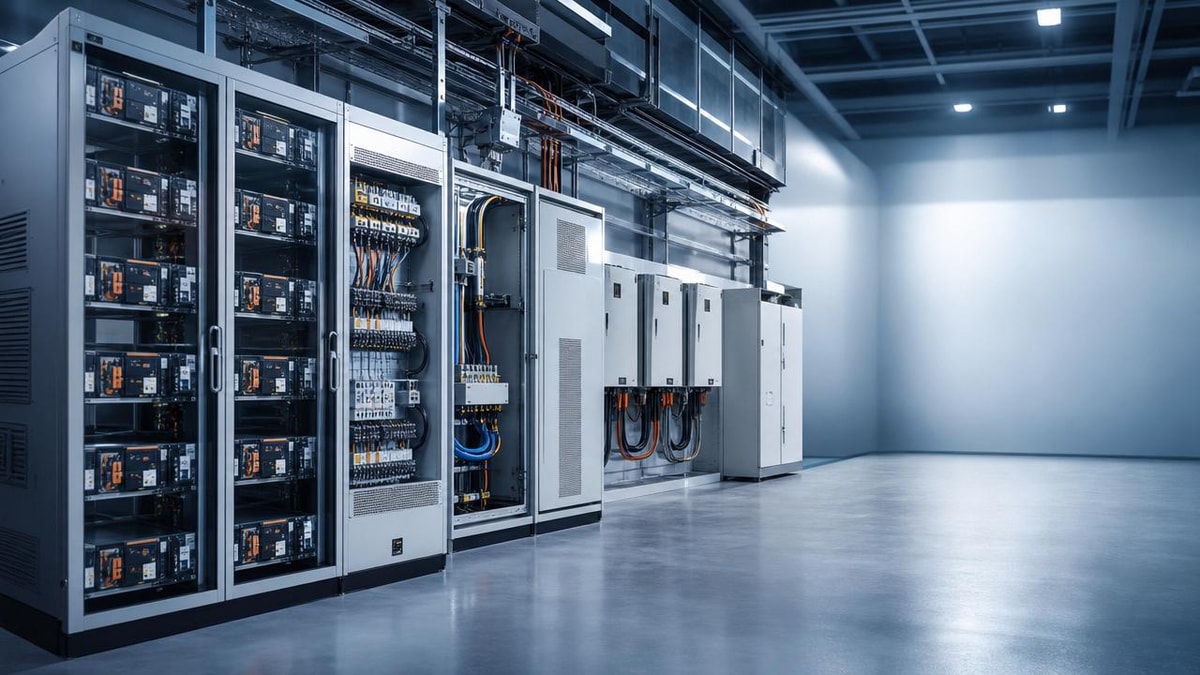
Both batteries and hydrogen fuel cells offer low-emission alternatives to conventional diesel-based backup. Yet they solve different operational problems. Batteries excel at rapid response and short-duration support, while hydrogen fuel cells are increasingly considered for longer-duration resilience where refueling logistics and clean operation matter. The right answer often depends on load criticality, expected outage duration, footprint, and the enterprise’s 3-year to 10-year infrastructure roadmap.
Why the Comparison Matters in Modern Backup Power Planning
Backup power decisions used to focus on one event: the outage. Today, they must also address power quality, restart speed, carbon impact, maintenance labor, and resilience against supply chain disruption. In many sectors, even a 5-minute interruption can trigger data loss, production scrap, safety risks, or missed service-level commitments. That makes technology selection a strategic procurement issue rather than a narrow engineering choice.
Hydrogen fuel cells and battery energy storage systems differ most in energy duration and replenishment logic. Batteries store electricity directly and typically deliver strong performance for seconds, minutes, or a few hours depending on sizing. Hydrogen fuel cells generate electricity from stored hydrogen, making them more flexible when enterprises require 8-hour, 24-hour, or multi-day backup without excessive battery oversizing.
What enterprise buyers are really evaluating
For enterprise decision-makers, the purchase is rarely about a single technical metric. It usually involves at least 6 factors: critical load coverage, runtime target, onsite safety requirements, emissions profile, service availability, and total cost over 5 to 15 years. Facilities with stable grids may value fast discharge and low routine intervention, while remote or mission-critical sites may prioritize duration and rapid refueling.
- Short outages under 30 minutes often favor batteries.
- Bridge power plus generator replacement may open the case for hydrogen fuel cells.
- Sites with limited electrical upgrade capacity may assess modular fuel cell deployment.
- Facilities under strict indoor emissions rules may prefer non-combustion backup options.
Core technology differences at a glance
The following comparison helps procurement teams align technical characteristics with business requirements. Values vary by design, but the ranges below reflect common planning considerations for commercial and industrial backup applications.
The table highlights a practical truth: batteries are usually strongest when immediate response and short-duration support dominate the use case, while hydrogen fuel cells become more attractive as runtime expectations extend beyond a few hours and recharging downtime becomes operationally expensive.
Performance, Runtime, and Operational Fit
The most important divide between hydrogen fuel cells and batteries is not whether they work in backup power, but how they behave under different outage profiles. A facility that experiences 10 to 20 brief disturbances per year needs a different architecture than a regional distribution center planning for weather-related outages lasting 8 to 48 hours. Matching technology to interruption pattern prevents costly overspecification.
Where batteries lead
Battery systems are well suited to high-speed ride-through and short backup windows. In facilities where the main requirement is seamless switchover for servers, automation controllers, telecom nodes, or imaging systems, batteries often provide the cleanest design path. They can also support peak shaving or power quality functions, giving buyers more than one value stream from the same asset.
Typical battery advantages
- Sub-second response for sensitive digital loads.
- Simple integration with UPS and building energy management systems.
- High round-trip efficiency in many stationary applications.
- Lower complexity for sites targeting 15-minute to 2-hour autonomy.
However, as duration targets increase, battery economics can become less favorable. A system sized for 30 minutes may be straightforward; a system sized for 12 hours at the same load can require much more space, thermal management, and charging recovery time. This is where hydrogen fuel cells enter the discussion as a long-duration resilience option.
Where hydrogen fuel cells lead
Hydrogen fuel cells are especially relevant when enterprises need cleaner extended-duration backup without relying on combustion engines. Because the energy is stored in hydrogen rather than only in electrochemical cells, duration can be increased by adjusting fuel storage strategy. This can be useful for microgrids, remote sites, and operations with low tolerance for prolonged downtime.
For instance, a cold-chain facility or advanced manufacturing site may value a backup system that can sustain critical loads through a 12-hour grid event and then be refueled for additional resilience. In such cases, hydrogen fuel cells may reduce the need for very large battery banks that sit idle most of the year yet must still be monitored, cooled, and periodically replaced.
Use-case alignment by outage profile
A simple way to compare fit is to map technology against load duration, restart urgency, and replenishment expectations. The table below gives a practical framework that enterprise teams can use during early-stage screening.
The key takeaway is that runtime and use pattern matter more than headlines. Hydrogen fuel cells are not a universal replacement for batteries, and batteries are not always the most practical route to long-duration resilience. Many enterprises will find the best solution in a hybrid design, where batteries handle the first seconds or minutes and fuel cells sustain longer backup.
Cost, Infrastructure, and Procurement Considerations
For procurement leaders, the real comparison extends beyond equipment price. It includes engineering complexity, installation timeline, permitting, fuel or electricity access, maintenance intervals, replacement cycles, and the cost of downtime if the system underperforms. A solution that appears cheaper in year 1 may become more expensive across year 7 if runtime requirements rise or replacement events occur sooner than expected.
Upfront and lifecycle cost drivers
Battery systems often present a clearer initial cost model, especially for shorter-duration deployments. Major variables include battery chemistry, inverter configuration, enclosure type, fire protection, and HVAC. Hydrogen fuel cells may involve additional costs for fuel storage, delivery arrangements, ventilation, and safety systems. Yet for backup windows above 8 hours, fuel cells may compare more favorably than large-format battery expansions.
Decision-makers should evaluate cost in at least 4 buckets: capital expenditure, site preparation, annual service, and end-of-life replacement. In some cases, battery replacement planning around year 8 to 12 can materially affect total ownership cost. In fuel cell projects, hydrogen supply terms and storage logistics can be equally decisive.
Questions procurement teams should ask suppliers
- What runtime is guaranteed at the specified critical load, such as 50kW, 250kW, or 1MW?
- What is the estimated installation lead time: 6 weeks, 12 weeks, or longer?
- What periodic service is required each quarter, semiannually, or annually?
- How does ambient temperature affect output, degradation, or storage conditions?
- What site modifications are required for ventilation, electrical interconnection, or hazardous area compliance?
- What is the recovery time after a full discharge or a full backup event?
Infrastructure readiness checklist
A robust backup decision should include a site readiness review before supplier shortlisting. The following framework is useful for cross-functional teams involving operations, EHS, facilities, and finance.
This checklist shows why procurement should not separate technology from site reality. Hydrogen fuel cells may offer compelling duration benefits, but only if hydrogen handling, delivery, and safety processes are mature. Batteries may seem easier to adopt, but large-duration systems can strain footprint, cooling, and recharge planning.
Risk, Compliance, and Maintenance Strategy
Backup systems are judged most harshly on the one day they are needed. That is why risk management must be built into technology selection from day 1. Enterprises should evaluate not only normal operation, but also inspection routines, failure modes, redundancy design, and emergency response procedures. A 2N or N+1 philosophy may be justified for high-consequence environments such as hospitals, semiconductor facilities, or cold-chain networks.
Maintenance profile differences
Battery systems generally require ongoing monitoring of temperature, state of charge, cell balance, and degradation over time. Hydrogen fuel cells require attention to stack condition, gas supply integrity, valves, sensors, and periodic system checks. Neither option is maintenance-free. The operational question is which maintenance model aligns better with internal staffing, third-party service coverage, and acceptable testing frequency.
Common maintenance planning points
- Define monthly remote monitoring responsibilities.
- Schedule quarterly or semiannual inspections based on system criticality.
- Test transfer performance under realistic load conditions at least once per year.
- Document spare parts, consumables, and supplier response times.
Compliance and internal governance
Safety, environmental review, and facility permitting should be integrated early. Hydrogen fuel cells may require additional hazard analysis related to gas storage and ventilation. Battery systems may require deeper review of thermal management, fire separation, and emergency isolation. For enterprise governance, the decision should be documented across 3 layers: engineering sign-off, EHS review, and financial approval tied to quantified downtime risk.
It is also wise to define measurable acceptance criteria before commissioning. Examples include switchover performance, runtime at specified load, alarm response, remote visibility, and restoration procedure. A backup asset is not fully procured when it is delivered; it is fully procured when the organization can test, maintain, and rely on it during a real event.
How to Choose Between Hydrogen Fuel Cells and Batteries
A practical decision framework starts with load segmentation. Not every load in a facility requires the same backup architecture. Separate life-safety, digital continuity, process control, refrigeration, and noncritical loads. Then define target runtime bands such as 0–15 minutes, 15 minutes–2 hours, 2–8 hours, and beyond 8 hours. This approach often reveals that a single technology may not be optimal across the full facility.
A 5-step enterprise selection process
- Quantify critical loads in kW and define acceptable downtime in seconds or minutes.
- Model outage scenarios, including short disturbances and 24-hour severe events.
- Review site constraints: space, ventilation, interconnection, fuel access, and safety rules.
- Compare lifecycle cost across 5-year, 10-year, and 15-year horizons.
- Run a pilot, phased deployment, or detailed engineering study before full rollout.
When a hybrid architecture makes sense
In many advanced facilities, the most resilient approach is not hydrogen fuel cells versus batteries, but hydrogen fuel cells with batteries. Batteries can provide immediate ride-through and power conditioning, while fuel cells sustain longer events. This layered design can reduce oversizing, improve operational flexibility, and support both resilience and sustainability goals.
For enterprises balancing uptime, emissions reduction, and infrastructure scalability, that hybrid model deserves serious consideration. It aligns especially well with digital operations, automated manufacturing, healthcare support systems, and distributed logistics networks where different loads have different tolerance levels.
Frequently asked decision questions
Are hydrogen fuel cells always better for long-duration backup?
Not always. They become more compelling as runtime targets increase, but the outcome depends on hydrogen supply arrangements, permitting, and total site readiness. If those elements are weak, a battery-based or hybrid design may be more practical.
Are batteries always the lower-risk option?
Not automatically. Batteries are familiar and effective, but long-duration systems introduce their own challenges around footprint, recharge time, temperature management, and replacement planning. Risk must be evaluated by use case, not by popularity.
What should a global B2B buyer prioritize first?
Start with operational requirement clarity: critical load, runtime, downtime tolerance, and recovery expectation. Once those 4 points are quantified, the comparison between hydrogen fuel cells and batteries becomes much more objective and commercially useful.
For enterprise backup strategy, the best technology is the one that matches outage duration, site conditions, service model, and long-term business risk. Batteries remain highly effective for short-duration, fast-response applications. Hydrogen fuel cells stand out where longer runtime, clean operation, and refueling flexibility add strategic value. For many organizations, a hybrid architecture delivers the strongest balance of performance and resilience.
TradeNexus Pro helps enterprise buyers assess technologies through a practical B2B lens, connecting market intelligence, supply chain insight, and solution-oriented evaluation. If your team is reviewing hydrogen fuel cells, battery backup systems, or hybrid resilience strategies, now is the right time to obtain a tailored assessment. Contact us to discuss your backup power roadmap, request a customized solution framework, and explore the right deployment path for your facilities.
Get weekly intelligence in your inbox.
No noise. No sponsored content. Pure intelligence.
 May 07, 2026Sustainable Building Materials That Cut Carbon Without Cutting DurabilitySustainable Building Materials That Cut Carbon Without Cutting Durability
 May 07, 2026Green Hydrogen Production: What Decides Whether a Project ScalesGreen Hydrogen Production: What Decides Whether a Project Scales
 May 07, 2026Wind Turbine Blades: Why Repairs Cost More Than PlannedWind Turbine Blades: Why Repairs Cost More Than Planned
 May 07, 2026Folding Solar Chargers: What Real Output Looks Like OutdoorsFolding Solar Chargers: What Real Output Looks Like Outdoors
 May 07, 2026Vehicle to Grid Revenue Looks Attractive, but What Are the Limits?Vehicle to Grid Revenue Looks Attractive, but What Are the Limits?
 May 07, 2026Wireless EV Charging Sounds Easy, So Why Is Adoption Slow?Wireless EV Charging Sounds Easy, So Why Is Adoption Slow?
 May 07, 2026Floating Solar Farms: The Hidden Tradeoffs Behind Water SavingsFloating Solar Farms: The Hidden Tradeoffs Behind Water Savings
 May 07, 2026Geothermal Heat Pumps: Why Installation Quotes Differ So WidelyGeothermal Heat Pumps: Why Installation Quotes Differ So Widely
 May 07, 2026Sodium Ion Batteries: Where They Make Sense Before 2030Sodium Ion Batteries: Where They Make Sense Before 2030
 May 07, 2026EV Battery Recycling Is Growing, but the Supply Chain Isn’t ReadyEV Battery Recycling Is Growing, but the Supply Chain Isn’t Ready
 May 07, 2026BMS Boards Selection Problems That Show Up After InstallationBMS Boards Selection Problems That Show Up After Installation
 May 07, 2026Deep Cycle Batteries: Why Runtime Estimates Often Miss the MarkDeep Cycle Batteries: Why Runtime Estimates Often Miss the Mark
 May 07, 2026Carbon Capture Technology Projects Often Stall at This StageCarbon Capture Technology Projects Often Stall at This Stage
 May 07, 2026What Makes Offshore Wind Technology So Expensive to Deploy?What Makes Offshore Wind Technology So Expensive to Deploy?
 May 07, 2026EV Charging Cables: Small Spec Differences, Big Fit ProblemsEV Charging Cables: Small Spec Differences, Big Fit Problems
 May 07, 2026Solid State Batteries: Progress Is Real, Timelines Are Not SimpleSolid State Batteries: Progress Is Real, Timelines Are Not Simple
 May 07, 2026Microgrid Controllers: What Changes Once Systems Scale UpMicrogrid Controllers: What Changes Once Systems Scale Up
 May 07, 2026Energy Efficient HVAC Claims That Deserve a Closer LookEnergy Efficient HVAC Claims That Deserve a Closer Look
 May 07, 2026Biomass Energy Equipment: Why Maintenance Costs Vary So MuchBiomass Energy Equipment: Why Maintenance Costs Vary So Much
 May 07, 2026Smart Meters Wholesale: Which Specs Matter Most in Bulk OrdersSmart Meters Wholesale: Which Specs Matter Most in Bulk Orders
 May 07, 2026Commercial Energy Storage Sizing Mistakes That Raise CostsCommercial Energy Storage Sizing Mistakes That Raise Costs
 May 07, 2026Residential Solar Kits: What Gets Overlooked Before BuyingResidential Solar Kits: What Gets Overlooked Before Buying
 May 07, 2026V2G Technology Is Moving Fast, but What Still Holds It Back?V2G Technology Is Moving Fast, but What Still Holds It Back?
 May 07, 2026Smart Street Lighting Upgrades: Where Savings Often SlipSmart Street Lighting Upgrades: Where Savings Often Slip
 May 07, 2026Portable Solar Panels That Work Better in Real Travel UsePortable Solar Panels That Work Better in Real Travel Use
 May 07, 2026How to Compare AGM Batteries Wholesale Beyond Unit PriceHow to Compare AGM Batteries Wholesale Beyond Unit Price
 May 07, 2026Do Solar Water Heaters Still Pay Off in Mild Climates?Do Solar Water Heaters Still Pay Off in Mild Climates?