Yangshan Port Launches First EV Infrastructure Ro-Ro Export Lane
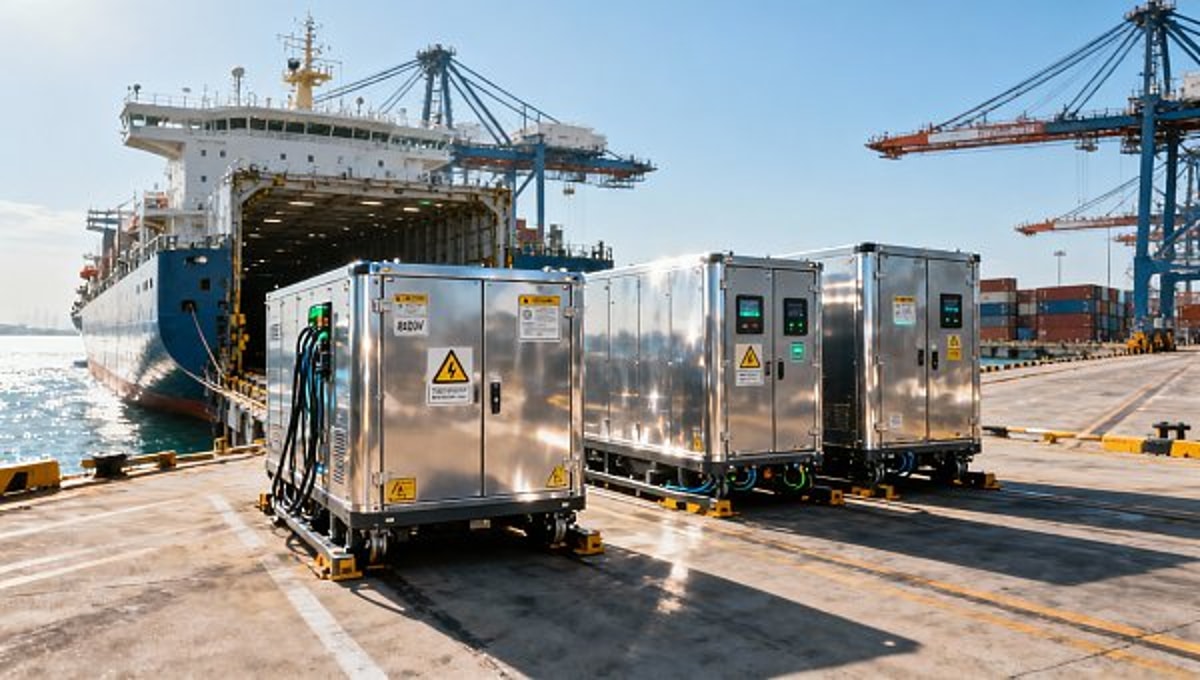
On May 6, 2026, Shanghai International Port Group activated the first dedicated roll-on/roll-off (ro-ro) export lane for EV infrastructure at Yangshan Phase IV automated terminal. This development directly impacts electric vehicle supply chain logistics, charging equipment exporters, and international infrastructure project contractors — particularly those serving Middle Eastern, Latin American, and Southeast Asian markets.
Event Overview
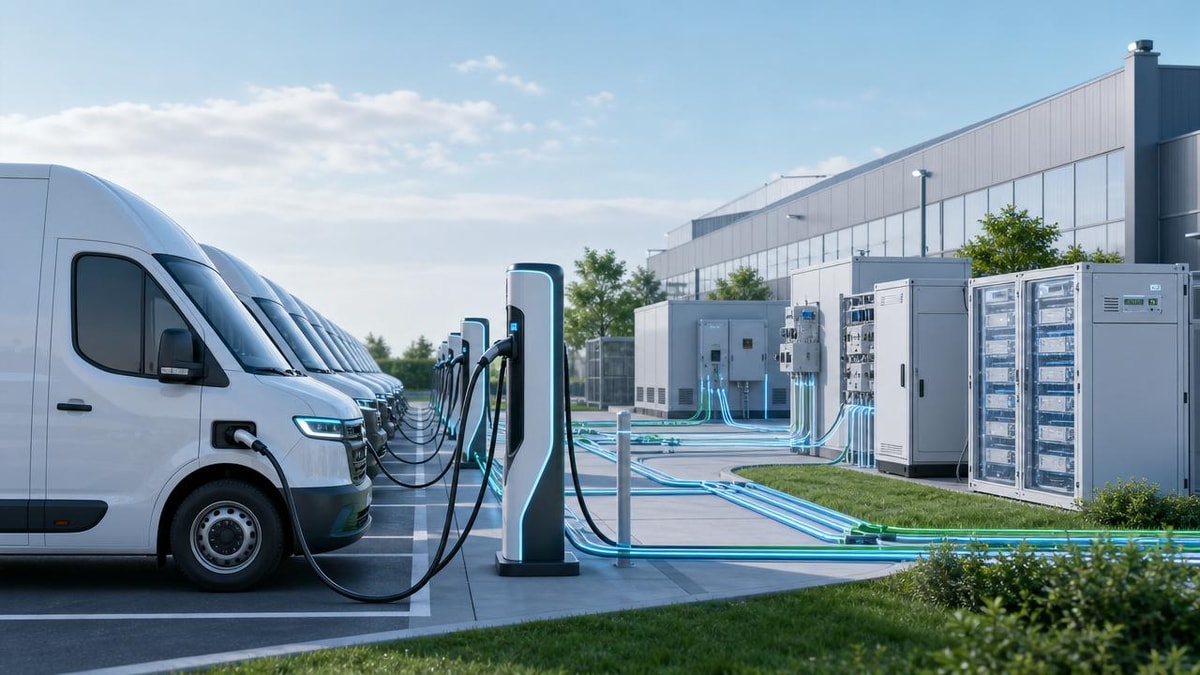
On May 6, 2026, Shanghai Port Group announced the official commissioning of a dedicated EV infrastructure ro-ro handling line at Yangshan Phase IV automated terminal. The lane is engineered to accommodate large-format EV charging components — including 800V high-voltage fast-charging modules, liquid-cooled charging stacks, and integrated photovoltaic-storage-charging cabinets. Verified outcomes include a 35% increase in per-vessel loading capacity and an average 7-day reduction in delivery lead time to the Middle East, Latin America, and Southeast Asia. Multiple Chinese EV charging equipment manufacturers have signed quarterly priority berthing agreements.
Industries Affected
EV Charging Equipment Exporters
These companies face immediate operational implications: their oversized, high-value hardware now benefits from purpose-built ro-ro infrastructure, reducing transshipment delays and mechanical handling risks. Impact manifests in improved vessel utilization rates, lower demurrage exposure, and tighter control over delivery windows — especially critical for turnkey infrastructure projects with fixed commissioning schedules.
International Infrastructure Project Contractors
Contractors executing EV charging deployments abroad rely on predictable equipment arrival timelines. The shortened 7-day average delivery cycle enhances schedule reliability for site preparation, civil works, and grid interconnection planning — particularly where local port handling capacity for specialized EV gear remains limited.
Logistics & Ro-Ro Service Providers
Specialized ro-ro operators and freight forwarders with EV infrastructure cargo experience gain a competitive differentiator. The new lane introduces standardized handling protocols for high-voltage, thermally sensitive equipment — raising baseline service expectations across the segment and potentially accelerating demand for certified EV cargo handling training and documentation support.
Supply Chain Planners (OEMs & Tier-1 Suppliers)
OEMs and tier-1 suppliers integrating third-party charging systems into regional EV deployment strategies must reassess lead time assumptions. The 35% uplift in per-vessel loading efficiency implies fewer voyages required per volume unit — which may influence inventory positioning decisions and inland distribution planning for destination markets.
What Stakeholders Should Monitor & Act On
Track official expansion timelines and eligibility criteria
While the lane is operational, its current scope — including weight limits, dimensional thresholds, and certification requirements for cargo — remains defined by Shanghai Port Group’s internal operating procedures. Stakeholders should monitor official updates for formalized technical specifications and potential expansion to additional terminals or vessel classes.
Validate priority berthing terms against actual vessel scheduling data
Quarterly priority berthing agreements have been signed, but confirmed berth allocation patterns and actual dwell-time reductions are not yet publicly reported. Exporters should cross-check contractual commitments against real-time AIS vessel tracking and terminal operation reports before adjusting production or shipment calendars.
Distinguish between infrastructure readiness and regulatory alignment
The new lane addresses physical handling capacity — not import compliance, customs classification, or local market certification (e.g., GCC, INMETRO, TISI). Companies must continue treating port infrastructure upgrades and regulatory approvals as separate, non-substitutable workstreams.
Prepare for increased coordination around pre-stowage documentation
Ro-ro operations for high-voltage equipment require precise stowage plans, thermal management declarations, and safety certifications. Forwarders and exporters should review internal documentation workflows and confirm alignment with Yangshan Phase IV’s updated pre-arrival data submission requirements ahead of first shipments.
Editorial Perspective / Industry Observation
Observably, this initiative signals a structural shift — not just an incremental port upgrade. It reflects growing recognition that EV infrastructure exports demand distinct logistics treatment, comparable to how automotive OEMs developed dedicated vehicle transport networks decades ago. Analysis shows the focus on 800V modules and liquid-cooled stacks suggests prioritization of next-generation, high-power charging hardware — aligning with global fast-charging standardization efforts. However, it remains early-stage infrastructure: the lane’s scalability, integration with inland multimodal links (e.g., rail-barge connections), and replicability at other Chinese ports are unconfirmed. Current evidence supports viewing this less as a fully matured solution and more as a targeted pilot — one that validates demand while inviting further investment scrutiny.
Conclusion
Yangshan’s dedicated EV infrastructure ro-ro lane marks a concrete step toward logistics specialization for high-growth clean energy exports. Its significance lies not in isolated efficiency gains, but in establishing precedent: that EV charging hardware warrants differentiated port handling standards. For stakeholders, the most rational interpretation is cautious adoption — leveraging verified capacity improvements while maintaining parallel contingency planning for regulatory, documentation, and intermodal handoff variables. This is infrastructure evolution in action — observable, measurable, and still unfolding.
Source: Shanghai International Port Group official announcement, May 6, 2026.
Note: Expansion scope, long-term throughput data, and replication status at other ports remain under observation.
Get weekly intelligence in your inbox.
No noise. No sponsored content. Pure intelligence.
 May 07, 2026Sustainable Building Materials That Cut Carbon Without Cutting DurabilitySustainable Building Materials That Cut Carbon Without Cutting Durability
 May 07, 2026Green Hydrogen Production: What Decides Whether a Project ScalesGreen Hydrogen Production: What Decides Whether a Project Scales
 May 07, 2026Wind Turbine Blades: Why Repairs Cost More Than PlannedWind Turbine Blades: Why Repairs Cost More Than Planned
 May 07, 2026Folding Solar Chargers: What Real Output Looks Like OutdoorsFolding Solar Chargers: What Real Output Looks Like Outdoors
 May 07, 2026Vehicle to Grid Revenue Looks Attractive, but What Are the Limits?Vehicle to Grid Revenue Looks Attractive, but What Are the Limits?
 May 07, 2026Wireless EV Charging Sounds Easy, So Why Is Adoption Slow?Wireless EV Charging Sounds Easy, So Why Is Adoption Slow?
 May 07, 2026Floating Solar Farms: The Hidden Tradeoffs Behind Water SavingsFloating Solar Farms: The Hidden Tradeoffs Behind Water Savings
 May 07, 2026Geothermal Heat Pumps: Why Installation Quotes Differ So WidelyGeothermal Heat Pumps: Why Installation Quotes Differ So Widely
 May 07, 2026Sodium Ion Batteries: Where They Make Sense Before 2030Sodium Ion Batteries: Where They Make Sense Before 2030
 May 07, 2026EV Battery Recycling Is Growing, but the Supply Chain Isn’t ReadyEV Battery Recycling Is Growing, but the Supply Chain Isn’t Ready
 May 07, 2026BMS Boards Selection Problems That Show Up After InstallationBMS Boards Selection Problems That Show Up After Installation
 May 07, 2026Deep Cycle Batteries: Why Runtime Estimates Often Miss the MarkDeep Cycle Batteries: Why Runtime Estimates Often Miss the Mark
 May 07, 2026Carbon Capture Technology Projects Often Stall at This StageCarbon Capture Technology Projects Often Stall at This Stage
 May 07, 2026What Makes Offshore Wind Technology So Expensive to Deploy?What Makes Offshore Wind Technology So Expensive to Deploy?
 May 07, 2026EV Charging Cables: Small Spec Differences, Big Fit ProblemsEV Charging Cables: Small Spec Differences, Big Fit Problems
 May 07, 2026Solid State Batteries: Progress Is Real, Timelines Are Not SimpleSolid State Batteries: Progress Is Real, Timelines Are Not Simple
 May 07, 2026Microgrid Controllers: What Changes Once Systems Scale UpMicrogrid Controllers: What Changes Once Systems Scale Up
 May 07, 2026Energy Efficient HVAC Claims That Deserve a Closer LookEnergy Efficient HVAC Claims That Deserve a Closer Look
 May 07, 2026Biomass Energy Equipment: Why Maintenance Costs Vary So MuchBiomass Energy Equipment: Why Maintenance Costs Vary So Much
 May 07, 2026Smart Meters Wholesale: Which Specs Matter Most in Bulk OrdersSmart Meters Wholesale: Which Specs Matter Most in Bulk Orders
 May 07, 2026Commercial Energy Storage Sizing Mistakes That Raise CostsCommercial Energy Storage Sizing Mistakes That Raise Costs
 May 07, 2026Residential Solar Kits: What Gets Overlooked Before BuyingResidential Solar Kits: What Gets Overlooked Before Buying
 May 07, 2026V2G Technology Is Moving Fast, but What Still Holds It Back?V2G Technology Is Moving Fast, but What Still Holds It Back?
 May 07, 2026Smart Street Lighting Upgrades: Where Savings Often SlipSmart Street Lighting Upgrades: Where Savings Often Slip
 May 07, 2026Portable Solar Panels That Work Better in Real Travel UsePortable Solar Panels That Work Better in Real Travel Use
 May 07, 2026How to Compare AGM Batteries Wholesale Beyond Unit PriceHow to Compare AGM Batteries Wholesale Beyond Unit Price
 May 07, 2026Do Solar Water Heaters Still Pay Off in Mild Climates?Do Solar Water Heaters Still Pay Off in Mild Climates?