India BIS Adds Portable Ultrasound, POCT Devices to Mandatory Certification
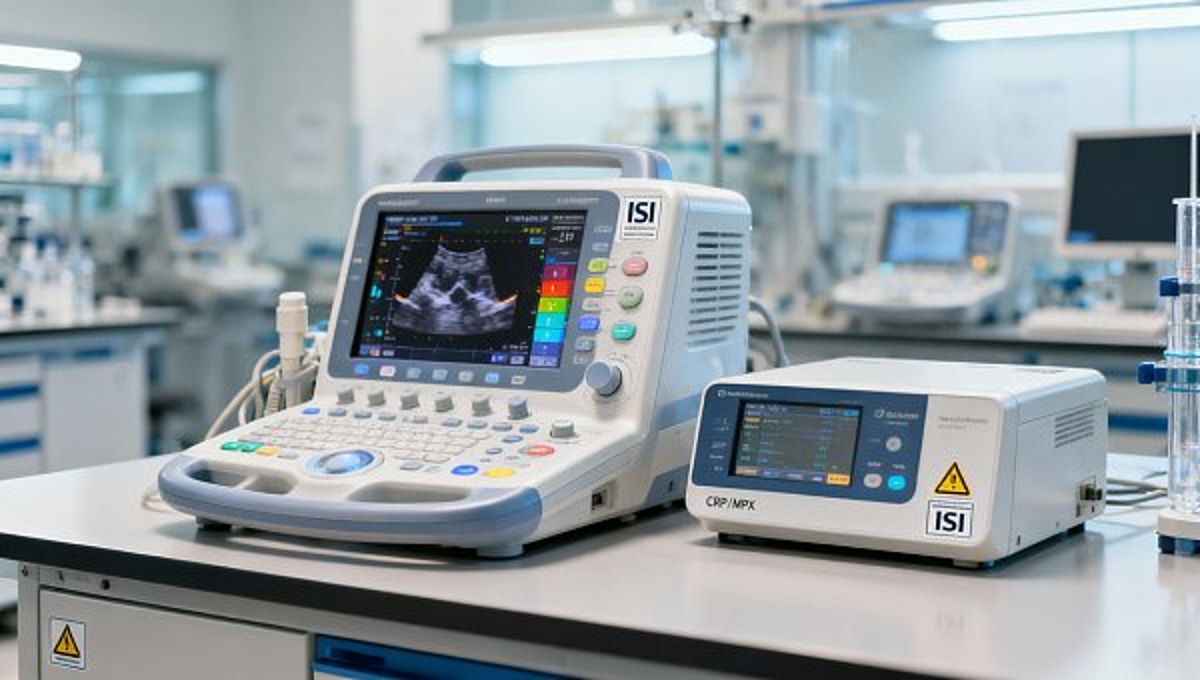
On May 6, 2026, the Bureau of Indian Standards (BIS) issued revised standard IS 13407:2026, mandating BIS certification and ISI marking for portable color Doppler ultrasound systems and fully automated CRP/MPX point-of-care testing (POCT) analyzers — effective October 1, 2026, for all imported and domestically assembled units. Medical device exporters, ODM manufacturers, and regulatory compliance teams — particularly those serving the Indian market — should monitor this development closely, as it marks India’s first formal inclusion of these diagnostic modalities under compulsory certification.
Event Overview
On May 6, 2026, the Bureau of Indian Standards (BIS) published the updated standard IS 13407:2026. This revision explicitly adds portable color Doppler ultrasound equipment and fully automated CRP/MPX point-of-care testing (POCT) instruments to the list of products subject to mandatory BIS certification. From October 1, 2026 onward, all such devices — whether imported into India or assembled locally — must obtain valid BIS certification and bear the ISI mark. Chinese ODM manufacturers supplying these devices have begun pre-testing at BIS-recognized laboratories; however, chip-level electromagnetic compatibility (EMC) validation and localization of clinical reference databases remain cited as key technical bottlenecks.
Industries Affected by This Regulation
Direct Exporters and Importers of Medical Devices
These entities are directly responsible for ensuring regulatory compliance prior to customs clearance. Non-compliant shipments after October 1, 2026, will be denied entry or detained. Impact includes extended lead times for market entry, increased documentation requirements, and potential liability for post-market non-conformity.
ODM/OEM Manufacturing Partners (Especially China-based)
Manufacturers producing devices for Indian distribution — including those operating under private label or white-label arrangements — now face new design and validation obligations. The requirement for chip-level EMC testing and localized clinical databases implies deeper involvement in product development cycles, not just final assembly or packaging.
Regulatory Affairs and Compliance Service Providers
Firms offering BIS certification support must update their technical assessment protocols to cover portable ultrasound and POCT-specific performance criteria, software validation, and database localization requirements. Demand for specialized test coordination — especially with labs capable of chip-level EMC measurement — is expected to rise.
Distributors and Local Assembly Operators in India
Local assemblers must verify that upstream suppliers provide BIS-certified subassemblies or modules where applicable. The regulation applies equally to fully imported units and those assembled in India using imported components — meaning supply chain traceability and component-level conformity become critical audit points.
What Enterprises and Practitioners Should Focus On Now
Track official BIS guidance on clinical database localization
While the regulation mandates localization, BIS has not yet published detailed specifications on acceptable formats, validation methods, or minimum regional data coverage. Stakeholders should subscribe to BIS notifications and monitor updates to Annexes of IS 13407:2026.
Prioritize chip-level EMC pre-testing with accredited labs
Standard board-level EMC tests may no longer suffice. Companies should identify and engage BIS-recognized laboratories capable of performing emissions and immunity testing at the integrated circuit level — a capability currently limited among regional test facilities.
Review supply chain documentation for traceability of certified subcomponents
For locally assembled devices, evidence of conformity for critical modules (e.g., ultrasound transducer drivers, optical detection units in POCT analyzers) must be retained. Current procurement contracts may lack clauses requiring supplier-provided BIS-related technical files.
Distinguish between policy announcement and operational readiness
The October 1, 2026 deadline is fixed, but BIS has not confirmed whether transitional arrangements — such as acceptance of pending applications or grace periods for stock clearance — will apply. Treat the date as binding unless explicit flexibility is communicated by BIS.
Editorial Observation / Industry Perspective
Observably, this revision signals India’s strategic shift toward tighter quality governance for frontline diagnostic tools — particularly those increasingly deployed outside centralized hospitals. Analysis shows that BIS is aligning its medical device oversight framework more closely with global risk-based classification principles, even while retaining domestic conformity mechanisms. It is not yet a full implementation outcome, but rather an early-stage regulatory signal: the inclusion of portable ultrasound and POCT reflects growing policy attention to point-of-use diagnostics, not just high-end imaging infrastructure. Continued monitoring is warranted, as future amendments may extend similar requirements to other handheld or battery-operated diagnostic platforms.
Conclusion: This amendment represents a targeted expansion of India’s medical device regulatory scope — not a broad overhaul. Its significance lies less in immediate enforcement volume and more in its precedent-setting nature for portable, software-driven diagnostics. For stakeholders, it is best understood as a structured compliance milestone requiring technical preparation, not a sudden market barrier. Proactive alignment with the updated standard — especially on EMC and clinical data — remains the most pragmatic response.
Source: Bureau of Indian Standards (BIS), Official Gazette Notification dated May 6, 2026, referencing revised standard IS 13407:2026. Note: Specific test methodology for chip-level EMC and clinical database localization criteria remain pending official clarification and are subject to ongoing observation.
Get weekly intelligence in your inbox.
No noise. No sponsored content. Pure intelligence.
 May 07, 2026Sustainable Building Materials That Cut Carbon Without Cutting DurabilitySustainable Building Materials That Cut Carbon Without Cutting Durability
 May 07, 2026Green Hydrogen Production: What Decides Whether a Project ScalesGreen Hydrogen Production: What Decides Whether a Project Scales
 May 07, 2026Wind Turbine Blades: Why Repairs Cost More Than PlannedWind Turbine Blades: Why Repairs Cost More Than Planned
 May 07, 2026Folding Solar Chargers: What Real Output Looks Like OutdoorsFolding Solar Chargers: What Real Output Looks Like Outdoors
 May 07, 2026Vehicle to Grid Revenue Looks Attractive, but What Are the Limits?Vehicle to Grid Revenue Looks Attractive, but What Are the Limits?
 May 07, 2026Wireless EV Charging Sounds Easy, So Why Is Adoption Slow?Wireless EV Charging Sounds Easy, So Why Is Adoption Slow?
 May 07, 2026Floating Solar Farms: The Hidden Tradeoffs Behind Water SavingsFloating Solar Farms: The Hidden Tradeoffs Behind Water Savings
 May 07, 2026Geothermal Heat Pumps: Why Installation Quotes Differ So WidelyGeothermal Heat Pumps: Why Installation Quotes Differ So Widely
 May 07, 2026Sodium Ion Batteries: Where They Make Sense Before 2030Sodium Ion Batteries: Where They Make Sense Before 2030
 May 07, 2026EV Battery Recycling Is Growing, but the Supply Chain Isn’t ReadyEV Battery Recycling Is Growing, but the Supply Chain Isn’t Ready
 May 07, 2026BMS Boards Selection Problems That Show Up After InstallationBMS Boards Selection Problems That Show Up After Installation
 May 07, 2026Deep Cycle Batteries: Why Runtime Estimates Often Miss the MarkDeep Cycle Batteries: Why Runtime Estimates Often Miss the Mark
 May 07, 2026Carbon Capture Technology Projects Often Stall at This StageCarbon Capture Technology Projects Often Stall at This Stage
 May 07, 2026What Makes Offshore Wind Technology So Expensive to Deploy?What Makes Offshore Wind Technology So Expensive to Deploy?
 May 07, 2026EV Charging Cables: Small Spec Differences, Big Fit ProblemsEV Charging Cables: Small Spec Differences, Big Fit Problems
 May 07, 2026Solid State Batteries: Progress Is Real, Timelines Are Not SimpleSolid State Batteries: Progress Is Real, Timelines Are Not Simple
 May 07, 2026Microgrid Controllers: What Changes Once Systems Scale UpMicrogrid Controllers: What Changes Once Systems Scale Up
 May 07, 2026Energy Efficient HVAC Claims That Deserve a Closer LookEnergy Efficient HVAC Claims That Deserve a Closer Look
 May 07, 2026Biomass Energy Equipment: Why Maintenance Costs Vary So MuchBiomass Energy Equipment: Why Maintenance Costs Vary So Much
 May 07, 2026Smart Meters Wholesale: Which Specs Matter Most in Bulk OrdersSmart Meters Wholesale: Which Specs Matter Most in Bulk Orders
 May 07, 2026Commercial Energy Storage Sizing Mistakes That Raise CostsCommercial Energy Storage Sizing Mistakes That Raise Costs
 May 07, 2026Residential Solar Kits: What Gets Overlooked Before BuyingResidential Solar Kits: What Gets Overlooked Before Buying
 May 07, 2026V2G Technology Is Moving Fast, but What Still Holds It Back?V2G Technology Is Moving Fast, but What Still Holds It Back?
 May 07, 2026Smart Street Lighting Upgrades: Where Savings Often SlipSmart Street Lighting Upgrades: Where Savings Often Slip
 May 07, 2026Portable Solar Panels That Work Better in Real Travel UsePortable Solar Panels That Work Better in Real Travel Use
 May 07, 2026How to Compare AGM Batteries Wholesale Beyond Unit PriceHow to Compare AGM Batteries Wholesale Beyond Unit Price
 May 07, 2026Do Solar Water Heaters Still Pay Off in Mild Climates?Do Solar Water Heaters Still Pay Off in Mild Climates?