Automated Optical Inspection Misses These Defects More Often Than Expected
Automated optical inspection is widely trusted to catch flaws fast, but some critical defects still slip through more often than many quality and safety teams realize. For professionals responsible for product integrity, understanding these blind spots is essential to reducing risk, improving process control, and preventing costly failures before they reach the next stage of production.
For quality control and safety teams, the real question is not whether automated optical inspection works. It does. The more important question is where it fails quietly. In most factories, AOI delivers speed, consistency, and traceability that manual inspection cannot match at scale. Yet some defect types remain disproportionately likely to pass undetected, especially when appearance is subtle, variable, reflective, hidden, or process-driven rather than purely visual.
The practical takeaway is straightforward: AOI is highly effective for many repeatable visual checks, but it should never be treated as a complete substitute for process understanding, defect mode analysis, and layered quality control. Teams that know which defects AOI tends to miss can redesign inspection strategies before small escapes become warranty claims, safety incidents, recalls, or supplier disputes.
Why automated optical inspection misses more defects than many teams expect
Most missed defects are not caused by a single “bad machine.” They happen because inspection systems are being asked to make reliable pass/fail decisions in environments full of variation. Lighting shifts, part orientation changes, cosmetic tolerances, material reflectivity, contamination, and upstream process drift all affect image interpretation. Even advanced systems with strong algorithms still depend on stable conditions and well-defined defect signatures.
Another reason for missed defects is that many factories overestimate what “visible” means. A defect may be technically visible to a trained engineer under the right angle, magnification, or lighting setup, but not consistently visible to an inline AOI system running at production speed. This is especially true when defects are intermittent, low contrast, buried in cluttered backgrounds, or masked by normal product variation.
There is also a common operational problem: inspection programs are often optimized to reduce false rejects rather than maximize defect capture. That tradeoff may be necessary to protect throughput, but it creates blind spots. If thresholds are tuned too conservatively, borderline defects pass. If model training data is too narrow, rare but serious anomalies are missed. In other words, AOI performance is as much a process management issue as a technology issue.
Which defect types does AOI commonly miss?
Quality and safety managers usually want specifics. The defect categories most often missed by automated optical inspection are not random; they share certain characteristics. They are subtle, inconsistent, partially hidden, highly reflective, or difficult to distinguish from acceptable variation. Knowing these categories helps teams decide where to add secondary controls.
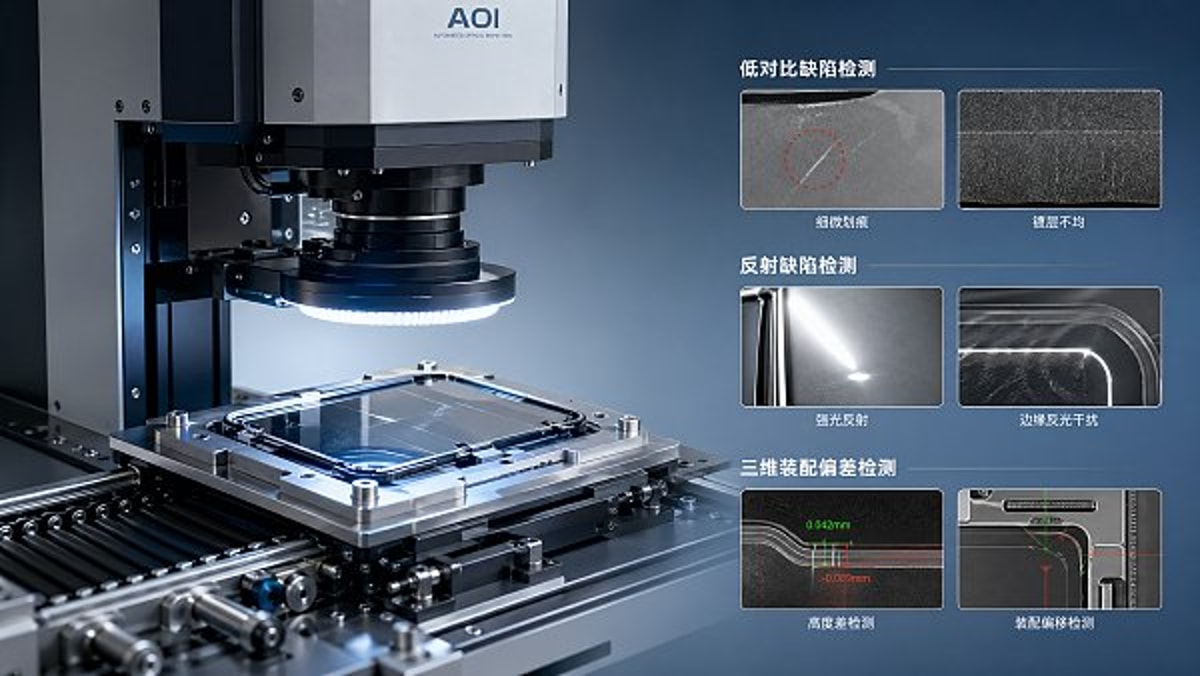
Low-contrast surface defects are a common blind spot. Fine scratches, shallow dents, slight discoloration, faint contamination, and minor coating inconsistencies may not generate enough visual difference from the surrounding surface. On matte, textured, patterned, or dark materials, the challenge becomes even greater. A defect that matters functionally or cosmetically may simply not stand out enough in a high-speed image stream.
Defects on reflective or transparent materials also evade detection more often than expected. Glare, refraction, and environmental reflections can confuse edge detection and feature extraction. Scratches on polished metal, cracks in glossy housings, residue on glass, or tiny defects under protective films may appear and disappear depending on angle and illumination. Without carefully engineered lighting and multiple image perspectives, escape rates can remain high.
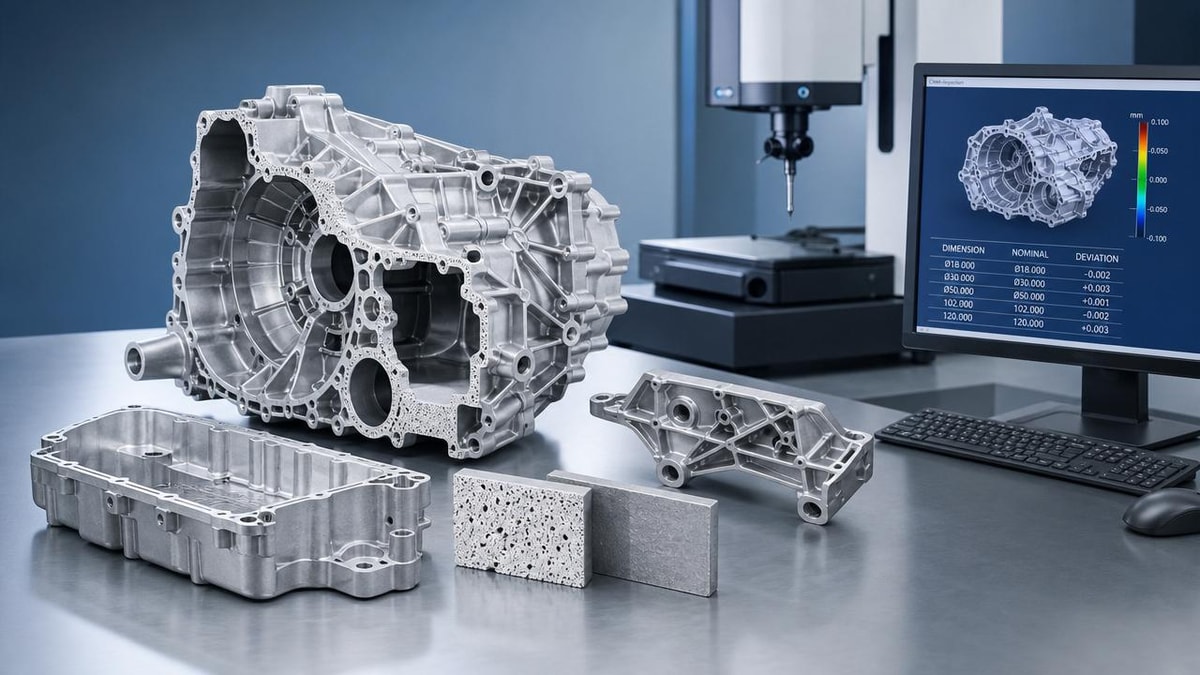
Three-dimensional defects with weak top-view signatures are another challenge. Warpage, lifted edges, poor seating, slight deformation, insufficient insertion depth, and subtle height differences may look acceptable in a 2D image. Yet these issues can create assembly problems, electrical unreliability, leak risks, or safety failures later in the process. If the defect is mainly dimensional rather than visual, standard AOI may underperform unless paired with 3D inspection methods.
Occluded or partially hidden defects frequently pass through. Features blocked by adjacent components, labels, fasteners, shadows, or packaging geometry are inherently difficult to inspect. In electronics, this might include solder issues under component edges. In mechanical assemblies, it may involve incomplete engagement hidden by surrounding structures. If the camera cannot see the full defect zone, software improvements alone will not solve the problem.
Context-dependent assembly errors are often underestimated. AOI may confirm that a component exists, but miss whether it is the correct variant, correctly torqued, properly aligned under load, or functionally seated after downstream handling. Similar-looking parts, mirrored orientation errors, subtle mix-ups, and process-induced movement can all slip by visual systems if inspection rules are based only on simple presence or position checks.
Intermittent contamination and process residue are especially risky because they are unstable in appearance. Oil films, flux residue, dust, fibers, adhesive smears, and moisture traces may vary from part to part and may not always trigger a clear pattern match. Some forms of contamination matter only when they occur in a specific zone, making broad visual screening less reliable than targeted process controls and cleanliness verification.
What these misses mean for product quality, safety, and cost
A missed defect is rarely just an inspection issue. It is a business risk multiplier. When automated optical inspection fails to catch a defect early, the cost grows as the product moves downstream. Rework becomes more complex, root cause analysis takes longer, and defect containment often expands to larger lots because traceability may not be precise enough to isolate all affected units with confidence.
For safety-sensitive products, the consequences are more severe. A subtle crack, incomplete seal, poor fit, or hidden contamination may not create immediate functional failure in the factory. It may only appear after transport stress, thermal cycling, vibration, repeated use, sterilization, or field exposure. That delay creates the false impression that AOI is performing well until customer complaints or incident reports surface.
Missed defects also distort management decisions. If escape data does not clearly show where AOI is weak, leaders may invest in more speed, more capacity, or more automation while leaving the true failure mode untouched. The result is a high-throughput system that scales error efficiently. For procurement and supplier quality teams, this can create misplaced trust in a line or vendor that appears digitally mature but still has unresolved inspection blind spots.
How quality teams can tell whether AOI is missing the wrong defects
The first sign is often mismatch between internal yields and downstream findings. If AOI pass rates remain high while manual audits, functional tests, customer returns, or line-side assembly issues continue, the system may be filtering the wrong things. Good inspection performance should correlate with lower downstream defect discovery, not merely with fewer rejects at the inspection station.
A second warning sign is repeated “random” escapes. When defect escapes appear sporadic but similar in nature, they are often not random at all. They may reflect a pattern that the current inspection logic cannot reliably classify. Examples include defects seen only on certain finishes, after tooling wear, during shift changes, under particular humidity conditions, or on parts from one supplier lot. These patterns are exactly where deeper defect review is needed.
Another useful test is to compare AOI findings against a structured defect pareto built from multiple sources: incoming inspection, in-process audits, rework stations, field failures, and customer complaints. If the top real-world failure modes are not the same as the top AOI detections, the inspection program may be over-focused on easy-to-see cosmetic deviations while missing lower-frequency but higher-risk defects.
Gauge capability analysis also matters. Teams often validate process equipment rigorously but treat inspection settings as fixed. In reality, image-based inspection needs regular measurement system evaluation too. If repeatability is weak between shifts, recipes, product variants, or lighting conditions, then defect detection consistency is likely weaker than reported summary metrics suggest.
How to reduce AOI blind spots without slowing production excessively
The most effective improvement is not simply “buy a better AOI machine.” It is to match inspection design to defect physics. Start by ranking defects by severity, occurrence, and detectability. Then ask which ones are truly visual, which are dimensional, which are hidden, and which are process-indicated rather than image-indicated. This prevents teams from forcing a visual system to solve a non-visual problem.
Lighting strategy is one of the highest-return upgrades. Many difficult defects become far more detectable when lighting geometry changes. Bright-field, dark-field, diffuse dome, low-angle, coaxial, backlight, polarized, and multispectral approaches each reveal different surface conditions. For reflective, transparent, or textured materials, lighting design often matters more than camera resolution alone.
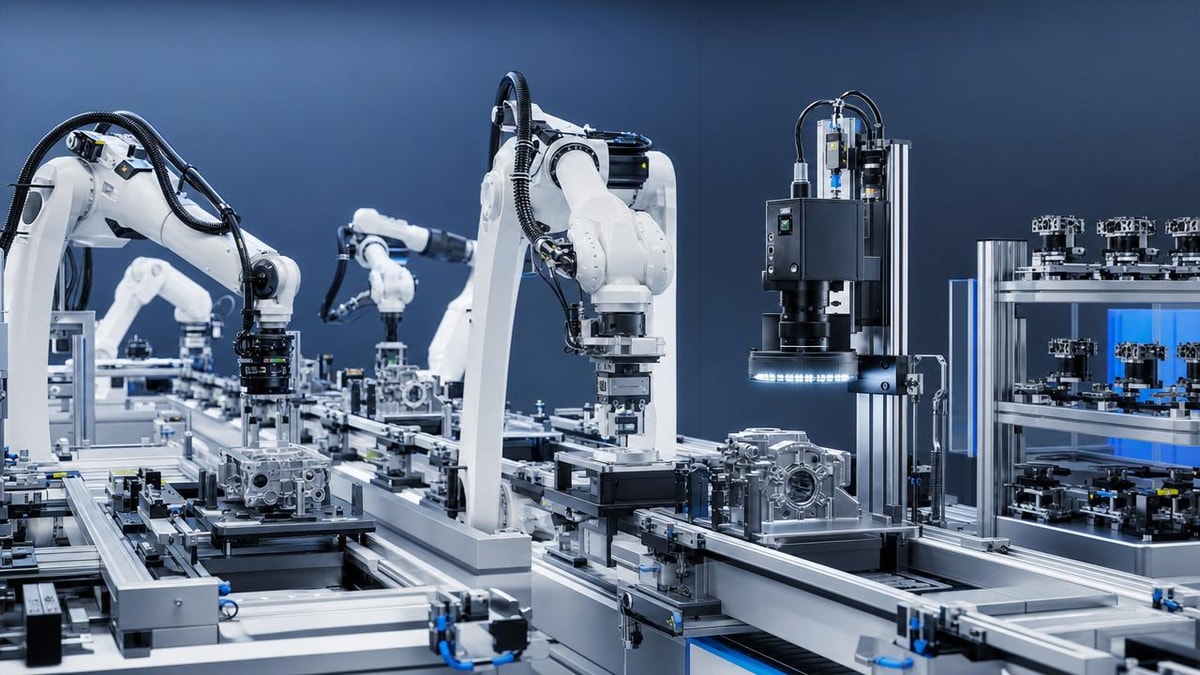
Adding multiple viewpoints can significantly reduce escapes. A top-down camera may miss lifted edges, bent leads, shallow deformation, or sidewall contamination that an angled or side-view camera would reveal. If the defect risk justifies it, combining 2D and 3D imaging can improve detection of height, coplanarity, and seating issues that conventional AOI struggles to classify reliably.
Recipe management should also be treated as a controlled quality process. Different product variants, finishes, suppliers, and environmental conditions may require different tolerances and training data. A single generic program often performs poorly across all cases. Version control, golden sample discipline, change approval workflows, and periodic challenge testing can all reduce unnoticed degradation in performance.
For some risks, the right answer is layered inspection rather than stronger AOI alone. Functional test, leak test, torque verification, X-ray, weight check, barcode validation, and targeted manual audit each serve different purposes. The goal is not to inspect everything twice, but to place the right control at the point where the defect becomes most detectable at acceptable cost.
Where manual inspection, process control, and supplier management still matter
Even highly automated plants need selective human judgment. Experienced inspectors can sometimes recognize unusual textures, inconsistent residue patterns, or context clues that rule-based systems were not trained to interpret. Manual inspection is not scalable as a primary control for all output, but it remains valuable for first-article review, escalation handling, defect library creation, and validation of uncertain machine decisions.
Process control is often more powerful than end-of-line detection. If a recurring defect originates in tool wear, unstable dispensing, poor handling, contamination sources, misfeeds, or thermal drift, then improving the process may produce far greater quality gains than trying to detect every resulting symptom visually. In many operations, the best way to reduce AOI misses is to create fewer ambiguous defects in the first place.
Supplier quality management is equally important. Some defects are driven by incoming material variation that AOI cannot reliably normalize across lots. Surface finish changes, coating inconsistency, dimensional spread, label placement variation, and packaging residue can all reduce inspection robustness. Sharing defect imagery, capability expectations, and acceptance criteria with suppliers helps prevent inspection systems from being overwhelmed by uncontrolled input variation.
What a stronger inspection strategy looks like in practice
A mature inspection strategy begins with a clear map of critical-to-quality and critical-to-safety characteristics. Not every visible flaw deserves the same attention. Teams should identify which defects create functional failure, regulatory risk, safety exposure, cosmetic rejection, or downstream assembly disruption. Once that hierarchy is clear, inspection resources can be allocated where they create the highest risk reduction.
Next comes method matching. Use automated optical inspection where repeatable visual signatures exist and the inspection environment can be controlled. Use complementary methods where defects are hidden, dimensional, internal, or highly variable in appearance. Then validate the full control plan with seeded defects, cross-shift trials, and periodic escape reviews rather than relying only on vendor specifications or initial setup acceptance.
Finally, build a learning loop. Every confirmed escape should feed back into defect classification, lighting review, recipe updates, process correction, and operator training. AOI should not be managed as static equipment. It should be managed as an evolving detection system tied directly to real defect behavior in production. That is how factories move from basic automation to dependable quality assurance.
Conclusion: AOI is powerful, but only when its limits are understood
Automated optical inspection remains one of the most valuable tools in modern quality control, especially where speed, consistency, and traceability are essential. But it misses certain defects more often than many teams assume, particularly low-contrast, reflective, hidden, dimensional, and context-dependent issues. Treating AOI as complete protection creates avoidable quality and safety risk.
For quality control and safety professionals, the best path is not to distrust automation, but to use it more intelligently. Understand which defects matter most, identify where visual inspection is weak, and combine AOI with stronger lighting, multiple viewpoints, process controls, supplier discipline, and selective secondary verification. That approach reduces escapes without abandoning the efficiency gains AOI delivers.
In practical terms, the question is simple: is your current system catching the defects that are easiest to detect, or the defects that are most dangerous to miss? Teams that can answer that honestly are far more likely to improve product integrity, protect customers, and strengthen operational confidence across the entire production chain.
Get weekly intelligence in your inbox.
No noise. No sponsored content. Pure intelligence.
 May 03, 20265 Axis Milling Machines for Automotive: Buy New or Retrofit?5 Axis Milling Machines for Automotive: Buy New or Retrofit?
 May 03, 2026What to Check Before Sourcing OEM Machined Parts from IndiaWhat to Check Before Sourcing OEM Machined Parts from India
 May 03, 2026Why Sheet Metal Bending Machine Price Varies So MuchWhy Sheet Metal Bending Machine Price Varies So Much
 May 03, 2026Plastic Injection Molding Process Guide for Common Defect ControlPlastic Injection Molding Process Guide for Common Defect Control
 May 03, 2026Smart Manufacturing Technology Trends Reshaping Factory UpgradesSmart Manufacturing Technology Trends Reshaping Factory Upgrades
 May 03, 2026Automotive Die Casting Parts and the Hidden Cost of PorosityAutomotive Die Casting Parts and the Hidden Cost of Porosity
 May 03, 2026Assembly Line Robots: Flexibility Can Matter More Than SpeedAssembly Line Robots: Flexibility Can Matter More Than Speed
 May 03, 2026Smart Manufacturing in Energy: Which Upgrades Pay Back FasterSmart Manufacturing in Energy: Which Upgrades Pay Back Faster
 May 03, 2026Why Robotics Integration Fails After a Successful DemoWhy Robotics Integration Fails After a Successful Demo
 May 03, 2026How to Spot a Reliable Precision Components ManufacturerHow to Spot a Reliable Precision Components Manufacturer
 May 03, 2026Sheet Metal Bending Machine Specifications That Affect AccuracySheet Metal Bending Machine Specifications That Affect Accuracy
 May 03, 2026Oil and Gas Fabrication: Where Material Mismatch Gets ExpensiveOil and Gas Fabrication: Where Material Mismatch Gets Expensive
 May 03, 2026Construction Fabrication Delays Often Start at the Drawing StageConstruction Fabrication Delays Often Start at the Drawing Stage
 May 03, 2026Industrial Robotics Maintenance Guide for Fewer Surprise StopsIndustrial Robotics Maintenance Guide for Fewer Surprise Stops
 May 03, 2026Smart Manufacturing Technology Benefits Beyond Labor SavingsSmart Manufacturing Technology Benefits Beyond Labor Savings
 May 03, 2026Defense Components Need More Than Tight TolerancesDefense Components Need More Than Tight Tolerances
 May 03, 2026How to Vet a Die Casting Parts Supplier in MexicoHow to Vet a Die Casting Parts Supplier in Mexico
 May 03, 2026Food Processing Automation Systems and the Cost of DowntimeFood Processing Automation Systems and the Cost of Downtime
 May 03, 20265 Axis Milling for Aerospace: When Extra Precision Is Worth It5 Axis Milling for Aerospace: When Extra Precision Is Worth It
 May 03, 2026How OEM Medical Equipment Parts Affect Validation TimelinesHow OEM Medical Equipment Parts Affect Validation Timelines
 May 03, 2026Packaging Robotics Integration Problems That Slow CommissioningPackaging Robotics Integration Problems That Slow Commissioning
 May 03, 2026What Causes Rework in OEM Aerospace Machined PartsWhat Causes Rework in OEM Aerospace Machined Parts
 May 03, 2026Choosing Sheet Metal Bending Services in Europe Without DelaysChoosing Sheet Metal Bending Services in Europe Without Delays
 May 03, 2026Die Casting Parts for Electronics: Tolerance or Heat Control?Die Casting Parts for Electronics: Tolerance or Heat Control?
 May 03, 2026Marine Metal Fabrication Mistakes That Raise Corrosion RiskMarine Metal Fabrication Mistakes That Raise Corrosion Risk
 May 03, 2026When Welding Robots Improve Quality More Than ThroughputWhen Welding Robots Improve Quality More Than Throughput
 May 03, 2026Medical Device Molding Machines: What Specs Matter MostMedical Device Molding Machines: What Specs Matter Most