Why Price Gaps in Servo Motors Wholesale Are Not Just About Brand
In servo motors wholesale, price gaps often reflect far more than brand labels. For business evaluators comparing suppliers, the real differences usually lie in precision standards, material quality, controller compatibility, lifecycle performance, and after-sales support. Understanding these cost drivers is essential for making sourcing decisions that balance upfront budgets with long-term operational value and supply chain reliability.
Why scenario-based evaluation matters in servo motors wholesale
For procurement teams, the biggest mistake in servo motors wholesale is assuming that two motors with similar rated power are commercially equivalent. In practice, a unit used in a high-speed packaging line, a CNC axis, or an AGV steering module may face completely different duty cycles, acceleration patterns, thermal loads, and communication requirements. A price gap of 15% to 40% can come from these operating realities rather than a logo on the housing.
Business evaluators are usually not purchasing a motor in isolation. They are assessing a supply decision that affects downtime risk, commissioning time, spare part planning, and warranty exposure across 12 to 36 months. In advanced manufacturing and smart equipment environments, servo motor selection influences both the machine builder’s margin and the end user’s lifetime operating cost. That is why application context should lead the evaluation process.
This is especially relevant in cross-border sourcing. One supplier may quote lower for the motor body, while another includes matched encoder feedback, drive compatibility guidance, protective connectors, and support for tuning. When reviewing servo motors wholesale offers, buyers should compare total deployment value rather than unit price alone.
Common cost layers hidden behind the quoted price
Before looking at specific applications, it helps to separate the pricing stack into technical and commercial layers. In many projects, the visible quotation only shows the first layer. The hidden layers surface later during assembly, software integration, field maintenance, or replacement cycles.
- Mechanical layer: shaft tolerance, bearing grade, housing rigidity, sealing level such as IP54 to IP67, and flange machining consistency.
- Electrical layer: encoder resolution, insulation class, winding stability, and resistance to voltage fluctuation in industrial environments.
- Control layer: compatibility with pulse, EtherCAT, CANopen, Modbus, or other motion control architectures.
- Commercial layer: lead time, MOQ, sample support, warranty terms, and spare part continuity over 3 to 5 years.
For sourcing teams using platforms such as TradeNexus Pro to compare industrial options across regions, this layered view helps filter suppliers more effectively. The question is not simply who is cheaper, but which quote best fits the intended operating scenario with the fewest downstream surprises.
Typical application scenarios where servo motors wholesale pricing diverges
Different applications create different definitions of value. A low-cost servo may be acceptable in light indexing tasks with intermittent movement, but the same product can become expensive if it triggers tuning instability or early bearing wear in a 24/7 line. The most useful way to compare servo motors wholesale offers is to map them against real application categories.
The table below highlights how pricing logic shifts across common industrial scenarios. It is not a ranking of products; it is a guide for business evaluators deciding what should carry more weight in each purchasing context.
A buyer comparing servo motors wholesale quotations should therefore begin with motion profile and operating environment. If the machine runs at 2 shifts per day with moderate cycling, one sourcing strategy may work. If the line runs 20 hours daily with frequent start-stop movement, durability and support quality become much more important than the initial price delta.
Scenario 1: High-speed packaging and converting equipment
In packaging, labeling, film handling, and cartoning systems, servo motors are often expected to deliver rapid acceleration and accurate synchronization across repeated cycles. Here, a cheaper unit may look attractive on paper, but small instability in response time can affect cut accuracy, registration, and throughput. Even a 1% to 3% reduction in line efficiency can outweigh a lower purchase cost.
Buyers in this scenario should pay attention to rated speed range, overload capability for short bursts, encoder type, and compatibility with the existing PLC or motion controller. In servo motors wholesale projects for OEM lines, plug-and-play integration can save days of commissioning time, which has clear commercial value.
Another factor is thermal behavior. A packaging machine may cycle thousands of times per hour, and inconsistent heat dissipation can gradually affect repeatability. That is one reason two servo motors of similar wattage can carry noticeably different prices.
Scenario 2: CNC, cutting, and precision positioning systems
Precision equipment places more emphasis on motion smoothness, positioning repeatability, and long-term stability. In these applications, buyers should not reduce comparison to torque and RPM alone. Shaft runout tolerance, bearing quality, encoder resolution, and drive tuning behavior can directly influence machining quality or positioning accuracy over 12 to 24 months of use.
This is where the price gap in servo motors wholesale often reflects manufacturing discipline. A supplier using tighter tolerance control, more stable materials, and stricter inspection may quote higher, but the result can be fewer rejected parts, less calibration drift, and lower maintenance intervention. Those benefits are highly relevant to evaluators responsible for total production cost.
If the project serves export-grade machinery, decision-makers should also check whether documentation quality, traceability, and replacement support are reliable enough for international field service. Precision applications rarely forgive inconsistent component quality.
Scenario 3: Robotics, AGV, and compact smart equipment
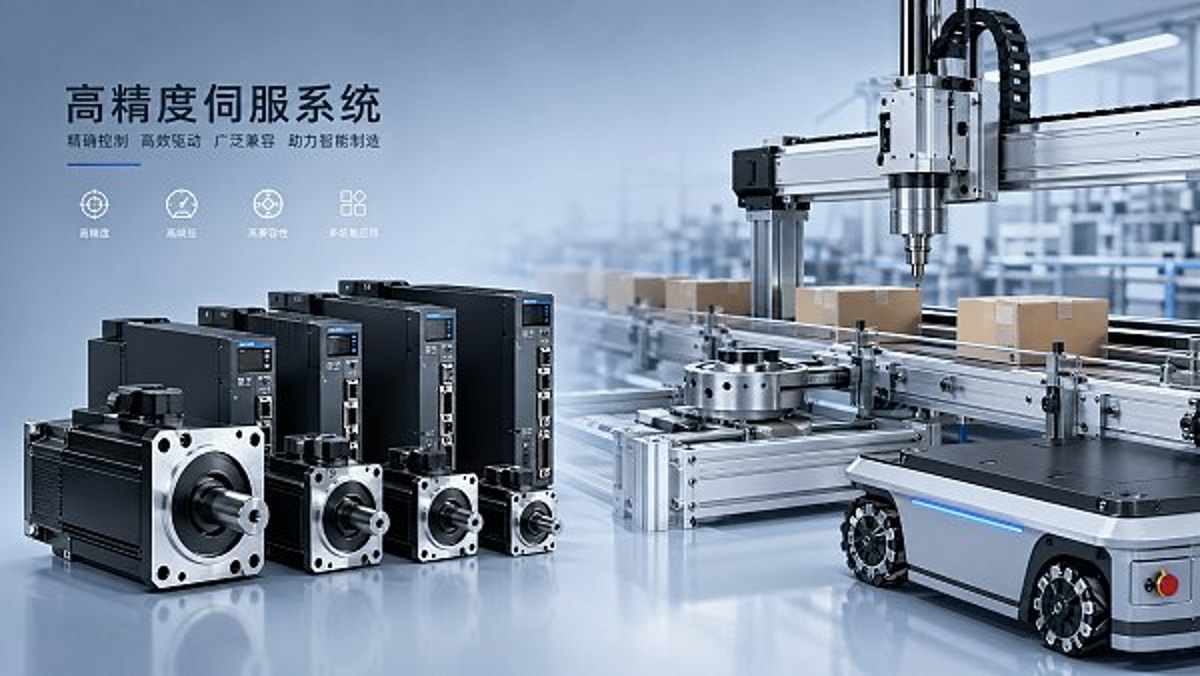
In robotics and mobile automation, integration density matters. Servo motors may need to fit tighter spaces, absorb variable loads, and maintain stable performance during frequent directional changes. For these use cases, price differences commonly come from torque density, shock resistance, connector quality, and communication readiness with digital control systems.
A buyer selecting servo motors wholesale for AGV steering or robotic joints should ask whether the lower-cost option has been evaluated for vibration, thermal rise, and continuous operation under dynamic loads. A unit that performs well in bench testing may not hold the same performance in a mobile or collaborative system exposed to frequent starts, stops, and load variation.
For smart electronics assembly, compact conveyors, or medical-adjacent automation support systems, stable communication with controllers is often as important as motor output. Integration issues can create hidden engineering labor costs that exceed the original unit price savings.
What to compare beyond brand when reviewing supplier offers
Once the application scenario is clear, evaluators should move from broad impressions to measurable comparison points. In servo motors wholesale, a structured supplier review often reveals why one quote is 20% higher yet commercially safer for a specific program. This is especially true when procurement spans multiple shipment batches or multi-country machine deployment.
The next table can be used as a practical checklist during RFQ review. It focuses on factors that influence commissioning, operating life, and after-sales risk rather than marketing claims.
A useful pattern is to score each supplier across 5 to 8 dimensions rather than selecting based on headline price. This turns servo motors wholesale evaluation into a procurement decision model instead of a basic price comparison. For enterprise buyers, that approach is easier to justify internally and more aligned with long-term equipment performance.
Why documentation and engineering support affect real cost
Suppliers who provide wiring diagrams, parameter references, commissioning support, and replacement guidance often quote above the market floor. For projects with tight launch schedules, this support can save 2 to 7 days of engineering effort. In many cases, that time saving matters more than a modest difference in unit cost.
This is especially relevant for exporters, system integrators, and machine builders serving several countries. If field technicians cannot quickly diagnose a feedback or tuning issue, service costs escalate fast. A low-cost servo purchased through wholesale channels may become expensive if support is limited after shipment.
For business evaluators, the right question is not “Is this the cheapest servo motors wholesale offer?” but “Does this supplier reduce implementation risk at scale?” That shift in framing leads to better decisions.
How to match servo motors wholesale choices to different buyer profiles
Not every buyer should optimize for the same target. An OEM launching a new machine series, a distributor balancing inventory, and an end user replacing installed motors all face different trade-offs. Price gaps make more sense when viewed through the buyer’s operating model.
OEMs and equipment manufacturers
OEMs often need repeatability across batches, stable documentation, and design continuity over several production cycles. In servo motors wholesale, they should prioritize version stability, control integration, and replenishment predictability. A lower quote loses appeal if the supplier changes connectors, encoder options, or mounting details without clear notice.
For OEMs, a moderate premium may be justified when it secures technical consistency over 12 to 36 months. This reduces redesign effort, supports export documentation, and protects machine commissioning schedules. In other words, the best wholesale option is not always the cheapest one, but the most repeatable one.
When launching a new machine platform, asking for sample validation, protocol confirmation, and thermal performance checks early in the process can prevent expensive revisions later.
Recommended checks for OEM sourcing teams
- Confirm whether the motor is tested with the intended drive family and controller environment.
- Verify batch-to-batch dimensional consistency for shafts, flanges, and connectors.
- Request lead time ranges for samples, pilot orders, and repeat production orders.
Distributors and trading companies
Distributors usually care about breadth of application, replacement compatibility, and inventory turnover. In this case, servo motors wholesale decisions should focus on standardization, broad use cases, and after-sales simplicity. A product with medium-grade specifications but strong interchangeability may be commercially more attractive than a specialized high-performance unit.
The key risk for distributors is dead stock. If a servo line is too customized or too dependent on one niche controller ecosystem, resale flexibility drops. Buyers should therefore compare not only price levels, but also market fit across several use cases such as packaging, conveyors, material handling, and light automation.
Commercially, fast replenishment windows such as 2 to 4 weeks can matter more than marginal price savings if the product line supports higher inventory turnover and easier cross-selling.
End users and maintenance-driven buyers
End users replacing motors in operating plants often need rapid compatibility checks, minimal installation risk, and dependable support. Their strongest concern is usually downtime. In servo motors wholesale, the lower quote may not be meaningful if replacement requires adapter work, controller retuning, or uncertain spare support.
These buyers should verify mounting dimensions, electrical interface, encoder format, and parameter migration path before focusing on price. A replacement program that saves 10% on procurement but extends downtime by 8 hours is often a false economy in process-intensive operations.
For maintenance-driven sourcing, clarity beats complexity. Shortlists should favor suppliers that can answer compatibility questions quickly and provide practical replacement guidance.
Frequent misjudgments in servo motors wholesale evaluations
Even experienced sourcing teams can misread servo pricing when project pressure is high. The most common errors happen when technical suitability, supply continuity, or support quality are treated as secondary. In reality, these are often the exact factors behind the price spread.
Mistaking nominal specs for full performance equivalence
Two motors may share similar power ratings, voltage classes, and speed ranges, yet behave differently in acceleration, feedback stability, or heat control. Servo motors wholesale comparison should always include how the motor performs under the intended load profile, not only what appears in a condensed datasheet.
This is especially important in systems with high start-stop frequency, continuous precision demand, or compact installation. A 750 W motor in one supplier’s range may not deliver the same practical result as a 750 W motor from another supplier under identical field conditions.
When possible, buyers should validate using application-side parameters such as inertia match, duty cycle, peak load duration, and ambient temperature range rather than relying on headline figures alone.
Ignoring supply chain and service economics
Another common error is treating logistics and support as afterthoughts. In international projects, a lower-cost source with a 10 to 14 week replenishment lead time may create more commercial risk than a supplier with a slightly higher price and a better delivery structure. This is highly relevant for recurring machine builds and maintenance stock programs.
Service terms also matter. Warranty scope, response speed, replacement handling, and spare continuity can significantly affect the real cost of ownership. A buyer focused only on initial price may overlook future exposure that is harder to reverse after deployment.
For enterprise teams, the safest approach is to compare unit price, integration cost, operating reliability, and supply continuity together. That creates a more accurate procurement picture than brand-first assumptions.
A practical sourcing approach for better decisions
A disciplined evaluation process helps business buyers avoid both overpaying and under-specifying. The most effective servo motors wholesale decisions usually come from a staged review that starts with application fit, then moves into compatibility, commercial terms, and support depth.
- Define the operating scenario: speed, torque, duty cycle, load variation, and environment.
- Screen technical fit: encoder type, controller communication, mounting dimensions, and protection level.
- Compare commercial conditions: MOQ, lead time, sample support, warranty, and spare supply horizon.
- Estimate deployment cost: tuning effort, integration labor, replacement complexity, and likely maintenance intervals.
- Shortlist suppliers based on total risk-adjusted value rather than quote price alone.
For organizations managing cross-sector sourcing in advanced manufacturing, green energy equipment, smart electronics, healthcare-adjacent automation, or supply chain technology infrastructure, this method improves internal alignment between engineering, procurement, and operations. It also makes supplier discussions more productive because requirements are clearer from the beginning.
At TradeNexus Pro, the goal is to help decision-makers assess industrial sourcing with sharper context. In servo motors wholesale, the smartest decision is rarely based on brand reputation alone. It comes from understanding which scenario you are buying for, which risks matter most, and which supplier can support performance over time.
Why choose us
TradeNexus Pro supports procurement directors, sourcing teams, and enterprise evaluators with focused B2B intelligence across critical growth sectors. Instead of broad, surface-level comparisons, we help buyers frame the right questions around application fit, supplier capability, lifecycle value, and sourcing risk.
If you are reviewing servo motors wholesale options, contact us for support on parameter confirmation, product selection logic, lead time comparison, customization direction, certification-related considerations, sample evaluation planning, and quotation benchmarking. Clearer inputs lead to stronger sourcing outcomes.
Whether you are evaluating a new machine project, a distribution program, or a replacement sourcing plan, reaching out early can help narrow the shortlist faster and reduce avoidable procurement risk.
Get weekly intelligence in your inbox.
No noise. No sponsored content. Pure intelligence.
 May 03, 20265 Axis Milling Machines for Automotive: Buy New or Retrofit?5 Axis Milling Machines for Automotive: Buy New or Retrofit?
 May 03, 2026What to Check Before Sourcing OEM Machined Parts from IndiaWhat to Check Before Sourcing OEM Machined Parts from India
 May 03, 2026Why Sheet Metal Bending Machine Price Varies So MuchWhy Sheet Metal Bending Machine Price Varies So Much
 May 03, 2026Plastic Injection Molding Process Guide for Common Defect ControlPlastic Injection Molding Process Guide for Common Defect Control
 May 03, 2026Smart Manufacturing Technology Trends Reshaping Factory UpgradesSmart Manufacturing Technology Trends Reshaping Factory Upgrades
 May 03, 2026Automotive Die Casting Parts and the Hidden Cost of PorosityAutomotive Die Casting Parts and the Hidden Cost of Porosity
 May 03, 2026Assembly Line Robots: Flexibility Can Matter More Than SpeedAssembly Line Robots: Flexibility Can Matter More Than Speed
 May 03, 2026Smart Manufacturing in Energy: Which Upgrades Pay Back FasterSmart Manufacturing in Energy: Which Upgrades Pay Back Faster
 May 03, 2026Why Robotics Integration Fails After a Successful DemoWhy Robotics Integration Fails After a Successful Demo
 May 03, 2026How to Spot a Reliable Precision Components ManufacturerHow to Spot a Reliable Precision Components Manufacturer
 May 03, 2026Sheet Metal Bending Machine Specifications That Affect AccuracySheet Metal Bending Machine Specifications That Affect Accuracy
 May 03, 2026Oil and Gas Fabrication: Where Material Mismatch Gets ExpensiveOil and Gas Fabrication: Where Material Mismatch Gets Expensive
 May 03, 2026Construction Fabrication Delays Often Start at the Drawing StageConstruction Fabrication Delays Often Start at the Drawing Stage
 May 03, 2026Industrial Robotics Maintenance Guide for Fewer Surprise StopsIndustrial Robotics Maintenance Guide for Fewer Surprise Stops
 May 03, 2026Smart Manufacturing Technology Benefits Beyond Labor SavingsSmart Manufacturing Technology Benefits Beyond Labor Savings
 May 03, 2026Defense Components Need More Than Tight TolerancesDefense Components Need More Than Tight Tolerances
 May 03, 2026How to Vet a Die Casting Parts Supplier in MexicoHow to Vet a Die Casting Parts Supplier in Mexico
 May 03, 2026Food Processing Automation Systems and the Cost of DowntimeFood Processing Automation Systems and the Cost of Downtime
 May 03, 20265 Axis Milling for Aerospace: When Extra Precision Is Worth It5 Axis Milling for Aerospace: When Extra Precision Is Worth It
 May 03, 2026How OEM Medical Equipment Parts Affect Validation TimelinesHow OEM Medical Equipment Parts Affect Validation Timelines
 May 03, 2026Packaging Robotics Integration Problems That Slow CommissioningPackaging Robotics Integration Problems That Slow Commissioning
 May 03, 2026What Causes Rework in OEM Aerospace Machined PartsWhat Causes Rework in OEM Aerospace Machined Parts
 May 03, 2026Choosing Sheet Metal Bending Services in Europe Without DelaysChoosing Sheet Metal Bending Services in Europe Without Delays
 May 03, 2026Die Casting Parts for Electronics: Tolerance or Heat Control?Die Casting Parts for Electronics: Tolerance or Heat Control?
 May 03, 2026Marine Metal Fabrication Mistakes That Raise Corrosion RiskMarine Metal Fabrication Mistakes That Raise Corrosion Risk
 May 03, 2026When Welding Robots Improve Quality More Than ThroughputWhen Welding Robots Improve Quality More Than Throughput
 May 03, 2026Medical Device Molding Machines: What Specs Matter MostMedical Device Molding Machines: What Specs Matter Most