Are Grid-Tied Hybrid Inverters Enough for Unstable Supply?
When power quality is inconsistent, many operators ask whether hybrid inverters grid-tied systems can do enough to protect uptime, equipment, and energy savings. The answer depends on how these systems handle voltage swings, outages, storage integration, and load priorities. This article explores where grid-tied hybrid setups perform well, where they fall short, and what users should evaluate before relying on them in unstable supply conditions.
A checklist-based approach is the fastest way to make that judgment. In unstable supply conditions, broad claims about efficiency or “backup capability” are not enough. Operators need to confirm what the inverter does during short sags, long outages, battery depletion, overload events, and grid restoration. For users working in facilities that cannot tolerate repeated stoppages, the key question is not simply whether hybrid inverters grid-tied systems are advanced, but whether their actual control logic matches the site’s risk profile.
Start Here: What Operators Should Confirm Before Trusting a Grid-Tied Hybrid Setup
Before comparing brands, ratings, or price, confirm five essentials. These points determine whether a system is suitable for unstable utility supply or only useful for basic self-consumption and peak shaving.
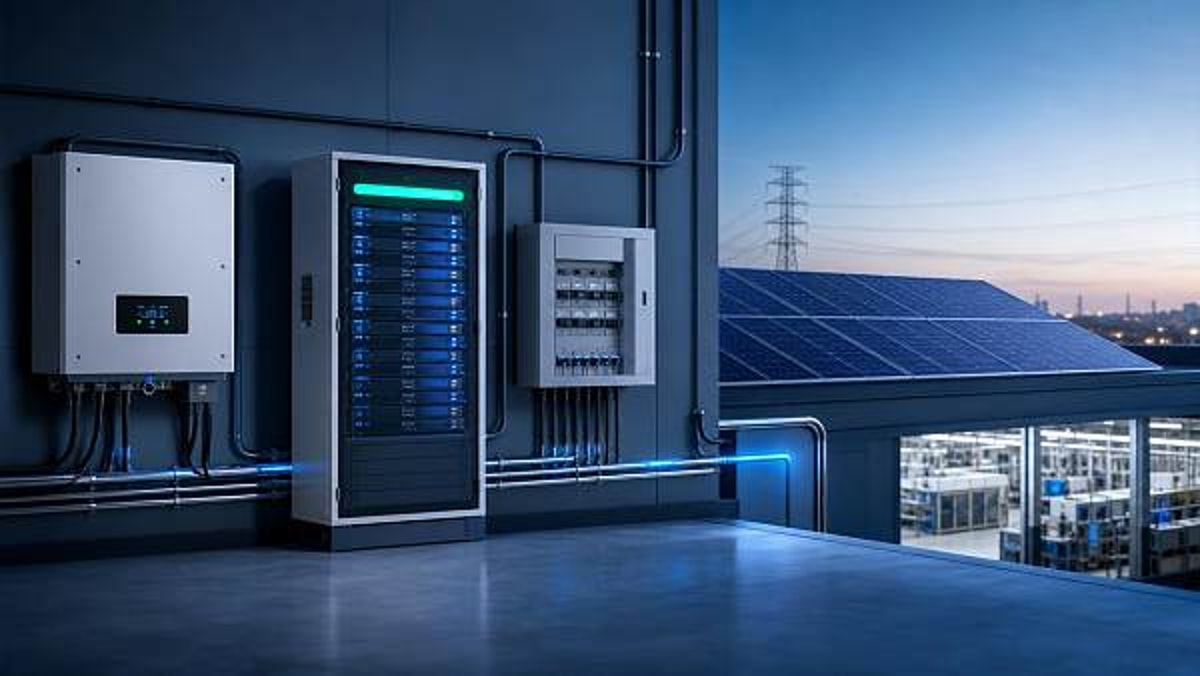
- Does the inverter provide true backup output, or is it only a grid-parallel device? Some hybrid inverters grid-tied systems can charge batteries but still shut down when the grid fails unless a dedicated backup port, transfer function, or gateway is present.
- What is the transfer time from grid loss to backup supply? For lighting or non-critical loads, a short interruption may be acceptable. For controls, routers, pumps, or process electronics, even a brief gap may cause a reset.
- Which loads are supported during backup mode? Many systems only support a protected subpanel, not the full facility. Operators should know exactly what remains energized.
- How much battery energy is available at the time of an outage? Backup value depends on usable battery capacity, discharge rate, reserve settings, and charging strategy.
- How does the inverter respond to poor grid quality? Voltage tolerance, frequency ride-through, anti-islanding settings, and reconnection logic directly affect system stability.
If any of these points are unclear, operators should pause assumptions about resilience. A system can be excellent for reducing electricity bills and still be inadequate for unstable supply.
Core Judgment Standard: When Are Hybrid Inverters Grid-Tied Systems Enough?
In practical use, hybrid inverters grid-tied systems are often enough when the power problem is moderate rather than extreme. They usually perform well if outages are short, critical loads are limited, batteries are sized realistically, and the site accepts some load prioritization. They may not be enough if the utility is absent for long periods, phase imbalance is severe, starting currents are high, or the facility expects seamless support for every circuit.
A useful operator rule is this: if the site mainly suffers from intermittent interruptions, occasional undervoltage, and rising electricity costs, a well-configured hybrid grid-tied system can provide strong value. If the site faces daily long blackouts, unstable frequency, heavy motor starts, or mission-critical production continuity, the inverter should be assessed as part of a broader resilience design rather than as a stand-alone answer.
Use This Technical Checklist Before Installation or Upgrade
1. Check grid behavior, not just outage count
Operators should log more than “how often the power goes out.” Also record undervoltage events, overvoltage spikes, low-frequency episodes, and the average length of recovery. Some hybrid inverters grid-tied systems disconnect correctly for safety but may reconnect slowly or repeatedly if the utility remains unstable. A simple outage tally can hide the true stress placed on the equipment.
2. Match inverter surge capability to real loads
Nameplate power is not enough. Pumps, compressors, refrigeration units, workshop tools, and HVAC fans can require several times their running power at startup. If the inverter’s backup output cannot tolerate that surge, the system may trip just when it is needed most. For operators, this is one of the most commonly missed checks.
3. Confirm battery operating strategy
Ask whether the battery is reserved for outages, used aggressively for tariff optimization, or controlled by a mixed mode. In unstable supply locations, a battery that is routinely discharged for savings may be too empty to provide meaningful backup later in the day. Reserve state-of-charge settings should be intentional, not left at default.
4. Separate critical and non-critical loads
The most reliable hybrid inverters grid-tied systems are usually installed with a clear backup loads panel. Network equipment, controls, alarms, refrigeration control boards, security systems, and key lighting should be identified first. If everything is placed on backup without prioritization, runtime drops sharply and nuisance trips become more likely.
5. Verify communication and monitoring depth
Users need event logs that show battery discharge, fault codes, grid abnormality alarms, transfer events, and load behavior. Without usable monitoring, operators often misdiagnose problems as inverter failure when the real cause is overload, low battery reserve, or poor utility quality.
6. Review standards and site protection coordination
Check compliance with local interconnection and anti-islanding requirements, breaker coordination, earthing design, and compatibility with upstream protection devices. In weak grids, poor coordination can create repeated disconnections that users incorrectly interpret as inadequate inverter design.
Quick Comparison Table: Good Fit vs. Warning Sign
The table below helps users judge whether hybrid inverters grid-tied systems are likely to be sufficient or whether the site needs a more robust architecture.
Scenario Notes: What Changes by Site Type?
Small commercial sites
Retail stores, small offices, and light service businesses often gain the most from hybrid inverters grid-tied systems. Their critical loads are usually easy to isolate, battery runtime requirements are manageable, and the value of maintaining internet, POS systems, lighting, and refrigeration controls is high. In these environments, careful load panel design matters more than very large inverter capacity.
Light industrial workshops
Here the main concern is surge current and process continuity. If machines stop mid-cycle, downtime costs may exceed energy savings. Users should check whether only controls and orderly shutdown systems need backup, or whether process loads must continue operating. That difference changes the entire design decision.
Cold chain and sensitive storage
For temperature-sensitive environments, the priority may be keeping monitoring, alarms, and selective compressors active rather than supporting all circuits. Operators should calculate holdover time, compressor cycling demand, and battery reserve strategy. A hybrid solution can work well, but only if runtime assumptions are realistic.
Healthcare support spaces and digital infrastructure
Even where hybrid inverters grid-tied systems are part of the plan, highly sensitive or regulated loads may still require UPS layers, generator coordination, or dedicated clean power design. Operators should avoid treating a hybrid inverter as a direct substitute for every level of backup architecture.
Commonly Missed Risks That Change the Outcome
- Assuming solar output will always help during an outage. If weather is poor, battery state is low, or the backup bus is limited, available support may be much less than expected.
- Ignoring ambient temperature and installation conditions. Heat can reduce inverter performance and battery life, especially in enclosed electrical rooms or outdoor cabinets without proper ventilation.
- Overlooking firmware settings and operating modes. A well-sized system can still perform badly if reserve thresholds, time-of-use schedules, or export rules are misconfigured.
- Failing to plan maintenance access and restart procedures. Operators should know how to isolate faults, review alarms, and recover service after abnormal shutdowns.
- Confusing “hybrid” with “full off-grid capability.” Many hybrid inverters grid-tied systems are designed for interactive operation first and resilience second.
Practical Execution Plan for Users and Operators
If your facility is considering a new installation or trying to improve an existing one, use the following sequence. It keeps decisions practical and reduces the risk of buying a system that looks capable on paper but disappoints in real conditions.
- Create a one-line list of critical loads, their running power, and their starting power.
- Record actual utility issues for at least several weeks if possible, including outage duration and voltage abnormalities.
- Define the minimum runtime target for essential loads: 10 minutes, 1 hour, 4 hours, or more.
- Set a battery reserve policy based on resilience needs, not only electricity price optimization.
- Ask suppliers to demonstrate backup mode behavior, transfer logic, overload tolerance, and monitoring screens.
- Plan operator training so users know what is backed up, what is not, and how to respond during faults.
For procurement teams and site users, this is also where reliable technical content matters. Platforms such as TradeNexus Pro help decision-makers compare technologies, supplier positioning, and application case studies across green energy, smart electronics, and supply chain-linked infrastructure. In fast-moving markets, having a verified information source reduces the risk of selecting a system based on marketing terms instead of performance criteria.
FAQ: Short Answers to the Most Common User Questions
Can hybrid inverters grid-tied systems protect against every outage?
No. They can protect selected loads effectively, but success depends on battery availability, transfer behavior, load sizing, and the severity of grid instability.
Are batteries mandatory if the grid is unstable?
For meaningful backup from a hybrid system, yes in most cases. Without stored energy, the value during outages is very limited.
Is a larger inverter always better?
Not necessarily. Correct load prioritization, surge matching, and battery strategy often matter more than simply increasing rated power.
Final Decision Guide and Next Step
So, are hybrid inverters grid-tied systems enough for unstable supply? Often yes for moderate instability, selected critical loads, and sites that combine energy savings with resilience planning. Often no if the expectation is seamless whole-site continuity under severe and prolonged grid failure. The most reliable decision comes from checking actual grid behavior, load priorities, battery reserve logic, surge demands, and protection coordination instead of relying on general product labels.
If you need to move from evaluation to procurement, prioritize these discussion points with suppliers or internal engineering teams: supported backup loads, transfer time, battery reserve settings, surge tolerance, event monitoring depth, standards compliance, installation constraints, expansion path, expected maintenance cycle, budget range, and delivery timeline. Those answers will tell you whether the proposed system is merely efficient on paper or genuinely fit for unstable real-world supply.
Get weekly intelligence in your inbox.
No noise. No sponsored content. Pure intelligence.
 May 02, 2026Commercial EV Charging Installation Costs Beyond the HardwareCommercial EV Charging Installation Costs Beyond the Hardware
 May 02, 2026Portable EV Charging Solutions: Where They Actually FitPortable EV Charging Solutions: Where They Actually Fit
 May 02, 2026Why Automotive Aluminum Extrusions Fail at Joining PointsWhy Automotive Aluminum Extrusions Fail at Joining Points
 May 02, 2026Sheet Metal Bending Services in the USA: What Drives Lead TimeSheet Metal Bending Services in the USA: What Drives Lead Time
 May 02, 2026Cost-Effective Factory Automation Often Starts Smaller Than ExpectedCost-Effective Factory Automation Often Starts Smaller Than Expected
 May 02, 2026Choosing a Solar Panels Wholesale Distributor Without Price TrapsChoosing a Solar Panels Wholesale Distributor Without Price Traps
 May 02, 2026High Efficiency PV Modules: When the Premium Makes SenseHigh Efficiency PV Modules: When the Premium Makes Sense
 May 02, 2026Why Data Centers Are Rethinking ESS Backup StrategyWhy Data Centers Are Rethinking ESS Backup Strategy
 May 02, 2026Do Agricultural PV Modules Need Different Frame Designs?Do Agricultural PV Modules Need Different Frame Designs?
 May 02, 2026How to Vet an OEM Machined Parts Supplier in GermanyHow to Vet an OEM Machined Parts Supplier in Germany
 May 02, 2026Custom Metal Fabrication for Aerospace: Cost vs CertificationCustom Metal Fabrication for Aerospace: Cost vs Certification
 May 02, 2026What Slows Rapid Prototyping for Automotive Parts MostWhat Slows Rapid Prototyping for Automotive Parts Most
 May 02, 2026Rapid Prototyping Choices That Cut Delays in Consumer ElectronicsRapid Prototyping Choices That Cut Delays in Consumer Electronics
 May 02, 2026Why Aerospace Parts Need More Than Tight Lathe TurningWhy Aerospace Parts Need More Than Tight Lathe Turning
 May 02, 2026What Fireproof Technology Really Changes in Lithium BatteriesWhat Fireproof Technology Really Changes in Lithium Batteries
 May 02, 2026Are Grid-Tied Hybrid Inverters Enough for Unstable Supply?Are Grid-Tied Hybrid Inverters Enough for Unstable Supply?
 May 02, 2026What a Solar Panels Wholesale Price List Does Not ShowWhat a Solar Panels Wholesale Price List Does Not Show
 May 02, 2026How Long Life Cycle Batteries Lower Replacement CostsHow Long Life Cycle Batteries Lower Replacement Costs
 May 02, 2026Lathe Turning Tolerances That Matter in Industrial MachineryLathe Turning Tolerances That Matter in Industrial Machinery
 May 02, 2026ESS for Commercial Buildings: Sizing Mistakes to AvoidESS for Commercial Buildings: Sizing Mistakes to Avoid
 May 02, 2026Warehouse Robotics Bottlenecks That Slow Automation ROIWarehouse Robotics Bottlenecks That Slow Automation ROI
 May 02, 2026Where Smart Manufacturing Pays Off First in Auto PlantsWhere Smart Manufacturing Pays Off First in Auto Plants
 May 02, 2026Marine Aluminum Extrusions: What Corrosion Ratings MissMarine Aluminum Extrusions: What Corrosion Ratings Miss
 May 02, 2026Plastic Injection Molding Machine Specs That Affect OutputPlastic Injection Molding Machine Specs That Affect Output
 May 02, 2026What Limits 5 Axis Milling Accuracy for Medical Devices?What Limits 5 Axis Milling Accuracy for Medical Devices?
 May 02, 2026How to Compare a Die Casting Parts Manufacturer in ChinaHow to Compare a Die Casting Parts Manufacturer in China
 May 02, 2026Why Oil and Gas Projects Still Rely on Steel ForgingWhy Oil and Gas Projects Still Rely on Steel Forging