Why Data Centers Are Rethinking ESS Backup Strategy
As uptime demands intensify and energy costs remain volatile, data center leaders are rethinking how resilience is built into critical infrastructure. ESS energy storage for data centers is emerging as a smarter backup strategy, offering faster response, greater flexibility, and stronger support for sustainability goals. This article explores why enterprise decision-makers are reassessing conventional backup models and what this shift means for long-term operational performance.
Understanding the shift in backup architecture
For years, the backup model in many facilities followed a familiar pattern: utility power feeds the site, UPS systems bridge short interruptions, and diesel generators carry the load during prolonged outages. That architecture still plays an important role, but it is no longer the only answer. ESS energy storage for data centers is changing the conversation because it can serve as both a resilience asset and an energy management tool.
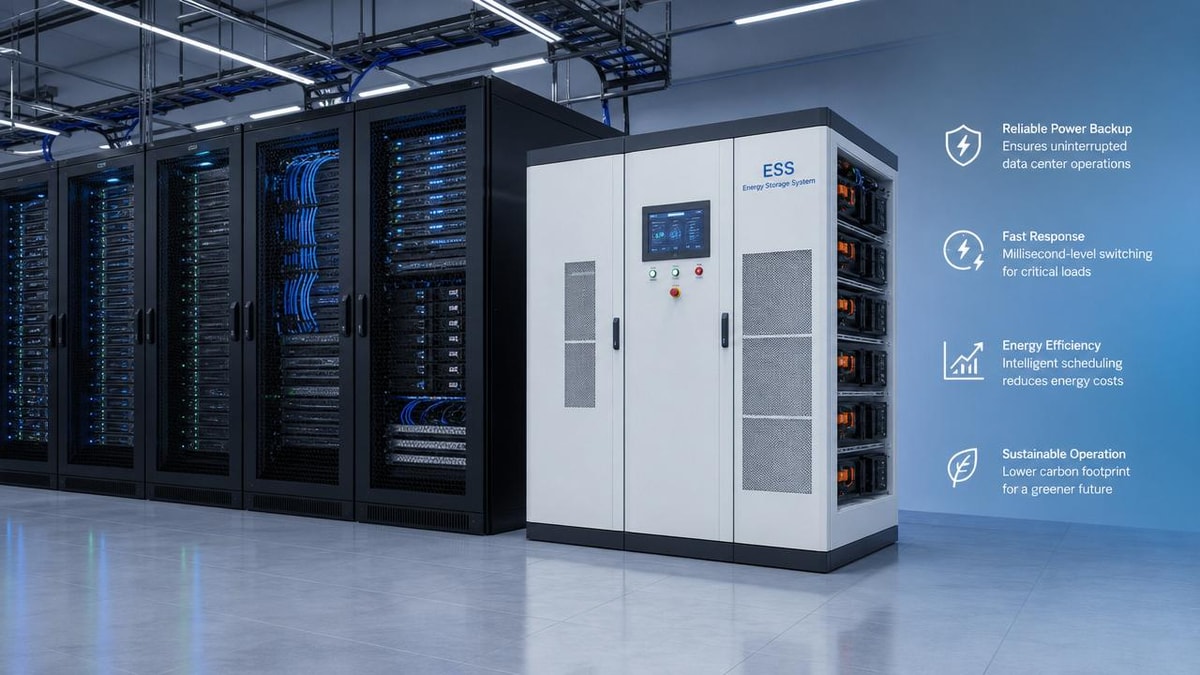
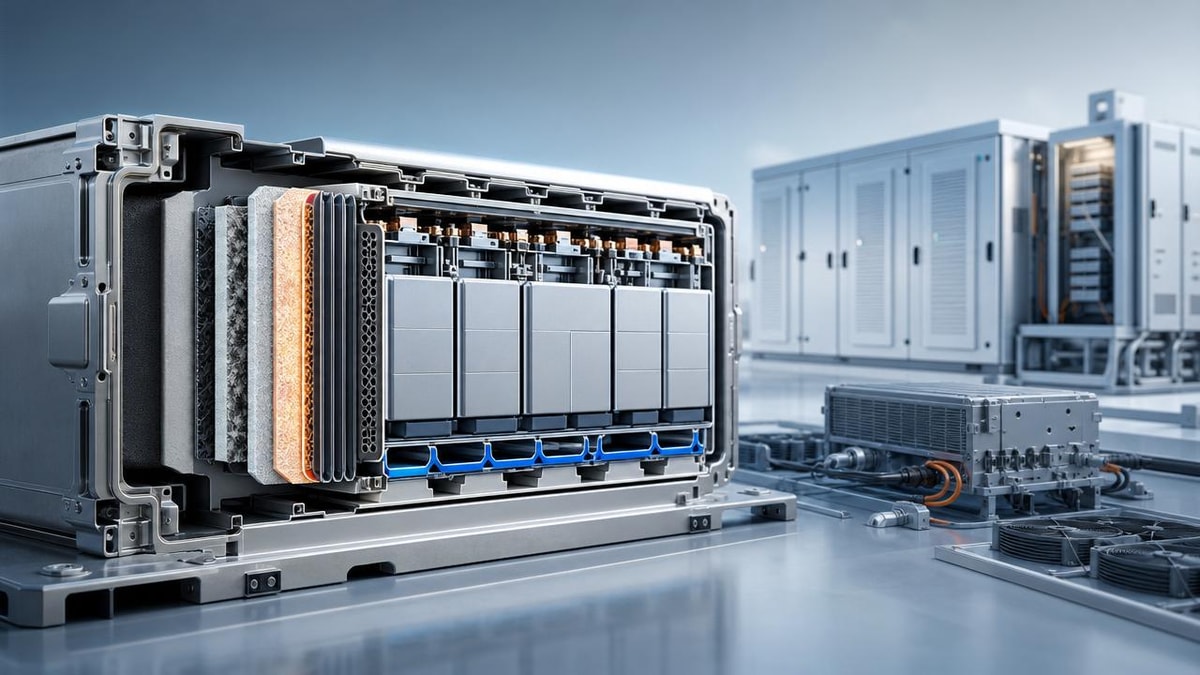
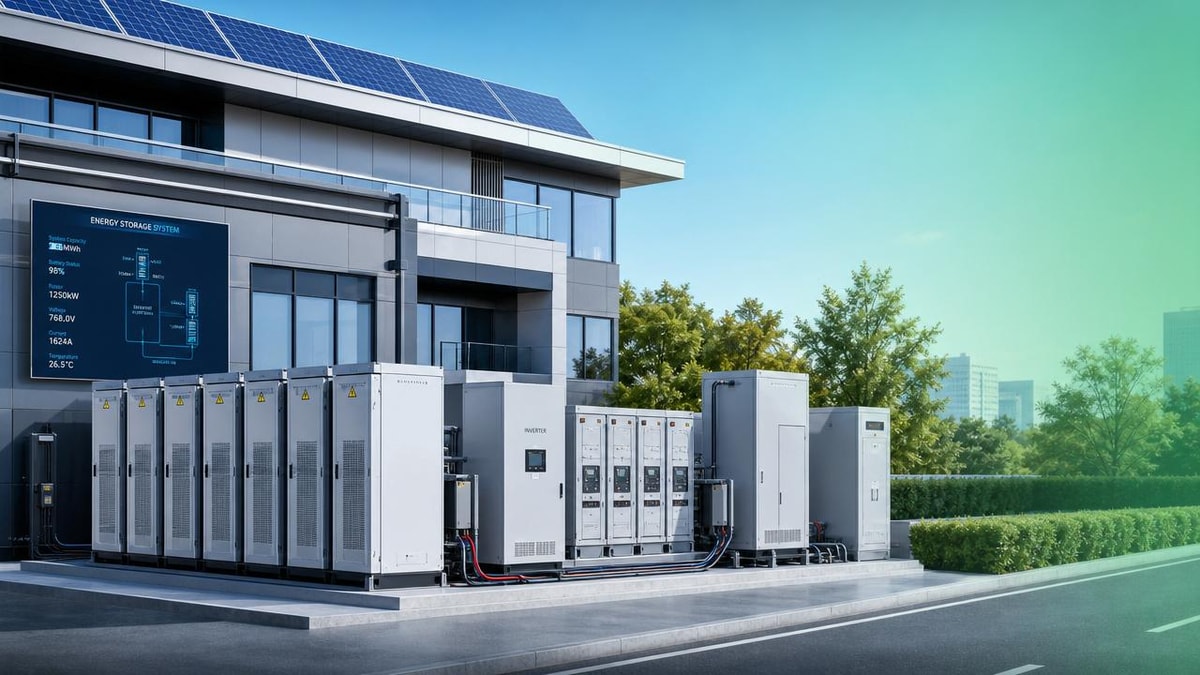
In practical terms, ESS refers to battery-based or hybrid storage systems that capture energy and discharge it when needed. In a data center setting, these systems can support ride-through power, provide backup capacity, smooth load fluctuations, reduce peak demand charges, and integrate with on-site renewables or microgrids. Instead of treating backup as a passive insurance policy, operators are increasingly viewing stored energy as an active component of infrastructure strategy.
This matters because the economics and risk profile of digital infrastructure have changed. AI workloads, colocation growth, edge deployments, and stricter service-level expectations all increase the cost of downtime. At the same time, enterprise customers, investors, and regulators are scrutinizing carbon intensity, fuel dependency, and operational efficiency. ESS energy storage for data centers fits into this broader transition by helping facilities respond faster while aligning with long-term energy planning.
Why the industry is paying closer attention now
Several industry trends are converging. First, grid instability is becoming a board-level concern in many markets. Extreme weather, local congestion, transmission constraints, and aging utility infrastructure can all create short disturbances or longer outages. Second, electricity pricing is more volatile, especially where demand charges or time-of-use tariffs are significant. Third, sustainability commitments are moving from marketing language to audited operational targets.
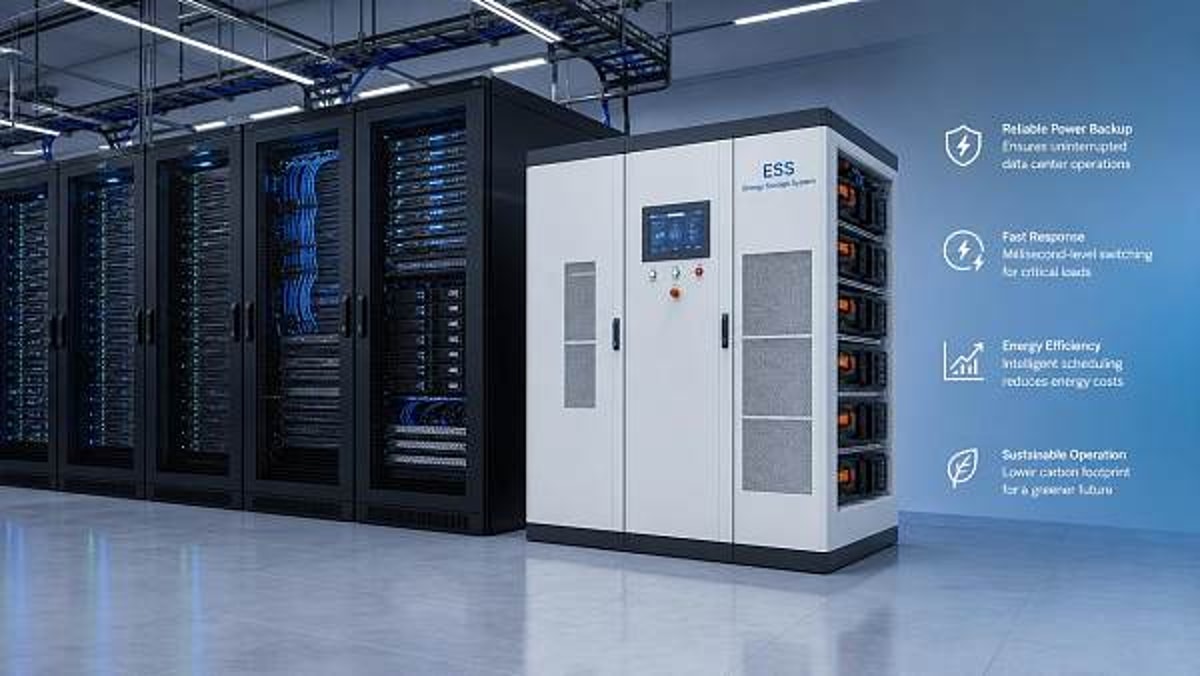
Against that backdrop, conventional generator-centric backup strategies can appear increasingly limited. Generators are effective for extended outages, but they are not always ideal for rapid response, emissions reduction, fuel logistics, or participation in broader energy optimization. ESS energy storage for data centers gives operators another layer of control. It can react in milliseconds, support transition events more cleanly, and create opportunities for cost management even when there is no outage.
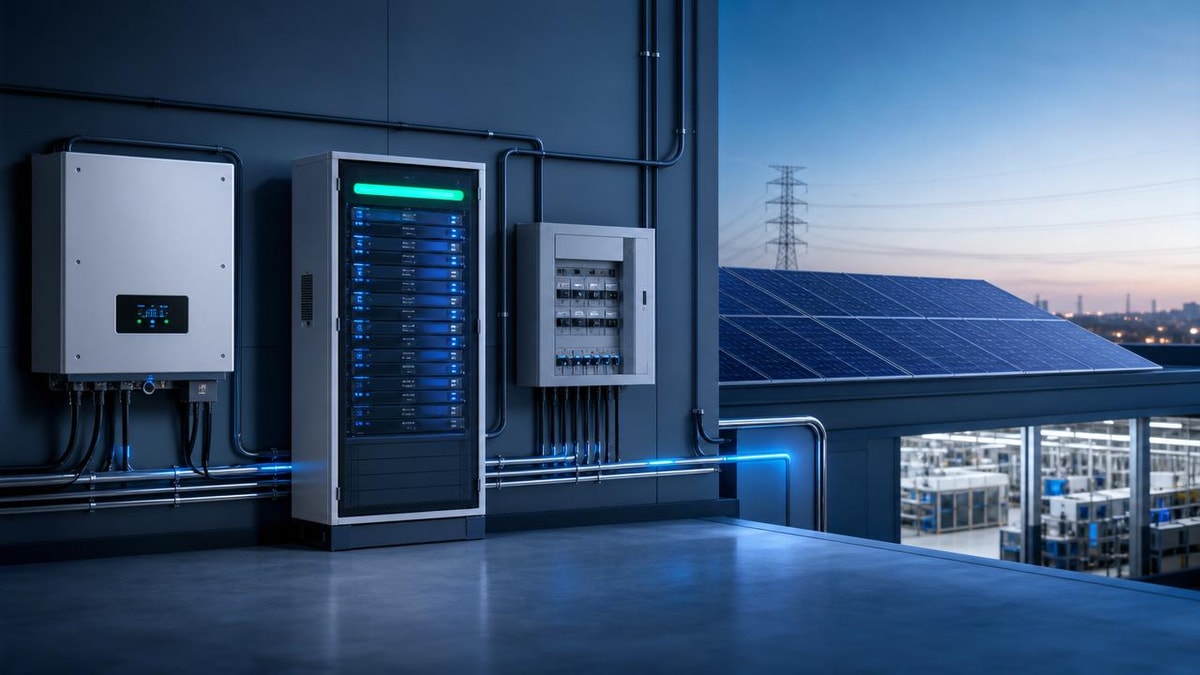
For enterprise decision-makers, the real issue is not whether generators disappear, but whether the entire backup stack should be redesigned. In many cases, the answer is yes. Facilities are moving toward hybrid resilience models that combine UPS, battery storage, generators, advanced controls, and sometimes renewable generation. The result is a more flexible system that can be tuned for uptime, economics, and environmental performance at the same time.
What ESS energy storage for data centers actually delivers
The strongest case for ESS energy storage for data centers comes from its multi-layered value. It improves resilience, but it also influences operational strategy in ways that legacy backup assets typically cannot.
Faster response and cleaner transition
Battery storage responds almost instantly. That speed can reduce the exposure associated with transfer events and support sensitive digital loads more effectively. In environments where milliseconds matter, response quality is as important as backup duration.
Support for energy cost optimization
Stored energy can be dispatched during peak price periods, helping reduce demand charges or optimize energy purchases. This turns backup capacity into a financial asset rather than a system that sits idle most of the year.
Better alignment with decarbonization goals
Many organizations are trying to reduce dependence on fossil-fuel-based backup wherever feasible. While diesel generation remains relevant for long-duration resilience, ESS energy storage for data centers can reduce generator runtime, improve renewable integration, and help meet internal ESG targets.
Improved operational flexibility
A programmable storage system can support multiple operating modes. It can act as spinning reserve, bridge utility disturbances, participate in demand response programs, or provide local balancing support. That flexibility is particularly valuable in large campuses and fast-growing sites where load profiles are changing.
A practical industry overview
Not every facility adopts the same backup design. The right approach depends on uptime requirements, grid conditions, site scale, sustainability priorities, and financial objectives. The table below outlines how common priorities connect to ESS energy storage for data centers.
Where this strategy has the most business value
ESS energy storage for data centers is not only relevant to hyperscale operators. Its value extends across different types of digital infrastructure, each with distinct business drivers.
Large enterprise campuses
Enterprises with mission-critical applications often face pressure to improve uptime and show measurable progress on energy strategy. For these sites, storage can strengthen continuity planning while supporting internal sustainability reporting and utility cost control.
Colocation facilities
Colocation providers compete on reliability, efficiency, and customer trust. A well-integrated ESS layer can improve service resilience and differentiate the facility for tenants that want greener or more modern power infrastructure.
Edge and distributed data centers
Smaller distributed sites may operate in areas with less stable grids or limited maintenance support. ESS energy storage for data centers can simplify resilience planning by providing fast-response backup with a potentially lower operational burden than fuel-dependent systems alone.
AI and high-density computing environments
High-density loads create sharper power ramps and more intense consequences from disruptions. In these environments, energy storage can help manage dynamic demand and contribute to higher-quality power support during critical events.
Key evaluation points before redesigning backup strategy
Although the benefits are significant, adoption should be approached through disciplined assessment rather than trend-following. Decision-makers should evaluate ESS energy storage for data centers against technical, financial, and organizational criteria.
1. Clarify the resilience objective
Some facilities need only seconds or minutes of bridging support, while others want longer-duration backup or participation in a site microgrid. The storage design must match the outage profile and recovery requirements of the business.
2. Model total lifecycle value
A storage investment should be analyzed beyond initial capex. The relevant questions include energy savings, avoided downtime risk, maintenance implications, replacement cycles, warranty terms, software controls, and interaction with existing assets.
3. Review safety, compliance, and thermal design
Battery technologies require careful attention to fire protection, ventilation, monitoring, and code compliance. Site design must account for local regulations, emergency response coordination, and operational training.
4. Consider controls and integration
The intelligence layer is essential. ESS energy storage for data centers creates the most value when integrated with UPS systems, generators, building management platforms, and energy management software. Poor controls can limit benefits even when hardware is strong.
5. Align stakeholders early
Backup strategy decisions touch facilities teams, IT leadership, finance, procurement, compliance, and sustainability functions. Early alignment reduces project friction and helps ensure the business case reflects the full value of resilience and energy flexibility.
Common implementation models
In the market today, several practical models are emerging. One is the hybrid generator-battery design, where storage improves short-duration performance and reduces generator dependence. Another is the microgrid-oriented model, where storage coordinates with on-site solar, fuel cells, or other distributed resources. A third is the tariff optimization model, where the storage system is justified partly through demand management and power quality benefits.
These models illustrate a broader truth: ESS energy storage for data centers should not be viewed as a standalone battery purchase. It is part of a wider infrastructure strategy that affects uptime, energy economics, sustainability metrics, and future expansion options. Organizations that frame it this way are more likely to make sound, scalable decisions.
Strategic implications for enterprise decision-makers
For business leaders, the importance of this shift goes beyond engineering. Digital infrastructure is now deeply tied to revenue continuity, customer experience, cyber-physical resilience, and corporate reputation. That means backup strategy deserves strategic oversight. ESS energy storage for data centers can help turn resilience from a static cost center into a more intelligent operational capability.
Platforms such as TradeNexus Pro track these changes because they reflect a wider transformation across advanced manufacturing, green energy, smart electronics, healthcare technology, and supply chain SaaS. In each of these sectors, reliable digital infrastructure supports procurement visibility, partner coordination, analytics, and operational continuity. As energy systems become more interconnected with business performance, informed decisions require both technical insight and market context.
Moving from interest to informed action
The move toward ESS energy storage for data centers is not a passing trend. It reflects a more mature understanding of what modern backup systems should do: protect uptime, improve responsiveness, enable flexibility, and support sustainability without compromising reliability. For enterprise decision-makers, the next step is not to replace every legacy asset overnight, but to evaluate where storage can create measurable value within a broader resilience roadmap.
Organizations that begin with a clear assessment of risk exposure, power quality needs, tariff structure, and long-term infrastructure goals will be better positioned to redesign backup architecture with confidence. In an environment where downtime is costly and energy strategy is increasingly strategic, rethinking backup is no longer optional. It is becoming a core part of competitive digital operations.
Get weekly intelligence in your inbox.
No noise. No sponsored content. Pure intelligence.
 May 02, 2026Commercial EV Charging Installation Costs Beyond the HardwareCommercial EV Charging Installation Costs Beyond the Hardware
 May 02, 2026Portable EV Charging Solutions: Where They Actually FitPortable EV Charging Solutions: Where They Actually Fit
 May 02, 2026Why Automotive Aluminum Extrusions Fail at Joining PointsWhy Automotive Aluminum Extrusions Fail at Joining Points
 May 02, 2026Sheet Metal Bending Services in the USA: What Drives Lead TimeSheet Metal Bending Services in the USA: What Drives Lead Time
 May 02, 2026Cost-Effective Factory Automation Often Starts Smaller Than ExpectedCost-Effective Factory Automation Often Starts Smaller Than Expected
 May 02, 2026Choosing a Solar Panels Wholesale Distributor Without Price TrapsChoosing a Solar Panels Wholesale Distributor Without Price Traps
 May 02, 2026High Efficiency PV Modules: When the Premium Makes SenseHigh Efficiency PV Modules: When the Premium Makes Sense
 May 02, 2026Why Data Centers Are Rethinking ESS Backup StrategyWhy Data Centers Are Rethinking ESS Backup Strategy
 May 02, 2026Do Agricultural PV Modules Need Different Frame Designs?Do Agricultural PV Modules Need Different Frame Designs?
 May 02, 2026How to Vet an OEM Machined Parts Supplier in GermanyHow to Vet an OEM Machined Parts Supplier in Germany
 May 02, 2026Custom Metal Fabrication for Aerospace: Cost vs CertificationCustom Metal Fabrication for Aerospace: Cost vs Certification
 May 02, 2026What Slows Rapid Prototyping for Automotive Parts MostWhat Slows Rapid Prototyping for Automotive Parts Most
 May 02, 2026Rapid Prototyping Choices That Cut Delays in Consumer ElectronicsRapid Prototyping Choices That Cut Delays in Consumer Electronics
 May 02, 2026Why Aerospace Parts Need More Than Tight Lathe TurningWhy Aerospace Parts Need More Than Tight Lathe Turning
 May 02, 2026What Fireproof Technology Really Changes in Lithium BatteriesWhat Fireproof Technology Really Changes in Lithium Batteries
 May 02, 2026Are Grid-Tied Hybrid Inverters Enough for Unstable Supply?Are Grid-Tied Hybrid Inverters Enough for Unstable Supply?
 May 02, 2026What a Solar Panels Wholesale Price List Does Not ShowWhat a Solar Panels Wholesale Price List Does Not Show
 May 02, 2026How Long Life Cycle Batteries Lower Replacement CostsHow Long Life Cycle Batteries Lower Replacement Costs
 May 02, 2026Lathe Turning Tolerances That Matter in Industrial MachineryLathe Turning Tolerances That Matter in Industrial Machinery
 May 02, 2026ESS for Commercial Buildings: Sizing Mistakes to AvoidESS for Commercial Buildings: Sizing Mistakes to Avoid
 May 02, 2026Warehouse Robotics Bottlenecks That Slow Automation ROIWarehouse Robotics Bottlenecks That Slow Automation ROI
 May 02, 2026Where Smart Manufacturing Pays Off First in Auto PlantsWhere Smart Manufacturing Pays Off First in Auto Plants
 May 02, 2026Marine Aluminum Extrusions: What Corrosion Ratings MissMarine Aluminum Extrusions: What Corrosion Ratings Miss
 May 02, 2026Plastic Injection Molding Machine Specs That Affect OutputPlastic Injection Molding Machine Specs That Affect Output
 May 02, 2026What Limits 5 Axis Milling Accuracy for Medical Devices?What Limits 5 Axis Milling Accuracy for Medical Devices?
 May 02, 2026How to Compare a Die Casting Parts Manufacturer in ChinaHow to Compare a Die Casting Parts Manufacturer in China
 May 02, 2026Why Oil and Gas Projects Still Rely on Steel ForgingWhy Oil and Gas Projects Still Rely on Steel Forging