Portable EV Charging Solutions: Where They Actually Fit
Portable EV charging solutions are often marketed as a fix for every charging problem, but their real value depends on where and how drivers use them. From roadside backup to temporary home setups and travel flexibility, EV charging stations portable solutions can fill important gaps. This article explores where they truly fit, what limits they have, and how consumers can choose the right option with confidence.
The market signal is changing: portable charging is moving from “emergency gadget” to “situational tool”
The biggest shift in the EV market is not that public charging has failed. It is that drivers now expect charging access to match more varied real-life routines. Early EV adoption centered on urban commuters with predictable home charging. Today, the user base is broader: apartment residents, second-home owners, rideshare drivers, campers, rural households, and buyers entering the market through used EVs. That change is creating more interest in EV charging stations portable solutions, but also more confusion about what they can realistically do.
In practical terms, portable charging is gaining relevance because charging demand is fragmenting. A permanent wallbox remains the best answer for many daily users, and fast public charging remains essential for long-distance travel. Yet there is a growing middle zone where drivers need flexibility more than speed. That is exactly where portable systems fit. The market is slowly correcting from exaggerated claims toward a more useful understanding: portable units are not universal replacements, but they are effective gap-fillers.
This shift matters to consumers because buying the wrong charging product can create frustration, underperformance, or even safety concerns. It also matters to retailers and manufacturers, because the next wave of demand will likely come from customers comparing use cases, plug compatibility, mobility, weather resistance, and temporary installation value—not just headline charging speed.
Why demand for EV charging stations portable solutions is rising now
Several forces are pushing portable charging into mainstream consideration. First, EV adoption is expanding into housing situations that do not support immediate fixed charging installation. Many consumers rent, live in multi-unit buildings, or face electrical upgrade delays. For them, a portable unit can serve as a bridge while long-term charging arrangements are still unresolved.
Second, travel behavior is changing. More EV owners want confidence when visiting relatives, staying at vacation homes, or driving in regions where charging coverage is inconsistent. In those scenarios, the value of EV charging stations portable solutions is psychological as much as practical. They reduce range anxiety by giving drivers one more charging option, even if the charging rate is modest.
Third, weather events and grid disruptions have changed how people think about resilience. Portable charging does not solve every outage problem, but it does fit a broader consumer trend toward backup planning. Drivers increasingly think in terms of charging redundancy: home charger if available, public network when needed, and portable access as a fallback.
Finally, product design has improved. Better cables, app monitoring, variable amperage settings, and multi-plug adaptability have made newer portable chargers more usable than earlier generations. The technology is not revolutionary, but the user experience is becoming more polished, which is often what moves a category from niche to credible.
Where portable solutions actually fit best
The most important consumer insight is that EV charging stations portable solutions work best in specific, limited roles. They are strongest where flexibility, temporary use, or backup value matters more than fast daily replenishment.
One strong fit is roadside or contingency backup. If a driver miscalculates range, arrives at a destination with no operational charging nearby, or needs a slow charge from an available outlet, a portable charger can make the difference between inconvenience and a tow. This is not the most common use, but it is one of the most defensible reasons to own one.
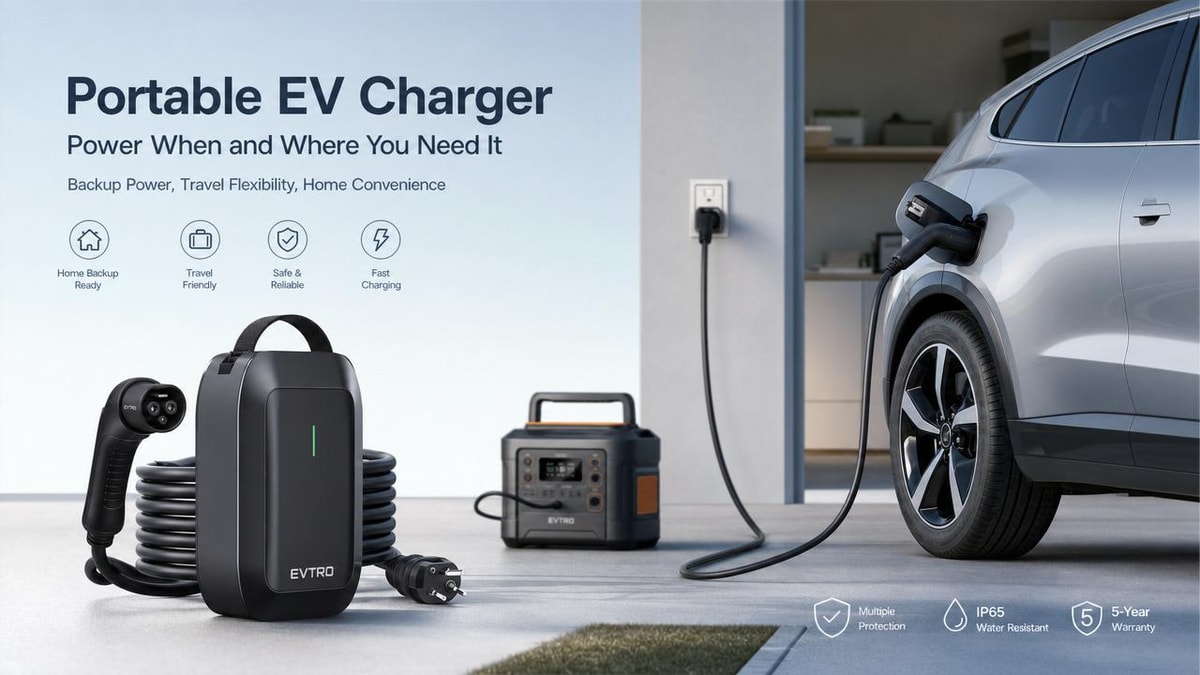
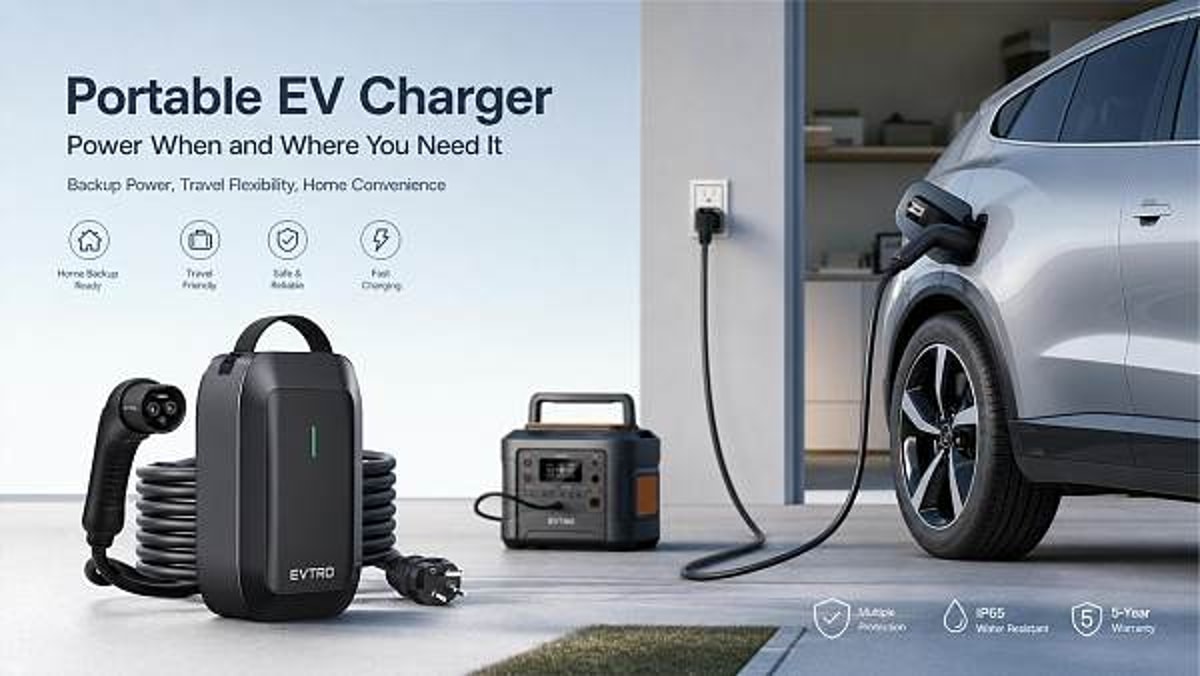
Another fit is temporary home charging. Consumers moving into a new home, waiting on an electrician, or testing whether an EV works with their lifestyle may not want to commit immediately to a fixed charger. A portable Level 1 or portable Level 2 option can help them start charging right away while they evaluate long-term needs.
Portable charging also makes sense for destination flexibility. Vacation homes, family visits, work trips, and outdoor recreation all create situations where charging infrastructure is uncertain. Here, the best EV charging stations portable solutions are less about speed and more about preserving options. They give drivers a way to convert available electrical access into usable range overnight or over a long stop.
For some households, a portable unit can even function as a shared resource. A family with two properties, or one that occasionally changes parking locations, may prefer a charger that moves with them. In that case, portability is not a backup feature; it is the core value proposition.
Where the limits are becoming clearer
At the same time, market maturity is making the limits of portable charging more visible. The first limit is charging speed. Many consumers discover too late that a basic portable charger using a standard household outlet adds range slowly. That can be acceptable for overnight charging or emergencies, but it may be frustrating for high-mileage drivers.
The second limit is electrical compatibility. Not every outlet, circuit, or extension setup is appropriate. The safe use of EV charging stations portable solutions depends on correct voltage, dedicated circuit capacity, connector compatibility, and environment. Consumers often focus on the charger itself when they should be evaluating the power source just as carefully.
A third limit is expectations around durability and convenience. A hardwired wall charger is usually simpler for daily repetition: no unpacking, no storage, less cable handling, and often better weather integration. Portable chargers can absolutely be rugged, but repeated setup and pack-away use is less seamless than permanent installation for drivers who charge every day at home.
There is also a market education problem. Some products are sold with messaging that implies near-universal usefulness. In reality, portable charging is highly dependent on vehicle type, local electrical conditions, and trip patterns. The category is becoming more useful precisely because buyers are learning to ask sharper questions.
The consumer groups most affected by this trend
Not every EV owner benefits equally from portable charging. The strongest demand is emerging from user groups whose charging access is irregular, transitional, or location-dependent. That is a critical signal for anyone evaluating product claims.
What smart buyers should watch before choosing EV charging stations portable solutions
As the category grows, the most important buying trend is not “more power.” It is better fit assessment. Consumers should start by asking how many times per month they truly need mobility. If the charger will remain in one garage and power a daily commute, a fixed home charger may be the more practical choice. If the charger needs to travel, adapt across locations, or stay in the trunk for peace of mind, then portable value becomes much easier to justify.
Safety and compatibility should come next. Buyers should confirm connector standards, adjustable amperage, weather resistance, cable quality, and whether the unit supports the outlets they can legally and safely use. They should also be realistic about charging rates from household sockets versus higher-voltage options. Portable does not automatically mean broadly compatible or equally effective in every setting.
Another emerging priority is usability. A good portable charger should be easy to transport, simple to read, and not burdensome to coil, store, or deploy. This sounds minor, but many charging products succeed or fail in everyday use because of handling friction rather than technical specs. The market direction suggests that convenience details will become bigger purchase drivers over time.
How this trend may develop next
Looking ahead, EV charging stations portable solutions are likely to become more specialized rather than more universal. Some products will clearly target emergency readiness, emphasizing compact size and broad plug options. Others will target semi-regular home use, offering stronger weather protection and higher power where electrical infrastructure permits. This segmentation is healthy because it aligns product design with actual consumer behavior.
Another likely direction is stronger integration with energy awareness. Consumers increasingly want visibility into charging speed, power draw, scheduling, and fault detection. Portable devices that can provide clearer diagnostics and safer operation will stand out. In a more mature market, trust is a competitive advantage, especially in products that interact directly with household electrical systems.
Policy and infrastructure growth may also shape demand in an indirect way. As more public charging comes online, portable charging may become less important for mainstream commuting but more valuable for edge cases, travel redundancy, and non-urban lifestyles. That does not weaken the category. It clarifies it.
A practical decision framework for consumers
If buyers want to make a confident decision, they should judge portable charging by use scenario rather than by marketing language. A simple framework can help:
If your primary problem is daily charging speed at home, prioritize a dedicated installed charger. If your problem is uncertain access across multiple places, portable charging deserves strong consideration. If your concern is emergency preparedness, choose a unit built for reliability, safe compatibility, and simple deployment. If your goal is to delay installation while learning your EV routine, a portable charger can be an efficient transition tool.
The key trend-based insight is that the value of EV charging stations portable solutions rises when charging routines become less predictable. The less stable the charging environment, the more useful portability becomes. The more stable the environment, the more permanent infrastructure usually wins.
Final takeaway and next questions to ask
Portable charging is finding its real place in the EV ecosystem. It is not replacing home charging or public fast charging, but it is becoming a meaningful layer between them. That is the real market shift consumers should understand. EV charging stations portable solutions fit best when flexibility, temporary deployment, backup access, and travel confidence matter more than maximum charging speed.
Before buying, consumers should confirm four things: where they will actually use the charger, what electrical access is safely available, how often portability is needed, and whether slower charging is acceptable in those moments. If those answers are clear, the right portable solution can be highly practical. If they are vague, the product may end up as an expensive compromise.
For anyone trying to judge the trend for their own situation, the most useful next step is not asking, “Do portable chargers work?” It is asking, “In which exact part of my charging routine do I need flexibility most?” That question leads to better decisions, better expectations, and a much better fit.
Get weekly intelligence in your inbox.
No noise. No sponsored content. Pure intelligence.
 May 02, 2026Commercial EV Charging Installation Costs Beyond the HardwareCommercial EV Charging Installation Costs Beyond the Hardware
 May 02, 2026Portable EV Charging Solutions: Where They Actually FitPortable EV Charging Solutions: Where They Actually Fit
 May 02, 2026Why Automotive Aluminum Extrusions Fail at Joining PointsWhy Automotive Aluminum Extrusions Fail at Joining Points
 May 02, 2026Sheet Metal Bending Services in the USA: What Drives Lead TimeSheet Metal Bending Services in the USA: What Drives Lead Time
 May 02, 2026Cost-Effective Factory Automation Often Starts Smaller Than ExpectedCost-Effective Factory Automation Often Starts Smaller Than Expected
 May 02, 2026Choosing a Solar Panels Wholesale Distributor Without Price TrapsChoosing a Solar Panels Wholesale Distributor Without Price Traps
 May 02, 2026High Efficiency PV Modules: When the Premium Makes SenseHigh Efficiency PV Modules: When the Premium Makes Sense
 May 02, 2026Why Data Centers Are Rethinking ESS Backup StrategyWhy Data Centers Are Rethinking ESS Backup Strategy
 May 02, 2026Do Agricultural PV Modules Need Different Frame Designs?Do Agricultural PV Modules Need Different Frame Designs?
 May 02, 2026How to Vet an OEM Machined Parts Supplier in GermanyHow to Vet an OEM Machined Parts Supplier in Germany
 May 02, 2026Custom Metal Fabrication for Aerospace: Cost vs CertificationCustom Metal Fabrication for Aerospace: Cost vs Certification
 May 02, 2026What Slows Rapid Prototyping for Automotive Parts MostWhat Slows Rapid Prototyping for Automotive Parts Most
 May 02, 2026Rapid Prototyping Choices That Cut Delays in Consumer ElectronicsRapid Prototyping Choices That Cut Delays in Consumer Electronics
 May 02, 2026Why Aerospace Parts Need More Than Tight Lathe TurningWhy Aerospace Parts Need More Than Tight Lathe Turning
 May 02, 2026What Fireproof Technology Really Changes in Lithium BatteriesWhat Fireproof Technology Really Changes in Lithium Batteries
 May 02, 2026Are Grid-Tied Hybrid Inverters Enough for Unstable Supply?Are Grid-Tied Hybrid Inverters Enough for Unstable Supply?
 May 02, 2026What a Solar Panels Wholesale Price List Does Not ShowWhat a Solar Panels Wholesale Price List Does Not Show
 May 02, 2026How Long Life Cycle Batteries Lower Replacement CostsHow Long Life Cycle Batteries Lower Replacement Costs
 May 02, 2026Lathe Turning Tolerances That Matter in Industrial MachineryLathe Turning Tolerances That Matter in Industrial Machinery
 May 02, 2026ESS for Commercial Buildings: Sizing Mistakes to AvoidESS for Commercial Buildings: Sizing Mistakes to Avoid
 May 02, 2026Warehouse Robotics Bottlenecks That Slow Automation ROIWarehouse Robotics Bottlenecks That Slow Automation ROI
 May 02, 2026Where Smart Manufacturing Pays Off First in Auto PlantsWhere Smart Manufacturing Pays Off First in Auto Plants
 May 02, 2026Marine Aluminum Extrusions: What Corrosion Ratings MissMarine Aluminum Extrusions: What Corrosion Ratings Miss
 May 02, 2026Plastic Injection Molding Machine Specs That Affect OutputPlastic Injection Molding Machine Specs That Affect Output
 May 02, 2026What Limits 5 Axis Milling Accuracy for Medical Devices?What Limits 5 Axis Milling Accuracy for Medical Devices?
 May 02, 2026How to Compare a Die Casting Parts Manufacturer in ChinaHow to Compare a Die Casting Parts Manufacturer in China
 May 02, 2026Why Oil and Gas Projects Still Rely on Steel ForgingWhy Oil and Gas Projects Still Rely on Steel Forging