Marine Aluminum Extrusions: What Corrosion Ratings Miss
Corrosion ratings can be useful, but they rarely tell the full story behind long-term performance, inspection risk, and safety compliance at sea. For quality control and safety teams evaluating aluminum extrusions for marine applications, factors like alloy selection, surface treatment, galvanic exposure, and load conditions often matter just as much. This article examines what standard corrosion metrics overlook and how to make more reliable material decisions in demanding marine environments.
What marine corrosion ratings explain—and what they do not
In many industrial specifications, corrosion resistance is reduced to a rating, a salt spray number, or a broad statement such as “marine grade.” That shorthand is convenient, but it can be misleading when teams are assessing aluminum extrusions for marine applications. A corrosion score may indicate how a sample behaved under a controlled test, yet offshore and coastal service conditions are not controlled in the same way. Real structures face cyclic wetting, trapped chlorides, mechanical stress, dissimilar metal contact, coating damage, and maintenance delays.
For quality control personnel, the issue is not simply whether a profile resists visible corrosion at the start of service. It is whether the extrusion maintains structural integrity, dimensional consistency, inspectability, and predictable failure behavior over time. For safety managers, the question is even broader: can the material support safe operations when exposed to splash zones, cargo handling impacts, vibration, and emergency repair conditions? A standard rating rarely answers all of that.
This is why decisions about aluminum extrusions for marine applications should be based on system performance rather than on corrosion labels alone. The alloy, temper, fabrication route, joint design, coating system, and surrounding hardware all influence long-term reliability. In practice, many field failures occur not because the base metal was “wrong” in a generic sense, but because the evaluation criteria were too narrow at the approval stage.
Why the marine sector pays close attention to extrusion performance
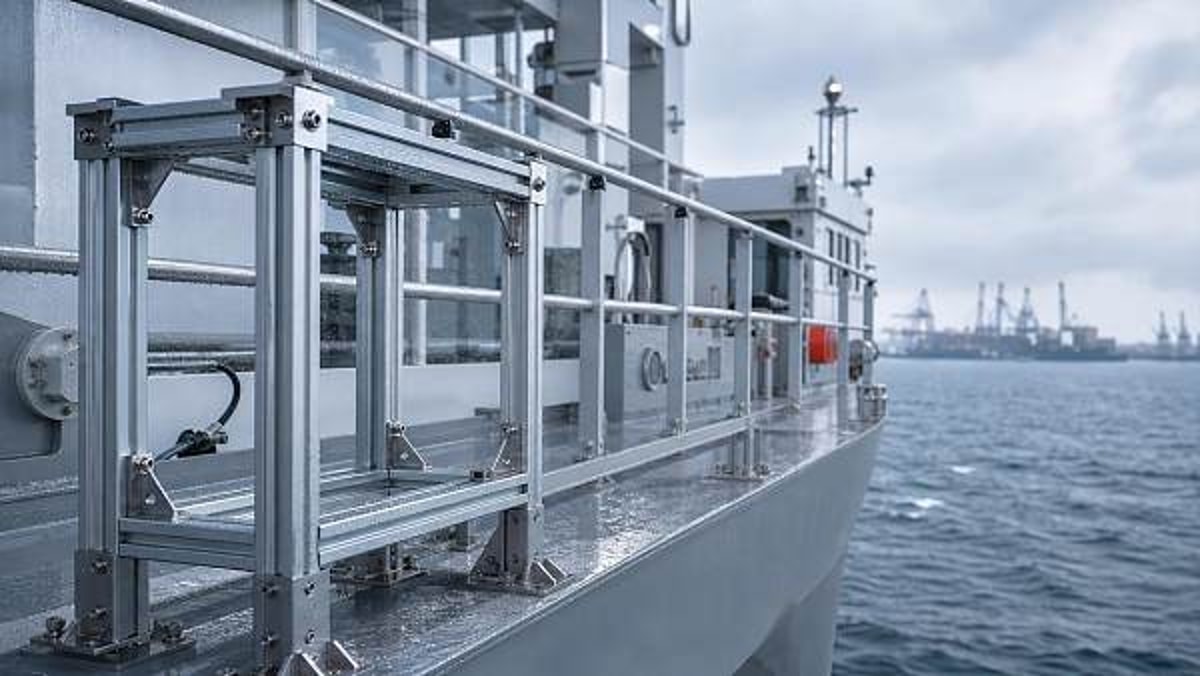
Marine infrastructure and vessels increasingly use aluminum because it offers a compelling combination of low weight, formability, corrosion resistance, and lifecycle efficiency. Extruded profiles are especially valuable because they allow designers to create complex sections for handrails, gangways, equipment frames, enclosure systems, deck structures, ladders, and modular supports. That flexibility helps reduce assembly complexity and improve throughput in fabrication.
At the same time, marine environments are unforgiving. Salt deposits concentrate in crevices. Bilge and washdown chemicals can alter local pH. Heat and humidity accelerate coating breakdown. Repeated loads may expose fresh metal at fastener holes or welded transitions. Even where aluminum extrusions for marine applications perform well overall, localized damage can create inspection findings, rework costs, or safety interventions. For organizations operating under classification rules, port authority checks, or internal EHS programs, these issues directly affect compliance and operational continuity.
From a B2B intelligence perspective, this is also why the topic matters across sectors represented on TradeNexus Pro. Advanced manufacturing relies on better profile design and tighter process control. Smart electronics adds enclosures and cable support systems in corrosive locations. Supply chain SaaS teams increasingly track material traceability and nonconformance data. As marine projects globalize, decision-makers need more than a vendor claim; they need evidence that performance assumptions hold across regions, suppliers, and service conditions.
The hidden variables behind real-world corrosion behavior
The phrase aluminum extrusions for marine applications sounds straightforward, but several technical variables sit underneath it. First is alloy family. Common marine-relevant extrusions often come from 5xxx and 6xxx series materials, yet their behavior differs in strength, weld response, and corrosion sensitivity. A profile chosen for machinability or dimensional ease may not be optimal for a chloride-rich, mechanically stressed assembly.
Second is temper and manufacturing quality. Extrusion speed, quench consistency, residual stress, and surface defects can influence later performance. A profile with die lines, inclusions, or poor edge quality may become more vulnerable where coatings are thin or where crevice moisture persists. Third is finishing. Mill finish, anodizing, conversion coatings, and paint systems each provide different advantages, but none are universally sufficient if the design traps moisture or if handling damage is not controlled.
Fourth is galvanic interaction. Aluminum placed in contact with stainless steel, copper-bearing alloys, or carbon steel can corrode more aggressively when electrolytes are present. This is a classic reason ratings fall short: the extrusion itself may test well alone, but the assembled product behaves differently. Finally, service load matters. Stress concentration near welds, bolt holes, or unsupported spans can interact with corrosive exposure, turning cosmetic deterioration into a structural concern.
A practical overview for quality and safety review
For teams reviewing aluminum extrusions for marine applications, it helps to break performance into a set of operational questions rather than a single corrosion metric. The table below offers a concise overview.
Where aluminum extrusions create value in marine use
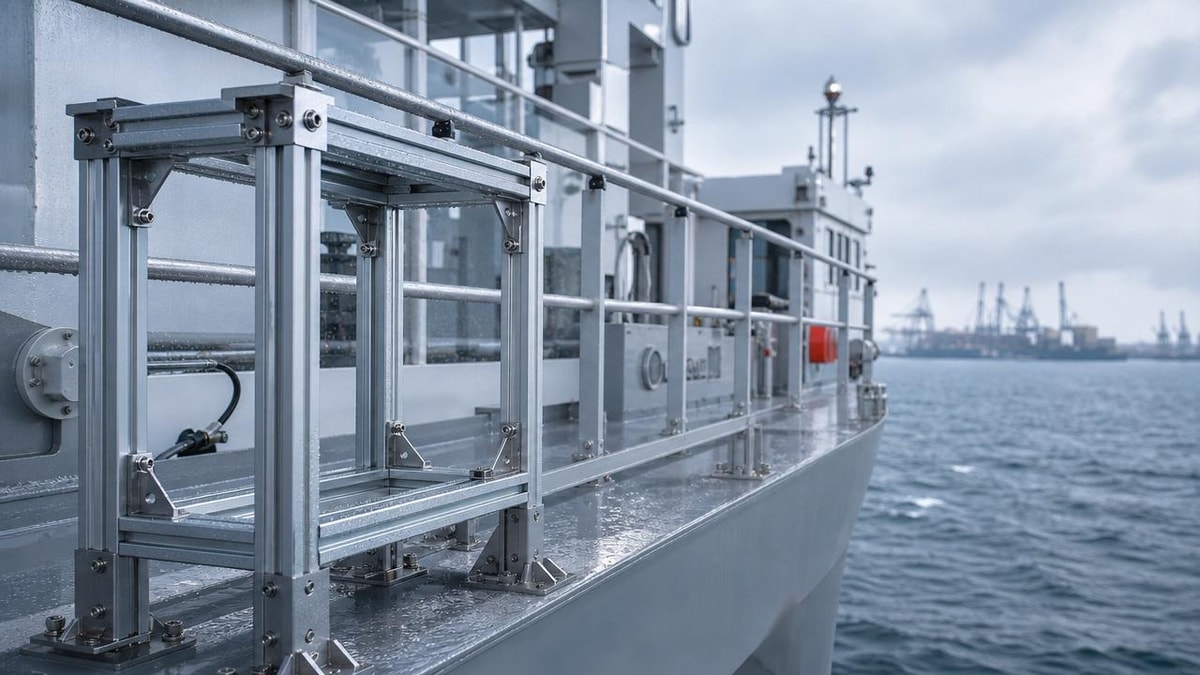
Despite the cautions above, aluminum extrusions for marine applications remain a strong engineering choice in many settings. Their value is most visible where lightweight design reduces fuel demand, improves handling, or simplifies modular installation. In vessel construction, extrusions support walkways, seating systems, hatches, storage units, and framing elements that benefit from reduced deadweight. In ports and offshore support areas, they are used in access platforms, cable trays, instrument housings, and safety barriers.
They also create value for quality teams because extrusion geometry can be standardized across product families. Repeatable cross-sections make incoming inspection more consistent, especially when paired with controlled supplier documentation and lot traceability. Safety teams benefit when profiles are designed with rounded edges, integrated drainage, non-slip interfaces, and fewer corrosion-prone joints. In other words, the benefit is not just the metal itself; it is the design efficiency that extrusion makes possible.
Typical marine application categories and risk profile
Not every application exposes the material to the same level of risk. Segmenting use cases helps quality and safety managers prioritize review depth.
What corrosion metrics often overlook in compliance programs
Compliance teams usually work with standards, inspection schedules, and documented acceptance criteria. The problem is that many corrosion metrics are not aligned with how audits happen in the field. Inspectors do not assess only whether red rust or white oxidation appears. They also evaluate whether damage is progressing near critical joints, whether drainage is blocked, whether previous repairs are compatible, and whether the condition could impair safe use before the next maintenance interval.
For aluminum extrusions for marine applications, this means the compliance lens should include traceability of alloy certification, coating process records, isolation methods for dissimilar metals, and evidence that design details support inspection access. A component may pass a material qualification test and still generate repeated NCRs if field crews cannot inspect hidden interfaces or if replacement parts introduce mixed-metal contact. Strong compliance therefore depends on design review and lifecycle planning, not just on pre-service corrosion data.
Practical guidance for selecting and approving extrusions
A sound approval process begins by defining the exposure zone clearly. Offshore splash areas, enclosed wet compartments, topside equipment zones, and port-side access systems can require different levels of protection. Once exposure is defined, teams should verify alloy suitability, temper, and fabrication constraints against the actual use case rather than against a generic marine label.
Next, review the complete assembly. Ask where water will collect, what metals will touch, how field drilling or cutting will be treated, and whether maintenance crews can clean and inspect all key surfaces. If the design relies on coatings, define minimum process controls and repair procedures. If welded fabrication is involved, evaluate heat-affected zones and dimensional changes that could reduce coating continuity or create stress risers.
Supplier qualification should also go beyond brochure claims. Request process capability information, corrosion test context, batch traceability, and examples of comparable marine service. For critical installations, pilot testing or limited field deployment can reveal issues that static ratings miss. This approach is especially useful for global sourcing environments where extrusion quality can vary between plants even under the same nominal specification.
A more reliable decision framework for quality and safety teams
The most effective framework for aluminum extrusions for marine applications combines four perspectives: material science, structural behavior, assembly design, and inspection practicality. Material science addresses alloy and finish. Structural behavior addresses load, fatigue, and weld influence. Assembly design addresses galvanic contact, drainage, and serviceability. Inspection practicality addresses whether risk can be detected early enough to prevent unsafe conditions.
When these four perspectives are documented together, decisions become easier to defend internally and externally. Quality managers gain clearer acceptance criteria. Safety managers gain stronger preventive controls. Procurement and engineering teams gain a common language for supplier review. That integrated view is exactly the kind of evidence-based decision support that high-authority B2B platforms such as TradeNexus Pro aim to advance across globally connected industries.
Closing perspective
Corrosion ratings remain useful reference points, but they should be treated as the beginning of evaluation, not the conclusion. In marine settings, long-term performance depends on how the extrusion is specified, fabricated, joined, protected, inspected, and maintained in service. For organizations responsible for product quality and operational safety, the smarter path is to evaluate aluminum extrusions for marine applications as part of a full operating system rather than as isolated material samples.
If your team is refining material standards, validating suppliers, or strengthening lifecycle compliance controls, a deeper technical review can prevent costly surprises later. Better decisions come from connecting corrosion data with design detail, field exposure, and inspection reality—the exact factors that ratings alone often miss.
Get weekly intelligence in your inbox.
No noise. No sponsored content. Pure intelligence.
 May 02, 2026Commercial EV Charging Installation Costs Beyond the HardwareCommercial EV Charging Installation Costs Beyond the Hardware
 May 02, 2026Portable EV Charging Solutions: Where They Actually FitPortable EV Charging Solutions: Where They Actually Fit
 May 02, 2026Why Automotive Aluminum Extrusions Fail at Joining PointsWhy Automotive Aluminum Extrusions Fail at Joining Points
 May 02, 2026Sheet Metal Bending Services in the USA: What Drives Lead TimeSheet Metal Bending Services in the USA: What Drives Lead Time
 May 02, 2026Cost-Effective Factory Automation Often Starts Smaller Than ExpectedCost-Effective Factory Automation Often Starts Smaller Than Expected
 May 02, 2026Choosing a Solar Panels Wholesale Distributor Without Price TrapsChoosing a Solar Panels Wholesale Distributor Without Price Traps
 May 02, 2026High Efficiency PV Modules: When the Premium Makes SenseHigh Efficiency PV Modules: When the Premium Makes Sense
 May 02, 2026Why Data Centers Are Rethinking ESS Backup StrategyWhy Data Centers Are Rethinking ESS Backup Strategy
 May 02, 2026Do Agricultural PV Modules Need Different Frame Designs?Do Agricultural PV Modules Need Different Frame Designs?
 May 02, 2026How to Vet an OEM Machined Parts Supplier in GermanyHow to Vet an OEM Machined Parts Supplier in Germany
 May 02, 2026Custom Metal Fabrication for Aerospace: Cost vs CertificationCustom Metal Fabrication for Aerospace: Cost vs Certification
 May 02, 2026What Slows Rapid Prototyping for Automotive Parts MostWhat Slows Rapid Prototyping for Automotive Parts Most
 May 02, 2026Rapid Prototyping Choices That Cut Delays in Consumer ElectronicsRapid Prototyping Choices That Cut Delays in Consumer Electronics
 May 02, 2026Why Aerospace Parts Need More Than Tight Lathe TurningWhy Aerospace Parts Need More Than Tight Lathe Turning
 May 02, 2026What Fireproof Technology Really Changes in Lithium BatteriesWhat Fireproof Technology Really Changes in Lithium Batteries
 May 02, 2026Are Grid-Tied Hybrid Inverters Enough for Unstable Supply?Are Grid-Tied Hybrid Inverters Enough for Unstable Supply?
 May 02, 2026What a Solar Panels Wholesale Price List Does Not ShowWhat a Solar Panels Wholesale Price List Does Not Show
 May 02, 2026How Long Life Cycle Batteries Lower Replacement CostsHow Long Life Cycle Batteries Lower Replacement Costs
 May 02, 2026Lathe Turning Tolerances That Matter in Industrial MachineryLathe Turning Tolerances That Matter in Industrial Machinery
 May 02, 2026ESS for Commercial Buildings: Sizing Mistakes to AvoidESS for Commercial Buildings: Sizing Mistakes to Avoid
 May 02, 2026Warehouse Robotics Bottlenecks That Slow Automation ROIWarehouse Robotics Bottlenecks That Slow Automation ROI
 May 02, 2026Where Smart Manufacturing Pays Off First in Auto PlantsWhere Smart Manufacturing Pays Off First in Auto Plants
 May 02, 2026Marine Aluminum Extrusions: What Corrosion Ratings MissMarine Aluminum Extrusions: What Corrosion Ratings Miss
 May 02, 2026Plastic Injection Molding Machine Specs That Affect OutputPlastic Injection Molding Machine Specs That Affect Output
 May 02, 2026What Limits 5 Axis Milling Accuracy for Medical Devices?What Limits 5 Axis Milling Accuracy for Medical Devices?
 May 02, 2026How to Compare a Die Casting Parts Manufacturer in ChinaHow to Compare a Die Casting Parts Manufacturer in China
 May 02, 2026Why Oil and Gas Projects Still Rely on Steel ForgingWhy Oil and Gas Projects Still Rely on Steel Forging