Where Smart Manufacturing Pays Off First in Auto Plants
In auto plants, the fastest returns from smart manufacturing rarely come from full-scale overhauls. They usually start with targeted upgrades in production visibility, predictive maintenance, quality control, and material flow. For enterprise leaders evaluating smart manufacturing solutions for automotive industry, knowing where value appears first is essential to reducing risk, accelerating ROI, and building a practical roadmap for wider digital transformation.
For plant directors, procurement leaders, and operations executives, the question is rarely whether digitalization matters. The practical question is where to begin so that capital spending produces measurable gains within 6 to 18 months rather than becoming a 3-year modernization burden. In automotive manufacturing, early payback usually appears in bottleneck stations, high-downtime assets, repetitive inspection points, and internal logistics flows where small delays multiply across shifts.
That is why many successful programs do not start with a greenfield architecture. They begin with selective, plant-level smart manufacturing solutions for automotive industry environments where data can be captured quickly, integration risk remains manageable, and results can be tied to OEE, scrap reduction, maintenance cost, labor utilization, and schedule adherence.
Where Automotive Plants See First-Stage Value
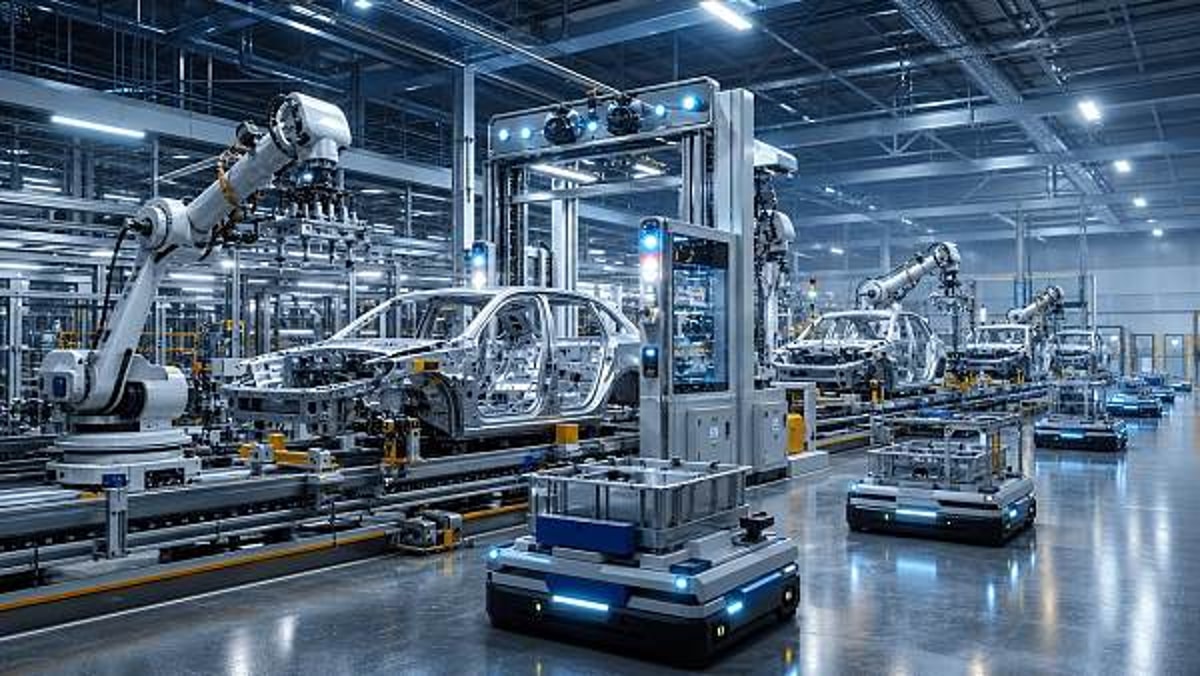
The first gains from smart manufacturing solutions for automotive industry operations tend to come from areas with three traits: high repeatability, measurable loss points, and clear operational ownership. In most assembly, body, and machining plants, that narrows the field to 4 common priorities: machine uptime, defect detection, throughput visibility, and material movement accuracy.
1. Production Visibility on Constrained Lines
A line producing 45 to 65 jobs per hour can lose meaningful output from a stoppage of only 3 to 7 minutes. Yet many facilities still rely on delayed reporting from manual logs or disconnected screens. Real-time visibility tools often create the first operational win because they expose micro-stops, cycle drift, and recurring fault codes shift by shift.
When production dashboards connect PLC, sensor, and MES-level events into a common view, supervisors can identify whether losses are linked to operator changeover, feeder interruptions, torque tool issues, or downstream queue congestion. The result is not just better reporting. It is faster intervention, often within the same shift rather than after a weekly review.
Typical early indicators
- 5% to 12% reduction in unclassified downtime after event tracking is standardized
- 10 to 20 second cycle-time recovery on stations with recurring motion or feed delays
- Improved first-hour startup stability through better shift handoff data
2. Predictive Maintenance on Critical Assets
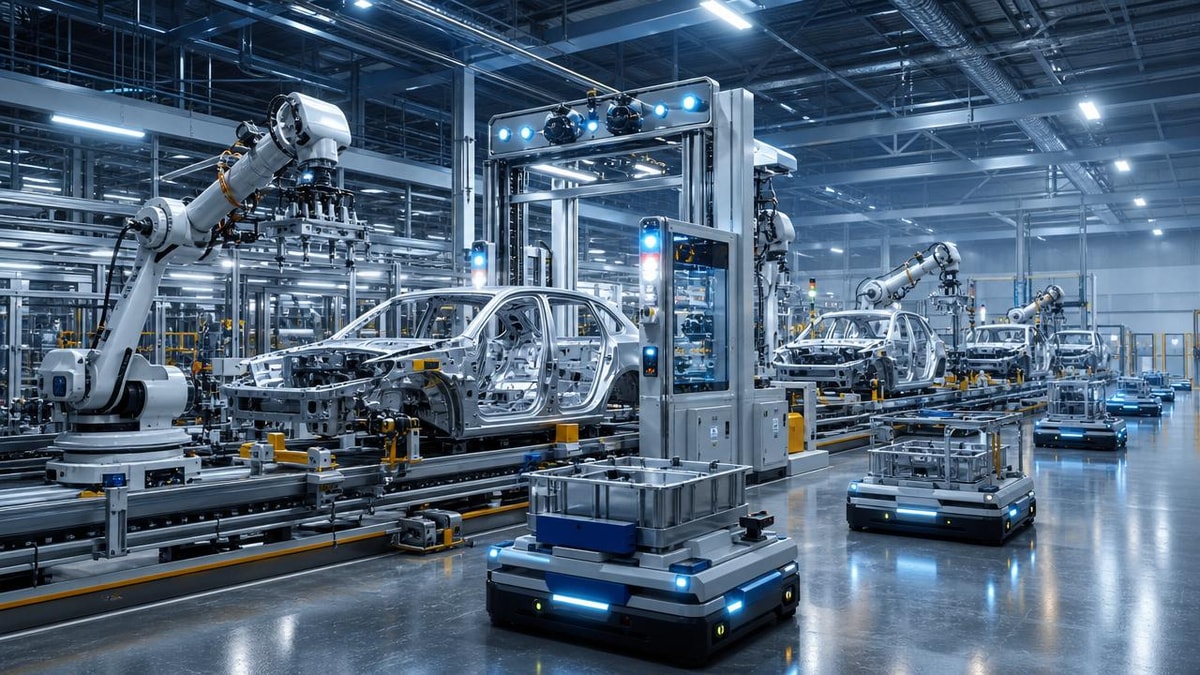
Auto plants do not need plantwide predictive maintenance on day one. The faster approach is to start with the 10% to 15% of assets that create 50% or more of unplanned stoppage exposure. This often includes weld cells, paint shop conveyors, CNC spindles, compressed air systems, AGVs, and end-of-line testers.
By monitoring vibration, temperature, current draw, pressure, or lubrication intervals, maintenance teams can move from reactive repair to condition-based scheduling. The value appears early because even one avoided failure during peak output can protect several hours of production and reduce expensive weekend recovery labor.
3. Automated Quality Control at Repetitive Defect Points
In automotive operations, the cost of a missed defect increases dramatically once the unit moves from subassembly to final assembly or shipping. Vision systems, traceability tools, and automated check verification often pay off first at repetitive defect points such as weld presence, fastener confirmation, sealant bead inspection, label validation, and dimensional checks with narrow tolerances like ±0.5 mm to ±1.0 mm.
These applications work well as early-stage smart manufacturing solutions for automotive industry programs because the acceptance criteria are usually clear. That makes implementation easier, user training simpler, and performance tracking more credible for leadership teams.
The table below shows where first-phase investments often produce the clearest financial and operational impact in auto plants.
The pattern is consistent: the best first targets are not the most futuristic ones. They are the areas where operational losses are visible, recurring, and expensive enough to justify action with a measurable business case.
Why Material Flow and Quality Often Outperform Broader Digital Projects
Many enterprise leaders initially focus on large platform decisions. Those decisions matter, but first-stage ROI in automotive plants often appears faster in material handling and quality control because these functions touch every shift, every SKU mix change, and every launch ramp. They also create direct links to customer delivery, warranty risk, and labor efficiency.
Material flow is a multiplier, not a support function
In an auto plant, a line-side shortage of even one component can stop production despite the rest of the process running normally. Digital replenishment signals, barcode or RFID validation, electronic kanban, and route optimization for tugger trains or AGVs often reduce avoidable interruptions within 8 to 12 weeks after stabilization.
These smart manufacturing solutions for automotive industry operations are especially effective in mixed-model production, where sequencing errors and handling complexity increase as variant count rises. When plants move from 20 to 60 or more active configuration combinations, manual coordination becomes less reliable and exception management becomes more costly.
Quality systems generate both cost savings and trust
A single defect caught at the source may cost minutes to correct. The same defect found after downstream assembly can cost 5 to 10 times more in labor, diagnosis, and disruption. If found in the field, the impact expands further through containment, expedited service parts, and brand exposure.
That is why digital quality applications are frequently among the strongest business cases. Automated image capture, torque traceability, process interlocks, and serialized part verification help reduce escape risk while giving managers evidence for root-cause analysis and supplier discussions.
Common use cases with fast payback
- Fastener confirmation on safety-critical assembly points
- Weld or adhesive inspection where manual checks vary by shift
- Part-to-order matching in high-variant final assembly
- Electronic genealogy for batches, serials, and rework history
The next table outlines why targeted projects often outperform large, simultaneous deployment efforts during the first phase of transformation.
For decision-makers, the takeaway is straightforward: broad digital architecture should support the roadmap, but high-value launch points are usually narrower, operationally grounded, and easier to govern with plant-level KPIs.
How to Select the Right First Smart Manufacturing Initiative
Selection discipline matters more than technology volume. The strongest first investment is not necessarily the most advanced system; it is the one that aligns measurable loss, available data, implementation feasibility, and cross-functional ownership. For enterprise buyers comparing smart manufacturing solutions for automotive industry use, a 4-factor screening model is often more effective than broad wish lists.
Screening factor 1: Concentrated operational loss
Start where one issue repeatedly affects output, cost, or quality. Examples include a station causing more than 15% of downtime events, a recurring defect family generating weekly containment, or material shortages hitting the same zone across multiple shifts.
Screening factor 2: Data readiness
The project should have usable signals available within the first phase. That may include sensor values, PLC events, image data, scanner records, maintenance logs, or operator acknowledgments. If teams need 6 months just to establish basic data capture, the first-stage business case weakens.
Screening factor 3: Limited integration complexity
Projects linked to one line, one process family, or one asset class often move faster than enterprise-wide programs touching ERP, multiple MES layers, and legacy custom logic. A manageable scope allows procurement and operations teams to validate vendor capability without creating systemwide exposure.
Screening factor 4: Clear ownership and adoption path
If no plant leader owns the KPI, the project will struggle. Early deployments should have named responsibility across at least 3 roles: operations, maintenance or quality, and IT or automation support. This reduces delays during commissioning and improves post-launch discipline.
A practical first-phase checklist
- Can value be measured within 90 to 180 days?
- Is the baseline loss already documented with enough accuracy?
- Will operators and supervisors use the output daily, not only monthly?
- Can the deployment be scaled to 2 to 5 similar assets or stations later?
- Does the project reduce a known customer, launch, or warranty risk?
This framework helps executive teams avoid a common mistake: selecting tools based on presentation quality rather than plant economics. In automotive settings, the right first move is usually one that can be repeated across lines, not one that dazzles in a demo but depends on unusual conditions.
Implementation Risks, Governance, and Procurement Guidance
Even high-potential smart manufacturing solutions for automotive industry environments can underperform if deployment discipline is weak. The most common failure points are not always technical. They include poor KPI definition, weak operator adoption, unclear escalation logic, and underestimating the effort required to clean or contextualize plant data.
Risk 1: Chasing too many use cases at once
A focused launch with 1 to 2 measurable use cases is usually safer than combining maintenance, quality, scheduling, and warehouse control into one initial package. Automotive plants are complex enough without adding unnecessary implementation layers in the first 60 to 120 days.
Risk 2: Measuring activity instead of business outcomes
A project can generate dashboards, alerts, and reports without changing plant performance. Procurement teams should require outcome-linked metrics such as minutes of downtime prevented, defect escapes reduced, schedule adherence improved, or maintenance overtime avoided.
Risk 3: Ignoring plant-floor usability
If operators need 8 screens and multiple logins to act on one event, adoption will fade. Interfaces should support quick decisions at the point of use, whether on HMI, tablet, or supervisory screen. In many plants, the difference between adoption and resistance is less than 30 seconds of extra interaction time per event.
Procurement questions worth asking suppliers
- Which automotive use cases can be configured with existing connectors versus custom development?
- What is the normal pilot duration, and what internal resources are required weekly?
- How is data quality handled when sensor or event records are incomplete?
- What acceptance criteria define success after 30, 60, and 90 days?
- How does the solution scale across plants with different equipment vintages?
For enterprise buyers, procurement should not evaluate only software or device features. It should also assess deployment methodology, change management support, interoperability with existing control and manufacturing systems, and the vendor’s ability to work inside a high-discipline production environment.
In auto plants, the earliest payoff from digital transformation is usually practical, targeted, and measurable. Production visibility, predictive maintenance, automated quality control, and material flow optimization consistently stand out because they address losses that occur every day and can be tracked in hard operational terms. For leaders assessing smart manufacturing solutions for automotive industry use, the best first step is often a controlled deployment tied to one line, one asset group, or one recurring quality risk.
TradeNexus Pro helps enterprise decision-makers cut through market noise with sector-focused insight, implementation intelligence, and solution benchmarking across advanced manufacturing ecosystems. If you are planning your next automotive plant upgrade, contact us to explore tailored opportunities, compare deployment pathways, and get a more practical roadmap for scalable digital returns.
Get weekly intelligence in your inbox.
No noise. No sponsored content. Pure intelligence.
 May 02, 2026Commercial EV Charging Installation Costs Beyond the HardwareCommercial EV Charging Installation Costs Beyond the Hardware
 May 02, 2026Portable EV Charging Solutions: Where They Actually FitPortable EV Charging Solutions: Where They Actually Fit
 May 02, 2026Why Automotive Aluminum Extrusions Fail at Joining PointsWhy Automotive Aluminum Extrusions Fail at Joining Points
 May 02, 2026Sheet Metal Bending Services in the USA: What Drives Lead TimeSheet Metal Bending Services in the USA: What Drives Lead Time
 May 02, 2026Cost-Effective Factory Automation Often Starts Smaller Than ExpectedCost-Effective Factory Automation Often Starts Smaller Than Expected
 May 02, 2026Choosing a Solar Panels Wholesale Distributor Without Price TrapsChoosing a Solar Panels Wholesale Distributor Without Price Traps
 May 02, 2026High Efficiency PV Modules: When the Premium Makes SenseHigh Efficiency PV Modules: When the Premium Makes Sense
 May 02, 2026Why Data Centers Are Rethinking ESS Backup StrategyWhy Data Centers Are Rethinking ESS Backup Strategy
 May 02, 2026Do Agricultural PV Modules Need Different Frame Designs?Do Agricultural PV Modules Need Different Frame Designs?
 May 02, 2026How to Vet an OEM Machined Parts Supplier in GermanyHow to Vet an OEM Machined Parts Supplier in Germany
 May 02, 2026Custom Metal Fabrication for Aerospace: Cost vs CertificationCustom Metal Fabrication for Aerospace: Cost vs Certification
 May 02, 2026What Slows Rapid Prototyping for Automotive Parts MostWhat Slows Rapid Prototyping for Automotive Parts Most
 May 02, 2026Rapid Prototyping Choices That Cut Delays in Consumer ElectronicsRapid Prototyping Choices That Cut Delays in Consumer Electronics
 May 02, 2026Why Aerospace Parts Need More Than Tight Lathe TurningWhy Aerospace Parts Need More Than Tight Lathe Turning
 May 02, 2026What Fireproof Technology Really Changes in Lithium BatteriesWhat Fireproof Technology Really Changes in Lithium Batteries
 May 02, 2026Are Grid-Tied Hybrid Inverters Enough for Unstable Supply?Are Grid-Tied Hybrid Inverters Enough for Unstable Supply?
 May 02, 2026What a Solar Panels Wholesale Price List Does Not ShowWhat a Solar Panels Wholesale Price List Does Not Show
 May 02, 2026How Long Life Cycle Batteries Lower Replacement CostsHow Long Life Cycle Batteries Lower Replacement Costs
 May 02, 2026Lathe Turning Tolerances That Matter in Industrial MachineryLathe Turning Tolerances That Matter in Industrial Machinery
 May 02, 2026ESS for Commercial Buildings: Sizing Mistakes to AvoidESS for Commercial Buildings: Sizing Mistakes to Avoid
 May 02, 2026Warehouse Robotics Bottlenecks That Slow Automation ROIWarehouse Robotics Bottlenecks That Slow Automation ROI
 May 02, 2026Where Smart Manufacturing Pays Off First in Auto PlantsWhere Smart Manufacturing Pays Off First in Auto Plants
 May 02, 2026Marine Aluminum Extrusions: What Corrosion Ratings MissMarine Aluminum Extrusions: What Corrosion Ratings Miss
 May 02, 2026Plastic Injection Molding Machine Specs That Affect OutputPlastic Injection Molding Machine Specs That Affect Output
 May 02, 2026What Limits 5 Axis Milling Accuracy for Medical Devices?What Limits 5 Axis Milling Accuracy for Medical Devices?
 May 02, 2026How to Compare a Die Casting Parts Manufacturer in ChinaHow to Compare a Die Casting Parts Manufacturer in China
 May 02, 2026Why Oil and Gas Projects Still Rely on Steel ForgingWhy Oil and Gas Projects Still Rely on Steel Forging