What Fireproof Technology Really Changes in Lithium Batteries
For quality control and safety teams, lithium ion batteries fireproof technology is no longer a niche upgrade but a critical factor in product reliability, compliance, and risk prevention. As battery applications expand across smart electronics, energy systems, and industrial equipment, understanding what this technology truly changes helps decision-makers evaluate safer designs, reduce thermal runaway threats, and strengthen end-to-end safety standards.
In practical procurement and product validation, the issue is not whether a battery can deliver energy density alone. It is whether the cell, pack, enclosure, and control architecture can contain abnormal heat events long enough for shutdown, isolation, and emergency response. For B2B buyers in electronics, green energy systems, and industrial equipment, lithium ion batteries fireproof technology directly affects audit outcomes, transport readiness, insurance exposure, and field failure costs.
This matters even more when quality teams are reviewing suppliers across multiple regions. A battery that performs well in standard charge-discharge testing may still present major safety gaps under crush, overcharge, puncture, or high-temperature abuse. Fire-resistant design changes the conversation from basic performance to controlled failure behavior, which is often the difference between a manageable incident and a product recall.
How Fireproof Technology Changes Battery Safety at the System Level

When buyers refer to lithium ion batteries fireproof technology, they are usually not describing a single material or coating. In most commercial applications, it is a layered safety strategy that can involve flame-retardant separators, heat-resistant electrolytes, ceramic-coated components, thermal barriers between cells, venting paths, and battery management logic that reacts within milliseconds to abnormal current or temperature signals.
The real change is that failure is no longer treated as a binary event. Instead of asking whether a battery ignites or not, safety teams evaluate how long heat propagation is delayed, how far a local incident can spread, and whether nearby components remain below critical thresholds such as 80°C, 120°C, or 150°C for a defined period. Even a delay of 3 to 10 minutes can materially improve evacuation, shutdown, and containment outcomes.
From Cell Protection to Pack Containment
At the cell level, fireproof improvements may reduce the chance of internal short circuits escalating immediately. At the module and pack level, the focus shifts to slowing thermal runaway propagation from one cell to the next. For quality control personnel, this means inspection criteria expand beyond voltage consistency and capacity matching to include spacing tolerances, barrier integrity, vent orientation, and enclosure sealing quality.
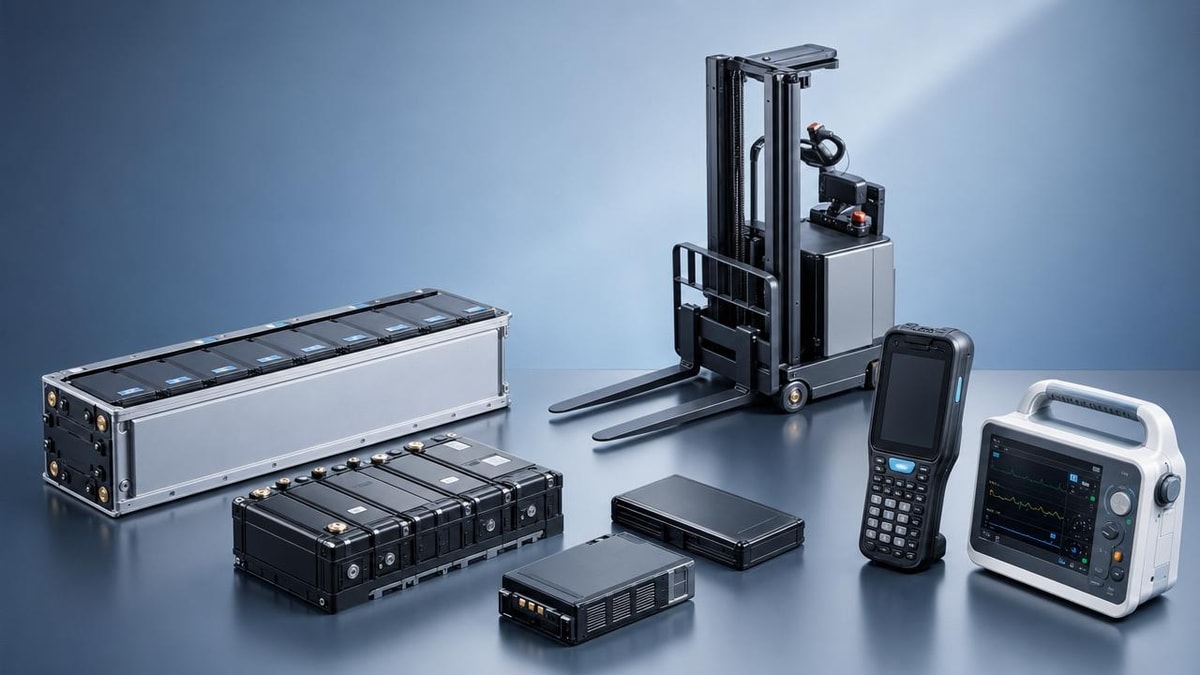
In smart electronics, the space available for barriers is limited, so design trade-offs often involve thinner thermal layers and stricter battery management thresholds. In energy storage or industrial equipment, packs are larger, and the challenge becomes compartmentalization, gas release management, and suppression compatibility. The same lithium ion batteries fireproof technology therefore looks different in a 20 Wh handheld device than in a 50 kWh industrial system.
What Safety Teams Should Measure
A useful review framework includes at least 4 dimensions: ignition resistance, heat spread delay, smoke or gas management, and post-event electrical isolation. Many procurement teams still overemphasize nominal specifications such as cycle life or charge rate while underweighting abuse-response behavior. Yet for high-consequence applications, one containment failure can erase the value of thousands of acceptable routine cycles.
- Cell-to-cell thermal propagation delay time
- Enclosure resistance to flame penetration for a defined number of minutes
- Battery management system response latency during overcurrent or overheating
- Gas venting path design and pressure relief effectiveness
- Insulation retention after exposure to elevated temperatures
These metrics are especially relevant for teams handling supplier comparison, incoming inspection, and reliability qualification. A supplier that cannot clearly explain these 5 items is usually not ready for demanding B2B deployment, regardless of pricing advantages.
The table below shows how fireproof design changes the evaluation focus across different battery layers. This helps safety managers align test protocols with actual failure mechanisms instead of relying only on generic acceptance criteria.
The key takeaway is that fire-resistant battery design expands quality review from performance validation to incident control capability. This shift is highly relevant for sectors where downtime, operator safety, and regulatory scrutiny can all escalate after a single thermal event.
What Changes in Testing, Compliance, and Supplier Qualification
For safety managers, lithium ion batteries fireproof technology changes not only product architecture but also the test matrix. A pack that includes thermal barriers or flame-retardant materials should be validated for normal operation, abuse tolerance, and post-failure behavior. In many programs, this expands qualification from 6 or 8 standard checks to 12 or more linked checks covering electrical, mechanical, and thermal failure conditions.
Typical review items include overcharge, short circuit, drop, crush, thermal exposure, insulation retention, and venting observation. Depending on the destination market and application category, teams may also screen transport readiness, enclosure flame resistance, or system shutdown performance. The goal is not to over-test every unit, but to ensure that the design intent behind the fireproof features is actually verified.
Why Standard Pass Results Are Not Enough
A common mistake is assuming that passing a transport-related battery test or a basic electrical safety check means a product has strong fire resistance. In reality, those tests may confirm survivability under specific conditions without proving controlled thermal containment at the pack level. For procurement directors and plant safety leaders, this is a critical gap because commercial liability usually follows the field outcome, not the narrow scope of an isolated lab result.
In supplier audits, ask for the test logic, not only the pass certificate. Teams should understand whether a claimed fireproof feature was evaluated at cell, module, or full-pack level; whether the event source was internal or external; and whether neighboring cells remained stable for a measurable duration such as 5, 10, or 15 minutes.
A 5-Point Qualification Checklist
- Confirm the fire-resistant feature location: cell chemistry, separator, barrier, enclosure, or software control.
- Review abuse-test coverage across at least 3 categories: electrical, thermal, and mechanical.
- Check whether containment performance was measured at module or pack level.
- Verify manufacturing consistency controls, including bonding, spacing, and insulation checks.
- Assess corrective action and traceability procedures for safety-related nonconformities.
This checklist helps reduce a frequent sourcing risk: buying a technically promising battery platform that cannot hold consistent safety performance in scaled production batches of 1,000, 10,000, or more units.
The following table maps common qualification concerns to practical review points. It is especially useful for cross-functional teams handling procurement, safety, and quality approvals together.
A strong supplier will answer these questions with process detail, not broad promises. For quality teams, the best indicator is whether safety performance is embedded into design review, incoming material control, and final inspection rather than presented as a marketing add-on.
Selection Priorities for Different B2B Applications
The value of lithium ion batteries fireproof technology changes by use case. In compact smart electronics, the key issue is preventing a localized event from spreading in a tightly packed enclosure. In energy systems, the priority is often delaying propagation long enough for disconnects and suppression systems to activate. In industrial equipment, vibration, dust, and impact may increase the importance of enclosure integrity and fault isolation.
Smart Electronics
For connected devices, handheld tools, and compact equipment, battery packs often operate within dense assemblies where heat can quickly affect nearby boards, plastics, or user contact surfaces. Here, even a 2 mm to 5 mm design change in barrier placement or vent path can matter. QC teams should review charging logic, casing material behavior, and whether the battery can safely shut down under fast-charge stress.
Green Energy and Storage Systems
For commercial storage, backup systems, and distributed energy assets, larger pack sizes raise the consequence of propagation. Fireproof design is less about preventing every failure and more about creating time and separation. Safety managers should evaluate compartment design, service access, off-gas management, and interface compatibility with site emergency procedures. Review windows such as 10-minute containment, staged shutdown, and alarm escalation logic become central decision factors.
Industrial Equipment and Mobile Platforms
Forklifts, robots, portable machinery, and field equipment face harsher duty cycles and more physical abuse. In these applications, fire-resistant battery architecture should be paired with mechanical robustness, connector retention, and impact-aware control logic. If the pack will be exposed to repeated shock or ambient temperatures above 45°C, safety margins need to be validated under realistic operating profiles, not just room-temperature bench tests.
Common Buying Mistakes to Avoid
- Choosing the lowest-cost pack without reviewing containment design details
- Accepting cell-level safety claims as proof of pack-level fire resistance
- Ignoring service and quarantine procedures for damaged batteries
- Overlooking how charging speed affects thermal stress and fault risk
- Failing to align battery safety criteria with the end-use environment
In B2B environments, the cheapest battery on day 1 can become the most expensive option over 12 to 24 months if field incidents, shipment delays, or warranty investigations increase. Selection teams should weigh prevention cost against interruption cost, especially when batteries are deployed across multiple sites or embedded in branded equipment.
Implementation, Inspection, and Ongoing Risk Control
Once a fire-resistant battery solution is selected, value depends on how well it is implemented. Many failures happen not because the core concept is weak, but because manufacturing, storage, charging, or field handling undermine the intended safety margin. That is why lithium ion batteries fireproof technology must be matched with clear inspection routines and operating controls.
Incoming and In-Process Inspection Priorities
For incoming quality control, check packaging condition, voltage spread, insulation integrity, and any visible deformation or contamination. During assembly, inspect thermal barrier placement, adhesive or bonding consistency, sensor attachment, and vent path obstruction. A deviation of only a few millimeters in barrier fit or cable routing can reduce the intended benefit during a thermal event.
A practical approach is to define 3 inspection stages: incoming materials, post-assembly verification, and final safety function check. For high-risk deployments, teams may add sample-based abuse screening at a set frequency such as every production lot or every 500 to 1,000 units, depending on process maturity.
Storage and Handling Controls
Even advanced fireproof features do not eliminate the need for disciplined storage. Batteries should be held within manufacturer-recommended temperature and state-of-charge windows, kept away from mechanical damage risks, and separated from incompatible materials. Safety managers should also establish quarantine rules for dropped, swollen, overheated, or water-exposed packs within 24 hours of detection.
Incident Readiness
A complete program includes response planning. At minimum, facilities using lithium batteries at scale should define 4 response elements: alarm trigger criteria, pack isolation procedure, temporary holding area controls, and escalation contacts. Fireproof technology buys time, but time only helps when personnel know exactly what to do in the first 1 to 5 minutes.
For organizations managing suppliers, contract manufacturers, or regional warehouses, this operational layer is often where risk control succeeds or fails. The battery specification, supplier agreement, and facility SOPs should all reflect the same safety assumptions so there is no disconnect between design intent and field execution.
Fireproof technology in lithium batteries changes more than a datasheet. It changes how products are designed, how suppliers are qualified, how failures are contained, and how safety responsibilities are managed across the full B2B chain. For quality control teams and safety managers, the strongest approach is to assess not only performance under normal conditions, but also how a battery behaves during the abnormal 1% of scenarios that create the highest operational risk.
TradeNexus Pro helps decision-makers evaluate these shifts with deeper sector intelligence across smart electronics, green energy, advanced manufacturing, and supply chain operations. If you are reviewing safer battery sourcing options, qualification frameworks, or risk-control strategies, contact us to get a tailored solution, discuss product details, or explore more implementation-ready insights.
Get weekly intelligence in your inbox.
No noise. No sponsored content. Pure intelligence.
 May 02, 2026Commercial EV Charging Installation Costs Beyond the HardwareCommercial EV Charging Installation Costs Beyond the Hardware
 May 02, 2026Portable EV Charging Solutions: Where They Actually FitPortable EV Charging Solutions: Where They Actually Fit
 May 02, 2026Why Automotive Aluminum Extrusions Fail at Joining PointsWhy Automotive Aluminum Extrusions Fail at Joining Points
 May 02, 2026Sheet Metal Bending Services in the USA: What Drives Lead TimeSheet Metal Bending Services in the USA: What Drives Lead Time
 May 02, 2026Cost-Effective Factory Automation Often Starts Smaller Than ExpectedCost-Effective Factory Automation Often Starts Smaller Than Expected
 May 02, 2026Choosing a Solar Panels Wholesale Distributor Without Price TrapsChoosing a Solar Panels Wholesale Distributor Without Price Traps
 May 02, 2026High Efficiency PV Modules: When the Premium Makes SenseHigh Efficiency PV Modules: When the Premium Makes Sense
 May 02, 2026Why Data Centers Are Rethinking ESS Backup StrategyWhy Data Centers Are Rethinking ESS Backup Strategy
 May 02, 2026Do Agricultural PV Modules Need Different Frame Designs?Do Agricultural PV Modules Need Different Frame Designs?
 May 02, 2026How to Vet an OEM Machined Parts Supplier in GermanyHow to Vet an OEM Machined Parts Supplier in Germany
 May 02, 2026Custom Metal Fabrication for Aerospace: Cost vs CertificationCustom Metal Fabrication for Aerospace: Cost vs Certification
 May 02, 2026What Slows Rapid Prototyping for Automotive Parts MostWhat Slows Rapid Prototyping for Automotive Parts Most
 May 02, 2026Rapid Prototyping Choices That Cut Delays in Consumer ElectronicsRapid Prototyping Choices That Cut Delays in Consumer Electronics
 May 02, 2026Why Aerospace Parts Need More Than Tight Lathe TurningWhy Aerospace Parts Need More Than Tight Lathe Turning
 May 02, 2026What Fireproof Technology Really Changes in Lithium BatteriesWhat Fireproof Technology Really Changes in Lithium Batteries
 May 02, 2026Are Grid-Tied Hybrid Inverters Enough for Unstable Supply?Are Grid-Tied Hybrid Inverters Enough for Unstable Supply?
 May 02, 2026What a Solar Panels Wholesale Price List Does Not ShowWhat a Solar Panels Wholesale Price List Does Not Show
 May 02, 2026How Long Life Cycle Batteries Lower Replacement CostsHow Long Life Cycle Batteries Lower Replacement Costs
 May 02, 2026Lathe Turning Tolerances That Matter in Industrial MachineryLathe Turning Tolerances That Matter in Industrial Machinery
 May 02, 2026ESS for Commercial Buildings: Sizing Mistakes to AvoidESS for Commercial Buildings: Sizing Mistakes to Avoid
 May 02, 2026Warehouse Robotics Bottlenecks That Slow Automation ROIWarehouse Robotics Bottlenecks That Slow Automation ROI
 May 02, 2026Where Smart Manufacturing Pays Off First in Auto PlantsWhere Smart Manufacturing Pays Off First in Auto Plants
 May 02, 2026Marine Aluminum Extrusions: What Corrosion Ratings MissMarine Aluminum Extrusions: What Corrosion Ratings Miss
 May 02, 2026Plastic Injection Molding Machine Specs That Affect OutputPlastic Injection Molding Machine Specs That Affect Output
 May 02, 2026What Limits 5 Axis Milling Accuracy for Medical Devices?What Limits 5 Axis Milling Accuracy for Medical Devices?
 May 02, 2026How to Compare a Die Casting Parts Manufacturer in ChinaHow to Compare a Die Casting Parts Manufacturer in China
 May 02, 2026Why Oil and Gas Projects Still Rely on Steel ForgingWhy Oil and Gas Projects Still Rely on Steel Forging