What Slows Rapid Prototyping for Automotive Parts Most
In automotive aftermarket service, delays in rapid prototyping for automotive parts can turn routine repairs into costly downtime and customer frustration. From design revisions and material selection to tooling constraints and supplier response times, several hidden factors can slow the process more than expected. Understanding these bottlenecks helps maintenance teams source parts faster, improve fit and performance, and keep vehicles back on the road with less disruption.
For aftermarket maintenance teams, the issue is rarely just speed in isolation. A prototype that arrives in 5 days but fails a fit check by 1.5 mm can create more delay than a 10-day prototype that installs correctly on the first attempt. In practice, rapid prototyping for automotive parts depends on a chain of design clarity, data quality, process selection, supplier coordination, and validation discipline. When one link underperforms, lead time expands, rework rises, and service bays stay occupied longer than planned.
This matters even more in aftermarket operations handling low-volume, high-urgency parts such as brackets, housings, clips, ducts, covers, and custom repair aids. Unlike mass production, service-driven prototyping often starts with incomplete drawings, worn legacy parts, or field-modified components. That makes decision speed, communication quality, and manufacturability reviews just as important as the printing or machining technology itself.
Where Rapid Prototyping for Automotive Parts Usually Slows Down
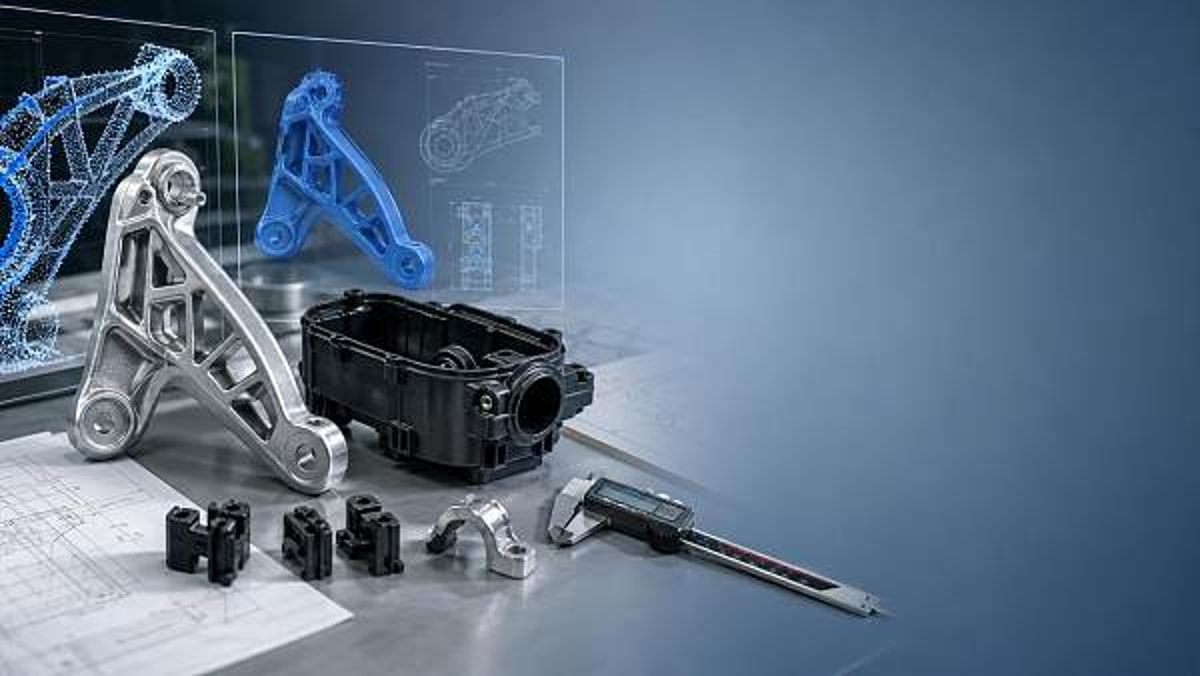
The biggest delays usually happen before a machine starts running. In many aftermarket cases, 30% to 50% of total prototype lead time is consumed by clarifying geometry, revising files, confirming tolerances, and aligning expectations between maintenance teams, engineers, and external suppliers. If the initial request only says “match the old part,” the supplier must spend extra cycles asking for dimensions, load conditions, installation orientation, and material priorities.
1. Incomplete design input creates avoidable iteration
Many service teams submit a broken sample, a few phone photos, and a rough deadline. That may be enough for a quotation, but it is rarely enough for efficient prototype execution. Missing information such as mating surface dimensions, wall thickness limits, heat exposure, or fastening method often leads to 2 to 3 rounds of redesign. Each redesign may add 24 to 72 hours, especially when multiple departments need to approve changes.
Typical missing details
- Installation clearance around adjacent components
- Required tolerance range, such as ±0.2 mm or ±0.5 mm
- Operating temperature exposure, for example 80°C to 140°C
- Load-bearing needs for clips, brackets, or support arms
- Surface finish requirements for sealing, visibility, or friction
2. Material selection is often slower than expected
Selecting a printable or machinable material sounds simple, but it can quickly become the main bottleneck. A prototype used only for fit testing can often be produced in 2 to 4 days using standard polymers. A part intended for heat, vibration, fluid exposure, or light functional testing may require nylon, reinforced resin, aluminum, or another engineering-grade option with longer sourcing and processing times. Material indecision can stall the job for several days before production starts.
This is especially common when maintenance personnel need a replacement part fast, but procurement or engineering asks whether the prototype must also survive road testing for 500 to 1,000 km. The answer changes the process, the post-processing route, and the supplier shortlist.
The table below shows how common decision points affect lead time in rapid prototyping for automotive parts.
The key takeaway is that production speed is only one variable. For most aftermarket users, the larger delay comes from uncertainty. The more precisely a team defines form, fit, and function at the start, the less likely rapid prototyping for automotive parts will get trapped in a revision loop.
3. Tooling assumptions and process mismatch
Even when the goal is “rapid” prototyping, some parts still need support fixtures, inserts, finishing jigs, or secondary machining. Teams often assume additive manufacturing eliminates all setup time, but that is not always true. A large duct, high-precision connector mount, or thin-wall bracket may still require orientation studies, support removal planning, and post-machining of holes or sealing faces. Those extra steps can add 1 to 3 working days.
4. Supplier communication lag multiplies every small issue
A supplier that replies once every 24 hours can quietly double an otherwise short project. If there are four open questions about finish, material, hole size, and delivery priority, a slow email cycle can add 4 to 6 days before production is released. For maintenance teams supporting commercial fleets or time-sensitive repairs, this is often the hidden cost no one sees in the initial quote.
Technical and Operational Bottlenecks Maintenance Teams Should Watch
Aftermarket teams usually focus on getting a part quickly, but the real objective is getting a usable part quickly. That means understanding the technical checkpoints that most often delay acceptance. In rapid prototyping for automotive parts, fit accuracy, thermal resistance, vibration tolerance, and assembly repeatability all affect whether the part can move from test bench to service application without another cycle.
Fit verification often exposes hidden geometry errors
A prototype may look correct on screen and still fail at installation. Warped legacy components, field wear, and undocumented design changes are common in automotive aftermarket environments. A mounting tab offset by only 0.8 mm can stop installation. A hose guide with 2 degrees of angle error may create rubbing under vibration. That is why first-article verification should include at least 4 checks: dimensional fit, mating alignment, fastener engagement, and service access.
Practical validation checklist
- Compare the prototype to the original or scan model at 6 to 10 critical points.
- Dry-fit the part before full installation and record clearance at interfaces.
- Confirm bolt, clip, or tab engagement under realistic assembly force.
- Check adjacent component movement, heat exposure, and maintenance access.
- Document revisions immediately to avoid repeating the same error in round two.
Post-processing is frequently underestimated
Printing or machining may finish in 8 to 20 hours, but post-processing can take just as long. Deburring, support removal, thread tapping, insert installation, surface smoothing, leak-path finishing, and inspection all extend the timeline. For visible cabin parts or under-hood covers, surface appearance may also matter. If that expectation is not defined up front, the supplier may either over-process the part or ship it in an unfinished state that triggers rejection.
The following table helps maintenance buyers align prototype methods with real service needs.
For buyers and maintenance coordinators, this comparison shows why “fastest” is not always the best selection criterion. Matching the process to the service objective reduces late-stage surprises, especially when rapid prototyping for automotive parts must support both urgent repair and acceptable durability.
Logistics and approval workflows can be slower than fabrication
In cross-border or multi-site operations, shipping and internal approvals often outrun actual production time. A supplier may complete the prototype in 3 days, but export handling, courier booking, customs checks, and receiving procedures can push total delivery to 7 or even 12 days. Internally, if quality, engineering, and service managers all require sign-off, the prototype may sit idle for another 1 to 2 days before testing starts.
How to Reduce Delays in Rapid Prototyping for Automotive Parts
The fastest teams do not rely on rush fees alone. They reduce decision friction. In most cases, maintenance organizations can cut 20% to 40% from total prototype cycle time by tightening handoff quality, pre-approving material options, and using a consistent supplier briefing format. The goal is to compress uncertainty before the request enters production.
Build a better prototype request package
A strong request package should include 5 core items: photos from multiple angles, critical dimensions, the installation environment, the intended test purpose, and the required date on site. If CAD is unavailable, a marked-up drawing or scan reference can still reduce reverse-engineering time. Teams should also label whether the part is for fit-check, short-term use, or functional trial. That single classification can save several email exchanges.
Minimum information to send on day one
- Vehicle platform, model year range, and application location
- Part function and failure mode of the original component
- 3 to 8 critical measurements with tolerance priorities
- Temperature, fluid, or vibration exposure level
- Required quantity, often 1, 3, or 10 units for validation
Qualify suppliers for response discipline, not just process capability
A technically capable supplier can still be a slow supplier if communication is fragmented. For aftermarket use, response service levels matter. A practical benchmark is quotation feedback within 12 to 24 hours, engineering clarification within 1 business day, and revision turnaround within 24 to 48 hours for minor changes. These are not guarantees, but they are useful procurement filters when selecting partners for rapid prototyping for automotive parts.
Use staged validation instead of waiting for a perfect first build
Trying to solve fit, strength, surface, and long-term durability in one prototype can increase total lead time. A better approach is a 3-stage path. Stage 1 confirms geometry and assembly. Stage 2 checks function under limited load or temperature. Stage 3, only if needed, refines material and finish for field use. This staged model often gets a usable answer earlier, even if the final optimized version takes longer.
Create internal prototype standards for repeat jobs
Maintenance teams that frequently source brackets, clips, housings, or covers should define standard approval rules. Examples include default tolerance bands, accepted polymer classes, standard inspection photos, and naming conventions for revision files. Over time, these standards reduce ambiguity and improve supplier consistency. Even a simple 1-page intake template can eliminate many of the delays that repeatedly slow rapid prototyping for automotive parts.
What Aftermarket Buyers Should Ask Before Issuing an Order
Before committing to a supplier, buyers and maintenance planners should ask a focused set of questions. The objective is not just price comparison. It is risk reduction. A low quote loses value quickly if the supplier cannot hold tolerance, cannot advise on material tradeoffs, or cannot support one urgent revision without restarting the schedule.
Key procurement questions
- What is the actual lead time from approved file to shipment: 2 days, 5 days, or 10 days?
- Which dimensions can be held reliably, and on which process?
- What post-processing steps are included in the quote?
- How are design changes handled after production release?
- Can the supplier support low-volume repeats of 5 to 50 units if the field test succeeds?
Common mistakes that add hidden cost
One common mistake is ordering a functional-grade prototype when a fit model would answer the immediate service question. Another is skipping dimensional checkpoints because the vehicle needs to return to the road quickly. That shortcut often causes a second service event. A third mistake is treating every part as a stand-alone request instead of building a reusable supplier workflow for repeat categories.
In practical terms, aftermarket buyers should evaluate prototype suppliers across at least 4 dimensions: technical fit, response speed, revision flexibility, and delivery reliability. This broader view creates better outcomes than comparing unit price alone, especially when vehicle downtime carries a larger cost than the part itself.
When rapid prototyping for automotive parts slows down, the root cause is usually not one dramatic failure but a stack of small inefficiencies: unclear files, uncertain materials, extra finishing steps, delayed responses, and weak validation discipline. Maintenance teams that standardize request data, align prototype purpose early, and work with responsive suppliers can shorten the cycle materially while improving fit and service readiness.
For procurement leaders, aftermarket service managers, and technical buyers navigating complex sourcing decisions, TradeNexus Pro offers a stronger basis for evaluating suppliers, processes, and market shifts across advanced manufacturing and supply chain networks. If you want to reduce downtime, improve prototype success rates, and build a more dependable sourcing workflow, contact us today to get a tailored solution, discuss your part requirements, or explore more practical B2B intelligence for automotive aftermarket operations.
Get weekly intelligence in your inbox.
No noise. No sponsored content. Pure intelligence.
 May 02, 2026Commercial EV Charging Installation Costs Beyond the HardwareCommercial EV Charging Installation Costs Beyond the Hardware
 May 02, 2026Portable EV Charging Solutions: Where They Actually FitPortable EV Charging Solutions: Where They Actually Fit
 May 02, 2026Why Automotive Aluminum Extrusions Fail at Joining PointsWhy Automotive Aluminum Extrusions Fail at Joining Points
 May 02, 2026Sheet Metal Bending Services in the USA: What Drives Lead TimeSheet Metal Bending Services in the USA: What Drives Lead Time
 May 02, 2026Cost-Effective Factory Automation Often Starts Smaller Than ExpectedCost-Effective Factory Automation Often Starts Smaller Than Expected
 May 02, 2026Choosing a Solar Panels Wholesale Distributor Without Price TrapsChoosing a Solar Panels Wholesale Distributor Without Price Traps
 May 02, 2026High Efficiency PV Modules: When the Premium Makes SenseHigh Efficiency PV Modules: When the Premium Makes Sense
 May 02, 2026Why Data Centers Are Rethinking ESS Backup StrategyWhy Data Centers Are Rethinking ESS Backup Strategy
 May 02, 2026Do Agricultural PV Modules Need Different Frame Designs?Do Agricultural PV Modules Need Different Frame Designs?
 May 02, 2026How to Vet an OEM Machined Parts Supplier in GermanyHow to Vet an OEM Machined Parts Supplier in Germany
 May 02, 2026Custom Metal Fabrication for Aerospace: Cost vs CertificationCustom Metal Fabrication for Aerospace: Cost vs Certification
 May 02, 2026What Slows Rapid Prototyping for Automotive Parts MostWhat Slows Rapid Prototyping for Automotive Parts Most
 May 02, 2026Rapid Prototyping Choices That Cut Delays in Consumer ElectronicsRapid Prototyping Choices That Cut Delays in Consumer Electronics
 May 02, 2026Why Aerospace Parts Need More Than Tight Lathe TurningWhy Aerospace Parts Need More Than Tight Lathe Turning
 May 02, 2026What Fireproof Technology Really Changes in Lithium BatteriesWhat Fireproof Technology Really Changes in Lithium Batteries
 May 02, 2026Are Grid-Tied Hybrid Inverters Enough for Unstable Supply?Are Grid-Tied Hybrid Inverters Enough for Unstable Supply?
 May 02, 2026What a Solar Panels Wholesale Price List Does Not ShowWhat a Solar Panels Wholesale Price List Does Not Show
 May 02, 2026How Long Life Cycle Batteries Lower Replacement CostsHow Long Life Cycle Batteries Lower Replacement Costs
 May 02, 2026Lathe Turning Tolerances That Matter in Industrial MachineryLathe Turning Tolerances That Matter in Industrial Machinery
 May 02, 2026ESS for Commercial Buildings: Sizing Mistakes to AvoidESS for Commercial Buildings: Sizing Mistakes to Avoid
 May 02, 2026Warehouse Robotics Bottlenecks That Slow Automation ROIWarehouse Robotics Bottlenecks That Slow Automation ROI
 May 02, 2026Where Smart Manufacturing Pays Off First in Auto PlantsWhere Smart Manufacturing Pays Off First in Auto Plants
 May 02, 2026Marine Aluminum Extrusions: What Corrosion Ratings MissMarine Aluminum Extrusions: What Corrosion Ratings Miss
 May 02, 2026Plastic Injection Molding Machine Specs That Affect OutputPlastic Injection Molding Machine Specs That Affect Output
 May 02, 2026What Limits 5 Axis Milling Accuracy for Medical Devices?What Limits 5 Axis Milling Accuracy for Medical Devices?
 May 02, 2026How to Compare a Die Casting Parts Manufacturer in ChinaHow to Compare a Die Casting Parts Manufacturer in China
 May 02, 2026Why Oil and Gas Projects Still Rely on Steel ForgingWhy Oil and Gas Projects Still Rely on Steel Forging