What Limits 5 Axis Milling Accuracy for Medical Devices?
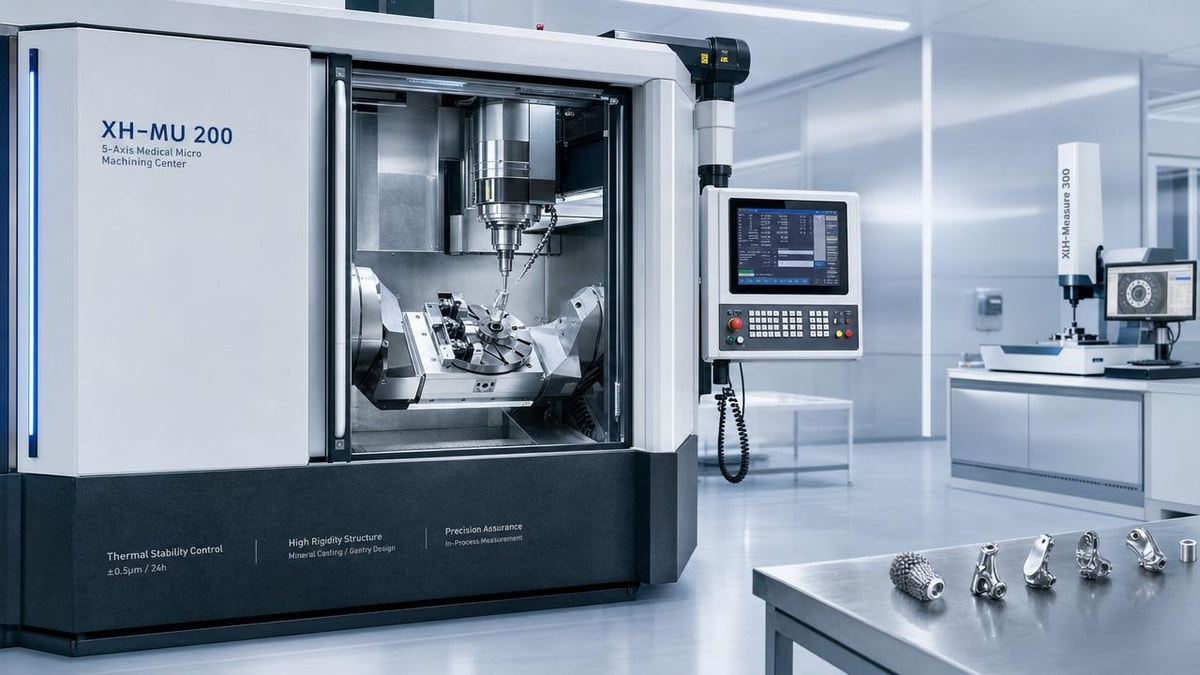
For technical evaluators, the real challenge is not whether a 5 axis milling machine for medical devices can produce complex parts, but what limits its repeatable accuracy under strict healthcare tolerances. From machine rigidity and thermal drift to tooling, software, and process validation, understanding these factors is essential for reducing risk, ensuring compliance, and selecting the right manufacturing solution.
Why a checklist-based evaluation matters first
When evaluating a 5 axis milling machine for medical devices, accuracy should never be reduced to a single brochure figure. A supplier may claim micron-level positioning, but actual medical part performance depends on how the full system behaves under production conditions. Technical evaluators need a structured checklist because medical applications combine thin walls, hard-to-cut alloys, miniature features, traceability requirements, and process repeatability expectations that are far more demanding than general industrial machining.
A checklist approach also improves decision quality. It helps teams separate marketing claims from validated capability, compare suppliers on equivalent criteria, and identify where nominal machine accuracy is lost in fixturing, programming, tool wear, inspection strategy, or shop-floor environmental control. For implants, surgical instruments, orthopedic components, dental parts, and device housings, these details determine whether a machining cell can repeatedly meet tolerance, surface integrity, and documentation standards.
The core accuracy checklist for a 5 axis milling machine for medical devices
Start with the following priority checks before comparing price, throughput, or optional automation. These are the main factors that limit real machining accuracy in medical production.
- Machine structural rigidity: Evaluate base casting stability, spindle interface stiffness, rotary axis rigidity, and vibration behavior under realistic cutting loads. Weak rigidity causes chatter, dimensional drift, and poor surface finish, especially on cobalt-chrome, titanium, and stainless alloys.
- Thermal stability: Check spindle growth, axis heating, coolant temperature control, ambient room variation, and warm-up behavior. In long medical production runs, thermal drift often causes more error than nominal positioning limits.
- Kinematic accuracy: Review volumetric accuracy, rotary axis calibration, backlash compensation, interpolation quality, and 5-axis synchronization. Small angular errors become large feature location errors on complex freeform parts.
- Tooling and holder performance: Verify runout, balance, gauge length consistency, holder repeatability, and suitability for micro-tools. Poor tooling stack-up can erase the benefits of a high-end machine.
- Fixture strategy: Assess clamping deformation, datum repeatability, access clearance, and part support for thin or delicate components. Medical parts often fail tolerance because of fixture distortion rather than machine limitations.
- CAM and post-processor quality: Confirm smooth toolpath generation, collision-safe axis motion, machine-specific post optimization, and controlled tool engagement. Software errors can translate directly into overtravel, marks, or inconsistent geometry.
- In-process measurement: Determine whether probing, tool break detection, and offset correction are used in a closed-loop method. A capable 5 axis milling machine for medical devices should support process control, not just raw motion.
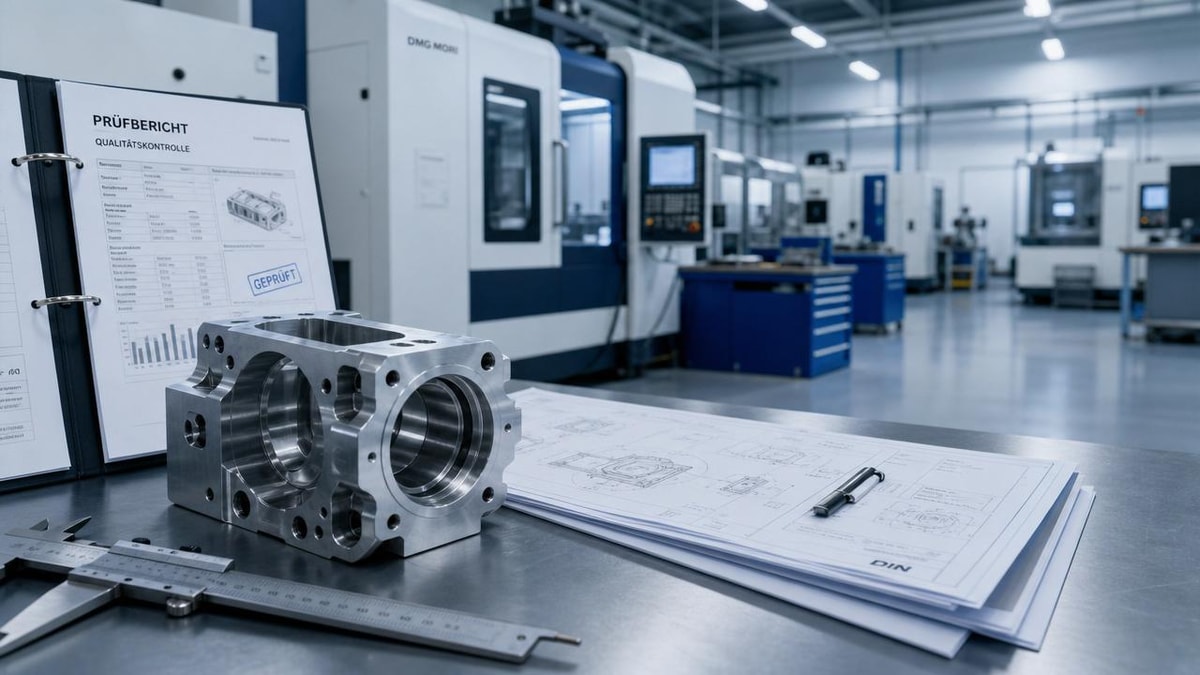
- Validation and inspection system: Ask how machine capability is proven: ball bar, laser calibration, artifact testing, CMM correlation, Cp/Cpk studies, and first article repeatability all matter.
How to judge each limiting factor in practical terms
1. Confirm rigidity before reading tolerance claims
A machine may have excellent axis resolution but still struggle with accuracy if the spindle, trunnion, or column deflects under load. For technical evaluators, the key question is not “What is the positioning spec?” but “What is the deflection during the actual cut?” This is especially important for bone screws, spinal components, abutments, and instrument jaws where small dimensional changes can affect assembly or function.
Ask suppliers for cut-test data on similar materials and geometries, not only no-load metrology reports. Review whether they can hold size and profile after roughing and finishing cycles, during multi-face machining, and near full tool reach. If chatter appears at longer stick-out lengths, accuracy may collapse on miniature features.
2. Treat thermal drift as a primary risk, not a secondary issue
Thermal drift is one of the most underestimated limits of a 5 axis milling machine for medical devices. Spindle heat, servo heat, coolant variation, and room temperature swings gradually change the machine’s geometry. In short qualification runs, the effect may appear small. In real production, it can shift true position, bore size, and feature relationships enough to exceed medical tolerances.
Evaluators should request evidence of thermal compensation strategy, machine warm-up requirements, environmental recommendations, and measured drift across a full shift. If the supplier cannot explain how thermal behavior is monitored and corrected, quoted repeatability should be treated cautiously.
3. Check 5-axis kinematics, not just linear axis accuracy
Medical device parts often require simultaneous contouring, undercuts, complex surface transitions, and precise angular relationships. That means rotary axis centerline errors, tilt-table misalignment, and interpolation mismatch can become the real source of inaccuracy. Even if X, Y, and Z axes perform well independently, the volumetric result may still be unacceptable.
Priority checks include rotary axis repeatability, pivot length calibration, dynamic contouring tests, and machine-specific verification routines. If a supplier cannot show how 5-axis motion is calibrated and maintained, the risk is high for freeform medical parts and off-axis holes.
4. Review the complete tooling system as an accuracy chain
The machine itself is only one part of the accuracy chain. Toolholder taper condition, collet quality, shrink-fit consistency, tool balance, and micro-tool runout can have a major effect on medical machining. This is especially true for tiny cutters, long-neck tools, and high-speed finishing where a few microns of runout can change edge loading and accelerate wear.
A robust evaluation should include maximum allowed tool runout, holder change repeatability, expected wear compensation intervals, and documented procedures for tool presetting. If these are uncontrolled, a premium 5 axis milling machine for medical devices may still deliver unstable results.
5. Examine fixturing for deformation and datum control
Thin titanium plates, orthopedic components, and delicate instrument parts are highly sensitive to clamping forces. Fixturing errors often appear as flatness problems, springback after unclamping, or inconsistent feature position between batches. Evaluators should inspect whether fixtures support the part close to the cut zone, allow repeatable referencing, and minimize distortion throughout all 5-axis orientations.
Where possible, request examples of fixture validation, GR&R on loading repeatability, and evidence that the process was optimized around the part’s weakest sections rather than around operator convenience.
Key comparison table for technical evaluators
Use this table to compare suppliers or manufacturing cells when assessing what may limit accuracy most severely.
Scenario-specific checks by medical application
Not all medical parts stress a 5 axis milling machine for medical devices in the same way. Technical evaluation should reflect the application.
Implants and orthopedic parts
Prioritize thermal stability, burr control, surface integrity, and machining strategy for titanium or cobalt-chrome. Small profile errors can affect fit, while heat and tool wear can alter edge quality and downstream finishing requirements.
Surgical instruments
Focus on thin features, hinge alignment, repeatability across multiple setups, and cosmetic surface consistency. Here, fixture repeatability and controlled deburring are often as important as machine motion accuracy.
Dental and micro medical components
Micro-tool runout, spindle balance, high-speed stability, and probing precision become critical. In miniature work, tiny deviations quickly consume tolerance and reduce tool life.
Commonly overlooked issues that quietly reduce accuracy
- Operator-dependent offset changes: If key corrections rely on tribal knowledge rather than controlled procedure, repeatability suffers.
- Post-maintenance drift: Machines may perform differently after spindle service, crash recovery, or rotary axis work unless recalibrated fully.
- Coolant delivery inconsistency: Poor chip evacuation and unstable cooling can change tool load and thermal behavior, especially in deep pockets or fine features.
- Inspection disconnect: If CMM strategy, datum scheme, and machining datum do not match, good parts may appear bad or bad parts may be accepted.
- Material batch variation: Differences in hardness or residual stress can change cutting forces and part movement, especially in long, thin components.
Execution advice: what to request before approving a supplier or machine
- Ask for a representative cut trial on the target medical material, geometry class, and tolerance band.
- Request documented thermal drift data over time, not only startup results.
- Review calibration and preventive maintenance intervals for linear and rotary axes.
- Verify tooling control standards, including runout limits and wear replacement rules.
- Compare fixturing method, probing routine, and final inspection alignment to the actual part print.
- Check whether process capability has been demonstrated with Cp/Cpk or equivalent repeatability studies.
- Confirm traceability, change control, and validation support if the part falls under regulated quality requirements.
FAQ for technical evaluators
Is machine positioning accuracy the best indicator of medical part accuracy?
No. It is only one indicator. Real performance depends on thermal stability, kinematics, tooling, fixturing, CAM quality, and validation discipline. For a 5 axis milling machine for medical devices, system accuracy matters more than isolated axis data.
Which factor is most often underestimated?
Thermal drift is frequently underestimated because it may not appear clearly in short demos. In actual production, it can be one of the biggest causes of dimensional variation.
Can software really limit machining accuracy that much?
Yes. Poor post-process output, unsmoothed toolpaths, or non-optimized 5-axis motion can produce visible marks, overcut, and unstable tool loading even on a mechanically capable machine.
Final decision guide and next-step questions
For technical evaluators, the best way to assess a 5 axis milling machine for medical devices is to treat accuracy as a controlled manufacturing outcome rather than a catalog number. Prioritize the limits that most often reduce repeatable performance: rigidity, thermal behavior, 5-axis calibration, tooling control, fixturing integrity, software quality, and validation evidence. A supplier that can explain these areas clearly and support them with production data is usually a safer choice than one offering only impressive nominal specifications.
If your team needs to move toward supplier qualification or equipment selection, the most useful next discussion points are part material, key tolerances, smallest feature size, expected batch volume, validation expectations, inspection method, cycle time target, and allowable risk level. Platforms such as TradeNexus Pro can help procurement and technical decision-makers compare these factors more intelligently by connecting market intelligence with verified industrial capability.
Get weekly intelligence in your inbox.
No noise. No sponsored content. Pure intelligence.
 May 02, 2026Commercial EV Charging Installation Costs Beyond the HardwareCommercial EV Charging Installation Costs Beyond the Hardware
 May 02, 2026Portable EV Charging Solutions: Where They Actually FitPortable EV Charging Solutions: Where They Actually Fit
 May 02, 2026Why Automotive Aluminum Extrusions Fail at Joining PointsWhy Automotive Aluminum Extrusions Fail at Joining Points
 May 02, 2026Sheet Metal Bending Services in the USA: What Drives Lead TimeSheet Metal Bending Services in the USA: What Drives Lead Time
 May 02, 2026Cost-Effective Factory Automation Often Starts Smaller Than ExpectedCost-Effective Factory Automation Often Starts Smaller Than Expected
 May 02, 2026Choosing a Solar Panels Wholesale Distributor Without Price TrapsChoosing a Solar Panels Wholesale Distributor Without Price Traps
 May 02, 2026High Efficiency PV Modules: When the Premium Makes SenseHigh Efficiency PV Modules: When the Premium Makes Sense
 May 02, 2026Why Data Centers Are Rethinking ESS Backup StrategyWhy Data Centers Are Rethinking ESS Backup Strategy
 May 02, 2026Do Agricultural PV Modules Need Different Frame Designs?Do Agricultural PV Modules Need Different Frame Designs?
 May 02, 2026How to Vet an OEM Machined Parts Supplier in GermanyHow to Vet an OEM Machined Parts Supplier in Germany
 May 02, 2026Custom Metal Fabrication for Aerospace: Cost vs CertificationCustom Metal Fabrication for Aerospace: Cost vs Certification
 May 02, 2026What Slows Rapid Prototyping for Automotive Parts MostWhat Slows Rapid Prototyping for Automotive Parts Most
 May 02, 2026Rapid Prototyping Choices That Cut Delays in Consumer ElectronicsRapid Prototyping Choices That Cut Delays in Consumer Electronics
 May 02, 2026Why Aerospace Parts Need More Than Tight Lathe TurningWhy Aerospace Parts Need More Than Tight Lathe Turning
 May 02, 2026What Fireproof Technology Really Changes in Lithium BatteriesWhat Fireproof Technology Really Changes in Lithium Batteries
 May 02, 2026Are Grid-Tied Hybrid Inverters Enough for Unstable Supply?Are Grid-Tied Hybrid Inverters Enough for Unstable Supply?
 May 02, 2026What a Solar Panels Wholesale Price List Does Not ShowWhat a Solar Panels Wholesale Price List Does Not Show
 May 02, 2026How Long Life Cycle Batteries Lower Replacement CostsHow Long Life Cycle Batteries Lower Replacement Costs
 May 02, 2026Lathe Turning Tolerances That Matter in Industrial MachineryLathe Turning Tolerances That Matter in Industrial Machinery
 May 02, 2026ESS for Commercial Buildings: Sizing Mistakes to AvoidESS for Commercial Buildings: Sizing Mistakes to Avoid
 May 02, 2026Warehouse Robotics Bottlenecks That Slow Automation ROIWarehouse Robotics Bottlenecks That Slow Automation ROI
 May 02, 2026Where Smart Manufacturing Pays Off First in Auto PlantsWhere Smart Manufacturing Pays Off First in Auto Plants
 May 02, 2026Marine Aluminum Extrusions: What Corrosion Ratings MissMarine Aluminum Extrusions: What Corrosion Ratings Miss
 May 02, 2026Plastic Injection Molding Machine Specs That Affect OutputPlastic Injection Molding Machine Specs That Affect Output
 May 02, 2026What Limits 5 Axis Milling Accuracy for Medical Devices?What Limits 5 Axis Milling Accuracy for Medical Devices?
 May 02, 2026How to Compare a Die Casting Parts Manufacturer in ChinaHow to Compare a Die Casting Parts Manufacturer in China
 May 02, 2026Why Oil and Gas Projects Still Rely on Steel ForgingWhy Oil and Gas Projects Still Rely on Steel Forging