ESS for Commercial Buildings: Sizing Mistakes to Avoid
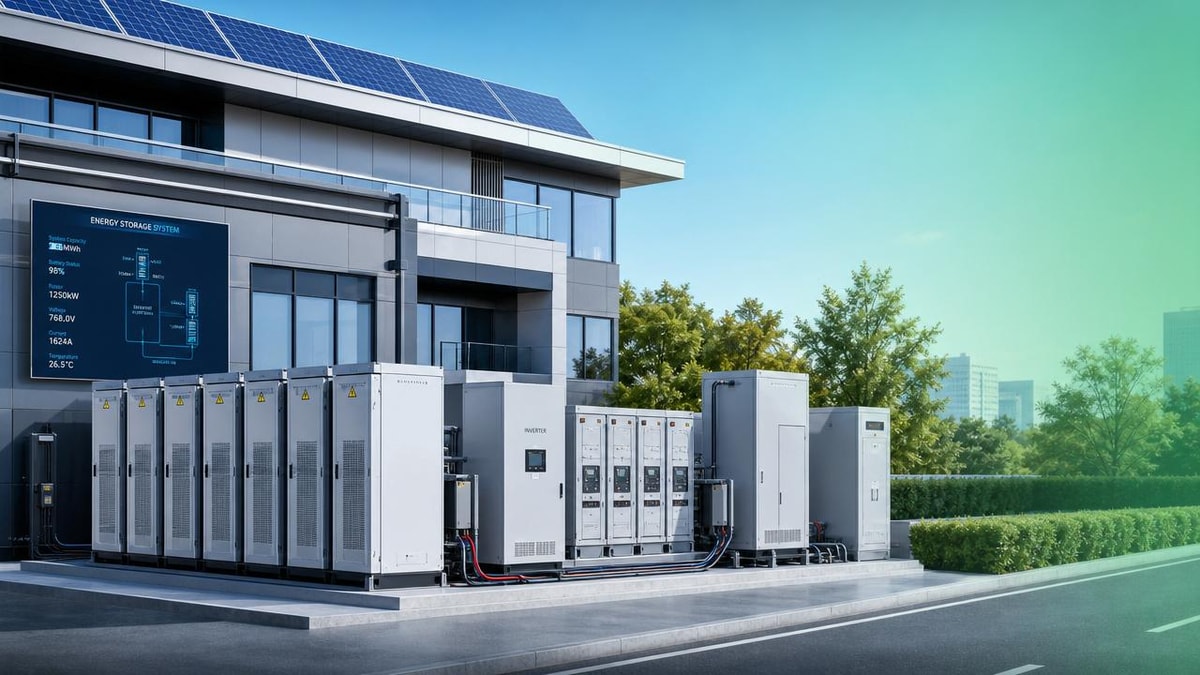
Getting ESS energy storage for commercial buildings right starts with accurate sizing—and that is where many projects go off track. For project managers and engineering leads, oversizing wastes capital while undersizing weakens resilience, savings, and ROI. This article highlights the most common sizing mistakes, the operational risks behind them, and what to evaluate early to align system performance with building loads, peak demand, and long-term energy goals.
Why a checklist approach works better than rough assumptions
Sizing ESS energy storage for commercial buildings is rarely a single-variable calculation. In real projects, the battery system must respond to peak demand charges, load variability, utility tariffs, outage expectations, electrical infrastructure limits, and future expansion plans. A simplified estimate based only on building square footage or average monthly consumption usually leads to the wrong answer.
For project managers, a checklist-based process reduces expensive redesigns. It also helps cross-functional teams align early: finance cares about payback, engineering cares about power and safety, operations cares about resilience, and procurement cares about lifecycle risk. A structured review keeps ESS energy storage for commercial buildings tied to actual performance goals rather than vendor defaults or generic benchmarks.
First-pass sizing checklist: what to confirm before discussing battery capacity
Before selecting kWh and kW values, confirm the following items. These checks often determine whether the system is being designed for savings, resilience, power quality, renewable integration, or a blended business case.
- Define the primary objective. Is the ESS for commercial buildings intended for demand charge reduction, backup power, solar self-consumption, time-of-use arbitrage, EV charging support, or multiple services?
- Review interval load data, not just utility bills. Fifteen-minute or five-minute data reveals spikes that monthly averages completely hide.
- Separate critical loads from total building load. Backup sizing should rarely assume every load must be supported.
- Check tariff structure and demand charge windows. The economic value of ESS energy storage for commercial buildings depends heavily on when high charges are triggered.
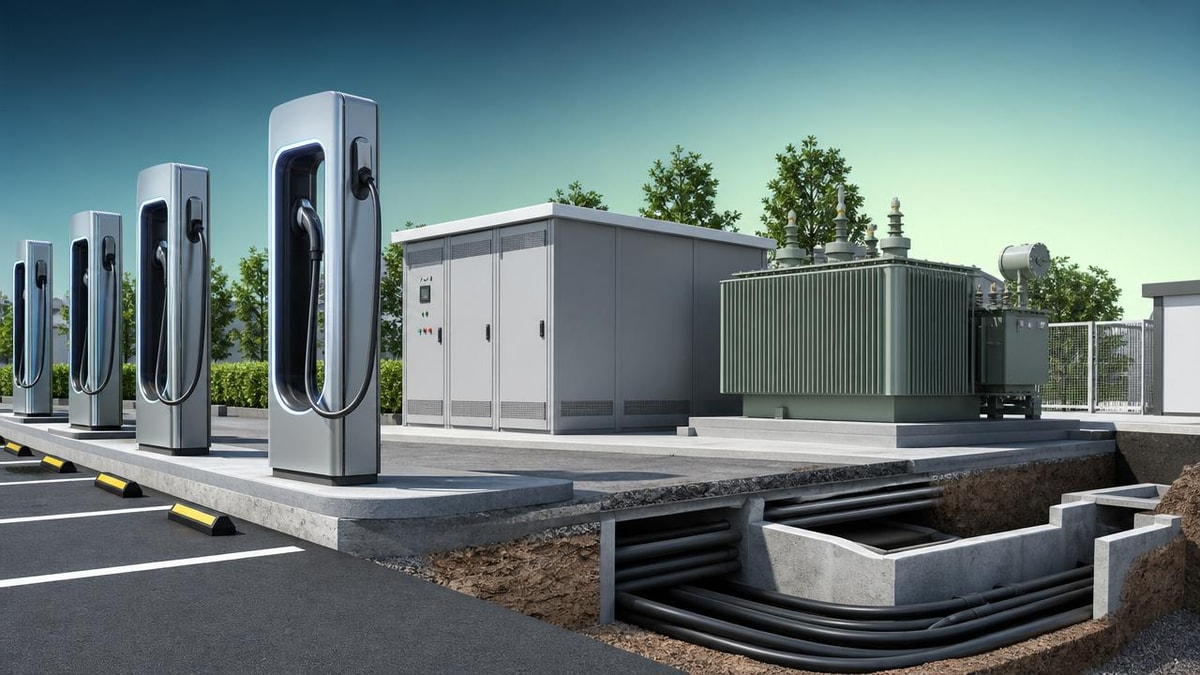
- Verify available interconnection capacity, transformer limits, switchgear constraints, and site layout restrictions.
- Model future changes such as tenant turnover, process upgrades, HVAC electrification, or EV fleet charging.
- Identify outage duration targets and acceptable load shedding strategy.
- Confirm round-trip efficiency, degradation assumptions, operating temperature profile, and augmentation needs over the project life.
The most common sizing mistakes to avoid
1. Using average energy consumption instead of interval demand data
One of the biggest mistakes in ESS energy storage for commercial buildings is designing from monthly kWh totals alone. Average consumption says little about short peak events that drive demand charges and inverter power requirements. A facility with moderate annual usage may still experience sharp daily demand spikes. If those spikes last only 15 to 30 minutes, the project may need more kW than expected, but not necessarily more kWh. Missing that distinction can produce a system that looks right on paper but fails in operation.
2. Confusing power sizing with energy sizing
Power capacity determines how fast the ESS can charge or discharge. Energy capacity determines how long it can sustain that output. Many teams focus heavily on battery kWh while underestimating inverter kW requirements. For example, a building targeting peak shaving during short, intense peaks may need higher power and moderate duration. A resilience-oriented site supporting critical loads for several hours may need lower power but much more energy. ESS energy storage for commercial buildings must balance both dimensions based on use case, not on a single headline capacity number.
3. Sizing backup loads as if the whole building must remain online
Backup designs often become oversized because teams fail to classify loads. In most commercial facilities, essential systems include life safety, IT, refrigeration, selected HVAC, access control, or process-critical circuits—not the entire building. A more disciplined load prioritization exercise frequently reduces required system size and improves ROI. For project leaders, this is one of the highest-impact decisions because it affects battery capacity, inverter sizing, controls strategy, and transfer equipment design.
4. Ignoring tariff logic and dispatch windows
Two buildings with similar annual consumption can need very different ESS designs if their tariffs differ. Some utility structures reward demand reduction during narrow peak windows; others create stronger value through time-of-use shifting. If the sizing team does not map battery dispatch to tariff triggers, the projected savings can be overstated. The result is a battery that cycles too often, captures too little value, or misses the most expensive intervals entirely.
5. Forgetting battery degradation and end-of-life performance
Nameplate capacity is not the same as usable capacity over time. ESS energy storage for commercial buildings should be sized with performance fade in mind. If the business case depends on delivering a certain peak shaving or backup duration in year eight or year ten, the model must include degradation, ambient conditions, cycling depth, and warranty structure. Otherwise, the system may meet project goals only in the early years.
6. Overlooking solar, EV charging, and future electrification impacts
Many commercial sites are not static. A battery sized around today’s profile may become inadequate after rooftop solar expansion, heat pump retrofits, or EV charger deployment. Conversely, a future distributed energy plan may reduce net load in some hours and shift peaks to new periods. Good sizing does not require perfect forecasting, but it does require scenario planning. If future load growth is likely, design flexibility and augmentation options should be part of the scope.
7. Treating all critical facilities the same
A warehouse, hospital-adjacent outpatient building, office tower, hotel, and food processing site have very different load signatures and risk tolerance. ESS energy storage for commercial buildings should reflect operational consequences, not generic market averages. In some facilities, a short outage mainly causes comfort issues. In others, even a few minutes of interruption can damage inventory, interrupt revenue systems, or violate service commitments.
A practical decision table for project teams
Use this quick reference to connect the project objective to the main sizing emphasis and the most common oversight.
Scenario-specific checks for different commercial building types
Office buildings
Focus on HVAC-driven afternoon peaks, tenant occupancy variability, and whether demand charges justify a short-duration battery. If hybrid work patterns shift occupancy, historical data may not reflect future operations.
Retail and mixed-use properties
Check seasonal peaks, refrigeration loads, lighting patterns, and weekend demand. In mixed-use assets, one tenant category can dominate the load profile and distort the sizing assumptions for the rest of the site.
Industrial-commercial hybrids and light manufacturing sites
Review process loads, motor starts, shift schedules, and downtime cost. Here, ESS energy storage for commercial buildings may need stronger power performance and controls integration rather than simply more stored energy.
Healthcare-adjacent and mission-critical facilities
Prioritize resilience tiers, code compliance, power quality, and selective coordination with existing backup assets. The system should be evaluated as part of the full continuity architecture, not as an isolated battery purchase.
Often-missed risk items that distort sizing results
- Assuming all stored energy is fully usable without accounting for reserve state-of-charge limits.
- Neglecting HVAC and ambient temperature effects on battery performance and degradation.
- Ignoring fire safety spacing, permitting constraints, and available installation footprint.
- Underestimating control system quality; poor dispatch logic can make a correctly sized system perform badly.
- Failing to test multiple operating modes when one ESS must serve both savings and resilience functions.
- Not checking whether utility rules limit export, charging source, or participation in grid programs.
Execution advice: how to size with fewer surprises
- Start with at least 12 months of interval data, and use 24 months if the site has seasonal variability.
- Build separate models for savings, resilience, and future load growth before combining them.
- Create a critical-load list with engineering, facilities, and operations teams together.
- Run sensitivity analyses for tariff changes, degradation, and EV or HVAC expansion.
- Ask vendors for dispatch assumptions, warranty conditions, augmentation strategy, and end-of-life usable capacity—not just nameplate ratings.
- Validate the battery design against interconnection, electrical room capacity, and local code requirements before final procurement.
FAQ for teams evaluating ESS energy storage for commercial buildings
How much ESS capacity does a commercial building need?
There is no reliable rule-of-thumb answer. The right size depends on the building load profile, demand spikes, operating schedule, tariff design, resilience target, and future electrification plans. A good sizing exercise starts with interval data and a clearly defined objective.
Should we size for maximum outage duration or for best payback?
That depends on business priorities. Some projects justify ESS energy storage for commercial buildings primarily through peak shaving and tariff management, with resilience as a secondary benefit. Others value continuity more than short-term ROI. The best approach is to compare separate scenarios and identify the acceptable balance between capital cost and operational protection.
What data should be prepared before vendor discussions?
Prepare interval load data, utility tariffs, single-line diagrams, critical load lists, outage history, future expansion plans, available site constraints, and existing solar or generator information. This shortens the design cycle and improves proposal quality.
What to prepare next before moving the project forward
If your team is advancing ESS energy storage for commercial buildings, the most useful next step is not asking for a generic battery quote. Instead, prepare a decision package: interval demand data, top three project objectives, must-serve critical loads, budget guardrails, expected project timeline, and known site constraints. With that information, engineering and procurement teams can compare solutions based on actual fit rather than marketing claims.
For project managers and engineering leads, the key is simple: size the system around the building’s real operating profile, not around assumptions. If you need to confirm technical parameters, system compatibility, delivery timing, lifecycle economics, or integration strategy, prioritize those questions early. That is the fastest way to avoid the most common sizing mistakes and turn ESS energy storage for commercial buildings into a practical asset instead of a costly compromise.
Get weekly intelligence in your inbox.
No noise. No sponsored content. Pure intelligence.
 May 02, 2026Commercial EV Charging Installation Costs Beyond the HardwareCommercial EV Charging Installation Costs Beyond the Hardware
 May 02, 2026Portable EV Charging Solutions: Where They Actually FitPortable EV Charging Solutions: Where They Actually Fit
 May 02, 2026Why Automotive Aluminum Extrusions Fail at Joining PointsWhy Automotive Aluminum Extrusions Fail at Joining Points
 May 02, 2026Sheet Metal Bending Services in the USA: What Drives Lead TimeSheet Metal Bending Services in the USA: What Drives Lead Time
 May 02, 2026Cost-Effective Factory Automation Often Starts Smaller Than ExpectedCost-Effective Factory Automation Often Starts Smaller Than Expected
 May 02, 2026Choosing a Solar Panels Wholesale Distributor Without Price TrapsChoosing a Solar Panels Wholesale Distributor Without Price Traps
 May 02, 2026High Efficiency PV Modules: When the Premium Makes SenseHigh Efficiency PV Modules: When the Premium Makes Sense
 May 02, 2026Why Data Centers Are Rethinking ESS Backup StrategyWhy Data Centers Are Rethinking ESS Backup Strategy
 May 02, 2026Do Agricultural PV Modules Need Different Frame Designs?Do Agricultural PV Modules Need Different Frame Designs?
 May 02, 2026How to Vet an OEM Machined Parts Supplier in GermanyHow to Vet an OEM Machined Parts Supplier in Germany
 May 02, 2026Custom Metal Fabrication for Aerospace: Cost vs CertificationCustom Metal Fabrication for Aerospace: Cost vs Certification
 May 02, 2026What Slows Rapid Prototyping for Automotive Parts MostWhat Slows Rapid Prototyping for Automotive Parts Most
 May 02, 2026Rapid Prototyping Choices That Cut Delays in Consumer ElectronicsRapid Prototyping Choices That Cut Delays in Consumer Electronics
 May 02, 2026Why Aerospace Parts Need More Than Tight Lathe TurningWhy Aerospace Parts Need More Than Tight Lathe Turning
 May 02, 2026What Fireproof Technology Really Changes in Lithium BatteriesWhat Fireproof Technology Really Changes in Lithium Batteries
 May 02, 2026Are Grid-Tied Hybrid Inverters Enough for Unstable Supply?Are Grid-Tied Hybrid Inverters Enough for Unstable Supply?
 May 02, 2026What a Solar Panels Wholesale Price List Does Not ShowWhat a Solar Panels Wholesale Price List Does Not Show
 May 02, 2026How Long Life Cycle Batteries Lower Replacement CostsHow Long Life Cycle Batteries Lower Replacement Costs
 May 02, 2026Lathe Turning Tolerances That Matter in Industrial MachineryLathe Turning Tolerances That Matter in Industrial Machinery
 May 02, 2026ESS for Commercial Buildings: Sizing Mistakes to AvoidESS for Commercial Buildings: Sizing Mistakes to Avoid
 May 02, 2026Warehouse Robotics Bottlenecks That Slow Automation ROIWarehouse Robotics Bottlenecks That Slow Automation ROI
 May 02, 2026Where Smart Manufacturing Pays Off First in Auto PlantsWhere Smart Manufacturing Pays Off First in Auto Plants
 May 02, 2026Marine Aluminum Extrusions: What Corrosion Ratings MissMarine Aluminum Extrusions: What Corrosion Ratings Miss
 May 02, 2026Plastic Injection Molding Machine Specs That Affect OutputPlastic Injection Molding Machine Specs That Affect Output
 May 02, 2026What Limits 5 Axis Milling Accuracy for Medical Devices?What Limits 5 Axis Milling Accuracy for Medical Devices?
 May 02, 2026How to Compare a Die Casting Parts Manufacturer in ChinaHow to Compare a Die Casting Parts Manufacturer in China
 May 02, 2026Why Oil and Gas Projects Still Rely on Steel ForgingWhy Oil and Gas Projects Still Rely on Steel Forging