Why Automotive Aluminum Extrusions Fail at Joining Points
Failures at joining points can turn high-performance aluminum extrusions for automotive industry applications into major quality and safety risks. For QA teams and safety managers, understanding why these weak links crack, loosen, or corrode is essential to preventing recalls, downtime, and compliance issues. This article examines the root causes behind joint failure and what manufacturers can do to improve durability and assembly reliability.
Why do joining points fail in aluminum extrusions for automotive industry use?
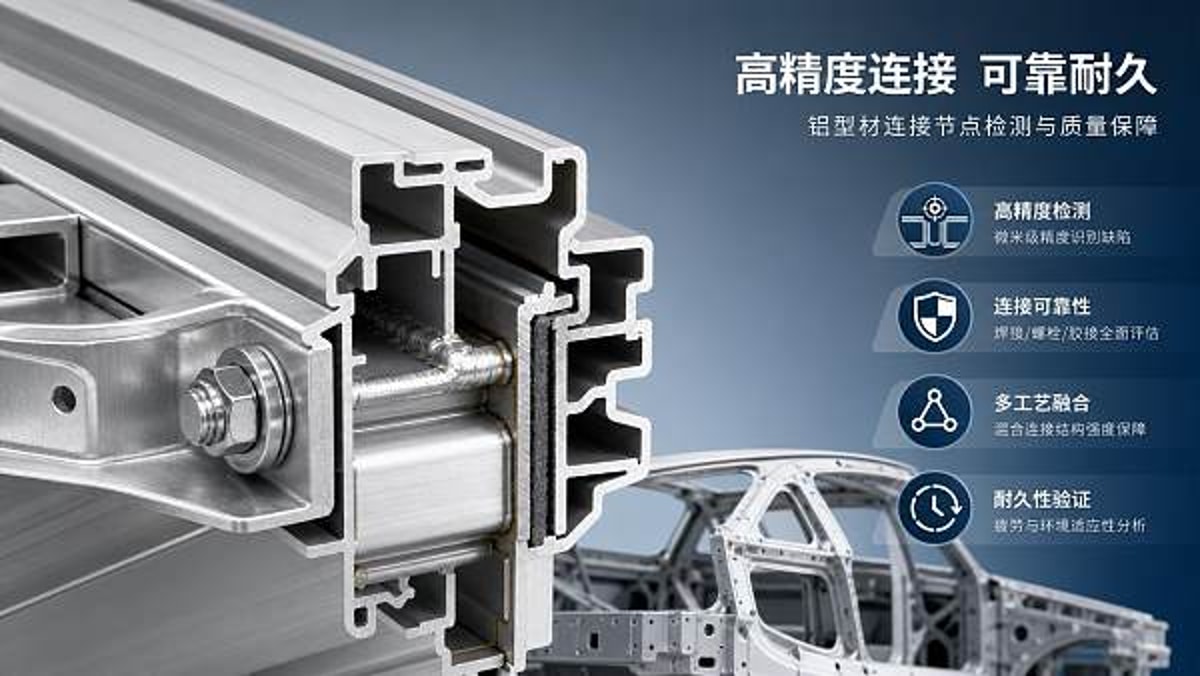
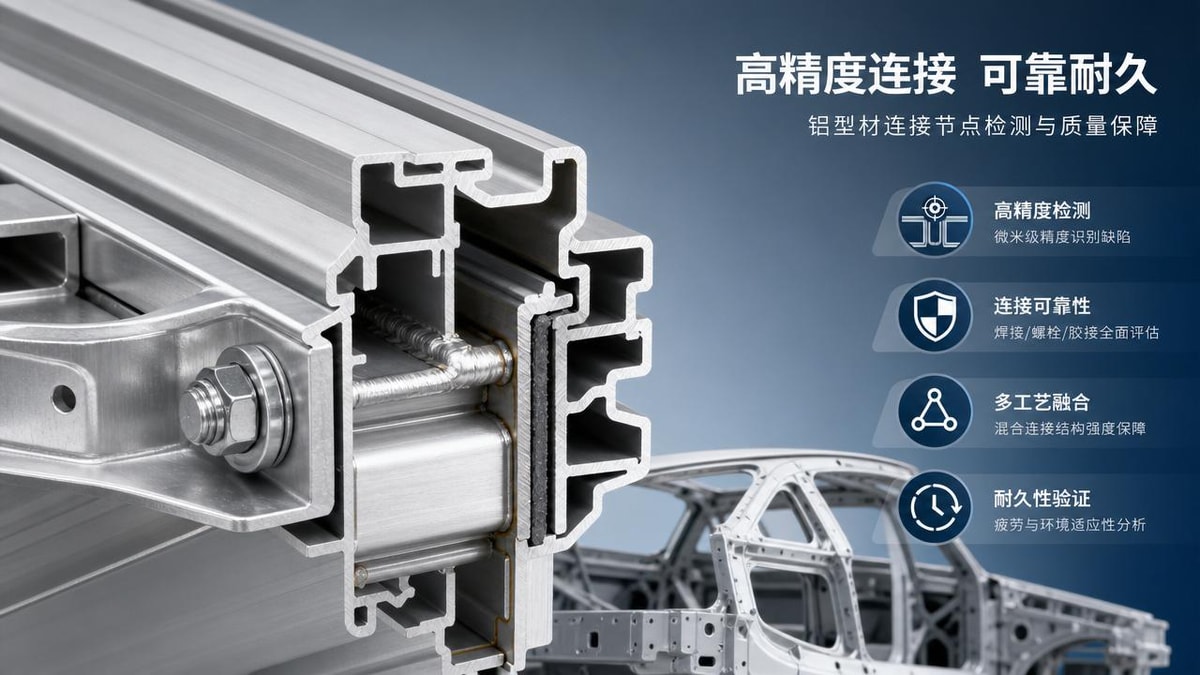
Joining points are where material behavior, process variation, and assembly stress meet. In aluminum extrusions for automotive industry structures, those interfaces often include weld seams, fastened nodes, bonded flanges, hybrid joints, and contact areas between aluminum and steel. Even when the extrusion profile itself meets dimensional targets, the joint can still become the first failure site under vibration, torsion, thermal cycling, or crash loading.
For quality control personnel, the problem is rarely caused by one factor alone. Joint failure usually develops through a chain of small deviations: unsuitable alloy choice, inconsistent temper, poor surface preparation, tool wear, tolerance stack-up, incorrect fastener preload, adhesive cure variation, or insufficient corrosion isolation. Safety managers see the downstream effect: loose assemblies, crack initiation, water ingress, noise and harshness complaints, reduced crash performance, and difficult traceability during audits.
This is especially relevant as vehicle platforms become lighter and more modular. The use of aluminum extrusions for automotive industry programs has expanded across battery enclosures, roof rails, side members, seat structures, cross car beams, and thermal management frames. Each application imposes different load paths and environmental demands, so a joining method that works in one subsystem may underperform in another.
- Static and dynamic loads are not distributed evenly at the joint, causing stress concentrations that are often much higher than in straight extrusion sections.
- Mixed-material assemblies increase galvanic corrosion risk, particularly where paint damage, trapped moisture, or road salts are present.
- Manufacturing speed pressures can reduce process windows for welding, bonding, inspection, and cure verification.
- Design teams may optimize mass and packaging before validating actual assembly robustness under production conditions.
The most common failure modes QA teams should track
Failure mode analysis becomes more effective when teams separate visible symptoms from root causes. A crack near a fastener hole does not always mean bad material. It may point to hole-edge quality, misalignment, over-torque, residual stress, or fatigue amplification from a stiff neighboring component.
- Fatigue cracking around welds, pierced holes, or abrupt section changes.
- Joint loosening caused by preload loss, embedding, vibration, or thermal mismatch.
- Crevice and galvanic corrosion where coatings are interrupted or dissimilar metals make contact.
- Adhesive bond degradation from contamination, poor cure control, or unsuitable service temperature range.
- Dimensional drift that forces assembly stress into the joint during fit-up.
Which root causes matter most in production environments?
In real manufacturing lines, joint failures in aluminum extrusions for automotive industry parts tend to cluster around five control domains: material selection, profile design, surface condition, joining process stability, and in-service environment. When one of these domains is weak, the others must compensate. That usually raises cost while still leaving hidden risk.
The following table helps QA and safety teams connect recurring symptoms to likely causes and practical controls. It is useful during supplier audits, APQP reviews, launch ramp-up, and corrective action planning for extrusion-based automotive assemblies.
The table shows a clear pattern: failure at the joint is often a systems problem rather than a single defective part. That is why supplier qualification for aluminum extrusions for automotive industry projects must include process capability at the joining stage, not just extrusion dimensional reports.
Material and temper choices can create hidden vulnerability
Different aluminum alloys respond very differently to forming, welding, and fastening. Higher-strength grades may improve structural efficiency, yet they can also narrow the joining process window. Temper condition matters too. A profile that performs well in tensile testing may show poorer local ductility around a clinch, pierce, or bent flange. QA teams should verify not only base material certification but also local property retention after joining.
Surface condition often decides whether the joint survives
Aluminum forms a natural oxide film, which protects the surface but can interfere with bonding and electrical contact behavior. Lubricants, release residues, shop dust, and inconsistent pretreatment can sharply reduce bond integrity. In high-volume automotive assembly, a small drift in cleaning chemistry or dwell time may not be visible until destructive testing or field returns reveal the issue.
How do different joining methods compare for aluminum extrusions for automotive industry assemblies?
Selecting the joining method is not just an engineering decision. It is also a quality, safety, cost, and supply chain decision. For procurement, supplier quality, and EHS teams, the right question is not which method is strongest in theory, but which method remains stable across volume production, maintenance intervals, operator variation, and end-use exposure.
The comparison below can support cross-functional reviews when choosing among welding, mechanical fastening, adhesive bonding, or hybrid joining for aluminum extrusions for automotive industry platforms.
No single method is universally superior. For safety-critical applications, hybrid strategies can reduce isolated failure modes, but only if process control, operator training, and verification plans are mature. Otherwise, added complexity can create new failure paths instead of removing old ones.
A practical decision sequence for cross-functional teams
- Define the service load, temperature range, corrosion exposure, and expected maintenance access.
- Confirm extrusion alloy, wall thickness, tolerances, and local geometry near the joint.
- Select joining methods based on process window robustness, not lab performance alone.
- Validate the joint through durability, salt exposure, thermal cycling, and teardown analysis.
- Lock in inspection gates, reaction plans, and traceability rules before SOP ramp-up.
What should QA and safety managers inspect before approving suppliers?
Approving a supplier of aluminum extrusions for automotive industry programs requires more than checking price and dimensional capability. Joining reliability depends on process discipline across extrusion, machining, finishing, logistics, and final assembly. If incoming profiles are scratched, contaminated, mixed by temper, or warped beyond fit-up allowances, the joint will absorb the hidden variation.
Use the following checklist to reduce quality escapes and late-stage engineering changes during sourcing or supplier development.
- Check alloy and temper traceability from billet to finished extrusion lot, especially where multiple strength variants are sourced.
- Review profile tolerances that affect mating accuracy, hole position, flatness, twist, and local wall integrity at joint interfaces.
- Verify surface preparation standards before bonding, welding, or coating, including storage and contamination control.
- Assess process capability for cutting, punching, drilling, and end machining because edge quality strongly influences crack initiation.
- Confirm whether the supplier can support PPAP-style documentation, control plans, MSA, and layered process audits where required.
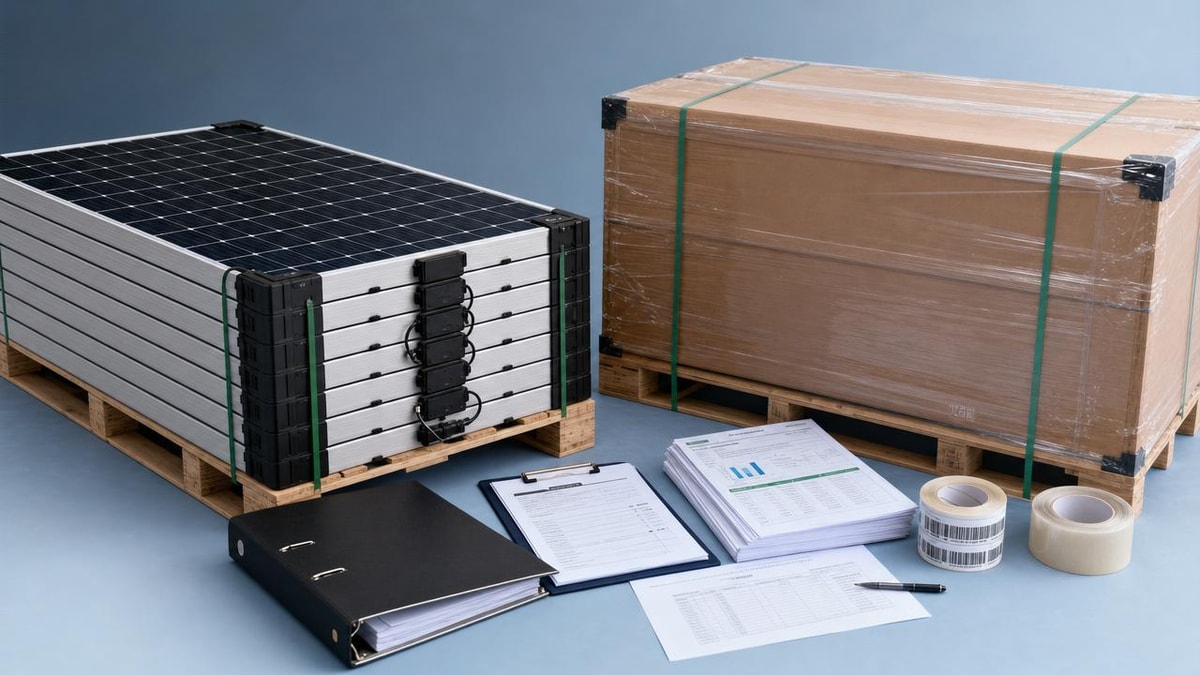
- Request clarity on packaging and transport protection, since surface damage and moisture exposure can compromise later joining steps.
Standards and compliance signals worth reviewing
Specific program requirements vary, but quality and safety teams commonly review whether suppliers align with recognized automotive and manufacturing control frameworks. Depending on the product category and region, this may include quality management systems, material certification practices, welding procedure controls, corrosion test methods, and restricted substance declarations. The key is not logo collection. The key is whether documentation matches the actual process on the floor.
How can manufacturers reduce joint failure risk in day-to-day operations?
Reducing failures in aluminum extrusions for automotive industry applications requires operational discipline. The most effective plants treat the joint as a controlled product characteristic, not as a secondary assembly step. That mindset changes how they plan fixtures, sampling, operator instructions, maintenance, and reaction plans.
Process controls that deliver the highest return
- Use fixture designs that minimize forced fit and distribute clamp loads without introducing local distortion.
- Define clear cleanliness standards with measurable acceptance criteria before adhesive or weld operations.
- Monitor tool wear for drilling, punching, and fastening because burrs and hole deformation accelerate crack growth.
- Validate torque, cure, and thermal process windows with periodic destructive audits, not only in-line readings.
- Add drainage, seal design, and electrical isolation features early to limit corrosion at mixed-metal contact points.
Plants that reduce warranty exposure usually combine these controls with feedback loops from field data, lab failure analysis, and supplier scorecards. That is where a specialized intelligence platform becomes valuable. Teams need not just data, but context: which joining trends are emerging, where supply chain constraints are creating shortcuts, and how peers in adjacent sectors manage similar lightweight structural risks.
Common misconceptions about joining failures
“If the extrusion passes incoming inspection, the joint will be fine.”
Not necessarily. Incoming inspection can confirm dimensions, appearance, and certificates, but it does not guarantee bondability, weld response, hole-edge fatigue resistance, or long-term corrosion behavior after assembly. Joining performance must be validated at the assembly level.
“Higher-strength aluminum always improves safety.”
Higher strength can reduce mass, but it may also reduce local formability or complicate joining. Safety depends on the complete system, including energy absorption, crack tolerance, fastening strategy, and manufacturing stability.
“Corrosion is mainly a cosmetic issue.”
At joining points, corrosion can reduce section thickness, undermine fastener retention, break seal lines, and create hidden structural degradation. For battery-adjacent and underbody applications, corrosion control is a safety topic, not a finish topic.
FAQ: what buyers and safety teams ask most often
How do we evaluate suppliers of aluminum extrusions for automotive industry projects beyond price?
Focus on joint-related capability. Review alloy consistency, machining quality, surface control, joining support, traceability discipline, and willingness to share process data during validation. A lower unit price can become expensive if joint scrap, launch delays, or field containment increase.
Which applications are most sensitive to joining point failure?
Battery enclosures, crash load paths, seat frames, roof structures, cross members, and thermal frames are especially sensitive because they combine dynamic loads, temperature cycling, and compliance expectations. In such areas, even small assembly variation can affect performance.
What should we ask during sample approval?
Ask for dimensional data, local hardness or property checks where relevant, surface condition control methods, joining trial records, corrosion mitigation details, and any observed limitations on storage, handling, or assembly timing before joining.
Can hybrid joining reduce recall risk?
It can, especially when combining load distribution and redundancy. But it also requires stronger process control and clearer inspection logic. If one process is poorly managed, the second process may mask the issue during launch and delay detection until field use.
Why work with us when evaluating sourcing and risk in this category?
TradeNexus Pro supports procurement leaders, supply chain managers, and technical decision-makers who need sharper judgment in complex industrial categories. For companies sourcing aluminum extrusions for automotive industry applications, that means access to focused market intelligence, sector-specific analysis, and a professional environment designed for informed supplier evaluation rather than broad, shallow listings.
Our value is practical. We help teams compare manufacturing capabilities, monitor technology shifts across advanced manufacturing and mobility supply chains, and frame better conversations with suppliers before quality problems become commercial problems. If your QA or safety team is reviewing joint durability risks, we can support a more structured decision process.
- Discuss parameter confirmation for extrusion geometry, alloy choice, surface state, and joining compatibility.
- Compare supplier options for product selection, validation scope, and quality documentation depth.
- Review delivery timing, ramp-up risk, and supply continuity for automotive programs under tight launch schedules.
- Explore custom sourcing strategies tied to certification expectations, sample support, and quotation alignment.
If you are assessing new suppliers, troubleshooting joint failures, or preparing a sourcing plan for lightweight structural components, connect with TradeNexus Pro for targeted insight on specifications, supplier screening, lead-time considerations, sample coordination, and commercial evaluation.
Get weekly intelligence in your inbox.
No noise. No sponsored content. Pure intelligence.
 May 02, 2026Commercial EV Charging Installation Costs Beyond the HardwareCommercial EV Charging Installation Costs Beyond the Hardware
 May 02, 2026Portable EV Charging Solutions: Where They Actually FitPortable EV Charging Solutions: Where They Actually Fit
 May 02, 2026Why Automotive Aluminum Extrusions Fail at Joining PointsWhy Automotive Aluminum Extrusions Fail at Joining Points
 May 02, 2026Sheet Metal Bending Services in the USA: What Drives Lead TimeSheet Metal Bending Services in the USA: What Drives Lead Time
 May 02, 2026Cost-Effective Factory Automation Often Starts Smaller Than ExpectedCost-Effective Factory Automation Often Starts Smaller Than Expected
 May 02, 2026Choosing a Solar Panels Wholesale Distributor Without Price TrapsChoosing a Solar Panels Wholesale Distributor Without Price Traps
 May 02, 2026High Efficiency PV Modules: When the Premium Makes SenseHigh Efficiency PV Modules: When the Premium Makes Sense
 May 02, 2026Why Data Centers Are Rethinking ESS Backup StrategyWhy Data Centers Are Rethinking ESS Backup Strategy
 May 02, 2026Do Agricultural PV Modules Need Different Frame Designs?Do Agricultural PV Modules Need Different Frame Designs?
 May 02, 2026How to Vet an OEM Machined Parts Supplier in GermanyHow to Vet an OEM Machined Parts Supplier in Germany
 May 02, 2026Custom Metal Fabrication for Aerospace: Cost vs CertificationCustom Metal Fabrication for Aerospace: Cost vs Certification
 May 02, 2026What Slows Rapid Prototyping for Automotive Parts MostWhat Slows Rapid Prototyping for Automotive Parts Most
 May 02, 2026Rapid Prototyping Choices That Cut Delays in Consumer ElectronicsRapid Prototyping Choices That Cut Delays in Consumer Electronics
 May 02, 2026Why Aerospace Parts Need More Than Tight Lathe TurningWhy Aerospace Parts Need More Than Tight Lathe Turning
 May 02, 2026What Fireproof Technology Really Changes in Lithium BatteriesWhat Fireproof Technology Really Changes in Lithium Batteries
 May 02, 2026Are Grid-Tied Hybrid Inverters Enough for Unstable Supply?Are Grid-Tied Hybrid Inverters Enough for Unstable Supply?
 May 02, 2026What a Solar Panels Wholesale Price List Does Not ShowWhat a Solar Panels Wholesale Price List Does Not Show
 May 02, 2026How Long Life Cycle Batteries Lower Replacement CostsHow Long Life Cycle Batteries Lower Replacement Costs
 May 02, 2026Lathe Turning Tolerances That Matter in Industrial MachineryLathe Turning Tolerances That Matter in Industrial Machinery
 May 02, 2026ESS for Commercial Buildings: Sizing Mistakes to AvoidESS for Commercial Buildings: Sizing Mistakes to Avoid
 May 02, 2026Warehouse Robotics Bottlenecks That Slow Automation ROIWarehouse Robotics Bottlenecks That Slow Automation ROI
 May 02, 2026Where Smart Manufacturing Pays Off First in Auto PlantsWhere Smart Manufacturing Pays Off First in Auto Plants
 May 02, 2026Marine Aluminum Extrusions: What Corrosion Ratings MissMarine Aluminum Extrusions: What Corrosion Ratings Miss
 May 02, 2026Plastic Injection Molding Machine Specs That Affect OutputPlastic Injection Molding Machine Specs That Affect Output
 May 02, 2026What Limits 5 Axis Milling Accuracy for Medical Devices?What Limits 5 Axis Milling Accuracy for Medical Devices?
 May 02, 2026How to Compare a Die Casting Parts Manufacturer in ChinaHow to Compare a Die Casting Parts Manufacturer in China
 May 02, 2026Why Oil and Gas Projects Still Rely on Steel ForgingWhy Oil and Gas Projects Still Rely on Steel Forging