How to Compare a Die Casting Parts Manufacturer in China
Choosing the right die casting parts manufacturer China can directly affect cost, quality, lead times, and long-term supply chain stability. For procurement professionals, a clear comparison framework is essential to avoid hidden risks and identify reliable partners. This guide explains the key factors to evaluate, helping you make smarter sourcing decisions with greater confidence.
Understanding the role of a die casting parts manufacturer in China
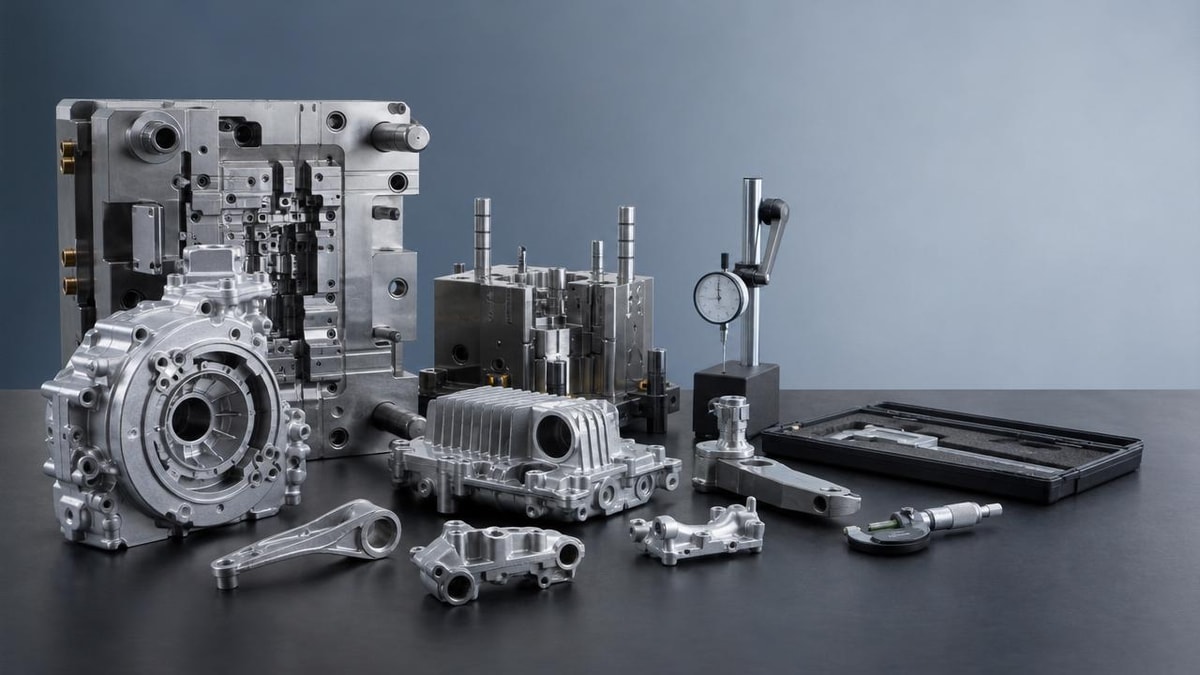
A die casting parts manufacturer China typically produces precision metal components by forcing molten alloy into hardened steel molds under high pressure. The process is widely used for aluminum, zinc, and magnesium parts that require repeatability, dimensional consistency, and efficient mass production. In modern B2B sourcing, China remains a major center for die casting because it combines broad industrial capacity, mature tooling ecosystems, integrated machining services, and export-oriented supply chains.
For procurement teams, however, supplier comparison should go far beyond unit price. Two factories may offer similar quotations while delivering very different levels of process control, engineering support, secondary finishing, compliance documentation, and after-sales responsiveness. That is why comparing a die casting parts manufacturer China requires both technical and commercial evaluation.
This topic matters across advanced manufacturing, smart electronics, healthcare technology, green energy systems, and industrial equipment because die cast components often sit inside products where failure is expensive and difficult to detect early. A poor sourcing decision can create porosity issues, dimensional drift, coating defects, assembly problems, or shipment delays that ripple through the entire supply chain.
Why the market pays close attention to Chinese die casting suppliers
The global market continues to rely on Chinese manufacturers for several reasons. First, supplier clusters in regions such as Guangdong, Zhejiang, Jiangsu, and Chongqing provide access to mold makers, machining workshops, surface treatment providers, testing labs, and logistics networks. Second, many suppliers have experience serving export markets with OEM and ODM programs. Third, the best factories are increasingly investing in automation, digital quality monitoring, and more disciplined traceability systems.
At the same time, the market is more selective than before. Buyers now expect stronger PPAP-style documentation, stable process capability, material traceability, ESG awareness, and faster engineering communication. As a result, comparing a die casting parts manufacturer China is no longer just a basic vendor-screening exercise. It is a strategic sourcing decision tied to total landed cost, risk management, and long-term supplier development.
What procurement professionals should compare first
A practical comparison starts with five foundations: manufacturing capability, quality system maturity, engineering communication, commercial transparency, and supply continuity. These areas create a realistic picture of whether a supplier can support your product today and scale with your demand tomorrow.
A strong die casting parts manufacturer China should be able to explain these points clearly, with evidence rather than generic claims. Buyers should ask for sample inspection reports, process flow charts, tooling plans, and examples from similar industries or part types.
How to assess manufacturing capability in a practical way
Manufacturing capability is the first technical filter. Start by checking whether the factory specializes in high-pressure die casting, gravity casting, or a mix of methods. Then confirm the alloys they process most often, because material familiarity influences porosity control, cycle optimization, and finishing quality. A supplier that mainly produces decorative zinc parts may not be the best match for structural aluminum housings.
Ask about machine range, annual capacity, mold maintenance routines, and the percentage of work handled in-house. In-house CNC machining, tapping, shot blasting, polishing, impregnation, powder coating, and assembly often improve schedule control. If many steps are outsourced, lead times and quality accountability become harder to manage.
For complex parts, request DFM comments before placing tooling. A capable die casting parts manufacturer China will identify wall thickness concerns, draft-angle issues, gating risks, ejection challenges, and post-machining constraints. Suppliers that only quote from drawings without technical discussion may create expensive changes later.
Quality systems are more important than slogans
Many factories mention ISO certification, but procurement teams should evaluate how quality operates on the shop floor. The real question is whether inspection data is used to control the process, not just to satisfy audit paperwork. Review the supplier’s control plan, gauge management, first article process, nonconformance handling, and corrective action discipline.
For critical components, a reliable die casting parts manufacturer China should support dimensional inspection records, material certificates, salt spray or coating reports where relevant, leak testing, and internal defect analysis when needed. If your product serves electronics, medical devices, or energy applications, confirm cleanliness standards, traceability depth, and packaging controls as well.
It is also useful to ask how the supplier manages process drift over time. Stable quality depends on preventive maintenance, die life monitoring, operator training, and rapid feedback loops between production, engineering, and QC teams. Mature factories are transparent about defect trends and improvement actions.
Business value across common application segments
The right supplier profile varies by application. Procurement professionals should compare manufacturers based on the technical demands of the end use rather than relying on a generic supplier score alone.
This application view helps explain why the best die casting parts manufacturer China for one buyer may not be the best for another. A highly automated supplier focused on consumer electronics can differ significantly from a factory that excels in heavier industrial castings.
Comparing cost correctly: beyond the quoted piece price
One of the most common sourcing mistakes is comparing only the per-part quote. A low price can hide higher scrap rates, expensive tooling revisions, weak packaging, poor on-time delivery, or extra inspection work on the buyer side. Procurement should instead evaluate total cost of ownership.
Look at tooling cost, mold life assumptions, sampling charges, machining content, finishing, packaging, freight terms, tariffs, payment conditions, and expected quality loss. Also ask whether the quotation includes fixture costs, special gauges, or custom testing. A transparent die casting parts manufacturer China will clearly separate one-time and recurring charges.
Lead time also has financial value. If one supplier can reduce sampling cycles by providing stronger DFM and faster revisions, the impact on product launch timing may justify a slightly higher piece price. Procurement leaders increasingly weigh responsiveness and execution reliability alongside nominal cost.
Communication, documentation, and project management signals
A supplier’s communication habits often predict project performance. During RFQ and sampling, observe response speed, question quality, drawing interpretation, and issue-tracking discipline. A strong die casting parts manufacturer China should ask relevant technical questions, highlight risks early, and document agreements in a structured way.
Project management matters especially when tooling, die casting, machining, coating, and assembly are all involved. Buyers should confirm who owns scheduling, how sample approvals are recorded, and how engineering changes are controlled. If revision control is weak, even a capable factory can create confusion and delivery errors.
For global sourcing teams, language clarity and digital collaboration are operational advantages. Shared inspection records, online progress updates, and version-controlled documents reduce friction and build trust across time zones.
Practical red flags when shortlisting suppliers
Several warning signs deserve attention during evaluation. Be cautious if a factory provides vague alloy information, cannot explain its gating or tooling logic, refuses sample data, changes commercial terms frequently, or relies heavily on unnamed subcontractors. Another red flag is overpromising on tolerance or finish quality without reviewing drawings carefully.
Procurement teams should also look for consistency between the supplier’s website claims, audit findings, quotation detail, and actual sample results. If the factory presents itself as a full-service die casting parts manufacturer China but outsources critical processes without clear control methods, risk increases.
A practical comparison framework for sourcing teams
A balanced sourcing decision usually combines technical fit, quality confidence, and business feasibility. In practice, buyers can score suppliers across a weighted matrix such as:
- 30% manufacturing and engineering capability
- 25% quality system and inspection evidence
- 20% total cost and quotation transparency
- 15% delivery reliability and capacity resilience
- 10% communication, service, and account management
This approach is useful because it prevents overreliance on any single variable. A die casting parts manufacturer China with slightly higher prices may still rank first if it offers superior process control, stronger documentation, and lower lifecycle risk.
How informed market intelligence improves supplier comparison
Procurement teams benefit when supplier evaluation is supported by deeper industry intelligence rather than isolated RFQs. Platforms focused on advanced manufacturing and supply chain analysis can help buyers understand regional production strengths, technology adoption trends, and changing compliance expectations. This wider context makes it easier to identify whether a supplier’s claims align with broader market realities.
For decision-makers navigating complex sourcing environments, credible B2B intelligence can shorten research time and improve due diligence. That is especially relevant when comparing a die casting parts manufacturer China for strategic programs where quality, continuity, and brand reputation are all at stake.
Conclusion
To compare a die casting parts manufacturer China effectively, procurement professionals should begin with a clear understanding of process capability and industry relevance, then move into quality maturity, application fit, cost structure, communication discipline, and supply resilience. The most reliable sourcing decisions come from structured evaluation, evidence-based comparison, and an awareness of total business impact rather than headline pricing alone.
If your team is reviewing suppliers for advanced manufacturing, electronics, healthcare technology, green energy, or broader industrial sourcing, use this framework to build a more dependable shortlist. In a market where technical detail and supply chain trust matter equally, careful comparison is not just procurement best practice—it is a competitive advantage.
Get weekly intelligence in your inbox.
No noise. No sponsored content. Pure intelligence.
 May 02, 2026Commercial EV Charging Installation Costs Beyond the HardwareCommercial EV Charging Installation Costs Beyond the Hardware
 May 02, 2026Portable EV Charging Solutions: Where They Actually FitPortable EV Charging Solutions: Where They Actually Fit
 May 02, 2026Why Automotive Aluminum Extrusions Fail at Joining PointsWhy Automotive Aluminum Extrusions Fail at Joining Points
 May 02, 2026Sheet Metal Bending Services in the USA: What Drives Lead TimeSheet Metal Bending Services in the USA: What Drives Lead Time
 May 02, 2026Cost-Effective Factory Automation Often Starts Smaller Than ExpectedCost-Effective Factory Automation Often Starts Smaller Than Expected
 May 02, 2026Choosing a Solar Panels Wholesale Distributor Without Price TrapsChoosing a Solar Panels Wholesale Distributor Without Price Traps
 May 02, 2026High Efficiency PV Modules: When the Premium Makes SenseHigh Efficiency PV Modules: When the Premium Makes Sense
 May 02, 2026Why Data Centers Are Rethinking ESS Backup StrategyWhy Data Centers Are Rethinking ESS Backup Strategy
 May 02, 2026Do Agricultural PV Modules Need Different Frame Designs?Do Agricultural PV Modules Need Different Frame Designs?
 May 02, 2026How to Vet an OEM Machined Parts Supplier in GermanyHow to Vet an OEM Machined Parts Supplier in Germany
 May 02, 2026Custom Metal Fabrication for Aerospace: Cost vs CertificationCustom Metal Fabrication for Aerospace: Cost vs Certification
 May 02, 2026What Slows Rapid Prototyping for Automotive Parts MostWhat Slows Rapid Prototyping for Automotive Parts Most
 May 02, 2026Rapid Prototyping Choices That Cut Delays in Consumer ElectronicsRapid Prototyping Choices That Cut Delays in Consumer Electronics
 May 02, 2026Why Aerospace Parts Need More Than Tight Lathe TurningWhy Aerospace Parts Need More Than Tight Lathe Turning
 May 02, 2026What Fireproof Technology Really Changes in Lithium BatteriesWhat Fireproof Technology Really Changes in Lithium Batteries
 May 02, 2026Are Grid-Tied Hybrid Inverters Enough for Unstable Supply?Are Grid-Tied Hybrid Inverters Enough for Unstable Supply?
 May 02, 2026What a Solar Panels Wholesale Price List Does Not ShowWhat a Solar Panels Wholesale Price List Does Not Show
 May 02, 2026How Long Life Cycle Batteries Lower Replacement CostsHow Long Life Cycle Batteries Lower Replacement Costs
 May 02, 2026Lathe Turning Tolerances That Matter in Industrial MachineryLathe Turning Tolerances That Matter in Industrial Machinery
 May 02, 2026ESS for Commercial Buildings: Sizing Mistakes to AvoidESS for Commercial Buildings: Sizing Mistakes to Avoid
 May 02, 2026Warehouse Robotics Bottlenecks That Slow Automation ROIWarehouse Robotics Bottlenecks That Slow Automation ROI
 May 02, 2026Where Smart Manufacturing Pays Off First in Auto PlantsWhere Smart Manufacturing Pays Off First in Auto Plants
 May 02, 2026Marine Aluminum Extrusions: What Corrosion Ratings MissMarine Aluminum Extrusions: What Corrosion Ratings Miss
 May 02, 2026Plastic Injection Molding Machine Specs That Affect OutputPlastic Injection Molding Machine Specs That Affect Output
 May 02, 2026What Limits 5 Axis Milling Accuracy for Medical Devices?What Limits 5 Axis Milling Accuracy for Medical Devices?
 May 02, 2026How to Compare a Die Casting Parts Manufacturer in ChinaHow to Compare a Die Casting Parts Manufacturer in China
 May 02, 2026Why Oil and Gas Projects Still Rely on Steel ForgingWhy Oil and Gas Projects Still Rely on Steel Forging