Commercial EV Charging Installation Costs Beyond the Hardware
For finance decision-makers, the true cost of EV charging stations commercial installation goes far beyond the price of chargers. Site upgrades, electrical capacity, permitting, software, maintenance, and long-term energy management can significantly reshape total investment. Understanding these hidden and operational expenses is essential for building a realistic budget, protecting ROI, and making confident infrastructure decisions.
Why do EV charging stations commercial installation budgets often exceed the hardware quote?
This is the first and most important question for any finance approver. In many projects, the charger itself represents only part of the total capital outlay. A commercial buyer may receive an attractive equipment proposal, but once electrical engineering, trenching, transformer upgrades, labor, networking, and compliance are added, the project total changes substantially. That is why EV charging stations commercial installation should be evaluated as an infrastructure program rather than a simple equipment purchase.
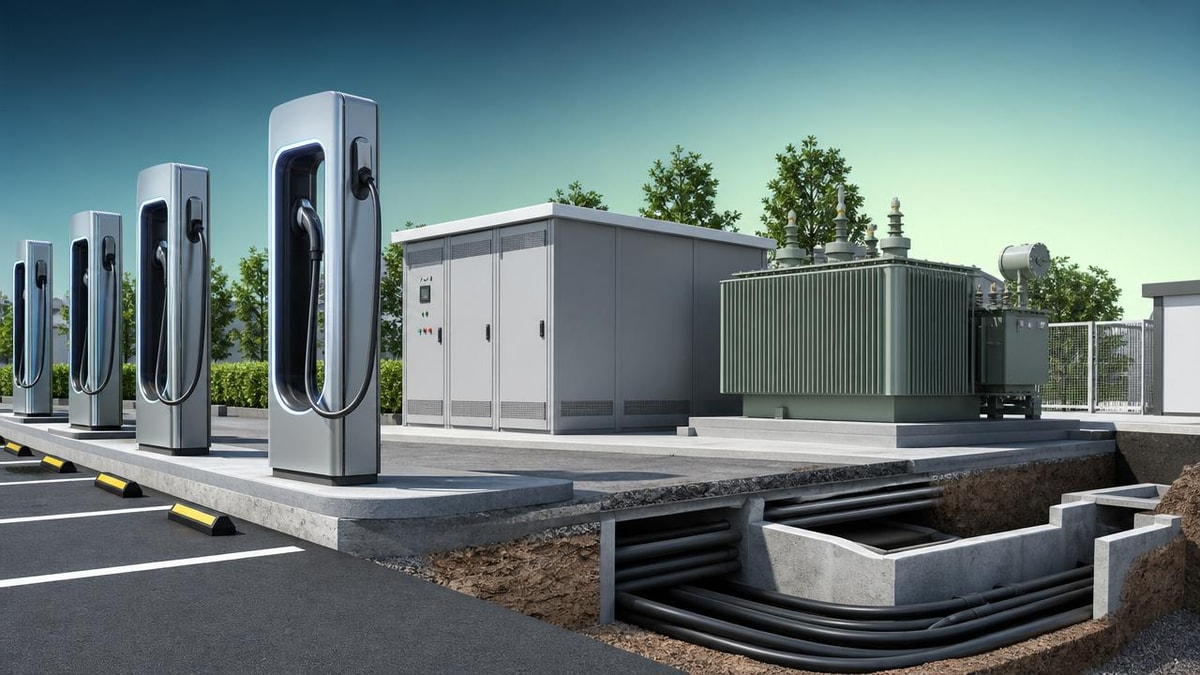
For example, a site with limited spare electrical capacity may require panel upgrades, service expansion, or utility-side improvements. A parking area far from the building’s power source may need extensive conduit runs and civil work. In regulated jurisdictions, permitting and inspection delays can also extend project timelines and increase soft costs. From a budgeting perspective, these “beyond the hardware” items are not exceptions; they are normal cost drivers.
Finance teams should therefore ask suppliers for a full installed-cost view, including assumptions. A charger quote without a site-specific scope is useful for comparison, but not sufficient for approval. The real benchmark is total cost of ownership over several years, not the initial unit price.
What cost categories should a finance team include in a realistic total investment model?
A reliable model for EV charging stations commercial installation typically includes five major layers: equipment, site preparation, electrical infrastructure, software and operations, and long-term maintenance. Each layer affects cash flow, depreciation planning, and expected payback.
Equipment includes the charger units, mounting systems, protective bollards, cable management, and in some cases payment terminals or signage. Site preparation covers trenching, pavement cutting, resurfacing, striping, and ADA-related adjustments where applicable. Electrical infrastructure includes switchgear, panels, transformers, distribution equipment, conduit, wiring, metering, and utility interconnection tasks. Software and operations may involve network subscriptions, energy management platforms, cybersecurity controls, payment processing, and reporting tools. Maintenance can include preventive service, spare parts, warranty extensions, and field support.
Financially mature organizations also add contingency reserves. This is especially important when conditions underground are uncertain, when utility coordination is required, or when future scalability is part of the design. A 10% to 20% contingency is not unusual in early planning for commercial EV charging deployment.
For finance decision-makers, this structure helps separate one-time CAPEX from recurring OPEX. It also supports better vendor comparisons when bids are not presented in the same format.
How much do site conditions and power availability influence EV charging stations commercial installation costs?
They influence costs dramatically. Two sites buying the same charging equipment can experience very different project totals because the site itself determines the complexity of installation. This is one of the most common reasons financial forecasts miss the mark.
If parking spaces are close to existing electrical rooms with available capacity, installation can be relatively straightforward. If chargers must be placed far from power sources, excavation, conduit runs, restoration, and labor increase quickly. If a site lacks sufficient capacity for planned charger loads, the business may need load studies, managed charging software, or utility-side service upgrades. In some cases, transformer lead times can become a schedule and cost risk on their own.
Utility demand charges also matter. A fast-charging project may look attractive from a revenue or employee-benefit standpoint, but if unmanaged peak demand pushes monthly electricity charges upward, the economics can weaken. Smart load management may reduce this risk, but that introduces software, controls, and design considerations that should be budgeted from the beginning.
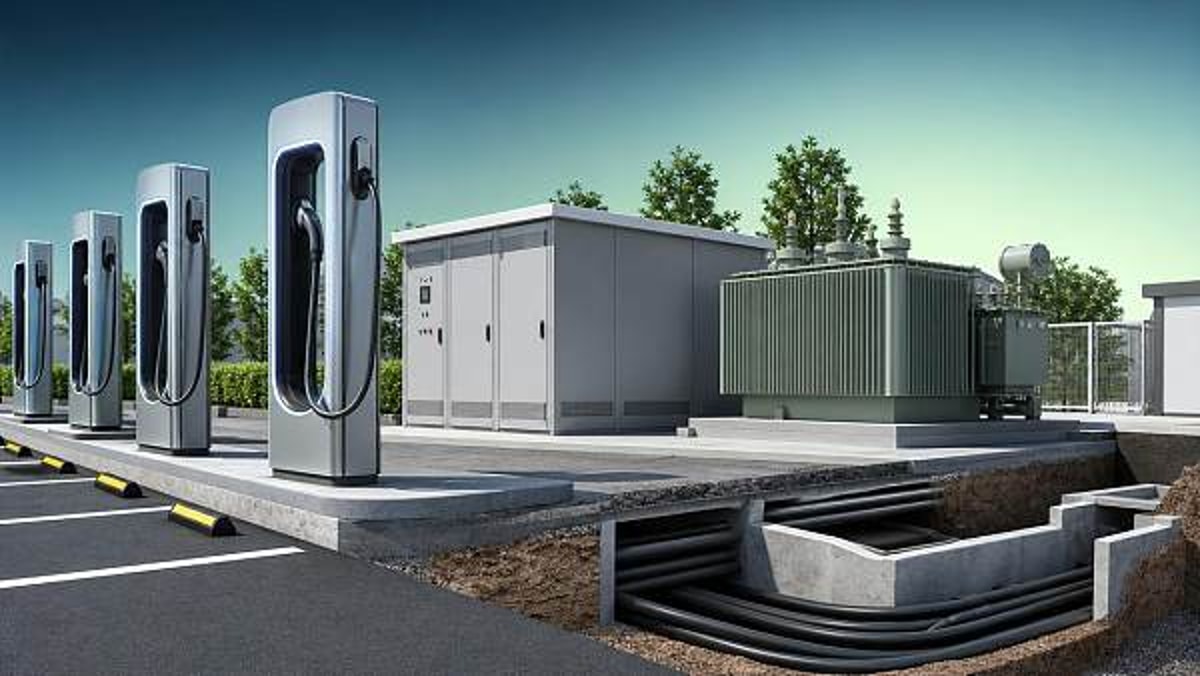
For this reason, a proper site assessment is not a formality. It is the foundation of credible cost planning. Finance leaders should require a documented pre-installation review covering electrical capacity, civil constraints, parking layout, local code requirements, and utility coordination assumptions.
What are the most overlooked recurring expenses after EV charging stations commercial installation is complete?
Many organizations focus so heavily on deployment that they underbudget for operations. Yet recurring costs can materially shape project value over a five- to seven-year horizon. The most frequently overlooked items are software subscriptions, communications connectivity, payment processing fees, preventive maintenance, emergency repairs, warranty extensions, and energy management services.
Networked chargers often require platform fees for user authentication, monitoring, reporting, and remote diagnostics. If chargers are monetized, payment gateway and transaction costs apply. If the project supports fleets, visitor parking, or mixed-use charging, there may be administrative overhead tied to access policies, reimbursement workflows, and usage analytics. These are not just IT details; they are operating expenses that affect utilization-based business cases.
Maintenance deserves particular scrutiny. Chargers operate outdoors, are subject to wear, and may fail due to cable damage, connector issues, vandalism, firmware errors, or networking problems. Downtime can create reputational cost as well as lost usage or operational disruption. A lower upfront bid can become expensive if support response times are weak or spare parts are hard to source.
In enterprise environments, cybersecurity and data governance may also introduce ongoing costs. Connected charging infrastructure touches networks, user credentials, payment systems, and usage records. Decision-makers in procurement and finance should confirm what is included in the vendor’s recurring commercial terms and what remains the buyer’s responsibility.
How should finance approvers compare Level 2 and DC fast charging from a cost-control perspective?
The right choice depends on use case, dwell time, utilization goals, and power availability. From a pure cost-control perspective, Level 2 installations are generally less expensive to deploy and easier to scale across workplaces, mixed commercial properties, hospitality sites, and destination charging environments. DC fast charging offers faster turnaround, but it introduces higher equipment costs, more demanding electrical infrastructure, and greater exposure to demand charges.
Finance teams should not evaluate this as a technology preference alone. They should ask what business outcome the chargers are meant to support. If the objective is employee charging over a full workday, Level 2 may provide sufficient performance with lower total investment. If the objective is rapid fleet turnaround or public charging with high throughput expectations, DC fast charging may be justified, but only with a stronger utilization case and more careful utility analysis.
A useful budgeting principle is to align charging speed with actual dwell behavior. Overbuilding speed can produce unnecessary capital intensity. Underbuilding can reduce user adoption or operational effectiveness. The most cost-efficient EV charging stations commercial installation strategy is often phased deployment: install foundational infrastructure for future expansion, but activate only the number and power level currently supported by utilization forecasts.
What mistakes most often weaken ROI in commercial charging projects?
Several mistakes appear repeatedly across industries. The first is approving a project based on charger price rather than installed cost. The second is ignoring future electrical scalability, which can force expensive retrofits when adoption grows. The third is underestimating recurring operating costs. The fourth is failing to model actual charger utilization, leading to unrealistic revenue or productivity assumptions.
Another common error is treating incentives as guaranteed savings before eligibility is confirmed. Grants, tax credits, utility rebates, and local support programs can materially improve the business case, but they may have timing rules, domestic content conditions, reporting obligations, or funding caps. Finance teams should apply incentives conservatively until the project clearly qualifies.
Vendor comparison mistakes are also frequent. One proposal may include civil work, software, commissioning, and warranty support, while another excludes several of these elements. On paper, the cheaper bid looks attractive. In practice, hidden scope gaps can produce change orders and operational headaches. A like-for-like scope matrix is essential before approval.
Finally, some businesses fail to define success metrics. Is the investment intended to support ESG reporting, employee retention, fleet electrification, visitor experience, tenant attraction, direct charging revenue, or brand positioning? Without clear success criteria, it becomes difficult to judge whether EV charging stations commercial installation is meeting financial expectations.
What should be confirmed before requesting final quotes or approving deployment?
Before moving to final procurement, finance approvers should confirm a short list of practical issues that determine project certainty. First, verify the site assessment and electrical load assumptions. Second, clarify whether the quoted scope includes design, permits, utility coordination, civil work, commissioning, networking, signage, and training. Third, identify recurring software and maintenance fees over the expected asset life. Fourth, understand warranty coverage, service-level agreements, and spare parts availability.
It is also wise to request a deployment roadmap. For many organizations, the best commercial charging strategy is not to install everything at once, but to build with expansion in mind. Conduit oversizing, panel planning, and load management can reduce future disruption and protect long-term capital efficiency. This staged approach is especially useful when EV adoption among employees, customers, tenants, or fleets is still developing.
For B2B decision-makers operating across complex supply environments, disciplined evaluation matters. Platforms such as TradeNexus Pro help enterprise buyers and sourcing teams track vendor capabilities, supply chain risks, technical trends, and market developments that influence infrastructure planning. That broader intelligence can be valuable when comparing partners, validating assumptions, and reducing procurement uncertainty.
Quick approval checklist for finance teams
- Is the EV charging stations commercial installation quote fully site-specific?
- Are power capacity upgrades and utility impacts clearly priced?
- Have recurring software, maintenance, and network costs been modeled?
- Does the project design support future expansion without major rework?
- Are incentives verified rather than assumed?
- Are ROI expectations linked to realistic utilization and business goals?
Final question: what is the smartest next step if your organization is still evaluating options?
The smartest next step is to convert the discussion from charger pricing to investment structure. Ask vendors and internal stakeholders for a full-scope view of EV charging stations commercial installation, including electrical readiness, civil work, operational software, maintenance support, and utility cost implications. That single shift improves budget accuracy and reduces approval risk.
If you need to confirm a specific solution, timeline, pricing framework, or supplier direction, prioritize these questions in stakeholder discussions: What is the site’s real electrical capacity? What installation scope is included or excluded? What recurring fees apply over the asset life? How will the system scale if demand doubles? What utilization assumptions support ROI? Which incentives are truly available? Those questions create a stronger basis for procurement, negotiation, and long-term infrastructure planning.
Get weekly intelligence in your inbox.
No noise. No sponsored content. Pure intelligence.
 May 02, 2026Commercial EV Charging Installation Costs Beyond the HardwareCommercial EV Charging Installation Costs Beyond the Hardware
 May 02, 2026Portable EV Charging Solutions: Where They Actually FitPortable EV Charging Solutions: Where They Actually Fit
 May 02, 2026Why Automotive Aluminum Extrusions Fail at Joining PointsWhy Automotive Aluminum Extrusions Fail at Joining Points
 May 02, 2026Sheet Metal Bending Services in the USA: What Drives Lead TimeSheet Metal Bending Services in the USA: What Drives Lead Time
 May 02, 2026Cost-Effective Factory Automation Often Starts Smaller Than ExpectedCost-Effective Factory Automation Often Starts Smaller Than Expected
 May 02, 2026Choosing a Solar Panels Wholesale Distributor Without Price TrapsChoosing a Solar Panels Wholesale Distributor Without Price Traps
 May 02, 2026High Efficiency PV Modules: When the Premium Makes SenseHigh Efficiency PV Modules: When the Premium Makes Sense
 May 02, 2026Why Data Centers Are Rethinking ESS Backup StrategyWhy Data Centers Are Rethinking ESS Backup Strategy
 May 02, 2026Do Agricultural PV Modules Need Different Frame Designs?Do Agricultural PV Modules Need Different Frame Designs?
 May 02, 2026How to Vet an OEM Machined Parts Supplier in GermanyHow to Vet an OEM Machined Parts Supplier in Germany
 May 02, 2026Custom Metal Fabrication for Aerospace: Cost vs CertificationCustom Metal Fabrication for Aerospace: Cost vs Certification
 May 02, 2026What Slows Rapid Prototyping for Automotive Parts MostWhat Slows Rapid Prototyping for Automotive Parts Most
 May 02, 2026Rapid Prototyping Choices That Cut Delays in Consumer ElectronicsRapid Prototyping Choices That Cut Delays in Consumer Electronics
 May 02, 2026Why Aerospace Parts Need More Than Tight Lathe TurningWhy Aerospace Parts Need More Than Tight Lathe Turning
 May 02, 2026What Fireproof Technology Really Changes in Lithium BatteriesWhat Fireproof Technology Really Changes in Lithium Batteries
 May 02, 2026Are Grid-Tied Hybrid Inverters Enough for Unstable Supply?Are Grid-Tied Hybrid Inverters Enough for Unstable Supply?
 May 02, 2026What a Solar Panels Wholesale Price List Does Not ShowWhat a Solar Panels Wholesale Price List Does Not Show
 May 02, 2026How Long Life Cycle Batteries Lower Replacement CostsHow Long Life Cycle Batteries Lower Replacement Costs
 May 02, 2026Lathe Turning Tolerances That Matter in Industrial MachineryLathe Turning Tolerances That Matter in Industrial Machinery
 May 02, 2026ESS for Commercial Buildings: Sizing Mistakes to AvoidESS for Commercial Buildings: Sizing Mistakes to Avoid
 May 02, 2026Warehouse Robotics Bottlenecks That Slow Automation ROIWarehouse Robotics Bottlenecks That Slow Automation ROI
 May 02, 2026Where Smart Manufacturing Pays Off First in Auto PlantsWhere Smart Manufacturing Pays Off First in Auto Plants
 May 02, 2026Marine Aluminum Extrusions: What Corrosion Ratings MissMarine Aluminum Extrusions: What Corrosion Ratings Miss
 May 02, 2026Plastic Injection Molding Machine Specs That Affect OutputPlastic Injection Molding Machine Specs That Affect Output
 May 02, 2026What Limits 5 Axis Milling Accuracy for Medical Devices?What Limits 5 Axis Milling Accuracy for Medical Devices?
 May 02, 2026How to Compare a Die Casting Parts Manufacturer in ChinaHow to Compare a Die Casting Parts Manufacturer in China
 May 02, 2026Why Oil and Gas Projects Still Rely on Steel ForgingWhy Oil and Gas Projects Still Rely on Steel Forging