High Efficiency PV Modules: When the Premium Makes Sense
For finance approvers, the real question is not whether photovoltaic modules high efficiency models perform better, but when their higher upfront cost translates into stronger long-term value. In capital-intensive energy decisions, the premium makes sense only if gains in yield, space utilization, and lifecycle returns clearly support the investment case.
Why the conversation is shifting now
The market discussion around photovoltaic modules high efficiency models has changed noticeably. A few years ago, the decision was often framed as a technical preference: premium modules for demanding projects, standard modules for cost-sensitive installations. Today, that distinction is less stable. Rising pressure on energy costs, tighter land use constraints, more sophisticated financing standards, and stronger decarbonization targets are pushing buyers to evaluate solar assets through a broader capital allocation lens.
For financial approvers, this shift matters because the premium is no longer just a module-line item issue. It affects total installed capacity per site, engineering design flexibility, long-term production reliability, and even the quality of projected cash flows. In many commercial and industrial settings, the debate is moving from “What is the cheapest module available?” to “Which module configuration creates the highest risk-adjusted value over the project life?”
This is especially relevant across global B2B decision environments, where procurement leaders are expected to defend not only purchase price, but also resilience, lifecycle economics, and strategic fit. High-efficiency module adoption is therefore becoming a signal of more disciplined energy investment rather than simply a preference for newer technology.
The clearest trend signals behind premium module demand
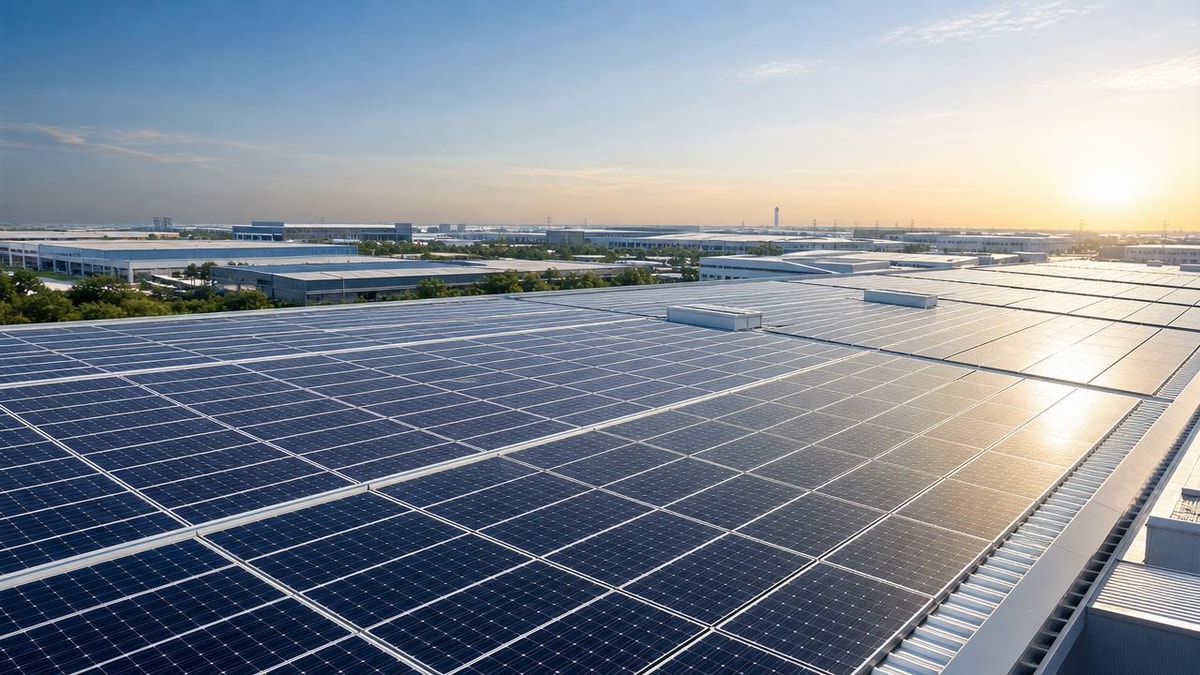
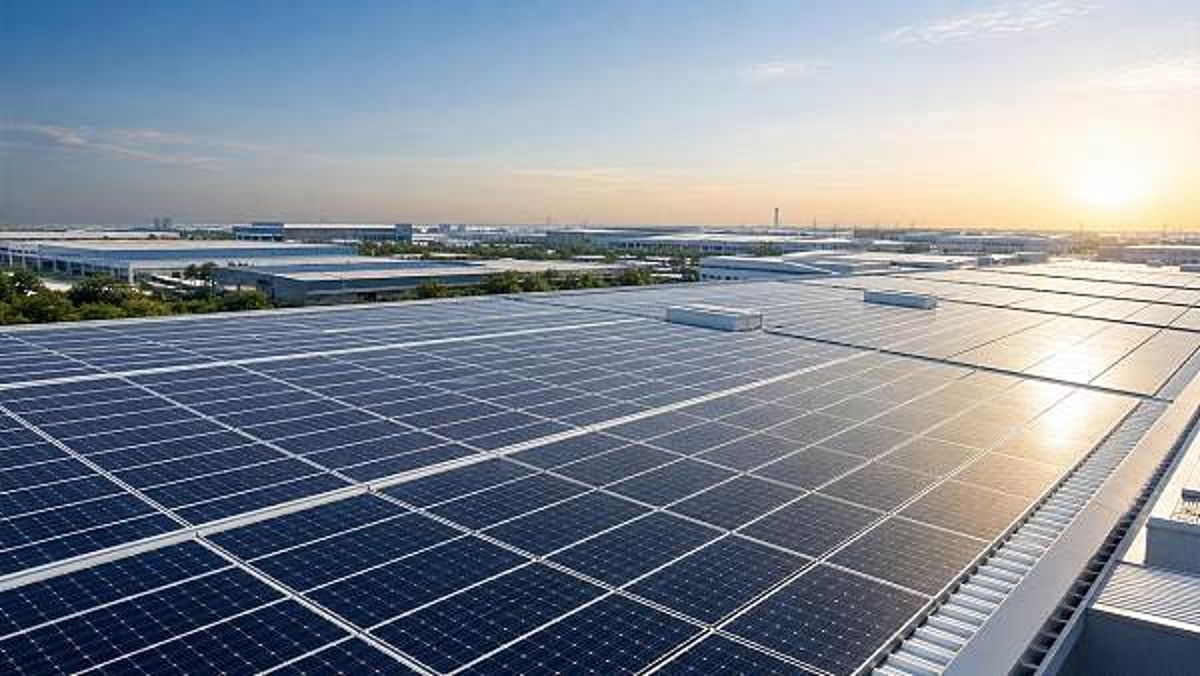
Several practical signals explain why photovoltaic modules high efficiency models are receiving greater boardroom attention. First, available installation space is becoming a harder constraint. Rooftop portfolios, logistics centers, industrial campuses, and urban commercial properties often cannot expand area even when power demand rises. In those cases, higher efficiency directly improves revenue potential or self-consumption value per square meter.
Second, project underwriting is becoming more granular. Lenders, internal finance teams, and investment committees are increasingly reviewing degradation assumptions, performance ratios, thermal behavior, and warranty bankability. Premium modules can strengthen the credibility of long-term production models, especially where electricity prices are volatile or where carbon reporting has become part of executive oversight.
Third, balance-of-system economics are changing the conversation. If fewer modules are needed for the same output, certain supporting costs may improve as well, including structures, wiring runs, labor intensity, and land-use efficiency. These gains are not universal, but they often narrow the effective premium far more than headline module pricing alone suggests.
These signals do not mean premium modules are always justified. They mean the decision framework has matured. Financial reviewers now need to ask where premium performance has measurable economic leverage, and where it does not.
Where the premium makes more sense than it used to
The strongest case for photovoltaic modules high efficiency models tends to appear when constraints amplify the value of each additional watt-hour. This includes facilities with limited roof area, campuses facing rising power demand, and projects where grid import costs are high enough that incremental generation materially improves savings.
High efficiency also becomes more attractive when developers or asset owners expect long holding periods. A project that will be owned and operated for many years has more time to convert small annual yield improvements into meaningful cumulative value. In contrast, short-horizon owners may be more sensitive to immediate capex differences than to lifecycle returns.
Another important trend is the increasing relevance of soft constraints. A site may not be physically full, but permitting limitations, labor availability, outage windows, or portfolio standardization requirements may still favor fewer, more productive modules. In these cases, premium products can simplify execution and reduce indirect complexity costs.
Common project profiles where higher efficiency deserves close review
- Commercial rooftops with high daytime consumption and limited usable surface
- Industrial sites where energy intensity is growing faster than available space
- Projects in high electricity tariff markets where added yield has strong payback value
- Long-life portfolios prioritizing predictable output and reduced degradation risk
- Sites where BOS, labor, or permitting conditions magnify the value of better module productivity
What is driving the premium decision beyond efficiency ratings alone
A common mistake in capital review is to reduce the premium question to nameplate efficiency. In reality, finance approvers should evaluate a package of value drivers. These include annual energy yield, temperature performance, degradation profile, product warranty strength, manufacturer bankability, compatibility with project design, and the reliability of supply.
The reason this broader view matters is simple: a premium module only creates value if the rest of the project can convert technical advantages into economic outcomes. If the system is poorly designed, exposed to avoidable curtailment, or based on unrealistic production assumptions, a better module will not rescue weak project fundamentals. Conversely, in a well-structured project, modest performance gains can compound significantly over time.
For B2B buyers, supply-side credibility is another growing factor. In a volatile market, module selection is tied not only to performance, but also to continuity of support, warranty confidence, and the supplier’s ability to remain a trusted long-term partner. This is one reason procurement and finance teams are aligning more closely on vendor screening than they did in earlier procurement cycles.
How the impact differs across decision-makers
The premium question affects each stakeholder differently, which is why many solar approvals stall. Engineering may favor higher output density. Procurement may focus on unit price and supply certainty. Sustainability leaders may emphasize emissions reduction. Finance approvers must translate all of those priorities into a coherent investment case.
This is why leading enterprises are no longer reviewing module premiums in isolation. They are integrating technical, procurement, financial, and strategic criteria earlier in the process.
What finance teams should test before approving the premium
The most useful trend in project evaluation is the move from static capex comparison to scenario-based analysis. For financial approvers, the question should be: under which conditions do photovoltaic modules high efficiency models outperform standard alternatives enough to justify the difference?
Start by stress-testing a few variables. How sensitive is project value to energy price escalation? How much of the premium is offset by BOS savings or higher usable capacity? Does the project face strict area limits, or would lower-cost modules achieve the same target? What assumptions are being used for degradation and operating temperatures? Is the supplier profile strong enough to support warranty confidence over the asset life?
A disciplined review should also distinguish between nominal and strategic value. For example, a small increase in annual generation may look modest in a spreadsheet, but could carry greater importance if it reduces grid dependence during peak-cost periods or helps meet internal emissions commitments that have business significance beyond direct utility savings.
A practical decision filter
- Approve the premium faster when space is constrained and every incremental unit of output has clear value.
- Be more selective when land is abundant and system scale can be achieved with standard modules.
- Look beyond module price if BOS reductions or execution simplification are material.
- Demand stronger modeling discipline when suppliers claim premium performance with weak documentation.
- Favor vendors with credible long-term support, not just attractive datasheet positioning.
The next phase of the market: smarter segmentation, not universal premium adoption
One of the clearest forward-looking signals is that the market is unlikely to move toward a simple all-premium outcome. Instead, segmentation is increasing. Photovoltaic modules high efficiency models will continue gaining share where project constraints, tariff structures, and sustainability pressure reward superior output density. Standard products will remain competitive where space is not scarce and levelized cost can be optimized without paying for performance that the site does not need.
That means the best-performing buyers will not be those who always choose premium or always reject it. They will be those who build a sharper decision framework. In practical terms, this includes better site screening, more transparent production modeling, clearer supplier qualification, and internal approval processes that connect engineering assumptions to financial outcomes.
For intelligence-led B2B organizations, this is also where competitive advantage begins. As market conditions change, companies that can evaluate premium technologies with discipline will avoid both underinvestment and overpayment.
Key questions to confirm before moving forward
If your organization is reviewing photovoltaic modules high efficiency models, the next step is not to ask whether premium modules are broadly “worth it.” The more useful question is whether your project economics, site limitations, and holding strategy create the conditions where the premium produces measurable advantage.
Finance approvers should confirm five points: whether space is truly constrained, whether incremental yield has high savings value, whether BOS or execution benefits offset part of the premium, whether lifecycle assumptions are defensible, and whether the supplier profile reduces rather than increases long-term risk. When those answers align, the premium often makes sense. When they do not, standard modules may remain the better capital decision.
For enterprises seeking stronger investment clarity, the most productive action is to compare scenarios rather than products alone. Review the project as a business case, not just a procurement event. That is where the real answer emerges.
Get weekly intelligence in your inbox.
No noise. No sponsored content. Pure intelligence.
 May 02, 2026Commercial EV Charging Installation Costs Beyond the HardwareCommercial EV Charging Installation Costs Beyond the Hardware
 May 02, 2026Portable EV Charging Solutions: Where They Actually FitPortable EV Charging Solutions: Where They Actually Fit
 May 02, 2026Why Automotive Aluminum Extrusions Fail at Joining PointsWhy Automotive Aluminum Extrusions Fail at Joining Points
 May 02, 2026Sheet Metal Bending Services in the USA: What Drives Lead TimeSheet Metal Bending Services in the USA: What Drives Lead Time
 May 02, 2026Cost-Effective Factory Automation Often Starts Smaller Than ExpectedCost-Effective Factory Automation Often Starts Smaller Than Expected
 May 02, 2026Choosing a Solar Panels Wholesale Distributor Without Price TrapsChoosing a Solar Panels Wholesale Distributor Without Price Traps
 May 02, 2026High Efficiency PV Modules: When the Premium Makes SenseHigh Efficiency PV Modules: When the Premium Makes Sense
 May 02, 2026Why Data Centers Are Rethinking ESS Backup StrategyWhy Data Centers Are Rethinking ESS Backup Strategy
 May 02, 2026Do Agricultural PV Modules Need Different Frame Designs?Do Agricultural PV Modules Need Different Frame Designs?
 May 02, 2026How to Vet an OEM Machined Parts Supplier in GermanyHow to Vet an OEM Machined Parts Supplier in Germany
 May 02, 2026Custom Metal Fabrication for Aerospace: Cost vs CertificationCustom Metal Fabrication for Aerospace: Cost vs Certification
 May 02, 2026What Slows Rapid Prototyping for Automotive Parts MostWhat Slows Rapid Prototyping for Automotive Parts Most
 May 02, 2026Rapid Prototyping Choices That Cut Delays in Consumer ElectronicsRapid Prototyping Choices That Cut Delays in Consumer Electronics
 May 02, 2026Why Aerospace Parts Need More Than Tight Lathe TurningWhy Aerospace Parts Need More Than Tight Lathe Turning
 May 02, 2026What Fireproof Technology Really Changes in Lithium BatteriesWhat Fireproof Technology Really Changes in Lithium Batteries
 May 02, 2026Are Grid-Tied Hybrid Inverters Enough for Unstable Supply?Are Grid-Tied Hybrid Inverters Enough for Unstable Supply?
 May 02, 2026What a Solar Panels Wholesale Price List Does Not ShowWhat a Solar Panels Wholesale Price List Does Not Show
 May 02, 2026How Long Life Cycle Batteries Lower Replacement CostsHow Long Life Cycle Batteries Lower Replacement Costs
 May 02, 2026Lathe Turning Tolerances That Matter in Industrial MachineryLathe Turning Tolerances That Matter in Industrial Machinery
 May 02, 2026ESS for Commercial Buildings: Sizing Mistakes to AvoidESS for Commercial Buildings: Sizing Mistakes to Avoid
 May 02, 2026Warehouse Robotics Bottlenecks That Slow Automation ROIWarehouse Robotics Bottlenecks That Slow Automation ROI
 May 02, 2026Where Smart Manufacturing Pays Off First in Auto PlantsWhere Smart Manufacturing Pays Off First in Auto Plants
 May 02, 2026Marine Aluminum Extrusions: What Corrosion Ratings MissMarine Aluminum Extrusions: What Corrosion Ratings Miss
 May 02, 2026Plastic Injection Molding Machine Specs That Affect OutputPlastic Injection Molding Machine Specs That Affect Output
 May 02, 2026What Limits 5 Axis Milling Accuracy for Medical Devices?What Limits 5 Axis Milling Accuracy for Medical Devices?
 May 02, 2026How to Compare a Die Casting Parts Manufacturer in ChinaHow to Compare a Die Casting Parts Manufacturer in China
 May 02, 2026Why Oil and Gas Projects Still Rely on Steel ForgingWhy Oil and Gas Projects Still Rely on Steel Forging