Custom Metal Fabrication for Aerospace: Cost vs Certification
For procurement and evaluation teams, custom metal fabrication for aerospace is never just a pricing exercise. Every sourcing decision must balance unit cost, certification burden, material traceability, and supplier capability. This article examines how aerospace buyers can compare fabrication partners more strategically, reduce compliance risk, and understand where higher certification standards create long-term operational and commercial value.
Why the Cost Debate Around Aerospace Fabrication Is Changing
The market discussion around custom metal fabrication for aerospace has shifted noticeably. In earlier sourcing cycles, buyers often focused on quoted piece price, machining hours, tooling cost, and lead time. Today, evaluation teams are under greater pressure to assess hidden variables that directly affect program continuity: audit readiness, process validation, nonconformance management, digital traceability, and the ability to meet customer or regulatory documentation standards without delay.
This change is being driven by a more complex operating environment. Aerospace programs face tighter quality oversight, more specialized material requirements, longer qualification timelines, and a stronger expectation that suppliers can demonstrate repeatability across parts, lots, and facilities. As a result, buyers comparing custom metal fabrication for aerospace suppliers are increasingly asking a broader question: when does a lower initial cost create a higher total risk cost later?
For business evaluation professionals, that question matters because fabrication decisions influence not only component quality but also schedule confidence, warranty exposure, customer satisfaction, and future supplier scalability. In practical terms, certification is no longer just a compliance checkbox. It has become a commercial differentiator and, in many cases, a predictor of operational resilience.
The Trend Signals Buyers Should Not Ignore
Several market signals explain why custom metal fabrication for aerospace is being evaluated through a more strategic lens. First, aerospace OEMs and tier suppliers are demanding more robust documentation from the supply base. Second, material provenance has become more important due to quality risk, geopolitical uncertainty, and stricter customer expectations. Third, advanced alloys and tighter tolerance requirements are making process capability more valuable than nominal shop capacity alone.
Another important signal is the growing cost of disruption. A fabrication partner that offers a cheaper quote but lacks disciplined certification systems can create disproportionate downstream costs through first article delays, rework, incomplete records, or customer re-approval cycles. That is why many sourcing teams now assess the maturity of a supplier’s quality system before they negotiate aggressively on price.
These trends do not mean the lowest-cost supplier is always the wrong choice. They mean the evaluation model itself has changed. Buyers need to distinguish between efficient suppliers and superficially cheap suppliers.
What Is Driving the Shift in Custom Metal Fabrication for Aerospace
The strongest driver is the rising value of assurance. In aerospace, fabricated metal components often enter systems where failure costs are outsized. Even when a part is structurally simple, the quality consequences of poor fabrication can be severe if tolerances drift, heat treatment is inconsistent, or inspection records are weak. Procurement teams therefore place increasing value on suppliers that can prove process discipline rather than merely claim competence.
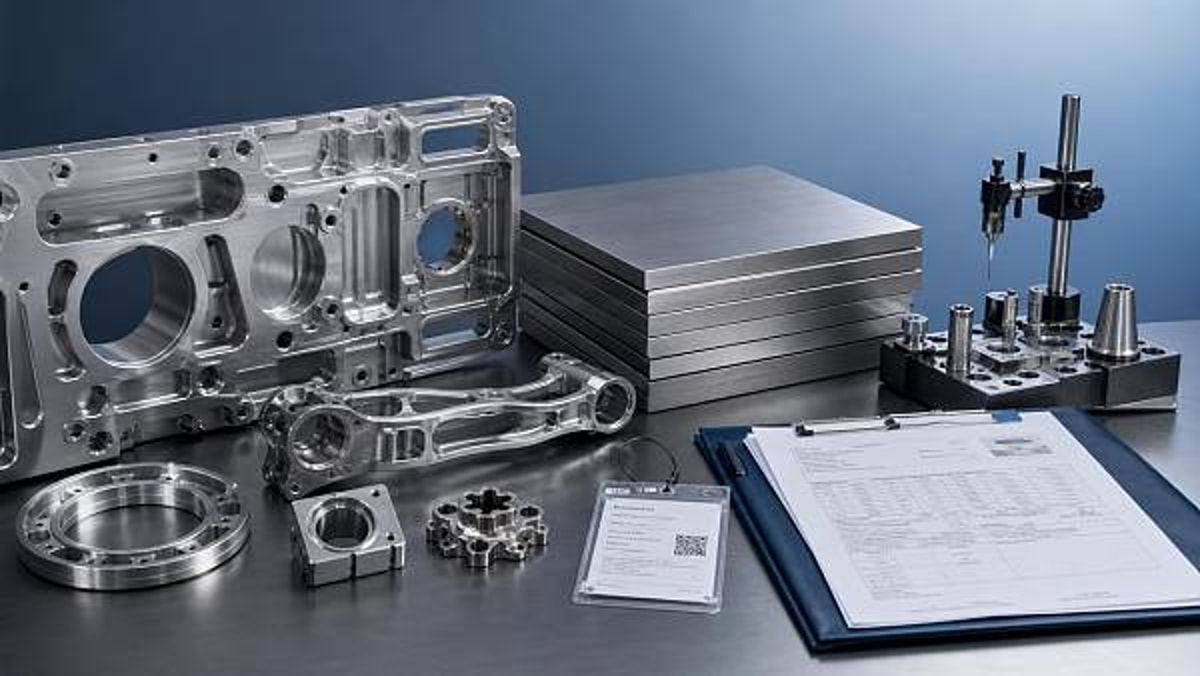
A second driver is the widening gap between basic metalworking and aerospace-grade fabrication. Many shops can cut, bend, machine, or weld metal. Far fewer can do so while maintaining controlled documentation, calibration management, revision control, approved process routing, and full traceability to aerospace expectations. This gap raises the premium on certification because it helps buyers separate general fabrication capability from aerospace-ready manufacturing maturity.
A third driver is the business pressure to shorten onboarding time. Qualified suppliers with recognized certifications and stable systems often move through audits and customer approval workflows more smoothly. For programs under launch pressure, the speed value of this readiness can outweigh a modest price difference. In that sense, custom metal fabrication for aerospace is increasingly judged by time-to-reliability, not only time-to-quote.
Where Cost Still Matters and Where Certification Changes the Equation
Cost remains important, especially in repeat production, multi-part assemblies, and competitively bid supply agreements. However, the meaning of cost is broader than line-item price. Evaluation teams should separate direct manufacturing cost from qualification cost, oversight cost, and disruption cost. This is where many sourcing models fall short.
For lower-criticality parts, a supplier with good general capabilities and selective aerospace controls may still be commercially suitable. But as geometry complexity, tolerance demands, documentation requirements, or customer scrutiny rise, certification begins to influence value more directly. A certified supplier may carry a higher quoted price because the quote includes the infrastructure required to support compliance: trained personnel, audited processes, validated equipment, controlled records, and corrective action systems.
That premium is not always overhead inflation. In many cases, it is the cost of reducing variability. For procurement teams, the core judgment is whether paying more today reduces the probability of expensive exceptions tomorrow. In custom metal fabrication for aerospace, that tradeoff often determines supplier fit more accurately than unit price alone.
A Practical Way to Compare Cost Against Certification
When reviewing supplier bids, decision-makers should evaluate at least five cost layers: quoted part price, onboarding and audit effort, expected documentation support, likelihood of quality escapes, and scalability for future production volumes. A lower quote with weak systems can appear attractive until internal engineering, supplier quality, and program teams spend significant time compensating for missing controls.
Who Feels the Impact Most Across the Buying Organization
The shift in custom metal fabrication for aerospace affects more than purchasing. Different stakeholders experience the cost-versus-certification decision in different ways, which is why cross-functional alignment matters during supplier selection.
For evaluation personnel, this means a good sourcing decision should be defendable across functions. If the cheapest option creates predictable objections from quality, engineering, or the end customer, then the sourcing strategy may not be as efficient as it first appears.
The New Decision Signals Buyers Should Track
As the supplier landscape evolves, several indicators deserve closer attention. One is whether a fabrication partner can show stable performance across similar aerospace parts, not just generic metalworking experience. Another is how clearly the supplier defines process ownership for welding, machining, forming, finishing, and inspection. Buyers should also observe the speed and quality of documentation during the RFQ and qualification phase. Slow, incomplete, or inconsistent responses often reveal system limitations before production even starts.
A further signal is how suppliers discuss exceptions. Mature aerospace fabricators typically explain constraints, tolerances, certification boundaries, and process risks with precision. Overly simple assurances can indicate either limited aerospace exposure or weak internal review practices. In a market where traceability and compliance matter more, disciplined communication itself becomes a useful indicator of supplier maturity.
How to Respond Without Overpaying for Certification
Not every project requires the highest possible certification stack, and smart buyers should avoid paying for controls that add little value to the actual risk profile. The key is to match certification depth to part criticality, customer requirements, material complexity, and expected production scale. This is where segmented sourcing strategies are becoming more effective.
For example, companies can divide fabricated parts into categories such as prototype, low-criticality production, regulated production, and flight-sensitive applications. Each category can then have a defined supplier threshold for certifications, traceability expectations, inspection planning, and change control. This approach helps organizations protect budgets while preserving compliance discipline where it matters most.
In custom metal fabrication for aerospace, this structured model also improves internal consistency. Instead of debating every supplier from scratch, teams can use a repeatable framework that connects risk class to sourcing criteria. Over time, that reduces approval friction and strengthens supplier portfolio quality.
What Smart Evaluation Teams Should Ask Next
To respond effectively to current market changes, buyers should move beyond asking who offers the lowest fabricated part cost. A stronger review process asks which supplier can support the business through audits, engineering changes, part revisions, demand shifts, and customer scrutiny. That perspective is especially important when the fabricated component may appear simple but sits inside a complex certification chain.
- Which certifications are relevant to this part family, and which are simply nice to have?
- How strong is the supplier’s traceability from raw material to finished component?
- Can the supplier support documentation requests without slowing production?
- What quality costs would our team absorb if the supplier’s systems prove immature?
- Is this supplier suitable only for current demand, or also for future scale and complexity?
Final Judgment: Cost Efficiency Now Depends on Risk Intelligence
The central trend is clear: custom metal fabrication for aerospace is becoming a more risk-sensitive sourcing category. Certification, documentation discipline, and traceability are moving closer to the center of commercial evaluation, not because the market ignores cost, but because buyers better understand the cost of getting supplier capability wrong.
For business evaluation teams, the most useful next step is to review current supplier selection logic against present-day program realities. If scoring models still prioritize piece price without sufficiently weighting quality systems, approval readiness, and long-term compliance support, they may no longer reflect the real economics of aerospace sourcing.
If your organization wants to judge how these trends affect its own sourcing decisions, focus first on three questions: where certification directly reduces risk, where lower-cost fabrication remains acceptable, and where future customer expectations may tighten faster than today’s specifications. That is where better decisions in custom metal fabrication for aerospace will increasingly be made.
Get weekly intelligence in your inbox.
No noise. No sponsored content. Pure intelligence.
 May 02, 2026Commercial EV Charging Installation Costs Beyond the HardwareCommercial EV Charging Installation Costs Beyond the Hardware
 May 02, 2026Portable EV Charging Solutions: Where They Actually FitPortable EV Charging Solutions: Where They Actually Fit
 May 02, 2026Why Automotive Aluminum Extrusions Fail at Joining PointsWhy Automotive Aluminum Extrusions Fail at Joining Points
 May 02, 2026Sheet Metal Bending Services in the USA: What Drives Lead TimeSheet Metal Bending Services in the USA: What Drives Lead Time
 May 02, 2026Cost-Effective Factory Automation Often Starts Smaller Than ExpectedCost-Effective Factory Automation Often Starts Smaller Than Expected
 May 02, 2026Choosing a Solar Panels Wholesale Distributor Without Price TrapsChoosing a Solar Panels Wholesale Distributor Without Price Traps
 May 02, 2026High Efficiency PV Modules: When the Premium Makes SenseHigh Efficiency PV Modules: When the Premium Makes Sense
 May 02, 2026Why Data Centers Are Rethinking ESS Backup StrategyWhy Data Centers Are Rethinking ESS Backup Strategy
 May 02, 2026Do Agricultural PV Modules Need Different Frame Designs?Do Agricultural PV Modules Need Different Frame Designs?
 May 02, 2026How to Vet an OEM Machined Parts Supplier in GermanyHow to Vet an OEM Machined Parts Supplier in Germany
 May 02, 2026Custom Metal Fabrication for Aerospace: Cost vs CertificationCustom Metal Fabrication for Aerospace: Cost vs Certification
 May 02, 2026What Slows Rapid Prototyping for Automotive Parts MostWhat Slows Rapid Prototyping for Automotive Parts Most
 May 02, 2026Rapid Prototyping Choices That Cut Delays in Consumer ElectronicsRapid Prototyping Choices That Cut Delays in Consumer Electronics
 May 02, 2026Why Aerospace Parts Need More Than Tight Lathe TurningWhy Aerospace Parts Need More Than Tight Lathe Turning
 May 02, 2026What Fireproof Technology Really Changes in Lithium BatteriesWhat Fireproof Technology Really Changes in Lithium Batteries
 May 02, 2026Are Grid-Tied Hybrid Inverters Enough for Unstable Supply?Are Grid-Tied Hybrid Inverters Enough for Unstable Supply?
 May 02, 2026What a Solar Panels Wholesale Price List Does Not ShowWhat a Solar Panels Wholesale Price List Does Not Show
 May 02, 2026How Long Life Cycle Batteries Lower Replacement CostsHow Long Life Cycle Batteries Lower Replacement Costs
 May 02, 2026Lathe Turning Tolerances That Matter in Industrial MachineryLathe Turning Tolerances That Matter in Industrial Machinery
 May 02, 2026ESS for Commercial Buildings: Sizing Mistakes to AvoidESS for Commercial Buildings: Sizing Mistakes to Avoid
 May 02, 2026Warehouse Robotics Bottlenecks That Slow Automation ROIWarehouse Robotics Bottlenecks That Slow Automation ROI
 May 02, 2026Where Smart Manufacturing Pays Off First in Auto PlantsWhere Smart Manufacturing Pays Off First in Auto Plants
 May 02, 2026Marine Aluminum Extrusions: What Corrosion Ratings MissMarine Aluminum Extrusions: What Corrosion Ratings Miss
 May 02, 2026Plastic Injection Molding Machine Specs That Affect OutputPlastic Injection Molding Machine Specs That Affect Output
 May 02, 2026What Limits 5 Axis Milling Accuracy for Medical Devices?What Limits 5 Axis Milling Accuracy for Medical Devices?
 May 02, 2026How to Compare a Die Casting Parts Manufacturer in ChinaHow to Compare a Die Casting Parts Manufacturer in China
 May 02, 2026Why Oil and Gas Projects Still Rely on Steel ForgingWhy Oil and Gas Projects Still Rely on Steel Forging