Do Agricultural PV Modules Need Different Frame Designs?
As agrivoltaics expands, project managers must evaluate whether standard solar hardware can withstand the unique demands of farmland. From crop clearance and irrigation exposure to corrosion risks and maintenance access, photovoltaic modules for agricultural use may require more specialized frame designs than conventional installations. Understanding these design factors is essential for improving durability, energy yield, and long-term project performance.
Understanding the frame question in agrivoltaic projects
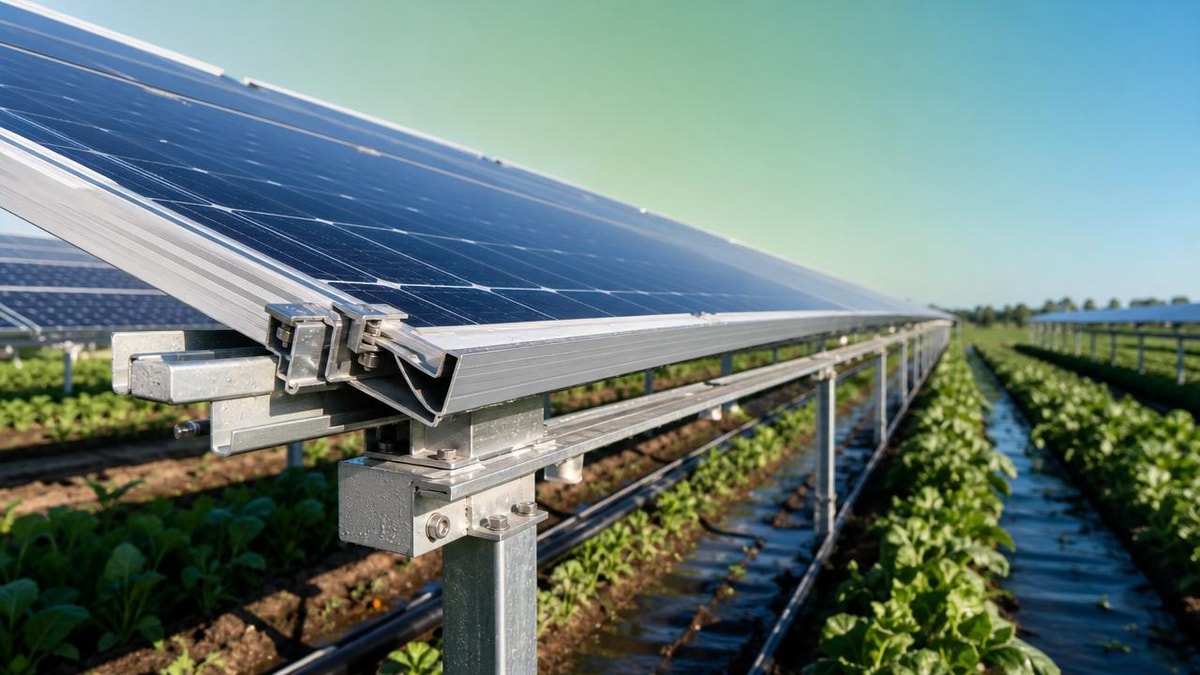
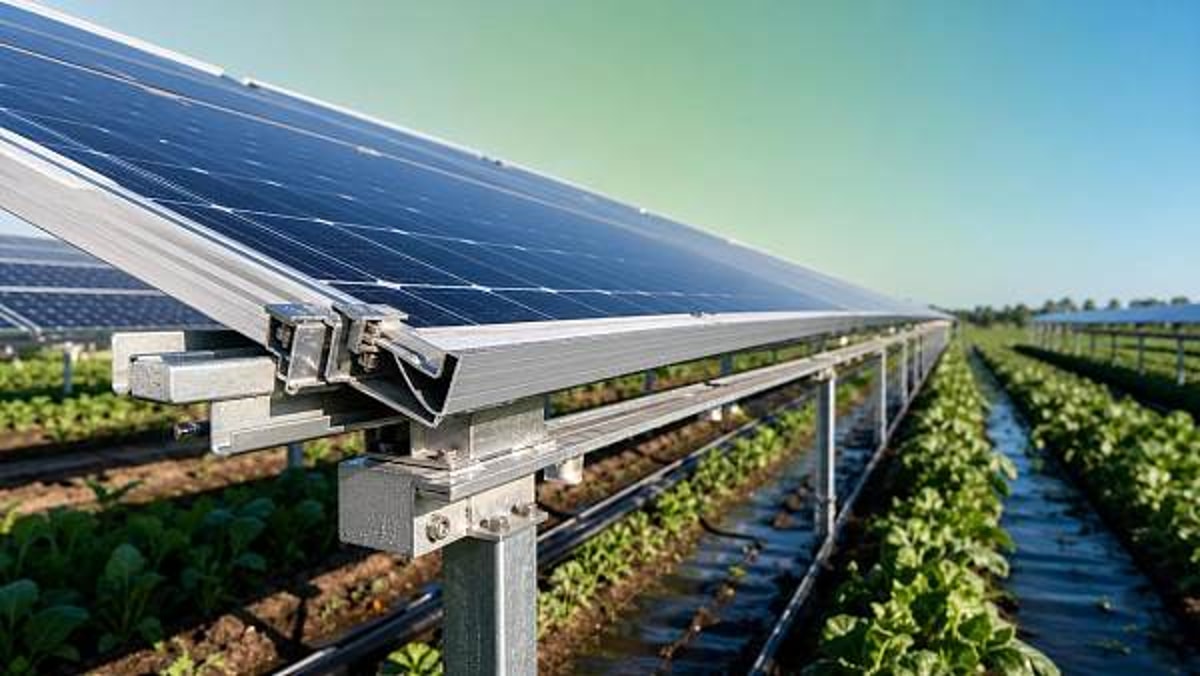
For many engineering teams, the first instinct is to treat agrivoltaic systems as standard utility or commercial solar plants placed on taller structures. In practice, that assumption is often incomplete. Photovoltaic modules for agricultural use operate in an environment where the frame is exposed not only to wind, rain, and ultraviolet radiation, but also to fertilizer residues, irrigation spray, dust, animal activity, frequent washing, and crop-driven access constraints. The module frame therefore becomes more than a structural edge component; it becomes part of the site’s long-term risk management strategy.
This does not mean every agricultural solar project needs a completely unique module frame. However, it does mean frame design should be reviewed against agronomic conditions, maintenance patterns, local climate, and mounting geometry. For project managers and engineering leads, the key issue is not whether agricultural systems are “different” in theory, but whether the site conditions create enough stress to justify a more specialized design specification.
Why the industry is paying closer attention
Agrivoltaics is moving from pilot installations to larger multi-stakeholder projects that combine land productivity with renewable energy generation. This shift has increased scrutiny on component reliability. In conventional solar plants, frame selection is often optimized around cost, static load, snow, wind, and ease of installation. In farmland, developers must add new variables: crop shading targets, machine circulation, elevated mounting heights, uneven terrain, high humidity near irrigation zones, and sometimes chemical exposure from pesticides or soil treatment.
For a platform like TradeNexus Pro, which serves procurement directors and enterprise decision-makers across green energy and advanced supply chains, this topic matters because hardware assumptions can influence project bankability. A frame that performs well on a rooftop may not deliver the same service life in a vineyard, greenhouse edge zone, or livestock-integrated installation. The discussion is therefore not only technical. It affects asset life, maintenance budgets, warranty confidence, and operational predictability across the full project lifecycle.
What frame design actually does for photovoltaic modules for agricultural use
The frame of a PV module supports mechanical integrity, protects the laminate edge, interfaces with clamps and rails, and influences drainage and contamination behavior. In photovoltaic modules for agricultural use, each of these functions can take on greater importance.
First, structural integrity must account for unusual mounting conditions. Agricultural arrays are often elevated to preserve crop clearance or allow worker and machine passage. Taller structures can change vibration patterns and amplify dynamic loads. Second, edge protection matters more where mud, standing moisture, and debris accumulate. Third, the clamp interface must remain reliable when modules are installed at custom spans or non-standard tilt strategies designed for crop-light balancing rather than maximum power alone. Finally, drainage behavior is critical because pooled moisture and accumulated residue can accelerate corrosion or soiling.
When standard frames may still be sufficient
Not every agrivoltaic installation needs a redesigned module frame. Standard anodized aluminum frames may remain suitable when the site has moderate climate conditions, low chemical exposure, predictable cleaning methods, and mounting structures engineered to control deflection and vibration. For example, dryland agricultural projects with limited irrigation, low salinity, and strong maintenance discipline may successfully use standard framed modules, provided the module certification, mounting instructions, and corrosion class are aligned with the site.
The critical point is that “agricultural use” should not be treated as a single condition. A fruit orchard in a humid coastal area creates very different stresses compared with a grain field in an arid inland zone. Project managers should avoid broad assumptions and instead define a site-specific frame requirement profile.
Conditions that often justify different frame designs
Specialized or enhanced frame designs become more valuable when agricultural conditions increase the likelihood of corrosion, contamination retention, mechanical fatigue, or maintenance disruption. Several factors commonly trigger that need.
High moisture and irrigation exposure
Repeated water contact can carry dissolved minerals, soil particles, and chemicals to the frame edge. Poor drainage geometry may allow long-term moisture retention. In such cases, frame coatings, corner sealing quality, and profile geometry deserve closer review.
Corrosive environments
Fertilizers, ammonia from livestock operations, saline air, and agrochemical mist can all raise corrosion risk. Enhanced anodization, more resistant alloys, or carefully matched fastener materials may be necessary to avoid galvanic or surface degradation issues.
Heavy cleaning and maintenance cycles
Photovoltaic modules for agricultural use may require more frequent cleaning because of dust, pollen, bird activity, and mud splashes. Frame edges should support effective runoff and reduce dirt traps that increase labor intensity.
Mechanical interaction with farm operations
Modules installed above cultivation zones may be exposed to accidental contact from tools, lifting devices, or crop support systems. While the frame cannot eliminate all impact risk, robust edge protection and mounting compatibility can reduce vulnerability.
Industry overview: site conditions and frame implications
The table below helps project teams connect agricultural operating conditions with likely frame design priorities. It is not a substitute for engineering verification, but it offers a practical screening framework during concept development and technical due diligence.
Application value for project managers and engineering leads
For project management teams, the value of selecting the right frame design is not limited to component longevity. It also supports construction predictability, inspection efficiency, and operations planning. If photovoltaic modules for agricultural use are specified with the wrong frame assumptions, the consequences may include premature cosmetic degradation, clamp-zone disputes, higher cleaning costs, drainage-related soiling, or uncertainty during warranty review.
Well-matched frame design can also improve multidisciplinary coordination. Agronomists, civil engineers, structural designers, and O&M teams often evaluate the same project through different lenses. A thoughtful frame specification helps bridge those concerns by linking farm activity with electrical asset durability. That alignment is especially important in projects financed on long operational timelines, where small design oversights can become recurring cost centers.
Typical design features worth evaluating
Rather than asking whether a frame is simply “standard” or “special,” teams should evaluate specific design features and material decisions. The most relevant points usually include:
- Aluminum alloy grade and anodization quality for corrosion resistance
- Frame profile geometry that supports water runoff and minimizes dirt retention
- Mechanical load performance under wider support spans or elevated agrivoltaic structures
- Clamp-zone compatibility with custom mounting layouts
- Corner assembly durability under vibration, thermal cycling, and washdown conditions
- Material compatibility with bolts, rails, and grounding hardware to reduce galvanic issues
- Cleaning accessibility and edge shape that reduces maintenance labor over time
These factors should be reviewed alongside module certification data, local environmental classifications, and the mounting supplier’s approved installation guidance. A high-quality frame cannot compensate for poor structural integration, but it can significantly improve resilience when the design basis is realistic.
How to assess frame needs during project development
A practical approach begins early, before final module procurement. First, characterize the site by mapping irrigation patterns, chemical use, humidity zones, livestock presence, and maintenance access routes. Second, compare those conditions with the module manufacturer’s material and mounting documentation. Third, confirm whether the support structure changes load behavior compared with conventional solar layouts. Fourth, involve O&M personnel in the review, since frame geometry affects cleaning effort and fault inspection.
It is also wise to request project-specific evidence from suppliers. This may include corrosion testing references, agrivoltaic deployment experience, approved clamp positions, and material compatibility statements. On sophisticated projects, especially in harsh farm environments, frame selection should be discussed as part of lifecycle engineering rather than treated as a minor accessory detail.
Common mistakes in specification
One common mistake is to define photovoltaic modules for agricultural use only by power output and cell technology, while overlooking frame-environment interaction. Another is assuming that if the racking structure is upgraded, the module frame no longer matters. In reality, the module edge remains exposed to the site atmosphere and maintenance regime. Teams also sometimes ignore cleaning realities, selecting modules whose frame profiles trap residue in muddy or pollen-heavy areas. Finally, procurement teams may compare module offers on price without fully accounting for long-term corrosion risk and service access cost.
A balanced conclusion for agrivoltaic decision-makers
So, do agricultural PV modules need different frame designs? In many cases, yes—though not always in the sense of a radically new product. More often, photovoltaic modules for agricultural use need frame specifications that are better matched to moisture exposure, corrosive agents, dynamic structure behavior, cleaning routines, and farm operations. The right answer depends on site conditions, not labels alone.
For project managers and engineering leaders, the most reliable path is a structured assessment that connects agronomic realities with module mechanics and long-term O&M needs. As agrivoltaics becomes a more strategic part of the green energy landscape, careful frame evaluation can help protect yield, reduce preventable degradation, and support stronger project outcomes. For organizations building credible supply-chain intelligence and technical authority, this is exactly the kind of detail that separates pilot success from durable commercial performance.
Get weekly intelligence in your inbox.
No noise. No sponsored content. Pure intelligence.
 May 02, 2026Commercial EV Charging Installation Costs Beyond the HardwareCommercial EV Charging Installation Costs Beyond the Hardware
 May 02, 2026Portable EV Charging Solutions: Where They Actually FitPortable EV Charging Solutions: Where They Actually Fit
 May 02, 2026Why Automotive Aluminum Extrusions Fail at Joining PointsWhy Automotive Aluminum Extrusions Fail at Joining Points
 May 02, 2026Sheet Metal Bending Services in the USA: What Drives Lead TimeSheet Metal Bending Services in the USA: What Drives Lead Time
 May 02, 2026Cost-Effective Factory Automation Often Starts Smaller Than ExpectedCost-Effective Factory Automation Often Starts Smaller Than Expected
 May 02, 2026Choosing a Solar Panels Wholesale Distributor Without Price TrapsChoosing a Solar Panels Wholesale Distributor Without Price Traps
 May 02, 2026High Efficiency PV Modules: When the Premium Makes SenseHigh Efficiency PV Modules: When the Premium Makes Sense
 May 02, 2026Why Data Centers Are Rethinking ESS Backup StrategyWhy Data Centers Are Rethinking ESS Backup Strategy
 May 02, 2026Do Agricultural PV Modules Need Different Frame Designs?Do Agricultural PV Modules Need Different Frame Designs?
 May 02, 2026How to Vet an OEM Machined Parts Supplier in GermanyHow to Vet an OEM Machined Parts Supplier in Germany
 May 02, 2026Custom Metal Fabrication for Aerospace: Cost vs CertificationCustom Metal Fabrication for Aerospace: Cost vs Certification
 May 02, 2026What Slows Rapid Prototyping for Automotive Parts MostWhat Slows Rapid Prototyping for Automotive Parts Most
 May 02, 2026Rapid Prototyping Choices That Cut Delays in Consumer ElectronicsRapid Prototyping Choices That Cut Delays in Consumer Electronics
 May 02, 2026Why Aerospace Parts Need More Than Tight Lathe TurningWhy Aerospace Parts Need More Than Tight Lathe Turning
 May 02, 2026What Fireproof Technology Really Changes in Lithium BatteriesWhat Fireproof Technology Really Changes in Lithium Batteries
 May 02, 2026Are Grid-Tied Hybrid Inverters Enough for Unstable Supply?Are Grid-Tied Hybrid Inverters Enough for Unstable Supply?
 May 02, 2026What a Solar Panels Wholesale Price List Does Not ShowWhat a Solar Panels Wholesale Price List Does Not Show
 May 02, 2026How Long Life Cycle Batteries Lower Replacement CostsHow Long Life Cycle Batteries Lower Replacement Costs
 May 02, 2026Lathe Turning Tolerances That Matter in Industrial MachineryLathe Turning Tolerances That Matter in Industrial Machinery
 May 02, 2026ESS for Commercial Buildings: Sizing Mistakes to AvoidESS for Commercial Buildings: Sizing Mistakes to Avoid
 May 02, 2026Warehouse Robotics Bottlenecks That Slow Automation ROIWarehouse Robotics Bottlenecks That Slow Automation ROI
 May 02, 2026Where Smart Manufacturing Pays Off First in Auto PlantsWhere Smart Manufacturing Pays Off First in Auto Plants
 May 02, 2026Marine Aluminum Extrusions: What Corrosion Ratings MissMarine Aluminum Extrusions: What Corrosion Ratings Miss
 May 02, 2026Plastic Injection Molding Machine Specs That Affect OutputPlastic Injection Molding Machine Specs That Affect Output
 May 02, 2026What Limits 5 Axis Milling Accuracy for Medical Devices?What Limits 5 Axis Milling Accuracy for Medical Devices?
 May 02, 2026How to Compare a Die Casting Parts Manufacturer in ChinaHow to Compare a Die Casting Parts Manufacturer in China
 May 02, 2026Why Oil and Gas Projects Still Rely on Steel ForgingWhy Oil and Gas Projects Still Rely on Steel Forging