Why Aerospace Parts Need More Than Tight Lathe Turning
In aerospace manufacturing, precision alone is never the full story. While lathe turning for aerospace components is essential for achieving tight tolerances, technical evaluators must also consider material integrity, traceability, surface performance, and compliance under extreme operating conditions. This article explores why true aerospace readiness depends on a broader quality framework beyond dimensional accuracy.
For technical evaluation teams, the key question is not whether a supplier can machine to print once. It is whether that supplier can repeatedly produce flight-critical parts that remain stable across batches, survive harsh environments, and stand up to audits, certification reviews, and lifecycle risk analysis.
The short answer is clear: tight lathe turning is necessary, but it is not sufficient. Aerospace parts operate in a domain where failure is expensive, highly visible, and often unacceptable. Dimensional precision must be integrated with process control, material validation, surface engineering, inspection discipline, and documentation maturity.
What Technical Evaluators Are Really Assessing Beyond Machining Precision
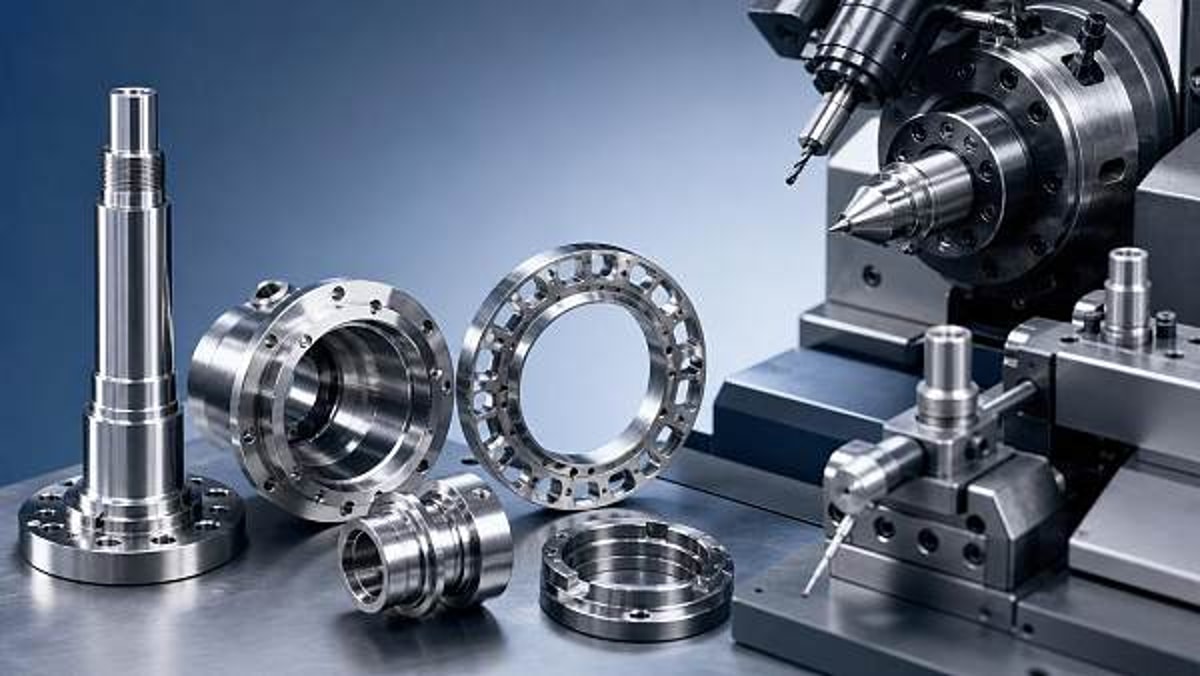
When buyers search for information about lathe turning for aerospace components, they are often trying to answer a deeper supplier qualification question. They are not simply comparing spindle capability or tolerance claims. They are assessing whether a machining partner understands the full aerospace production environment.
Technical evaluators typically care about five issues first: can the supplier control part-to-part consistency, can they preserve material properties during machining, can they document every critical step, can they meet relevant aerospace standards, and can they reduce downstream quality risk. These concerns shape sourcing decisions far more than a generic promise of “high precision.”
This is especially true for components used in engines, landing systems, hydraulic assemblies, avionics housings, and structural interfaces. In these applications, geometric accuracy is only one input into performance. Metallurgical stability, surface finish behavior, residual stress, burr control, and cleanliness may have an equal or greater impact on final suitability.
As a result, a strong aerospace turning supplier is judged by system capability, not only by machine capability. The lathe matters, but the controlled ecosystem around it matters more.
Why Tight Tolerances Alone Do Not Guarantee Aerospace Readiness
A turned aerospace part can meet dimensional requirements on a drawing and still fail to meet the real functional demands of the application. This is the central risk that technical evaluators must avoid. A part that is “in tolerance” can still create problems if its surface integrity is compromised, if heat input alters the material condition, or if unrecorded process variation undermines repeatability.
In aerospace, the term quality extends beyond size and geometry. It includes how the part was made, what happened to the material during machining, whether tooling wear was monitored, whether the coolant process was controlled, and whether post-machining inspection can verify the features that actually matter in service.
For example, a titanium shaft may be turned accurately but suffer from surface tearing or embedded contamination that affects fatigue performance. A nickel alloy fitting may hold diameter and concentricity targets while still carrying excessive residual stress from unstable cutting parameters. An aluminum housing may look perfect dimensionally yet fail cleanliness or coating preparation requirements.
This is why experienced evaluators rarely treat tolerance capability as a standalone indicator. Instead, they ask whether the manufacturing process protects the part’s functional reliability from raw stock intake to final release.
Material Behavior Is a Core Part of Aerospace Turning Quality
Aerospace materials are not simple to machine, and that fact changes how lathe turning for aerospace components should be evaluated. Titanium alloys, Inconel, stainless grades, hardened steels, and high-performance aluminum each respond differently to cutting forces, heat generation, chip formation, and tool wear.
If the supplier’s process is optimized only for dimensional outcome, rather than for material-specific behavior, hidden quality risks can develop. Built-up edge, microcracking, deformation, work hardening, and thermal damage are all potential concerns depending on the alloy and component function.
Technical evaluators should therefore review how a supplier selects inserts, cutting speeds, feeds, coolant strategies, and tool replacement intervals for each material family. A mature supplier can explain why a process window is used, what failure modes it is designed to prevent, and how the process is validated before volume production begins.
This level of material awareness is often what separates a general precision shop from a credible aerospace manufacturing partner. Aerospace machining requires process discipline informed by metallurgy, not just by equipment specifications.
Surface Integrity Matters as Much as Measured Dimensions
Surface finish is often discussed in simple roughness terms, but aerospace applications require a more advanced view. Surface integrity includes roughness, waviness, microstructural condition, recast or smeared layers, tool marks, burr formation, and any alterations that could influence sealing, friction, coating adhesion, corrosion resistance, or fatigue life.
For rotating or pressure-bearing parts, poor surface condition may accelerate wear or create leakage pathways. For structural parts, unfavorable machining marks can become stress concentrators. For parts entering secondary processes such as anodizing, passivation, plating, or shot peening, the turned surface may directly affect treatment performance.
That is why technical evaluators should ask not only what Ra value can be achieved, but also how it is achieved and verified. Is the surface produced consistently across long runs? Is burr control built into the process? Are edge conditions defined and inspected? Are there safeguards against tool wear drift affecting critical contact surfaces?
In many aerospace programs, the real value lies in a supplier’s ability to produce surfaces that remain functionally stable after assembly, coating, and field exposure. This goes far beyond a single finish number on a quality report.
Traceability and Documentation Are Non-Negotiable
Even the most accurately machined part may be commercially unusable in aerospace if its documentation is incomplete. Traceability is not an administrative afterthought. It is part of the product itself, because aerospace customers need evidence of conformity, process accountability, and lot-level visibility.
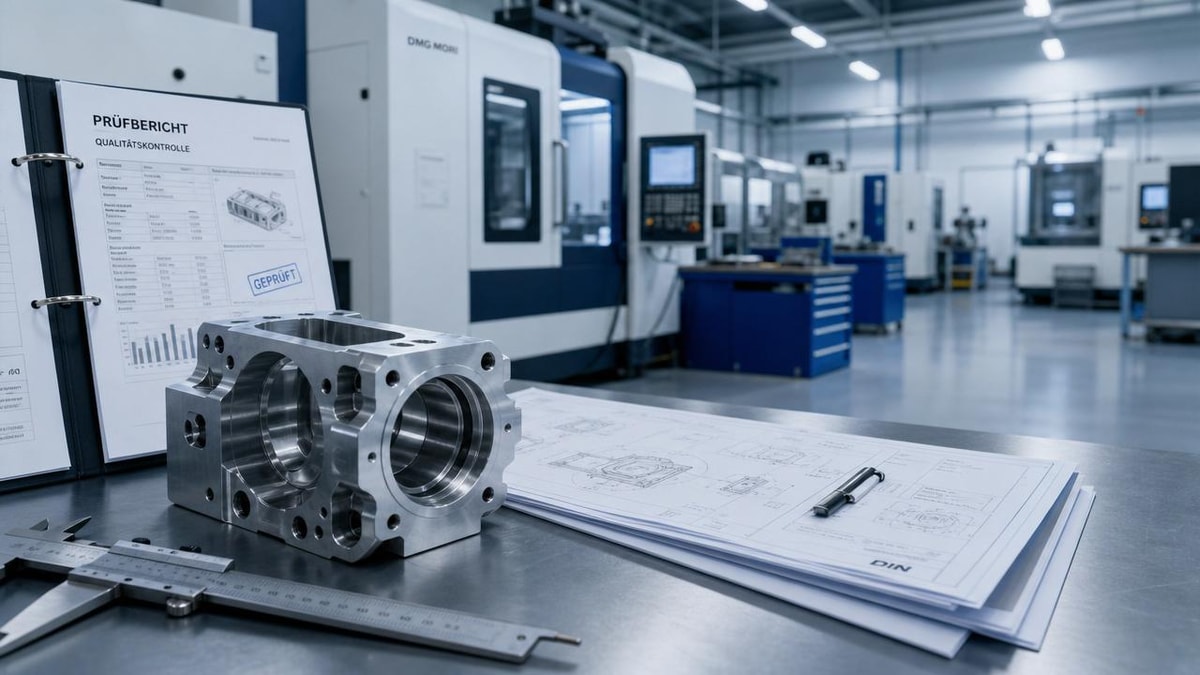
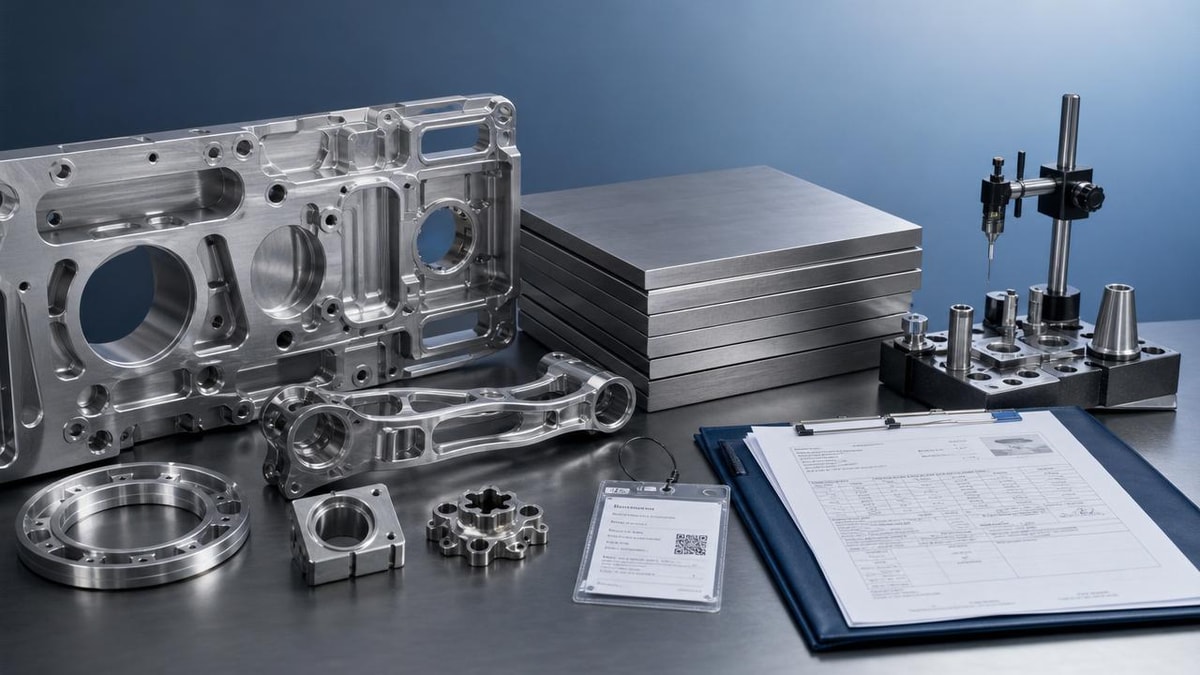
Technical evaluation teams will usually want to see material certificates, process travelers, in-process inspection records, final inspection reports, calibration status, nonconformance handling procedures, and revision control practices. In many procurement environments, these records are as important as the physical part because they enable regulatory review, internal approval, and long-term risk management.
A supplier that claims strong lathe turning for aerospace components capability should also demonstrate document discipline. Can they trace raw material heat numbers to finished serial or batch records? Can they link operator actions and machine settings to specific lots? Can they show what happened when a dimension trended toward a limit or when an out-of-spec condition was found?
For technical evaluators, strong traceability reduces approval friction and supports audit readiness. It also makes future root-cause analysis possible if a field or assembly issue emerges. In aerospace, that is not optional value. It is baseline credibility.
Process Stability Is More Important Than One-Time Capability
Many suppliers can produce a conforming prototype. Fewer can maintain the same level of quality across repeated production, shifting material lots, operator changes, tool life cycles, and evolving demand volumes. This is why technical evaluators often place more weight on process stability than on isolated demonstration samples.
Stable aerospace turning depends on disciplined control plans. These may include first article inspection, statistical process monitoring, tool wear tracking, machine maintenance schedules, fixture repeatability checks, coolant concentration management, and clear reaction plans when variation is detected.
From a buyer’s perspective, the risk is not simply receiving one bad part. The larger risk is systemic drift that remains undetected until parts have moved further downstream into assembly, testing, or even customer delivery. The cost of that drift can easily exceed the savings from choosing a lower-maturity supplier.
When evaluating a source, it is useful to ask for evidence of repeatability over time. Capability data, trend charts, control methods for critical characteristics, and examples of corrective actions can reveal whether the supplier’s turning process is truly production-ready for aerospace expectations.
Compliance, Certification, and Quality Systems Shape Supplier Credibility
For aerospace buyers, machining competence must sit inside a recognized quality system. Standards such as AS9100 are often used as practical indicators that a supplier has structured controls for risk, documentation, configuration management, corrective action, and continuous improvement.
Certification alone does not guarantee excellent execution, but lack of system maturity should raise questions. Technical evaluators should examine whether certifications are current, whether the scope covers relevant processes, and whether internal procedures align with aerospace customer expectations.
It is also important to verify how special requirements are managed. If a component needs outside heat treatment, coating, nondestructive testing, or passivation, the turning supplier must coordinate approved sub-tier providers and preserve traceability across those handoffs. Weak supplier control at this stage can compromise an otherwise good machining process.
In practice, compliance confidence comes from alignment between paperwork, process, and demonstrated results. Evaluators should look for that consistency rather than relying on certificates as a standalone signal.
How to Evaluate a Supplier of Lathe-Turned Aerospace Parts More Effectively
A practical evaluation framework helps technical teams move beyond marketing claims. Instead of asking only “Can you hold this tolerance?” ask a broader set of questions tied to performance risk, scalability, and audit readiness.
Start with material control. Ask how incoming stock is verified, segregated, and traced. Then examine machining methodology. Request details on tooling strategy, process validation, in-process inspection frequency, and management of critical dimensions over production runs.
Next, review surface and post-process controls. Clarify how burrs, edge breaks, finish consistency, and cleanliness are handled. If the part goes through downstream treatment, ask how the turned condition is optimized for that next step. This is often where hidden defects or rework costs emerge.
Then assess quality system behavior. Review sample documentation packages, nonconformance workflows, calibration practices, and change control procedures. Finally, look at responsiveness: how quickly can the supplier address engineering changes, investigate anomalies, and communicate technical risk?
The most useful suppliers for aerospace programs are rarely those that present machining as an isolated service. They present it as a controlled manufacturing process integrated with quality, compliance, and functional performance requirements.
What This Means for Strategic Sourcing and Technical Approval
For procurement directors and technical evaluation teams, the business impact is straightforward. Suppliers that understand the full aerospace quality framework can lower total risk even if their quoted piece price is not the lowest. They reduce the probability of hidden defects, delayed approvals, documentation gaps, and costly downstream escapes.
That matters in a market where aerospace lead times are sensitive, qualification cycles are demanding, and supplier changes can create disruption across entire production schedules. In this context, evaluating lathe turning for aerospace components through a broader lens is not only a technical choice. It is a commercial risk-control strategy.
Organizations that source successfully in aerospace usually adopt a total-value perspective. They compare suppliers based on repeatability, documentation maturity, material expertise, and quality responsiveness alongside tolerance capability. This approach leads to more resilient supply decisions and stronger long-term program performance.
Conclusion
Aerospace components need more than tight lathe turning because performance in this sector depends on far more than dimensional accuracy. Precision remains essential, but it must be supported by material understanding, surface integrity control, traceability, process stability, and compliance discipline.
For technical evaluators, the smartest question is not whether a part can be machined to spec once. It is whether the supplier can repeatedly deliver aerospace-ready parts with documented conformity and dependable real-world performance. That is the threshold that separates ordinary precision machining from true aerospace manufacturing capability.
When assessing suppliers, use tolerance as the starting point, not the conclusion. The deeper value lies in the systems that protect every dimension, every material property, and every record behind the final part.
Get weekly intelligence in your inbox.
No noise. No sponsored content. Pure intelligence.
 May 02, 2026Commercial EV Charging Installation Costs Beyond the HardwareCommercial EV Charging Installation Costs Beyond the Hardware
 May 02, 2026Portable EV Charging Solutions: Where They Actually FitPortable EV Charging Solutions: Where They Actually Fit
 May 02, 2026Why Automotive Aluminum Extrusions Fail at Joining PointsWhy Automotive Aluminum Extrusions Fail at Joining Points
 May 02, 2026Sheet Metal Bending Services in the USA: What Drives Lead TimeSheet Metal Bending Services in the USA: What Drives Lead Time
 May 02, 2026Cost-Effective Factory Automation Often Starts Smaller Than ExpectedCost-Effective Factory Automation Often Starts Smaller Than Expected
 May 02, 2026Choosing a Solar Panels Wholesale Distributor Without Price TrapsChoosing a Solar Panels Wholesale Distributor Without Price Traps
 May 02, 2026High Efficiency PV Modules: When the Premium Makes SenseHigh Efficiency PV Modules: When the Premium Makes Sense
 May 02, 2026Why Data Centers Are Rethinking ESS Backup StrategyWhy Data Centers Are Rethinking ESS Backup Strategy
 May 02, 2026Do Agricultural PV Modules Need Different Frame Designs?Do Agricultural PV Modules Need Different Frame Designs?
 May 02, 2026How to Vet an OEM Machined Parts Supplier in GermanyHow to Vet an OEM Machined Parts Supplier in Germany
 May 02, 2026Custom Metal Fabrication for Aerospace: Cost vs CertificationCustom Metal Fabrication for Aerospace: Cost vs Certification
 May 02, 2026What Slows Rapid Prototyping for Automotive Parts MostWhat Slows Rapid Prototyping for Automotive Parts Most
 May 02, 2026Rapid Prototyping Choices That Cut Delays in Consumer ElectronicsRapid Prototyping Choices That Cut Delays in Consumer Electronics
 May 02, 2026Why Aerospace Parts Need More Than Tight Lathe TurningWhy Aerospace Parts Need More Than Tight Lathe Turning
 May 02, 2026What Fireproof Technology Really Changes in Lithium BatteriesWhat Fireproof Technology Really Changes in Lithium Batteries
 May 02, 2026Are Grid-Tied Hybrid Inverters Enough for Unstable Supply?Are Grid-Tied Hybrid Inverters Enough for Unstable Supply?
 May 02, 2026What a Solar Panels Wholesale Price List Does Not ShowWhat a Solar Panels Wholesale Price List Does Not Show
 May 02, 2026How Long Life Cycle Batteries Lower Replacement CostsHow Long Life Cycle Batteries Lower Replacement Costs
 May 02, 2026Lathe Turning Tolerances That Matter in Industrial MachineryLathe Turning Tolerances That Matter in Industrial Machinery
 May 02, 2026ESS for Commercial Buildings: Sizing Mistakes to AvoidESS for Commercial Buildings: Sizing Mistakes to Avoid
 May 02, 2026Warehouse Robotics Bottlenecks That Slow Automation ROIWarehouse Robotics Bottlenecks That Slow Automation ROI
 May 02, 2026Where Smart Manufacturing Pays Off First in Auto PlantsWhere Smart Manufacturing Pays Off First in Auto Plants
 May 02, 2026Marine Aluminum Extrusions: What Corrosion Ratings MissMarine Aluminum Extrusions: What Corrosion Ratings Miss
 May 02, 2026Plastic Injection Molding Machine Specs That Affect OutputPlastic Injection Molding Machine Specs That Affect Output
 May 02, 2026What Limits 5 Axis Milling Accuracy for Medical Devices?What Limits 5 Axis Milling Accuracy for Medical Devices?
 May 02, 2026How to Compare a Die Casting Parts Manufacturer in ChinaHow to Compare a Die Casting Parts Manufacturer in China
 May 02, 2026Why Oil and Gas Projects Still Rely on Steel ForgingWhy Oil and Gas Projects Still Rely on Steel Forging