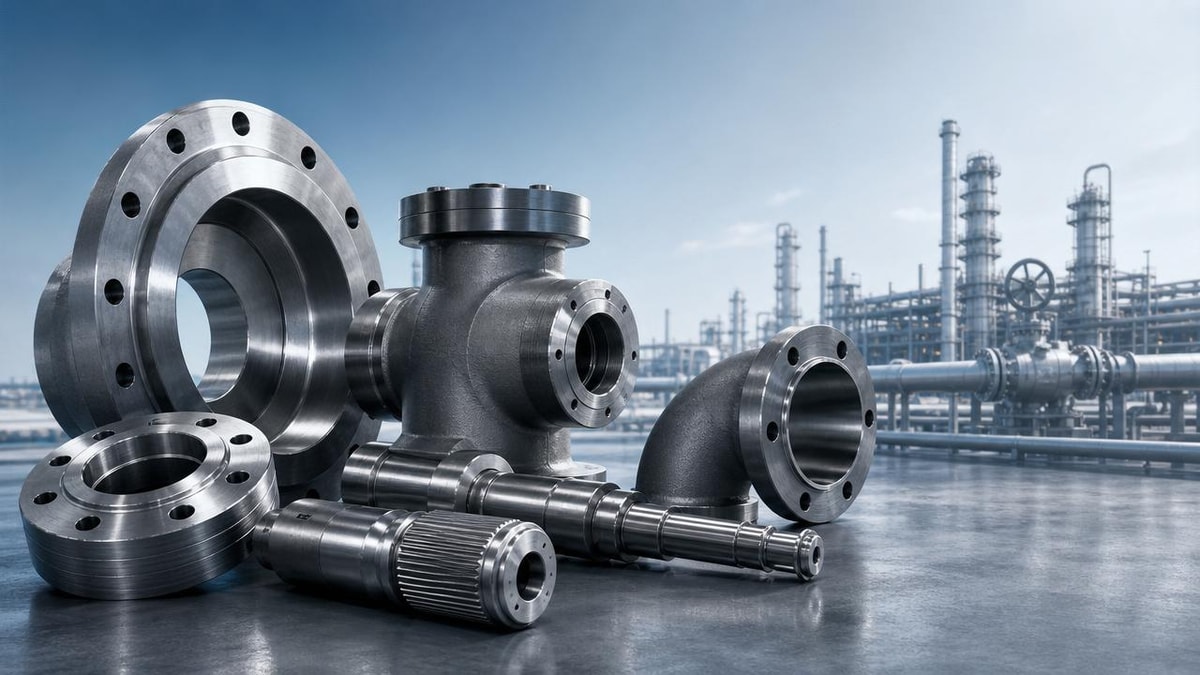
Why Oil and Gas Projects Still Rely on Steel Forging
Despite rapid advances in materials and manufacturing, steel forging for oil and gas industry applications remains indispensable where extreme pressure, corrosion resistance, and component integrity are non-negotiable. For enterprise decision-makers balancing operational risk, lifecycle cost, and supply security, understanding why forged steel continues to outperform alternatives is essential to smarter project planning and long-term asset reliability.
Why the conversation has shifted from lowest unit price to total project resilience
A notable shift is taking place across upstream, midstream, and downstream projects: procurement teams are no longer evaluating components only by upfront purchase cost. They are increasingly measuring material selection against uptime risk, inspection intervals, compliance exposure, and replacement complexity. In that context, steel forging for oil and gas industry assets has kept its strategic position not because the sector resists innovation, but because the operating environment still punishes weakness more severely than most industries.
This matters even more as projects move into harsher service conditions. Sour gas fields, deepwater installations, high-pressure high-temperature wells, LNG infrastructure, and aging pipeline networks all place extraordinary demands on valves, flanges, fittings, shafts, drill components, pressure-containing parts, and rotating equipment. In many of these cases, forged steel continues to offer the combination of strength, toughness, fatigue resistance, and grain structure consistency that castings or lighter alternatives struggle to match under sustained stress.
The current trend is not a return to old materials thinking. It is a more selective and risk-aware approach. Decision-makers are asking a practical question: where can innovation safely reduce cost, and where must proven metallurgy remain the default? For critical service components, the answer often still favors steel forging for oil and gas industry use.
The strongest trend signals are coming from harsher operations and tighter accountability
Several market signals explain why forged steel remains central. First, assets are operating longer. Operators are extending the life of refineries, compressor stations, offshore platforms, and transmission systems, which increases the value of durable components with predictable performance. Second, project owners face stronger regulatory and insurance scrutiny around failure prevention, documentation, and traceability. Third, geopolitical supply uncertainty has elevated the importance of dependable material specifications and supplier qualification.
These shifts strengthen the case for forged parts because forging supports tighter control of internal soundness and mechanical properties. Compared with less robust manufacturing routes, forging can reduce the likelihood of voids, discontinuities, and structural inconsistencies in parts exposed to cyclical loading or pressure containment demands. The result is not simply a technical preference; it is a commercial hedge against unplanned shutdowns, safety incidents, and reputational damage.
For procurement and engineering leaders, these are not abstract signals. They directly affect specification decisions, audit requirements, lead-time planning, and total installed cost.
Material innovation is real, but critical-service applications still reward forged performance
There has been genuine progress in composites, specialty alloys, additive manufacturing, and precision casting. Yet the oil and gas sector does not adopt alternatives purely because they are newer. It adopts them when they can survive pressure cycling, corrosive chemistry, impact loading, and maintenance realities across decades. That threshold remains difficult to clear in many mission-critical locations.
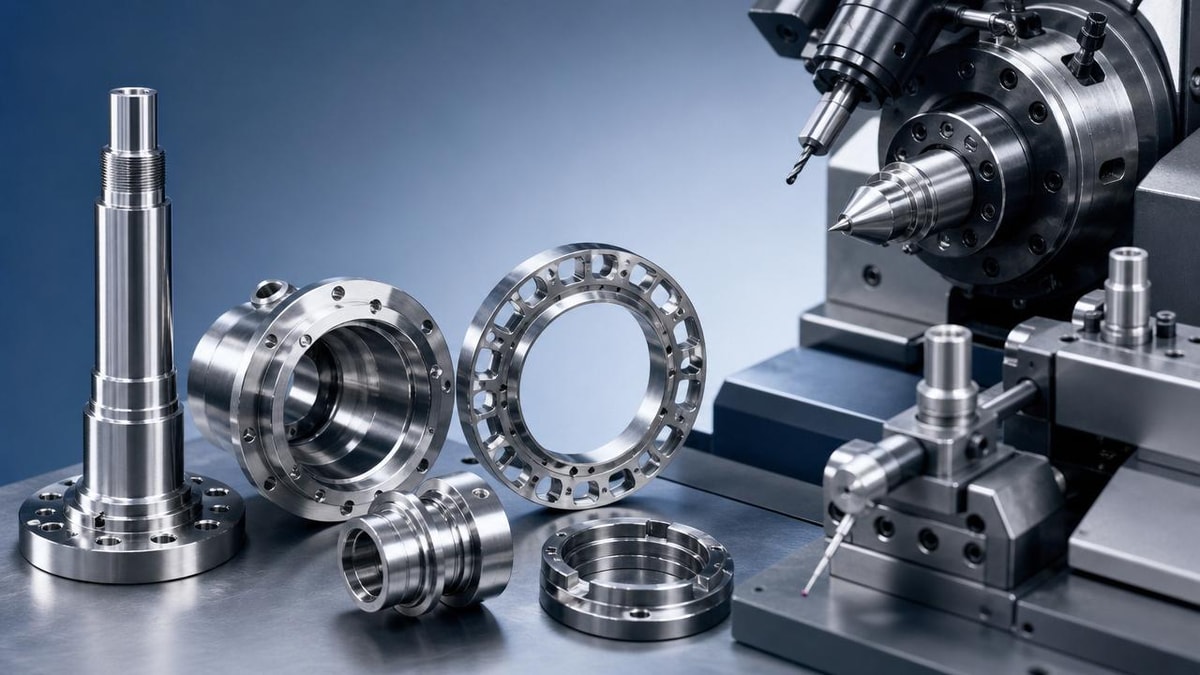
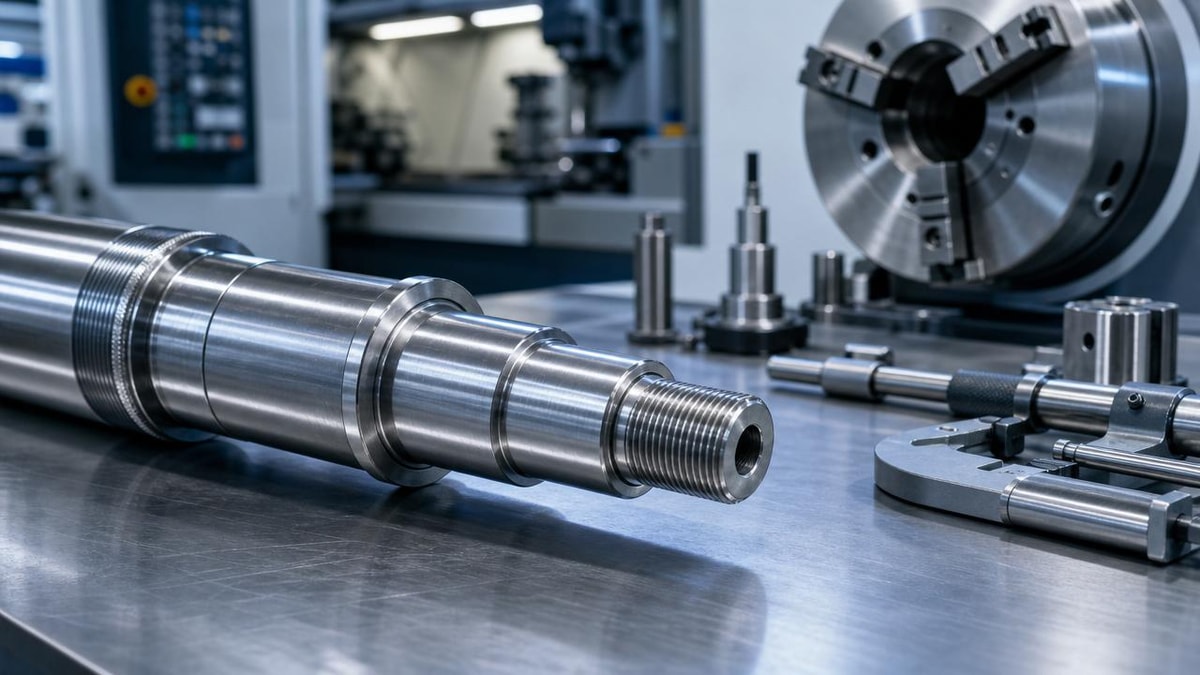
Steel forging for oil and gas industry use remains valuable because the process improves directional grain flow and mechanical reliability in ways that are especially useful for high-stress geometries. Flanges in transmission systems, valve bodies in severe service, forged bars for drilling tools, and shafts for pumps and compressors all benefit from this structural advantage. When a component is expected to absorb stress without brittle failure, endure repeated loading, and maintain dimensional stability after heat treatment and machining, forged steel remains a preferred choice.
This does not mean every part should be forged steel. The direction of the market is more nuanced. Low-risk or non-critical components may increasingly shift toward other manufacturing routes. But the closer a component moves to pressure boundaries, safety functions, or high consequence of failure, the stronger the economic logic becomes for steel forging for oil and gas industry projects.
Why operating risk now outweighs theoretical material savings
One of the most important decision trends is the wider use of lifecycle thinking. A cheaper component can quickly become the most expensive item in a project if it causes inspection escalation, leakage, premature wear, or production interruption. Oil and gas operators increasingly understand that material decisions should be priced against consequence, not simply against invoice value.
Forged steel supports this logic in three ways. First, it improves confidence in performance under load. Second, it can reduce variability between batches when sourced from disciplined manufacturers. Third, it integrates well into established qualification standards and maintenance practices. In capital-intensive facilities, these benefits reduce the risk of costly surprises after installation.
For enterprise decision-makers, the implication is clear: evaluation frameworks should compare forged and non-forged options not only on procurement price, but also on outage exposure, access difficulty, warranty recoverability, replacement lead time, and insurability. This is why steel forging for oil and gas industry procurement remains resilient even when procurement teams are under aggressive cost pressure.
The impact is different for EPCs, operators, OEMs, and global sourcing teams
The trend affects stakeholders in different ways. EPC contractors must balance schedule certainty with specification discipline. Operators care most about uptime, safety, and maintenance burden. OEMs need reliable forged inputs to protect their equipment warranties and performance commitments. Global sourcing teams are under pressure to diversify suppliers without weakening quality assurance.
The next phase of demand will favor qualified suppliers, not just low-cost capacity
Another change worth watching is how buyers define supplier competitiveness. The market is moving away from simple volume capability and toward auditable process control. Buyers want heat traceability, test documentation, machining consistency, metallurgy expertise, and evidence that the supplier understands the specific application rather than merely producing to print.
This is especially relevant for steel forging for oil and gas industry procurement because project owners cannot afford hidden variability. A supplier with attractive pricing but weak process discipline can introduce delay through requalification, non-conformance, or field performance doubt. As a result, supplier selection is becoming more intelligence-driven. Technical capability, sector familiarity, and communication responsiveness are now major purchasing criteria.
For platforms such as TradeNexus Pro, this is where market intelligence becomes practical. Decision-makers need more than a directory of vendors. They need insight into sector specialization, production credibility, and how supply dynamics are shifting across regions and end-use categories.
What enterprise buyers should monitor before locking in specifications
The most effective response is not to assume forged steel is always the answer, nor to replace it too aggressively in pursuit of savings. Instead, buyers should develop a tiered decision model. Components should be classified by consequence of failure, inspection accessibility, pressure duty, corrosion severity, and replacement complexity. Once that mapping is complete, the role of steel forging for oil and gas industry applications becomes easier to justify where it matters most.
Key signals to monitor include changes in service environment, revised customer specifications, tighter regional compliance expectations, longer maintenance intervals, and supplier lead-time instability. Any one of these can shift the economics in favor of forged components. The more severe the duty cycle and the harder the component is to replace, the stronger the case becomes.
A practical outlook: forged steel will remain selective, but deeply relevant
Looking ahead, the role of steel forging for oil and gas industry use is likely to become more selective rather than less important. As digital procurement matures and specification management becomes more data-driven, buyers will make finer distinctions between critical and non-critical applications. That may reduce unnecessary overengineering in some categories. At the same time, it will sharpen demand for high-performance forged components in applications where reliability economics are undeniable.
In other words, forged steel is not surviving out of habit. It is being retained where consequence, compliance, and lifecycle economics still favor it. That is a more disciplined and more sustainable position than broad material conservatism. For boards, procurement directors, and operations leaders, the real opportunity is to align specification strategy with risk reality.
What to confirm now if you are planning future projects
If your team is evaluating future supply plans, capital projects, or replacement programs, focus on a short set of questions. Which components truly sit in high-consequence service? Where are maintenance intervals becoming longer? Which supplier relationships can provide verified forging quality at scale? And where does the cost of failure far exceed the savings from alternative manufacturing routes?
Answering those questions will reveal why steel forging for oil and gas industry demand remains durable even as the broader industrial landscape evolves. For decision-makers seeking clearer market signals, stronger supplier intelligence, and better alignment between engineering and sourcing strategy, that is the most useful place to begin.
Get weekly intelligence in your inbox.
No noise. No sponsored content. Pure intelligence.
 May 02, 2026Commercial EV Charging Installation Costs Beyond the HardwareCommercial EV Charging Installation Costs Beyond the Hardware
 May 02, 2026Portable EV Charging Solutions: Where They Actually FitPortable EV Charging Solutions: Where They Actually Fit
 May 02, 2026Why Automotive Aluminum Extrusions Fail at Joining PointsWhy Automotive Aluminum Extrusions Fail at Joining Points
 May 02, 2026Sheet Metal Bending Services in the USA: What Drives Lead TimeSheet Metal Bending Services in the USA: What Drives Lead Time
 May 02, 2026Cost-Effective Factory Automation Often Starts Smaller Than ExpectedCost-Effective Factory Automation Often Starts Smaller Than Expected
 May 02, 2026Choosing a Solar Panels Wholesale Distributor Without Price TrapsChoosing a Solar Panels Wholesale Distributor Without Price Traps
 May 02, 2026High Efficiency PV Modules: When the Premium Makes SenseHigh Efficiency PV Modules: When the Premium Makes Sense
 May 02, 2026Why Data Centers Are Rethinking ESS Backup StrategyWhy Data Centers Are Rethinking ESS Backup Strategy
 May 02, 2026Do Agricultural PV Modules Need Different Frame Designs?Do Agricultural PV Modules Need Different Frame Designs?
 May 02, 2026How to Vet an OEM Machined Parts Supplier in GermanyHow to Vet an OEM Machined Parts Supplier in Germany
 May 02, 2026Custom Metal Fabrication for Aerospace: Cost vs CertificationCustom Metal Fabrication for Aerospace: Cost vs Certification
 May 02, 2026What Slows Rapid Prototyping for Automotive Parts MostWhat Slows Rapid Prototyping for Automotive Parts Most
 May 02, 2026Rapid Prototyping Choices That Cut Delays in Consumer ElectronicsRapid Prototyping Choices That Cut Delays in Consumer Electronics
 May 02, 2026Why Aerospace Parts Need More Than Tight Lathe TurningWhy Aerospace Parts Need More Than Tight Lathe Turning
 May 02, 2026What Fireproof Technology Really Changes in Lithium BatteriesWhat Fireproof Technology Really Changes in Lithium Batteries
 May 02, 2026Are Grid-Tied Hybrid Inverters Enough for Unstable Supply?Are Grid-Tied Hybrid Inverters Enough for Unstable Supply?
 May 02, 2026What a Solar Panels Wholesale Price List Does Not ShowWhat a Solar Panels Wholesale Price List Does Not Show
 May 02, 2026How Long Life Cycle Batteries Lower Replacement CostsHow Long Life Cycle Batteries Lower Replacement Costs
 May 02, 2026Lathe Turning Tolerances That Matter in Industrial MachineryLathe Turning Tolerances That Matter in Industrial Machinery
 May 02, 2026ESS for Commercial Buildings: Sizing Mistakes to AvoidESS for Commercial Buildings: Sizing Mistakes to Avoid
 May 02, 2026Warehouse Robotics Bottlenecks That Slow Automation ROIWarehouse Robotics Bottlenecks That Slow Automation ROI
 May 02, 2026Where Smart Manufacturing Pays Off First in Auto PlantsWhere Smart Manufacturing Pays Off First in Auto Plants
 May 02, 2026Marine Aluminum Extrusions: What Corrosion Ratings MissMarine Aluminum Extrusions: What Corrosion Ratings Miss
 May 02, 2026Plastic Injection Molding Machine Specs That Affect OutputPlastic Injection Molding Machine Specs That Affect Output
 May 02, 2026What Limits 5 Axis Milling Accuracy for Medical Devices?What Limits 5 Axis Milling Accuracy for Medical Devices?
 May 02, 2026How to Compare a Die Casting Parts Manufacturer in ChinaHow to Compare a Die Casting Parts Manufacturer in China
 May 02, 2026Why Oil and Gas Projects Still Rely on Steel ForgingWhy Oil and Gas Projects Still Rely on Steel Forging