Hybrid Inverters for Industrial Applications: What Fails First?
In demanding facilities, hybrid inverters for industrial applications often fail long before total shutdown—usually through thermal stress, capacitor aging, cooling fan wear, or control board faults. For after-sales maintenance teams, knowing which components degrade first is critical to reducing downtime, planning spare parts, and preventing costly production losses. This article examines the most common early failure points and what they reveal about system health.
Why a checklist-first approach works better for industrial troubleshooting
For after-sales teams, the biggest risk is not only failure itself, but misreading the sequence of failure. In many hybrid inverters for industrial applications, the first damaged part is not the root cause. A failed fan may be the visible issue, while excessive dust loading, poor cabinet airflow, harmonic stress, or repeated battery cycling may be the real trigger. That is why a checklist-based method is more effective than a general inspection.
A structured checklist helps maintenance personnel answer three practical questions fast: what to inspect first, what readings matter most, and which symptoms indicate deeper risk. In industrial environments such as manufacturing plants, warehouse microgrids, cold storage sites, and logistics hubs, hybrid inverters for industrial applications are exposed to heavy loads, thermal swings, and unstable utility conditions. Early identification of wear patterns can turn an emergency shutdown into a planned service window.
First-pass checklist: the components that usually fail first
When diagnosing hybrid inverters for industrial applications, start with the components that statistically degrade earlier under real operating stress. The list below is designed for field technicians and service coordinators who need quick prioritization.
- Cooling fans: Often the earliest mechanical wear point. Listen for bearing noise, reduced airflow, intermittent startup, or speed mismatch alarms. Fan decline rapidly increases internal temperature and accelerates downstream failures.
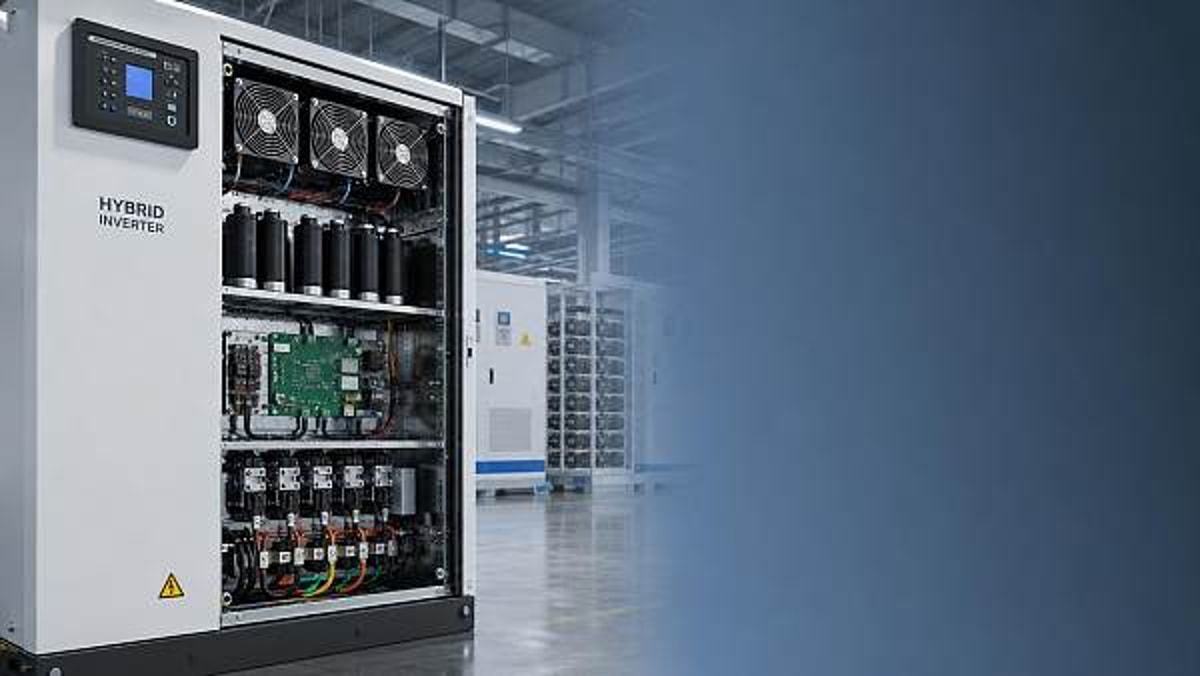
- Electrolytic capacitors: One of the most common aging components in power electronics. Look for bulging tops, electrolyte leakage, rising ESR behavior, DC bus ripple, and reduced ride-through stability during load changes.
- Power semiconductors: IGBTs, MOSFETs, and diode modules usually fail after cumulative thermal cycling or switching stress. Warning signs include irregular temperature spread between phases, nuisance trips, and distortion under partial load.
- Control boards and solder joints: Sensitive to heat, vibration, moisture, and contamination. Intermittent communication loss, unexplained resets, or random fault codes often point here before full board failure occurs.
- Relays, contactors, and terminal points: These are frequently overlooked. Pitting, heat discoloration, loose torque, and oxidation can mimic more serious inverter faults while actually being connection-related.
- Battery interface components: In systems integrated with storage, current sensors, BMS communication ports, and pre-charge circuits can fail early when battery cycling is aggressive or configuration is unstable.
For most hybrid inverters for industrial applications, the practical rule is simple: if cooling performance drops, capacitor aging and control instability usually follow. If electrical connections degrade, thermal stress rises even when the inverter still appears operational.
How to judge which fault is primary and which is secondary
A common service mistake is replacing the failed component without verifying the upstream cause. To avoid repeat failures, maintenance teams should apply a simple judgment standard: identify whether the failed part is a stress absorber, a wear item, or a root-cause carrier.
Signs the issue started with thermal stress
Prioritize thermal analysis if you see fan alarms, brown discoloration near heatsinks, repeated overtemperature logs, drifting output under afternoon peak load, or stronger failures in top-mounted modules. In hybrid inverters for industrial applications, heat usually leaves a pattern: multiple parts age faster together rather than one isolated part failing cleanly.
Signs the issue started with electrical stress
Look for sudden trips during grid events, abnormal DC ripple, high THD, relay chatter, or failure after load step changes from motors, compressors, or large drives. If the site has unstable grid quality, poor power factor control, or frequent transfer events, hybrid inverters for industrial applications may show semiconductor or capacitor stress before mechanical wear becomes obvious.
Signs the issue started with environmental contamination
Dust, oil mist, salt air, and moisture leave clues such as clogged filters, sticky fan blades, uneven corrosion on terminals, and creeping insulation faults. Industrial sites often underestimate how quickly contamination reduces heat dissipation and increases leakage risk.
Field inspection priorities for after-sales maintenance teams
Use the following sequence when arriving on site. It balances safety, speed, and diagnostic value for hybrid inverters for industrial applications.
- Review fault history before touching hardware. Export event logs, overtemperature records, DC bus alarms, communication interruptions, and power derating history. Trend data often shows failure progression better than visual inspection alone.
- Check ambient and cabinet conditions. Measure room temperature, airflow path, filter condition, dust accumulation, and clearance around vents. Poor installation surroundings can explain recurring failures across multiple units.
- Inspect cooling components first. Verify fan speed, vibration, bearing sound, filter blockage, and heatsink cleanliness. If cooling has degraded, inspect capacitors next even if they are not yet visibly swollen.
- Measure electrical stress indicators. Review input voltage imbalance, DC ripple, harmonic conditions, neutral integrity, and transient history. In industrial systems, power quality frequently shapes inverter life expectancy.
- Check battery-side behavior. Confirm BMS communication stability, charge-discharge current peaks, SOC control logic, and whether the inverter has been forced into frequent high-current cycling.
- Verify torque and connection integrity. Loose terminals create local heat, nuisance trips, and false fault interpretation. Infrared scanning is especially useful under load.
- Decide whether to replace single parts or rebuild a wear set. If one fan has failed in a high-hour fleet, replacing all matched fans and inspecting capacitors may be more cost-effective than repeated visits.
Quick judgment table: symptom, likely first failure, and what to do next
Failure patterns vary by industrial scenario
Not all hybrid inverters for industrial applications age the same way. Site profile matters. After-sales personnel should adjust their checklist based on operating environment and load behavior.
Manufacturing lines with variable motor loads
Expect higher switching stress, load-step instability, and more thermal cycling. Semiconductor modules, bus capacitors, and terminal connections deserve priority inspection. Harmonics and repetitive start-stop operations can shorten life faster than steady-state high load.
Warehouses and logistics facilities with rooftop solar plus storage
These installations often show fan wear and battery communication issues first. Daily charge-discharge patterns, fast throughput expectations, and dust accumulation from busy loading areas can jointly affect reliability.
Cold storage and temperature-controlled operations
Condensation risk and enclosure sealing become major factors. Control boards, connectors, and insulation surfaces may degrade before power stages show obvious distress. Moisture management should be part of every service checklist.
Remote or weak-grid sites
Voltage fluctuations and transfer events place stress on DC bus components and control logic. Here, hybrid inverters for industrial applications may fail first at surge-sensitive interfaces rather than mechanical parts.
Commonly missed warning signs that increase repeat failures
Many repeat callouts happen because service teams fix the visible defect but miss the condition that accelerated it. Pay extra attention to these overlooked items:
- Replacing one failed fan without checking whether all fans have reached similar operating hours.
- Ignoring slight capacitor drift because no bulging is visible yet.
- Treating nuisance trips as firmware issues when loose power terminals are generating local heat.
- Skipping infrared inspection under real load conditions.
- Not correlating failure timing with ambient heat peaks, production shifts, or battery cycling windows.
- Using replacement parts with mismatched airflow, voltage rating, ESR characteristics, or communication revision.
Service planning recommendations: what to stock, track, and escalate
For organizations supporting fleets of hybrid inverters for industrial applications, maintenance effectiveness improves when spare planning matches failure order. High-value service programs usually stock fan kits, capacitor sets, relays or contactors, filtered ventilation parts, common communication modules, and approved terminal hardware before keeping expensive full inverter assemblies.
Track these metrics at minimum: inverter internal temperature trend, derating frequency, fan runtime, capacitor replacement history, battery alarm frequency, grid event correlation, and mean time between service interventions. Escalate to engineering support when the same model fails repeatedly at the same operating hour band, when one phase runs consistently hotter, or when failures cluster around firmware updates or battery integration changes.
FAQ for after-sales teams handling hybrid inverters for industrial applications
Do cooling fans really fail before major power components?
Very often, yes. Fans are mechanical wear items and are highly exposed to dust and temperature. In many hybrid inverters for industrial applications, fan degradation is the first practical warning that larger thermal problems are coming.
Can capacitor aging be detected before shutdown?
Usually yes, through ripple behavior, thermal history, derating trends, and preventive testing. Visible swelling is a late sign, not the first sign.
Should one failed part trigger broader replacement?
If the failed part belongs to a matched wear group, such as multiple fans of the same service age, broader replacement is often justified. It reduces repeat labor, downtime, and hidden thermal risk.
What to confirm before discussing repair scope or upgrade options
Before finalizing a repair strategy, gather the information that most affects decision quality: site ambient conditions, load profile, battery cycling pattern, event logs, inverter operating hours, previous parts replaced, and any recent changes to firmware, grid interface, or enclosure ventilation. These details help determine whether the right action is a simple repair, a preventive component refresh, a cooling redesign, or a broader system compatibility review.
For buyers, operators, and service partners working through platforms such as TradeNexus Pro, the most productive next conversation is not only about price or lead time. It should also cover failure pattern by application, spare part interchangeability, recommended maintenance intervals, battery-inverter compatibility, expected service life under local conditions, and whether remote diagnostics can reduce future callouts. That is how maintenance teams turn recurring inverter issues into a more reliable industrial energy strategy.
Get weekly intelligence in your inbox.
No noise. No sponsored content. Pure intelligence.
 May 03, 20265 Axis Milling Machines for Automotive: Buy New or Retrofit?5 Axis Milling Machines for Automotive: Buy New or Retrofit?
 May 03, 2026What to Check Before Sourcing OEM Machined Parts from IndiaWhat to Check Before Sourcing OEM Machined Parts from India
 May 03, 2026Why Sheet Metal Bending Machine Price Varies So MuchWhy Sheet Metal Bending Machine Price Varies So Much
 May 03, 2026Plastic Injection Molding Process Guide for Common Defect ControlPlastic Injection Molding Process Guide for Common Defect Control
 May 03, 2026Smart Manufacturing Technology Trends Reshaping Factory UpgradesSmart Manufacturing Technology Trends Reshaping Factory Upgrades
 May 03, 2026Automotive Die Casting Parts and the Hidden Cost of PorosityAutomotive Die Casting Parts and the Hidden Cost of Porosity
 May 03, 2026Assembly Line Robots: Flexibility Can Matter More Than SpeedAssembly Line Robots: Flexibility Can Matter More Than Speed
 May 03, 2026Smart Manufacturing in Energy: Which Upgrades Pay Back FasterSmart Manufacturing in Energy: Which Upgrades Pay Back Faster
 May 03, 2026Why Robotics Integration Fails After a Successful DemoWhy Robotics Integration Fails After a Successful Demo
 May 03, 2026How to Spot a Reliable Precision Components ManufacturerHow to Spot a Reliable Precision Components Manufacturer
 May 03, 2026Sheet Metal Bending Machine Specifications That Affect AccuracySheet Metal Bending Machine Specifications That Affect Accuracy
 May 03, 2026Oil and Gas Fabrication: Where Material Mismatch Gets ExpensiveOil and Gas Fabrication: Where Material Mismatch Gets Expensive
 May 03, 2026Construction Fabrication Delays Often Start at the Drawing StageConstruction Fabrication Delays Often Start at the Drawing Stage
 May 03, 2026Industrial Robotics Maintenance Guide for Fewer Surprise StopsIndustrial Robotics Maintenance Guide for Fewer Surprise Stops
 May 03, 2026Smart Manufacturing Technology Benefits Beyond Labor SavingsSmart Manufacturing Technology Benefits Beyond Labor Savings
 May 03, 2026Defense Components Need More Than Tight TolerancesDefense Components Need More Than Tight Tolerances
 May 03, 2026How to Vet a Die Casting Parts Supplier in MexicoHow to Vet a Die Casting Parts Supplier in Mexico
 May 03, 2026Food Processing Automation Systems and the Cost of DowntimeFood Processing Automation Systems and the Cost of Downtime
 May 03, 20265 Axis Milling for Aerospace: When Extra Precision Is Worth It5 Axis Milling for Aerospace: When Extra Precision Is Worth It
 May 03, 2026How OEM Medical Equipment Parts Affect Validation TimelinesHow OEM Medical Equipment Parts Affect Validation Timelines
 May 03, 2026Packaging Robotics Integration Problems That Slow CommissioningPackaging Robotics Integration Problems That Slow Commissioning
 May 03, 2026What Causes Rework in OEM Aerospace Machined PartsWhat Causes Rework in OEM Aerospace Machined Parts
 May 03, 2026Choosing Sheet Metal Bending Services in Europe Without DelaysChoosing Sheet Metal Bending Services in Europe Without Delays
 May 03, 2026Die Casting Parts for Electronics: Tolerance or Heat Control?Die Casting Parts for Electronics: Tolerance or Heat Control?
 May 03, 2026Marine Metal Fabrication Mistakes That Raise Corrosion RiskMarine Metal Fabrication Mistakes That Raise Corrosion Risk
 May 03, 2026When Welding Robots Improve Quality More Than ThroughputWhen Welding Robots Improve Quality More Than Throughput
 May 03, 2026Medical Device Molding Machines: What Specs Matter MostMedical Device Molding Machines: What Specs Matter Most