What Drives Energy Use in Industrial Dust Collectors
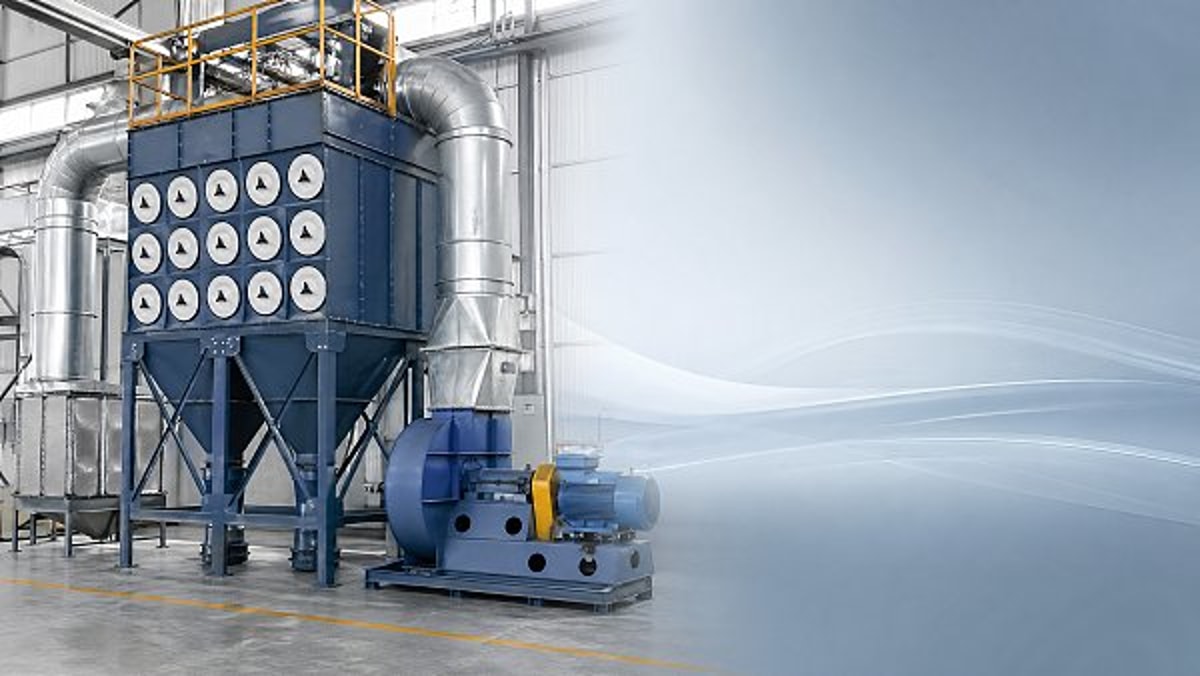
For financial decision-makers, understanding what drives energy use in industrial dust collectors is essential to controlling operating costs and improving long-term ROI. From airflow demands and filter resistance to fan efficiency and maintenance practices, energy consumption directly impacts budget performance. This article breaks down the key cost drivers behind industrial dust collectors and highlights where smarter investment decisions can deliver measurable savings.
Why finance teams should evaluate industrial dust collectors with a checklist first
For many plants, industrial dust collectors run for 8 to 24 hours per day, making them one of the quieter but more persistent energy loads in the facility. A procurement review focused only on purchase price can miss the larger cost picture, especially when electricity, compressed air, filter replacement, and downtime accumulate over a 3- to 7-year ownership window. A checklist approach helps finance approvers quickly identify which variables will influence annual operating expense the most.
This matters across mixed industrial environments, including metal fabrication, food processing, woodworking, chemicals, electronics assembly, and packaging. In each case, the same headline question applies: what is causing the system to consume more kilowatt-hours than expected? The answer usually comes from a short group of drivers rather than one single issue. Reviewing those drivers in a structured way improves budget accuracy and reduces the risk of approving an underperforming system.
A practical checklist also supports cross-functional conversations. Operations may focus on airflow and dust capture, maintenance may focus on filter access, and EHS teams may focus on compliance and exposure control. Finance teams need a framework that translates those technical discussions into cost categories, risk exposure, and payback logic. That is where disciplined review of industrial dust collectors becomes a strategic purchasing tool rather than a routine equipment approval.
First-pass review: the five items to confirm before comparing quotes
- Required airflow in CFM or m³/h, because oversized airflow is a direct energy penalty.
- Static pressure range, since each additional pressure burden raises fan power demand.
- Filter cleaning method and compressed air usage, especially for pulse-jet systems operating at high cycle frequency.
- Motor and fan efficiency, including whether a VFD is included for part-load operation.
- Expected maintenance interval, because clogged filters and neglected seals can raise energy use by 10% to 30% over time.
When these five points are confirmed early, financial decision-makers can sort supplier proposals more effectively. The goal is not to master every engineering detail, but to identify where one system may look affordable upfront while carrying a higher operating burden over the next 12, 24, or 60 months.
Core energy drivers: what to check in every industrial dust collector review
The largest energy driver in most industrial dust collectors is airflow. If the collector is designed to move more air than the process really needs, fan horsepower rises quickly. This often happens when systems are sized with excessive safety margin, duct runs are poorly designed, or multiple capture points are combined without balancing. For finance teams, the key question is simple: is the quoted airflow based on measured process demand or on broad estimation?
The second major driver is static pressure, which reflects the resistance the fan must overcome. Pressure losses come from filters, duct bends, hoods, spark arrestors, dampers, and long pipe runs. A system operating at 6 to 8 inches of water gauge will generally consume much less energy than one forced to work at 10 to 14 inches for the same airflow. This is why lower resistance design can produce recurring savings without changing production output.
Filter condition is another decisive factor. As dust cake builds, pressure drop rises. While some dust cake is necessary for efficient filtration, excessive restriction means the fan is working harder and pulse cleaning may become more frequent. In practical terms, a neglected filter set can turn a stable energy profile into a creeping cost increase that may go unnoticed for several quarters unless differential pressure is tracked regularly.
Priority checklist for cost-driving variables
The table below gives a finance-friendly view of the most common factors behind energy use in industrial dust collectors and how they typically affect operating budgets.
This table shows why evaluating industrial dust collectors as simple “fans with filters” is not enough. Energy consumption is shaped by system interaction. A more efficient fan may still produce disappointing results if the duct network is restrictive or if filter cleaning is poorly controlled. Finance reviews should therefore ask for the complete operating profile, not just the motor nameplate rating.
A quick rule-of-thumb list for internal approvals
- Challenge systems with unusually high quoted horsepower relative to airflow.
- Ask whether the system will operate at full load all shift or only during active process windows.
- Request expected pressure-drop range from clean filter to replacement point.
- Confirm whether the collector includes VFD-based modulation or fixed-speed operation.
Compare the hidden operating costs, not just the visible power draw
Electricity for the main fan usually receives the most attention, but it is not the only energy-related cost in industrial dust collectors. Pulse-jet units also consume compressed air, and compressed air is often one of the most expensive utilities in a factory. If pulse cleaning occurs every few seconds instead of on-demand by pressure setpoint, the hidden cost can materially change the annual operating budget.
Another overlooked cost is conditioned air loss. In facilities that exhaust filtered air outdoors, the plant may need to heat or cool replacement air. During winter or summer peaks, this can add a second energy burden that is not visible in the dust collector’s motor rating. For some buildings, the HVAC penalty over a 4- to 6-month season can rival or exceed part of the direct fan energy cost.
Downtime is the third hidden cost category. A collector with poor filter access, weak instrumentation, or unstable airflow may not just consume more power; it may also interrupt production. For a finance approver, that means the true economic question is broader than kilowatts. It includes labor hours, replacement parts, lost throughput, and emergency service exposure.
Operating cost checklist by category
Use this comparison table when reviewing proposals for industrial dust collectors across different departments or plant locations.
The financial value of this view is that it converts a technical purchase into a total-cost comparison. Even a 5% to 15% reduction in fan energy, combined with less compressed air use and longer filter service intervals, can materially improve lifecycle economics for industrial dust collectors in medium- to high-hour operations.
Questions to raise before approval
- What is the estimated annual runtime: one shift, two shifts, or continuous operation?
- Does the process create steady dust loading or short spikes that require control flexibility?
- Will cleaned air be recirculated or exhausted, and what does that mean for facility heating and cooling?
- What maintenance interval is expected at current production volume: monthly, quarterly, or semiannually?
Scenario-based checks: what changes by application, dust type, and plant layout
Not all industrial dust collectors behave the same way in service. Fine powder, fibrous material, sticky particulate, abrasive dust, and intermittent process emissions each create different pressure-drop patterns and cleaning demands. As a result, finance approvers should avoid assuming that an energy profile from one plant can be copied directly to another, even when the collector size appears similar on paper.
In compact facilities with short duct runs, static pressure may remain manageable, making fan efficiency the main cost lever. In larger facilities with multiple branch lines, pressure losses can dominate. Likewise, plants operating 2,000 hours per year can tolerate a different payback threshold than facilities running 6,000 to 8,000 hours annually. The correct level of investment depends on use intensity as much as on technology choice.
Dust characteristics also affect filter life and cleaning frequency. Fine, dry dust often behaves differently from moist or agglomerating material, and that difference can raise both electricity and maintenance costs. Reviewing application fit early reduces the chance of approving industrial dust collectors that later need modifications, add-on controls, or more frequent consumable replacement.
Application checklist for better budget forecasting
- For metalworking dust, verify spark management devices and their added pressure loss.
- For food or powder handling, review sanitation access and whether washdown design affects sealing and fan demand.
- For woodworking, confirm how chip load versus fine sanding dust changes filtration behavior over time.
- For electronics or fine particulate applications, check whether tighter capture requirements require higher airflow stability.
Signals that a quote may underestimate future energy use
Watch for proposals that provide motor size but not the operating fan curve, quote airflow without system pressure assumptions, or omit expected filter pressure-drop range. Another caution sign is a cleaning system described only in generic terms, without pulse frequency logic or compressed air requirement. These gaps do not automatically mean the system is unsuitable, but they do increase uncertainty for financial planning.
A second warning sign is when all applications are presented as if they share the same runtime and dust loading. In reality, energy use in industrial dust collectors can vary significantly between a batch process running a few hours daily and a continuous process running across three shifts. If runtime assumptions are wrong by 20% to 30%, the total-cost model may become misleading.
Finally, be cautious when the proposal does not address future production changes. If throughput is expected to rise within 12 to 24 months, the collector may either become undersized and restrictive or be oversized today and inefficient in the short term. Variable control strategy matters here, especially when flexible operation can protect both current and future ROI.
Commonly missed savings opportunities in industrial dust collectors
One of the most common missed opportunities is variable speed control. Many industrial dust collectors do not need full airflow at every minute of the shift. With a VFD and proper sensor logic, airflow can be adjusted to actual production state, reducing unnecessary fan power. In suitable applications, this can create meaningful savings, especially where processes start and stop frequently within an 8- to 12-hour shift.
Another missed opportunity is pressure-drop monitoring discipline. Differential pressure readings are often available, yet not integrated into a clear maintenance threshold. When filters remain in service too long, energy use rises. When they are replaced too early, consumable cost increases. Setting rational intervention bands helps plants balance utility efficiency with filter life rather than relying on guesswork.
Duct optimization is also frequently overlooked because it sits between equipment and facility infrastructure. Reducing sharp bends, unnecessary branch resistance, or poor hood design can lower system pressure without changing the collector itself. For finance leaders, that means some of the best returns may come from system tuning rather than complete equipment replacement.
Savings checklist to review with operations and maintenance
- Check whether airflow can be reduced during idle periods without compromising capture performance.
- Review filter differential pressure weekly or monthly, depending on dust loading stability.
- Inspect duct routing for avoidable restrictions before approving larger fan capacity.
- Confirm that compressed air cleaning is triggered by need, not simply by fixed timer settings.
- Compare projected energy savings against a 12-, 24-, and 36-month capital recovery view.
These practical checks often reveal that improving industrial dust collectors is not only a compliance or process issue, but also an operating margin issue. Where utilization is high, even modest reductions in static pressure or runtime can generate recurring savings that justify closer technical due diligence before approval.
Execution plan for finance approvers: what to request before signing off
A strong approval process starts with documentation, not assumptions. Ask suppliers or internal engineering teams for the design airflow, system pressure, motor efficiency information, filter cleaning logic, expected maintenance interval, and annual runtime basis. Without these inputs, it is difficult to compare industrial dust collectors on a meaningful lifecycle basis. A lower bid may simply reflect less complete design scope.
It is also useful to request a simple operating-cost model for low, normal, and peak production conditions. This gives finance teams a sensitivity range instead of a single number. For example, a collector may operate efficiently at 70% load but show higher-than-expected cost at sustained peak loading. That distinction becomes important when production forecasts are uncertain across the next 1 to 3 years.
Where possible, align the review with facility goals beyond direct energy reduction. That may include better maintenance planning, more stable process airflow, safer housekeeping conditions, or smoother budget forecasting. In multi-site industrial groups, a standardized review checklist also helps procurement teams compare industrial dust collectors across regions without losing sight of local process differences.
What to prepare for a productive supplier discussion
- Process type, dust characteristics, and daily operating hours.
- Current pain points, such as rising utility cost, frequent filter changes, or unstable suction.
- Plant layout constraints, including duct length, footprint, and indoor or outdoor installation.
- Approval targets, such as payback horizon, budget limit, and preferred service interval.
- Compliance or operating requirements relevant to your process environment.
Why work with TradeNexus Pro
TradeNexus Pro helps enterprise buyers and financial decision-makers cut through generic equipment claims by focusing on practical evaluation criteria, supply-side intelligence, and application-specific comparison points. For teams reviewing industrial dust collectors, that means better support in clarifying technical parameters, identifying total-cost drivers, and improving vendor shortlisting across global sourcing options.
If you need to move from internal discussion to procurement action, contact us to discuss parameter confirmation, product selection logic, expected delivery windows, customization scope, certification-related questions, sample or documentation support, and quotation comparison. A better decision on industrial dust collectors usually starts with a better set of questions, and we can help structure that conversation for clearer commercial outcomes.
Get weekly intelligence in your inbox.
No noise. No sponsored content. Pure intelligence.
 May 03, 20265 Axis Milling Machines for Automotive: Buy New or Retrofit?5 Axis Milling Machines for Automotive: Buy New or Retrofit?
 May 03, 2026What to Check Before Sourcing OEM Machined Parts from IndiaWhat to Check Before Sourcing OEM Machined Parts from India
 May 03, 2026Why Sheet Metal Bending Machine Price Varies So MuchWhy Sheet Metal Bending Machine Price Varies So Much
 May 03, 2026Plastic Injection Molding Process Guide for Common Defect ControlPlastic Injection Molding Process Guide for Common Defect Control
 May 03, 2026Smart Manufacturing Technology Trends Reshaping Factory UpgradesSmart Manufacturing Technology Trends Reshaping Factory Upgrades
 May 03, 2026Automotive Die Casting Parts and the Hidden Cost of PorosityAutomotive Die Casting Parts and the Hidden Cost of Porosity
 May 03, 2026Assembly Line Robots: Flexibility Can Matter More Than SpeedAssembly Line Robots: Flexibility Can Matter More Than Speed
 May 03, 2026Smart Manufacturing in Energy: Which Upgrades Pay Back FasterSmart Manufacturing in Energy: Which Upgrades Pay Back Faster
 May 03, 2026Why Robotics Integration Fails After a Successful DemoWhy Robotics Integration Fails After a Successful Demo
 May 03, 2026How to Spot a Reliable Precision Components ManufacturerHow to Spot a Reliable Precision Components Manufacturer
 May 03, 2026Sheet Metal Bending Machine Specifications That Affect AccuracySheet Metal Bending Machine Specifications That Affect Accuracy
 May 03, 2026Oil and Gas Fabrication: Where Material Mismatch Gets ExpensiveOil and Gas Fabrication: Where Material Mismatch Gets Expensive
 May 03, 2026Construction Fabrication Delays Often Start at the Drawing StageConstruction Fabrication Delays Often Start at the Drawing Stage
 May 03, 2026Industrial Robotics Maintenance Guide for Fewer Surprise StopsIndustrial Robotics Maintenance Guide for Fewer Surprise Stops
 May 03, 2026Smart Manufacturing Technology Benefits Beyond Labor SavingsSmart Manufacturing Technology Benefits Beyond Labor Savings
 May 03, 2026Defense Components Need More Than Tight TolerancesDefense Components Need More Than Tight Tolerances
 May 03, 2026How to Vet a Die Casting Parts Supplier in MexicoHow to Vet a Die Casting Parts Supplier in Mexico
 May 03, 2026Food Processing Automation Systems and the Cost of DowntimeFood Processing Automation Systems and the Cost of Downtime
 May 03, 20265 Axis Milling for Aerospace: When Extra Precision Is Worth It5 Axis Milling for Aerospace: When Extra Precision Is Worth It
 May 03, 2026How OEM Medical Equipment Parts Affect Validation TimelinesHow OEM Medical Equipment Parts Affect Validation Timelines
 May 03, 2026Packaging Robotics Integration Problems That Slow CommissioningPackaging Robotics Integration Problems That Slow Commissioning
 May 03, 2026What Causes Rework in OEM Aerospace Machined PartsWhat Causes Rework in OEM Aerospace Machined Parts
 May 03, 2026Choosing Sheet Metal Bending Services in Europe Without DelaysChoosing Sheet Metal Bending Services in Europe Without Delays
 May 03, 2026Die Casting Parts for Electronics: Tolerance or Heat Control?Die Casting Parts for Electronics: Tolerance or Heat Control?
 May 03, 2026Marine Metal Fabrication Mistakes That Raise Corrosion RiskMarine Metal Fabrication Mistakes That Raise Corrosion Risk
 May 03, 2026When Welding Robots Improve Quality More Than ThroughputWhen Welding Robots Improve Quality More Than Throughput
 May 03, 2026Medical Device Molding Machines: What Specs Matter MostMedical Device Molding Machines: What Specs Matter Most