Coordinate Measuring Machines for Complex Parts: Accuracy vs Speed
For technical evaluators assessing complex-part inspection, coordinate measuring machines sit at the center of a critical trade-off: accuracy versus throughput. From tight-tolerance geometries to high-mix production environments, selecting the right CMM strategy can directly affect quality, cycle time, and long-term cost. This article explores how to balance measurement precision, speed, and application fit when evaluating solutions for demanding industrial use cases.
In advanced manufacturing, healthcare components, smart electronics housings, energy assemblies, and precision supply chain operations, the wrong metrology choice can create expensive downstream effects. A machine that delivers sub-micron repeatability but slows every first-article check may constrain output, while a faster platform with poor access to deep features may miss functional defects. Technical evaluators therefore need a practical framework that connects metrology performance to production realities.
When comparing coordinate measuring machines, the most useful questions are rarely limited to brochure specifications. The decision usually depends on part geometry, tolerance stack-up, environmental stability, fixture strategy, operator skill level, and software integration. In most industrial settings, the best choice is not the fastest machine or the most accurate machine in isolation, but the system that maintains acceptable uncertainty within the required takt window.
Why the Accuracy-versus-Speed Trade-off Matters for Complex Parts
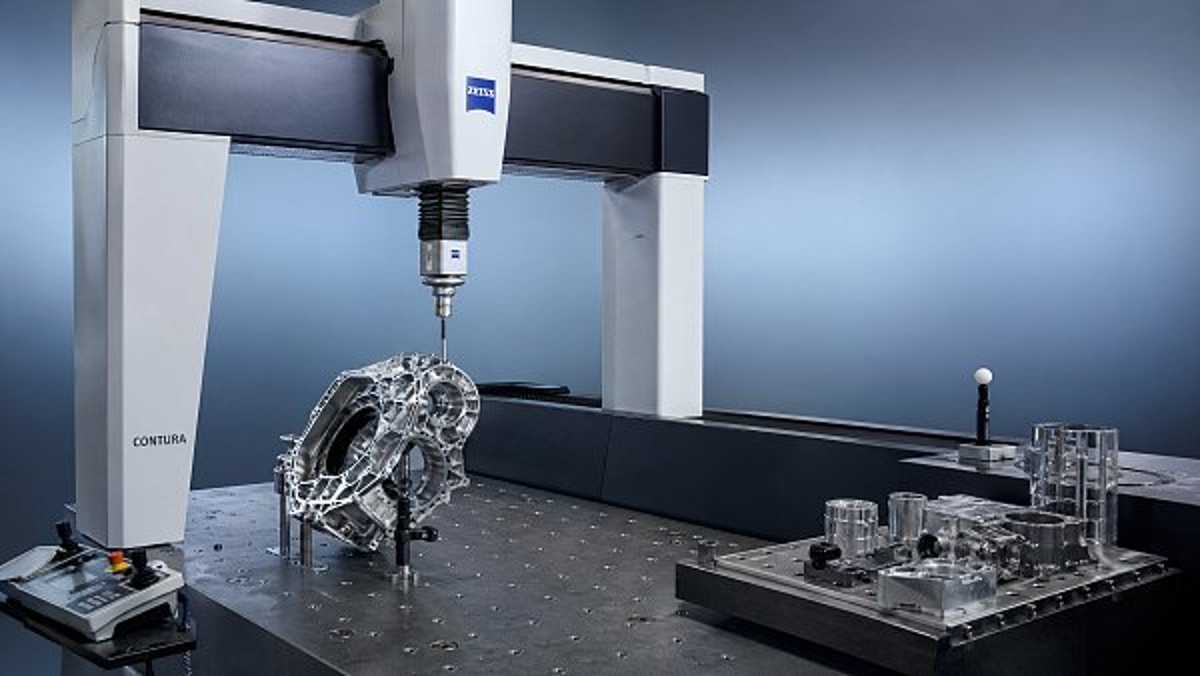
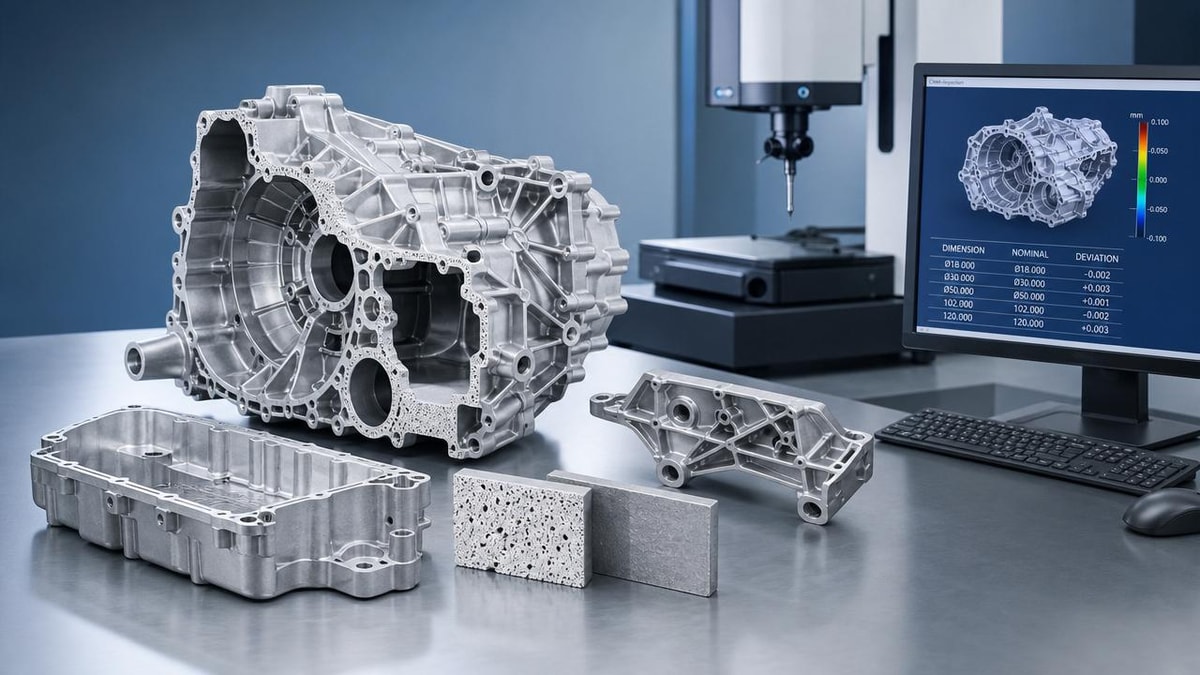
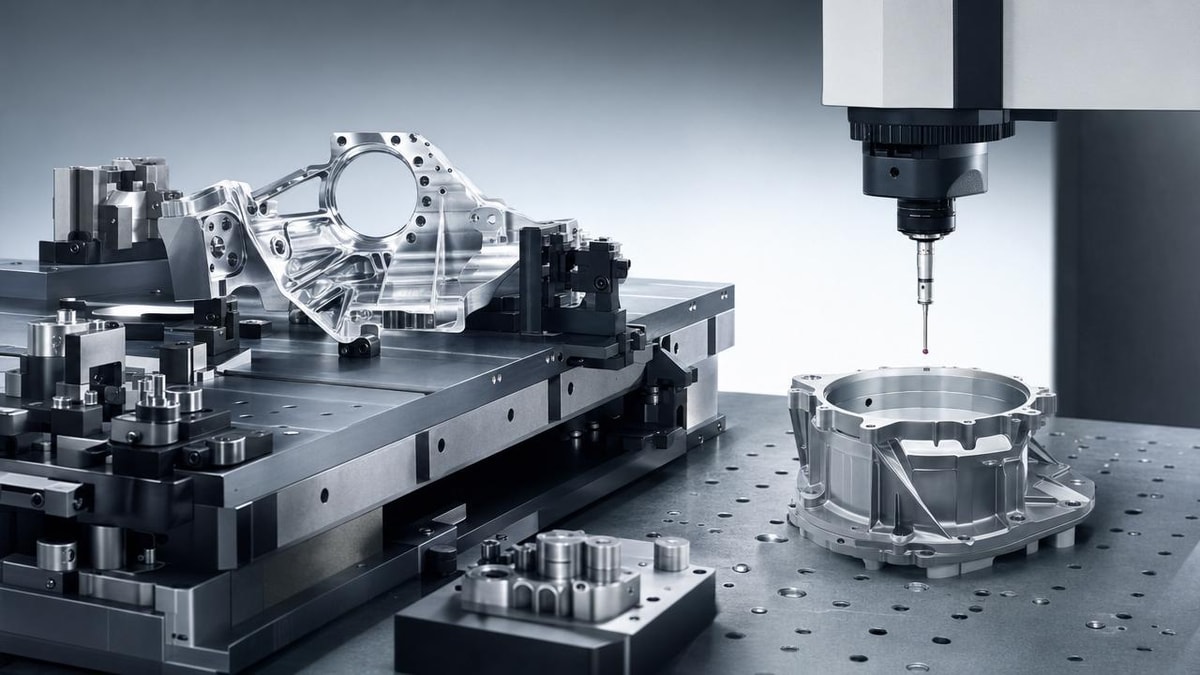
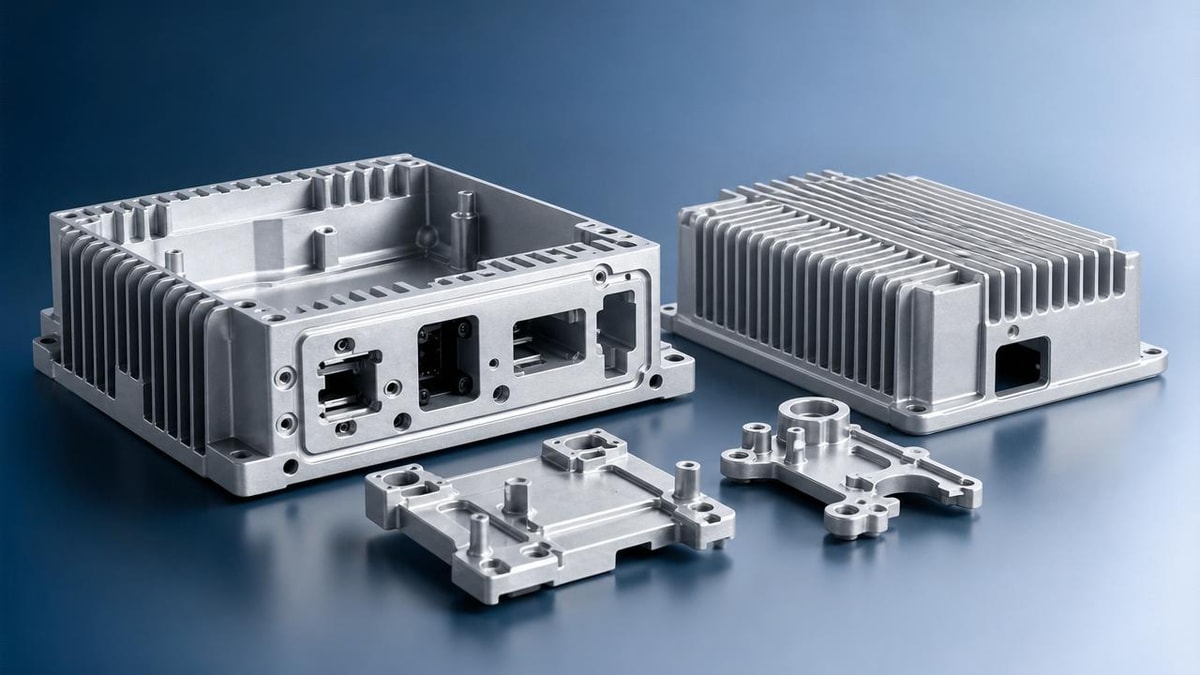
Complex parts challenge coordinate measuring machines because they combine tight tolerances, difficult access points, and large volumes of features. A medical implant tray, EV powertrain housing, or aerospace-style structural bracket may include 50 to 300 measured characteristics in a single program. Every added point, scan path, probe change, and alignment routine increases cycle time, yet reducing measurement content can elevate quality risk.
For technical evaluators, the first step is to define what “accuracy” means in context. On many shop floors, absolute volumetric accuracy is less important than process-capable repeatability at the inspection point. A CMM with measurement uncertainty well below the part tolerance band is usually sufficient. As a rule of thumb, many teams target a measurement system contribution of no more than 10% to 20% of the tolerance, especially for critical dimensions below 50 microns.
Speed must also be broken into components. Machine traverse rate, probe qualification time, scanning velocity, fixturing effort, and reporting automation all affect throughput. Two coordinate measuring machines with similar specification sheets may differ by 25% to 40% in effective cycle time once real programs are loaded. That gap matters in high-mix environments where setup changes occur 6 to 20 times per shift.
Typical sources of the trade-off
Higher accuracy often requires slower motion, more stable temperature control, finer probe strategies, and denser data capture. Faster inspection, by contrast, tends to rely on optimized path planning, reduced touch points, and more selective feature coverage. This is why coordinate measuring machines should be evaluated as systems rather than as static assets. Probe technology, software intelligence, and offline programming can be as important as the base machine frame.
- Tighter tolerances usually demand slower approach speeds and more stable environmental control, often within 20°C ±1°C.
- Complex geometries increase stylus changes, recalibration events, and collision-risk checks.
- Production urgency encourages shorter programs, but overly aggressive simplification can reduce defect detection.
The practical implication is clear: evaluators should define required measurement confidence, maximum acceptable inspection time, and the operational environment before narrowing technology choices. Without those three inputs, comparisons between bridge, gantry, horizontal-arm, or multisensor coordinate measuring machines become misleading.
How to Match CMM Architecture to Part Complexity
Different coordinate measuring machines are optimized for different inspection conditions. Small, tight-tolerance electronics components often favor compact bridge systems in controlled rooms, while large welded structures may require horizontal-arm or gantry configurations near production. For evaluators, architecture selection should begin with part envelope, access geometry, material behavior, and expected annual inspection volume rather than brand preference.
Bridge CMMs remain the default choice for many precision applications because they combine stiffness, repeatability, and broad software support. They are effective for machined metal parts, medical devices, connectors, and molded components within moderate measuring volumes. However, if parts exceed 1.5 to 2 meters, require side access, or involve flexible sheet-like structures, other formats may be more efficient.
Multisensor systems deserve special attention when surface diversity is high. Parts that combine reflective surfaces, small holes, freeform curves, and soft materials can benefit from tactile plus optical measurement. In these situations, coordinate measuring machines with integrated vision or laser capability may cut cycle time by 20% to 50% for non-contact features while preserving tactile verification for key datums.
Architecture comparison for technical evaluation
The table below summarizes common CMM configurations against evaluation criteria that matter in cross-sector B2B production environments.
The key takeaway is that architecture should be selected around inspection intent. If 80% of your workload involves small, critical dimensions, a precision bridge solution is often the rational baseline. If the workload is split between large-format geometry and moderate tolerances, access and handling efficiency may outweigh maximum accuracy.
Questions to ask during fit assessment
- What is the largest and smallest part envelope expected over the next 24 to 36 months?
- How many critical features require tactile verification versus optical capture?
- Will inspection occur in a metrology lab, at-line, or directly on the shop floor?
- How many new programs per month will be created, and how much offline programming support exists?
Key Performance Parameters Beyond the Spec Sheet
A common mistake in evaluating coordinate measuring machines is focusing only on stated volumetric accuracy. While this metric matters, it does not capture probe behavior, thermal response, software efficiency, or program robustness. In real operations, these factors often determine whether a CMM supports first-pass yield improvements or becomes a bottleneck during launch and ramp-up.
Probe configuration directly affects both speed and confidence. Touch-trigger probes may be sufficient for discrete prismatic features, but analog scanning becomes valuable when profile tolerances, roundness, or freeform continuity matter. For complex parts with 30 or more curved surfaces, scanning can reduce uncertainty caused by sparse point sampling, though it may increase program complexity and data management requirements.
Environmental capability is another underweighted parameter. Coordinate measuring machines placed near machining cells, molding lines, or assembly stations may face 2°C to 5°C daily swings, airborne contamination, and vibration. Machines with compensation routines can help, but compensation does not fully replace stable conditions. When tolerance zones fall below 25 microns, room control, base isolation, and material soak time become critical.
Parameter checklist for technical evaluators
The following table highlights practical parameters that should be validated during supplier discussions, acceptance planning, and pilot testing.
In many evaluations, software should be tested as rigorously as mechanics. Program portability, CAD import reliability, GD&T interpretation, SPC output, and MES or QMS connectivity can reduce total inspection labor by 15% to 30%. For supply chains that must share reports across multiple plants or suppliers, reporting consistency is not a convenience feature; it is a governance requirement.
What to validate during a pilot run
- Repeatability on at least 10 consecutive runs using the same fixture and operator.
- Reproducibility across 2 or 3 operators if the system will be shared between shifts.
- Program time with real reporting output enabled, not idealized measurement only.
- Sensitivity to part temperature and loading variation after normal shop-floor handling.
Selecting for Throughput Without Sacrificing Critical Quality
Technical evaluators often face pressure from operations teams to reduce inspection time. That pressure is valid, but the answer is not simply buying faster coordinate measuring machines. Throughput gains usually come from program strategy, fixture standardization, automation level, and inspection segmentation. A balanced system may combine full CMM validation for launch, reduced sampling for stable production, and targeted audits for process drift.
One effective strategy is characteristic prioritization. Not every feature needs the same measurement frequency or data density. Critical-to-function datums, sealing surfaces, and alignment interfaces may require 100% verification or frequent sampling, while cosmetic or secondary dimensions can be checked every 1 in 5 or 1 in 10 parts once process capability is proven. This approach shortens cycle time while preserving risk control.
Automation options also change the equation. Pallet systems, automatic stylus changing, barcode-driven program selection, and offline programming can meaningfully increase utilization. In a medium-volume cell, cutting manual intervention by even 3 to 5 minutes per part can return several productive hours per day. Over 250 operating days, that can materially reduce metrology labor burden and release capacity for new product introduction work.
Throughput improvement levers
The list below focuses on changes that typically improve output without undermining the intent of coordinate measuring machines in regulated or high-precision environments.
- Reduce redundant alignments by using repeatable fixtures and stable datum strategy.
- Use scanning only where feature continuity matters; use discrete points on simple geometry.
- Separate first-article inspection programs from in-process verification programs.
- Pre-qualify stylus sets so changeover does not add unnecessary downtime.
- Automate report templates to avoid manual formatting on every production lot.
It is also important to decide where the CMM sits in the quality chain. If upstream machines already provide in-process sensing, coordinate measuring machines can be used as reference systems and escalation tools rather than as universal gatekeepers. This layered strategy is increasingly relevant in smart electronics and automated manufacturing lines, where line-side checks filter routine variation and the CMM confirms geometric truth at scheduled intervals.
For procurement and technical review teams, the evaluation should include the cost of under-utilization. A premium machine with advanced capability may look attractive, but if only 30% of its functions will be used over the next 2 years, a better business case may be a modular platform with upgrade paths. The ideal selection is a machine that can absorb moderate complexity growth without forcing an overspend on unused capacity.
Implementation, Risk Control, and Supplier Evaluation
Even well-selected coordinate measuring machines can disappoint if implementation is weak. Technical evaluators should therefore assess the deployment model alongside the machine itself. Typical rollout has 4 phases: application review, acceptance planning, installation and calibration, then production validation. Depending on site readiness, this can take 2 to 8 weeks, with longer timelines if fixturing, software templates, or operator training must be built from scratch.
Acceptance criteria should be explicit before purchase. That means defining benchmark parts, target cycle times, reporting format, environmental conditions, and repeatability expectations. If complex parts include deep bores, thin walls, or deformable surfaces, those conditions must be represented in the acceptance plan. Too many projects validate coordinate measuring machines on simple coupons, then discover limitations during production launch.
Service capability is another procurement-critical variable. Preventive maintenance intervals, local application support, spare stylus availability, and software update policy all affect long-term usability. In distributed supply chains, response time matters. A vendor with a 24- to 48-hour service commitment may be far more valuable than one offering slightly better nominal accuracy but slow support in your operating region.
Supplier evaluation criteria
The matrix below can help technical evaluators compare proposals in a structured, decision-ready way.
A disciplined supplier review should also cover training. For many companies, the gap between theoretical CMM capability and actual production results comes down to user competence. A 2-day basic training package may be enough for routine operation, but programming-intensive environments often require 1 to 2 additional weeks of application-specific support.
Common evaluation risks
- Choosing based on machine accuracy alone while ignoring fixture and software constraints.
- Assuming lab performance will transfer unchanged to a production-adjacent environment.
- Underestimating the number of programs, stylus sets, and report templates needed in year 1.
- Failing to define acceptable cycle time per part family before procurement approval.
Practical FAQ for Technical Evaluators
How accurate do coordinate measuring machines need to be for complex parts?
The answer depends on tolerance, functional risk, and process variation. In many industrial applications, the goal is not the lowest possible machine error, but a measurement system that contributes a small and controlled share of total tolerance. For critical dimensions, many evaluators target a CMM uncertainty at roughly 10% to 20% of tolerance, then confirm repeatability under actual fixturing and temperature conditions.
When is a faster CMM a better choice than a more accurate one?
A faster system may be the better fit when tolerances are moderate, feature counts are high, and production pace makes inspection a bottleneck. If your process can tolerate slightly lower metrology capability but loses value through queue time, a higher-throughput solution with stable repeatability may produce better plant-level results. The decision should be made using real cycle-time studies, not catalog speeds.
Are multisensor coordinate measuring machines worth the added complexity?
They can be, especially for mixed-material parts, delicate surfaces, or micro features that are slow to inspect tactically. However, evaluators should verify correlation between sensor types and ensure the team can manage calibration, software workflows, and data interpretation. Multisensor value is strongest when it removes meaningful inspection time or expands feature access that a tactile-only strategy cannot handle efficiently.
What is a realistic implementation timeline?
For standard deployments, 2 to 8 weeks is a reasonable planning range from site readiness to stable use, although large systems and custom fixturing can take longer. A practical timeline should include machine delivery, installation, calibration, software setup, fixture validation, operator training, and at least 1 pilot part family. For high-mix production, programming workload often becomes the pacing factor.
For technical evaluators, the best coordinate measuring machines are the ones that match inspection risk, part complexity, and production reality in equal measure. Accuracy matters, but only when it is relevant to the tolerance and environment. Speed matters, but only when it does not weaken decision quality on critical features. A disciplined evaluation process—covering architecture, probe strategy, software, workflow, and service support—creates a far stronger procurement outcome than relying on specification headlines alone.
TradeNexus Pro helps industrial decision-makers compare technologies with a sharper focus on application fit, implementation risk, and long-term operational value. If you are assessing coordinate measuring machines for complex parts across advanced manufacturing, energy, electronics, healthcare technology, or supply chain-driven production networks, now is the right time to refine your evaluation framework.
Contact us to discuss your inspection requirements, request a tailored solution perspective, or explore more industry-grade guidance on coordinate measuring machines and precision quality workflows.
Get weekly intelligence in your inbox.
No noise. No sponsored content. Pure intelligence.
 May 03, 20265 Axis Milling Machines for Automotive: Buy New or Retrofit?5 Axis Milling Machines for Automotive: Buy New or Retrofit?
 May 03, 2026What to Check Before Sourcing OEM Machined Parts from IndiaWhat to Check Before Sourcing OEM Machined Parts from India
 May 03, 2026Why Sheet Metal Bending Machine Price Varies So MuchWhy Sheet Metal Bending Machine Price Varies So Much
 May 03, 2026Plastic Injection Molding Process Guide for Common Defect ControlPlastic Injection Molding Process Guide for Common Defect Control
 May 03, 2026Smart Manufacturing Technology Trends Reshaping Factory UpgradesSmart Manufacturing Technology Trends Reshaping Factory Upgrades
 May 03, 2026Automotive Die Casting Parts and the Hidden Cost of PorosityAutomotive Die Casting Parts and the Hidden Cost of Porosity
 May 03, 2026Assembly Line Robots: Flexibility Can Matter More Than SpeedAssembly Line Robots: Flexibility Can Matter More Than Speed
 May 03, 2026Smart Manufacturing in Energy: Which Upgrades Pay Back FasterSmart Manufacturing in Energy: Which Upgrades Pay Back Faster
 May 03, 2026Why Robotics Integration Fails After a Successful DemoWhy Robotics Integration Fails After a Successful Demo
 May 03, 2026How to Spot a Reliable Precision Components ManufacturerHow to Spot a Reliable Precision Components Manufacturer
 May 03, 2026Sheet Metal Bending Machine Specifications That Affect AccuracySheet Metal Bending Machine Specifications That Affect Accuracy
 May 03, 2026Oil and Gas Fabrication: Where Material Mismatch Gets ExpensiveOil and Gas Fabrication: Where Material Mismatch Gets Expensive
 May 03, 2026Construction Fabrication Delays Often Start at the Drawing StageConstruction Fabrication Delays Often Start at the Drawing Stage
 May 03, 2026Industrial Robotics Maintenance Guide for Fewer Surprise StopsIndustrial Robotics Maintenance Guide for Fewer Surprise Stops
 May 03, 2026Smart Manufacturing Technology Benefits Beyond Labor SavingsSmart Manufacturing Technology Benefits Beyond Labor Savings
 May 03, 2026Defense Components Need More Than Tight TolerancesDefense Components Need More Than Tight Tolerances
 May 03, 2026How to Vet a Die Casting Parts Supplier in MexicoHow to Vet a Die Casting Parts Supplier in Mexico
 May 03, 2026Food Processing Automation Systems and the Cost of DowntimeFood Processing Automation Systems and the Cost of Downtime
 May 03, 20265 Axis Milling for Aerospace: When Extra Precision Is Worth It5 Axis Milling for Aerospace: When Extra Precision Is Worth It
 May 03, 2026How OEM Medical Equipment Parts Affect Validation TimelinesHow OEM Medical Equipment Parts Affect Validation Timelines
 May 03, 2026Packaging Robotics Integration Problems That Slow CommissioningPackaging Robotics Integration Problems That Slow Commissioning
 May 03, 2026What Causes Rework in OEM Aerospace Machined PartsWhat Causes Rework in OEM Aerospace Machined Parts
 May 03, 2026Choosing Sheet Metal Bending Services in Europe Without DelaysChoosing Sheet Metal Bending Services in Europe Without Delays
 May 03, 2026Die Casting Parts for Electronics: Tolerance or Heat Control?Die Casting Parts for Electronics: Tolerance or Heat Control?
 May 03, 2026Marine Metal Fabrication Mistakes That Raise Corrosion RiskMarine Metal Fabrication Mistakes That Raise Corrosion Risk
 May 03, 2026When Welding Robots Improve Quality More Than ThroughputWhen Welding Robots Improve Quality More Than Throughput
 May 03, 2026Medical Device Molding Machines: What Specs Matter MostMedical Device Molding Machines: What Specs Matter Most