Hybrid Inverters for Industrial Use: When Grid-Tied Works Best
For industrial energy projects, choosing between flexibility and stability is rarely simple. Hybrid inverters grid-tied systems offer a practical path when facilities need reliable power management, peak shaving, and smoother renewable integration without abandoning grid support. For technical evaluators, understanding where this architecture delivers the strongest operational and economic value is essential before moving into system design or procurement decisions.
In most industrial cases, the short answer is this: grid-tied hybrid architecture works best when a site wants to reduce energy cost and improve resilience, but does not need to operate as a full-time off-grid system. It is especially valuable where utility power is available but expensive, unstable during peak periods, or increasingly paired with on-site solar and battery storage.
For technical assessment teams, the real question is not whether hybrid inverters are “better” in general. The real question is whether they solve the site’s specific operational constraints more effectively than a conventional grid-following solar inverter, a battery-only retrofit, or a full microgrid design. That decision depends on load profile, outage tolerance, tariff structure, control requirements, and expansion plans.
When do hybrid inverters grid-tied systems make the most sense in industrial settings?
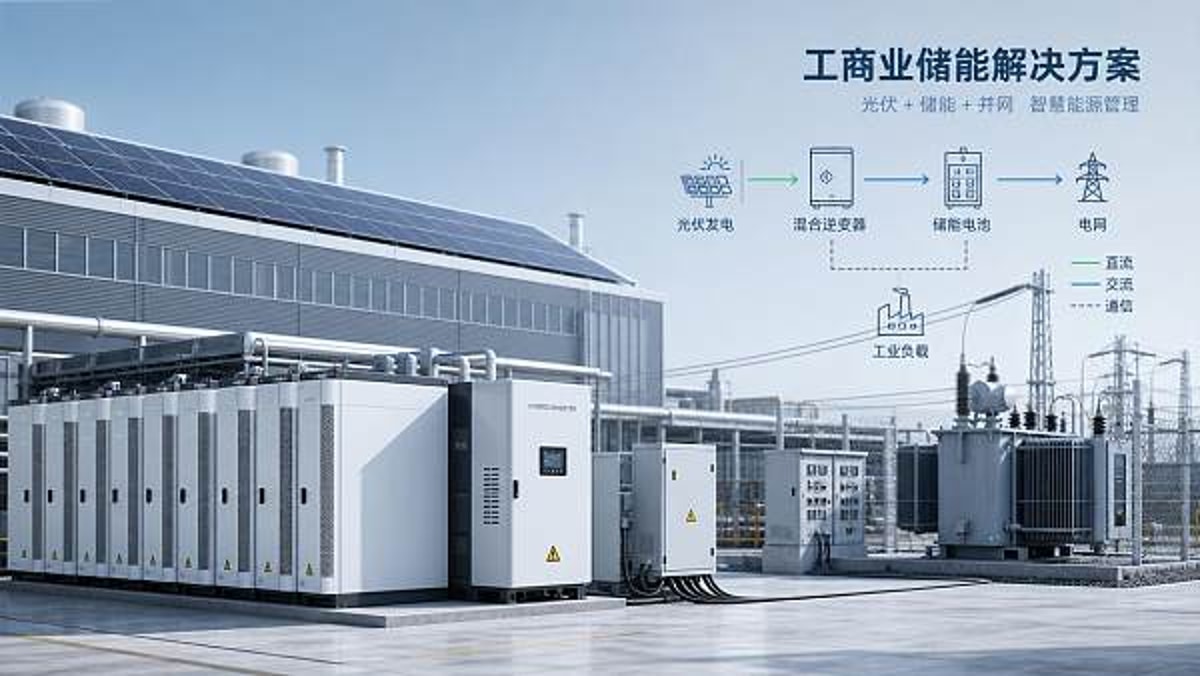
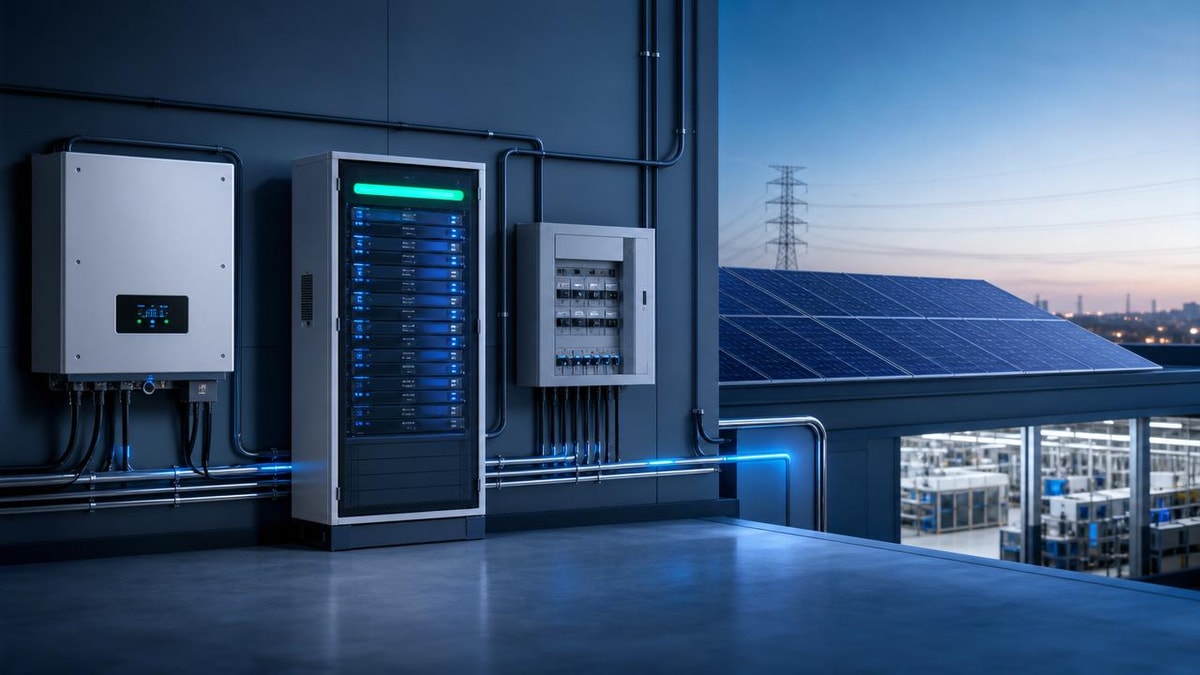
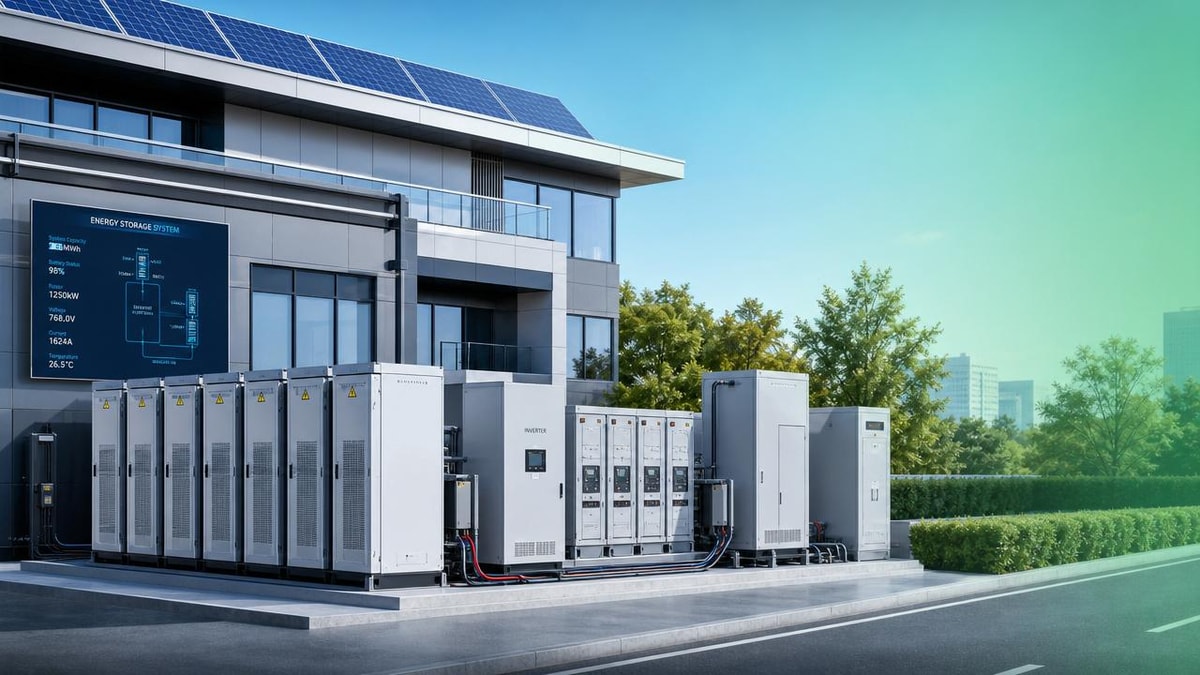
The strongest use case appears in facilities that already have dependable grid access but face three common pressures at once: rising electricity prices, demand charge exposure, and a need to integrate distributed energy resources without adding excessive control complexity. In these environments, hybrid inverters grid-tied systems create practical value by coordinating solar, battery storage, and utility supply through one operating framework.
Industrial plants rarely pursue energy projects for one reason alone. A manufacturer may want to shave peaks, support critical loads during short disturbances, improve power quality in selected circuits, and capture more solar self-consumption. A hybrid inverter can help balance these priorities because it is designed to manage bidirectional energy flow between generation, storage, loads, and the grid.
This architecture tends to work best when outages are occasional rather than constant. If the grid is available most of the time, but the site still needs backup capability for key assets, a hybrid solution often delivers a better cost-to-flexibility ratio than fully islanded infrastructure. It allows the business to preserve grid connectivity while adding intelligence around when to import, store, export, or discharge energy.
It is also attractive where step-by-step deployment matters. Many technical evaluators are not selecting a final twenty-year energy architecture all at once. They are planning a phased pathway: first solar, then storage, then load segmentation, then advanced controls. A grid-tied hybrid platform can support that progression more smoothly than systems built only for one-direction solar export.
What technical evaluators care about most before approving this architecture
Technical evaluation teams usually focus less on marketing claims and more on fit-for-purpose engineering. Their first concern is operating mode. They need to know whether the inverter can seamlessly support grid-parallel operation, controlled battery dispatch, and backup functionality without introducing switching delays that disrupt sensitive industrial processes.
The second concern is load criticality. Not every industrial load should sit behind a hybrid inverter-backed bus. Motors with high inrush current, harmonic-sensitive drives, compressors, thermal processes, and tightly sequenced automation systems all require careful compatibility checks. A technically sound project begins by separating essential loads, flexible loads, and non-critical loads rather than assuming one inverter strategy fits the entire plant.
Third, evaluators want visibility into control hierarchy. In industrial environments, the inverter does not operate in isolation. It may need to coordinate with energy management systems, building management systems, SCADA layers, generator controls, and utility interconnection requirements. The value of a hybrid design increases sharply when communication protocols, dispatch logic, and monitoring granularity are clear from the beginning.
Battery behavior is another major issue. Hybrid performance depends heavily on charge-discharge strategy, thermal management, round-trip efficiency, degradation assumptions, and warranty alignment with real industrial duty cycles. A system that looks attractive in a desktop model may underperform if the battery is undersized, cycled too aggressively for demand management, or unable to maintain expected output under ambient site conditions.
Finally, technical teams care about protection and compliance. Anti-islanding behavior, transfer logic, fault ride-through expectations, short-circuit contribution, grounding approach, and local interconnection rules all influence whether a grid-tied hybrid system can move from concept to approval without expensive redesign.
Why grid-tied often works better than off-grid in real industrial economics
Off-grid thinking can be attractive on paper because it promises energy independence. In practice, most industrial operators do not need total independence; they need better economics and controlled resilience. That distinction matters. Full off-grid systems require oversizing generation, storage, and often backup generation capacity to cover worst-case scenarios, seasonal variability, and operational uncertainty.
By contrast, grid-tied hybrid systems use the utility connection as a stabilizing asset rather than treating it as a weakness. The grid handles residual demand, seasonal imbalances, and unusual production peaks. This reduces the amount of battery capacity and inverter redundancy required, which often improves project economics significantly.
Demand charge management is one of the biggest reasons this model works well. In many industrial tariffs, a relatively small number of peak intervals drive a disproportionate share of total electricity cost. A hybrid inverter paired with storage can discharge strategically during those peaks, reducing billing demand without forcing the site to build enough storage to cover all load for long durations.
Self-consumption optimization is another advantage. Sites with daytime solar generation can use hybrid controls to shift excess production into battery storage instead of exporting at low compensation rates. That can materially improve project returns in regions where feed-in tariffs are weak, export limits exist, or utility policy favors behind-the-meter consumption.
There is also a resilience benefit, but one that should be framed correctly. A grid-tied hybrid system does not make the site immune to all outages. What it does is allow selected loads to ride through short disruptions or continue operating in backup mode for defined periods. For many facilities, that targeted resilience is far more cost-effective than designing for whole-site autonomy.
Where hybrid inverters deliver measurable value on the plant floor
Facilities with variable load profiles are strong candidates. For example, advanced manufacturing sites often run equipment with noticeable daytime ramp-up, shift-based peaks, and uneven energy intensity across production lines. Hybrid controls can be programmed to align solar generation and battery discharge with these patterns, increasing usable renewable penetration while avoiding unnecessary battery cycling.
Cold storage, healthcare technology manufacturing, electronics assembly, and logistics hubs also benefit when continuity for selected systems matters more than whole-building backup. In these cases, the hybrid inverter can prioritize refrigeration control systems, clean-room support equipment, data infrastructure, or automated handling systems during grid events.
Sites in areas with weak but not absent grid infrastructure are another good match. If voltage disturbances, short outages, or tariff volatility are common, a hybrid platform can improve operational smoothness without requiring a full microgrid investment. This middle-ground architecture is often underappreciated because it does not sound as dramatic as “energy independence,” yet it solves very real performance problems.
Industrial campuses planning electrification also deserve attention. As heat processes, vehicle fleets, and auxiliary systems become more electric, load management becomes more dynamic. A grid-tied hybrid system provides a flexible foundation for future changes because storage dispatch and energy prioritization can be updated more easily than fixed one-direction infrastructure.
How to assess whether the system is technically right for your site
A credible evaluation starts with interval load data, not equipment brochures. At minimum, technical teams should analyze 12 months of interval consumption, tariff structure, outage history, production scheduling, and projected load changes. Without these inputs, any claim about battery sizing, inverter rating, or return on investment is largely speculative.
Next, define the objective hierarchy. Is the top goal peak shaving, backup for critical loads, solar self-consumption, power quality support, carbon reduction, or phased electrification readiness? Many projects underperform because they are designed to do everything moderately well instead of doing the top two priorities exceptionally well.
Then map load criticality. Separate loads into three layers: must-support, should-support, and non-essential. This determines backup panel architecture, transfer strategy, battery reserve requirements, and inverter sizing logic. It also prevents expensive overdesign driven by the assumption that the entire plant requires the same resilience profile.
After that, evaluate control integration. Ask whether the inverter platform supports the communication standards your facility uses today and the interoperability it may need tomorrow. Technical evaluators should review API availability, Modbus or equivalent support, EMS compatibility, historian integration, alarm logic, and remote diagnostics. Operational visibility is not a luxury in industrial energy systems; it is part of risk control.
Model battery use cases separately. One scenario may optimize demand charge reduction, another backup duration, and another solar time-shifting. Combining all expected benefits into one optimistic dispatch model often leads to disappointment. A stronger method is to test multiple control strategies and identify which one remains robust under real production variability.
Finally, stress-test the business case against constraints. Include battery degradation, maintenance assumptions, inverter replacement horizon, utility interconnection delays, export limitations, ambient temperature effects, and future expansion needs. The best grid-tied hybrid projects are not the ones with the most aggressive forecasts, but the ones that remain attractive under conservative assumptions.
Common misconceptions that distort procurement decisions
One common misconception is that a hybrid inverter automatically delivers uninterrupted power to all loads. In reality, backup performance depends on system topology, load segregation, battery capacity, switchgear design, and transition behavior. “Hybrid” is not a guarantee of plant-wide continuity.
Another misconception is that adding storage always improves returns. Storage adds value only when the site’s tariff, load timing, export conditions, and resilience needs justify it. In some facilities, solar plus conventional grid-tied inverters may still be the better first step. In others, the battery is essential, but only if dispatch is tightly aligned with billing and operational realities.
Some buyers also assume the highest inverter power rating is the safest choice. Oversizing can increase capex without solving the actual bottleneck. The better question is whether the inverter can support the site’s most important operating modes, surge characteristics, and future scalability within a technically coherent architecture.
A final misconception is that grid connection reduces strategic value. For many industrial operators, grid connectivity is precisely what makes the hybrid model commercially attractive. It limits overbuild, supports flexibility, and creates a more balanced resilience strategy than either simple solar export or expensive off-grid design.
Questions technical evaluators should ask vendors before shortlisting
Ask how the system performs under partial-load and mixed-load conditions, not only at ideal nominal ratings. Industrial facilities rarely operate at steady-state textbook profiles. Real performance under fluctuating demand matters more than headline efficiency alone.
Request a clear explanation of transition behavior during grid disturbances. What is the transfer time? Which loads are supported? What happens under motor starting conditions or sudden step changes? These details often determine whether the system is usable in production settings.
Ask for evidence of integration with industrial controls. Can the platform communicate with site EMS or SCADA? What granularity of data is available? How are alarms handled? Can dispatch schedules be customized around production shifts and tariff windows?
Probe lifecycle assumptions. What battery throughput is assumed in the financial model? How does ambient temperature affect warranty and usable capacity? What maintenance interventions are expected for power electronics, cooling, and battery subsystems?
Finally, ask vendors to distinguish between modeled savings and controllable savings. A mature supplier should be able to explain which outcomes are highly dependable, which are site-dependent, and which require operational discipline to achieve consistently.
Bottom line: when grid-tied hybrid architecture is the right industrial choice
For technical evaluators, the value of hybrid inverters grid-tied systems lies in controlled flexibility. They are usually the best fit when a facility wants to reduce peak demand costs, improve renewable utilization, and protect selected critical loads, while still relying on the grid as a stabilizing resource.
They are less compelling when the site has minimal tariff pressure, no meaningful resilience requirement, or load characteristics that do not support storage-based optimization. They are also not a substitute for proper load analysis, protection design, and controls integration.
When applied to the right industrial scenario, however, grid-tied hybrid systems can create a strong middle path between basic solar interconnection and full microgrid complexity. That is why they increasingly stand out in industrial energy planning: not because they promise independence in every condition, but because they deliver measurable operational and economic value where the grid still matters.
The most effective procurement decisions will come from teams that evaluate this architecture through real site data, load criticality, control requirements, and conservative financial modeling. In industrial energy, the best system is rarely the most ambitious one. It is the one that matches technical reality, supports operations, and remains valuable as the facility evolves.
Get weekly intelligence in your inbox.
No noise. No sponsored content. Pure intelligence.
 May 02, 2026Commercial EV Charging Installation Costs Beyond the HardwareCommercial EV Charging Installation Costs Beyond the Hardware
 May 02, 2026Portable EV Charging Solutions: Where They Actually FitPortable EV Charging Solutions: Where They Actually Fit
 May 02, 2026Why Automotive Aluminum Extrusions Fail at Joining PointsWhy Automotive Aluminum Extrusions Fail at Joining Points
 May 02, 2026Sheet Metal Bending Services in the USA: What Drives Lead TimeSheet Metal Bending Services in the USA: What Drives Lead Time
 May 02, 2026Cost-Effective Factory Automation Often Starts Smaller Than ExpectedCost-Effective Factory Automation Often Starts Smaller Than Expected
 May 02, 2026Choosing a Solar Panels Wholesale Distributor Without Price TrapsChoosing a Solar Panels Wholesale Distributor Without Price Traps
 May 02, 2026High Efficiency PV Modules: When the Premium Makes SenseHigh Efficiency PV Modules: When the Premium Makes Sense
 May 02, 2026Why Data Centers Are Rethinking ESS Backup StrategyWhy Data Centers Are Rethinking ESS Backup Strategy
 May 02, 2026Do Agricultural PV Modules Need Different Frame Designs?Do Agricultural PV Modules Need Different Frame Designs?
 May 02, 2026How to Vet an OEM Machined Parts Supplier in GermanyHow to Vet an OEM Machined Parts Supplier in Germany
 May 02, 2026Custom Metal Fabrication for Aerospace: Cost vs CertificationCustom Metal Fabrication for Aerospace: Cost vs Certification
 May 02, 2026What Slows Rapid Prototyping for Automotive Parts MostWhat Slows Rapid Prototyping for Automotive Parts Most
 May 02, 2026Rapid Prototyping Choices That Cut Delays in Consumer ElectronicsRapid Prototyping Choices That Cut Delays in Consumer Electronics
 May 02, 2026Why Aerospace Parts Need More Than Tight Lathe TurningWhy Aerospace Parts Need More Than Tight Lathe Turning
 May 02, 2026What Fireproof Technology Really Changes in Lithium BatteriesWhat Fireproof Technology Really Changes in Lithium Batteries
 May 02, 2026Are Grid-Tied Hybrid Inverters Enough for Unstable Supply?Are Grid-Tied Hybrid Inverters Enough for Unstable Supply?
 May 02, 2026What a Solar Panels Wholesale Price List Does Not ShowWhat a Solar Panels Wholesale Price List Does Not Show
 May 02, 2026How Long Life Cycle Batteries Lower Replacement CostsHow Long Life Cycle Batteries Lower Replacement Costs
 May 02, 2026Lathe Turning Tolerances That Matter in Industrial MachineryLathe Turning Tolerances That Matter in Industrial Machinery
 May 02, 2026ESS for Commercial Buildings: Sizing Mistakes to AvoidESS for Commercial Buildings: Sizing Mistakes to Avoid
 May 02, 2026Warehouse Robotics Bottlenecks That Slow Automation ROIWarehouse Robotics Bottlenecks That Slow Automation ROI
 May 02, 2026Where Smart Manufacturing Pays Off First in Auto PlantsWhere Smart Manufacturing Pays Off First in Auto Plants
 May 02, 2026Marine Aluminum Extrusions: What Corrosion Ratings MissMarine Aluminum Extrusions: What Corrosion Ratings Miss
 May 02, 2026Plastic Injection Molding Machine Specs That Affect OutputPlastic Injection Molding Machine Specs That Affect Output
 May 02, 2026What Limits 5 Axis Milling Accuracy for Medical Devices?What Limits 5 Axis Milling Accuracy for Medical Devices?
 May 02, 2026How to Compare a Die Casting Parts Manufacturer in ChinaHow to Compare a Die Casting Parts Manufacturer in China
 May 02, 2026Why Oil and Gas Projects Still Rely on Steel ForgingWhy Oil and Gas Projects Still Rely on Steel Forging