Portable Power Station Costs in 2026: What Drives the Price?
In 2026, portable power stations are no longer priced as standalone devices—they reflect shifts in lithium ion batteries, solar battery integration, charging efficiency, safety standards, and global component sourcing. For buyers comparing options across backup power, wireless chargers, and broader energy systems like wind turbine applications, understanding what truly drives cost is essential for smarter technical, commercial, and procurement decisions.
For operators, the headline price is only the visible layer. Technical evaluators need to look at battery chemistry, inverter architecture, thermal protection, and cycle-life assumptions. Commercial teams care about landed cost, warranty exposure, and replacement intervals. Finance approvers often compare a 500Wh unit and a 2kWh unit as if they belong to the same cost logic, but the price drivers are fundamentally different.
In B2B purchasing, portable power stations now sit at the intersection of green energy, smart electronics, and resilient backup infrastructure. Whether used at field sites, for temporary medical equipment support, in mobile service fleets, or as part of hybrid solar battery deployments, cost analysis in 2026 requires a full-system view rather than a device-only view.
What the 2026 Price Tag Really Includes
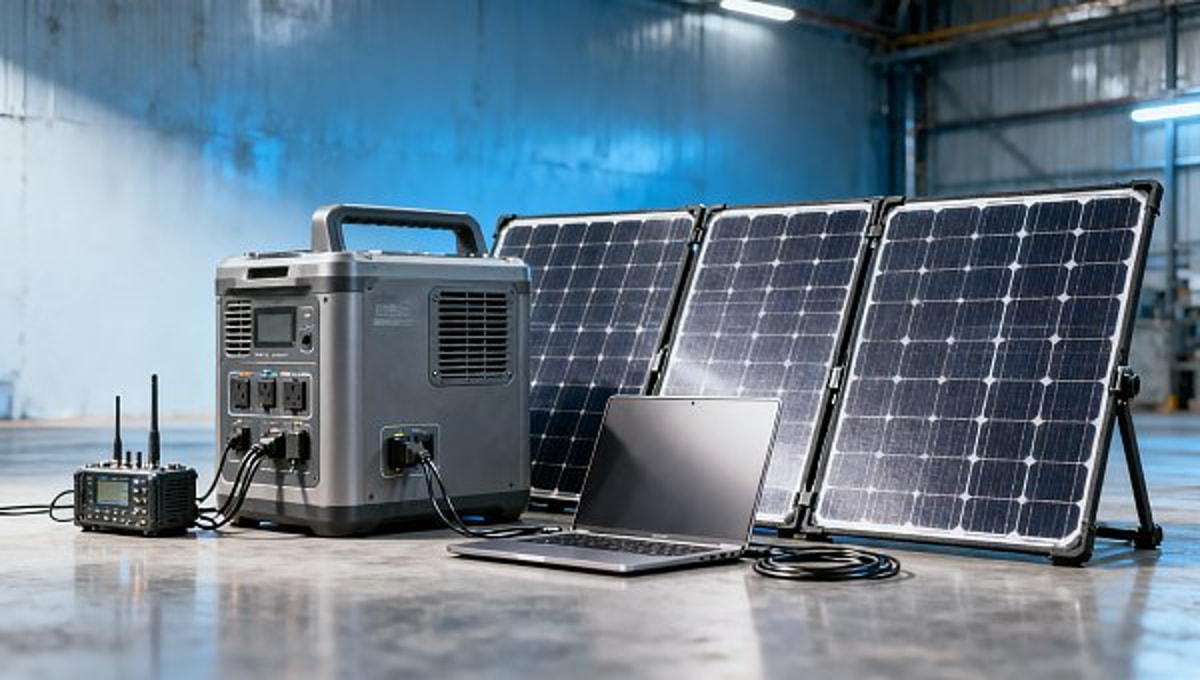
A portable power station cost in 2026 is typically shaped by five primary layers: battery pack value, power electronics, charging architecture, compliance and safety design, and supply chain overhead. For entry-level units in the 300Wh to 700Wh range, battery cells can account for roughly 35% to 50% of total manufacturing cost. For larger systems above 1.5kWh, the share of battery cost may remain dominant, but thermal management, battery management systems, and enclosure engineering become more significant.
Buyers often ask why two units with similar capacity can differ in price by 20% to 40%. The reason is usually not branding alone. A lower-cost model may use lower discharge-rate cells, fewer AC output protections, reduced surge handling, or a simpler cooling layout. A higher-cost model may support 1,000W to 2,400W continuous output, faster recharge within 1.5 to 3 hours, and higher cycle durability, which changes both cost and application value.
Another 2026 factor is system integration. Portable power stations are no longer isolated battery boxes. They increasingly connect with foldable solar panels, vehicle charging inputs, wireless chargers, remote monitoring apps, and modular expansion batteries. Each interface adds hardware, firmware validation, and testing cost. In procurement reviews, these integration features should be evaluated as operational cost reducers or deployment enablers, not just optional extras.
The table below breaks down the major cost components that usually influence B2B sourcing decisions across light-duty, mid-duty, and professional-use portable power stations.
The key takeaway is that capacity alone does not explain price. Two 1kWh units may have very different cost structures depending on output stability, charging speed, thermal design, and certification readiness. For project managers and quality teams, this is where technical cost transparency matters more than entry price.
Why “cost per watt-hour” is useful but incomplete
Cost per watt-hour remains a practical screening metric. For example, a unit priced at $600 with 1,000Wh storage equals $0.60 per Wh. Another priced at $950 with 1,024Wh equals about $0.93 per Wh. However, this metric ignores inverter quality, charge cycles, weather tolerance, and input flexibility.
In B2B settings, a more useful comparison is cost per usable lifetime kilowatt-hour. A lower-cost unit with 500 cycles to 80% capacity may look attractive upfront, but a higher-grade system with 2,000 to 3,500 cycles can produce a lower effective energy cost over 3 to 5 years of operation.
Battery Chemistry, Capacity, and Safety Standards as Core Price Drivers
Battery chemistry is one of the strongest price variables in portable power stations. In 2026, buyers commonly compare lithium iron phosphate and other lithium ion configurations because each affects weight, cycle life, safety profile, and cost. Lithium iron phosphate systems often carry a higher upfront price in some configurations due to pack design and size, but they may offer 2,000 to 4,000 cycles under moderate depth-of-discharge conditions, which improves long-term ownership value.
Capacity scaling is not linear. Moving from 500Wh to 1,000Wh does not simply double the price. Once systems exceed 1kWh, manufacturers often need stronger enclosures, better heat dissipation, higher-current pathways, and more robust BMS logic. This means a jump to 2kWh may increase price by 2.3x or even 2.8x depending on charging speed and output class.
Safety standards also have a measurable cost effect. Portable energy storage products intended for commercial circulation may require cell-level traceability, transport-compliant packaging, short-circuit protection validation, and thermal abuse testing. For quality control teams, these are not paperwork issues. They directly reduce the risk of field failure, shipment delays, insurance disputes, or product rejection in regulated markets.
A frequent mistake is to compare battery chemistry in isolation. The actual cost impact depends on pack architecture, internal spacing, balancing strategy, operating temperature range, and firmware accuracy. A well-designed battery pack rated for stable operation from 0°C to 40°C with low-voltage protection and multi-layer shutdown logic may justify a noticeably higher procurement price than a basic pack with limited field resilience.
How battery and safety choices affect commercial value
The table below compares common evaluation dimensions that influence both initial price and lifecycle suitability.
For finance and procurement teams, the decision should connect intended duty cycle with expected service life. If a unit will be used once per month for emergency backup, lower cycle life may be acceptable. If it will be used 4 to 6 times per week in mobile operations, battery durability and safety logic usually have a stronger impact on the real cost than the initial purchase figure.
Practical evaluation checklist
- Check rated capacity and usable output separately; not all stored energy is available at AC output.
- Ask for expected cycles to 80% remaining capacity under standard test conditions.
- Review operating temperature limits, especially for construction, healthcare support, or outdoor service teams.
- Confirm whether protections cover overload, short circuit, overheating, over-discharge, and abnormal charging.
Charging Speed, Solar Integration, and Power Electronics
Charging architecture has become a major differentiator in 2026 pricing. A portable power station that recharges from 0% to 80% in under 90 minutes requires more advanced thermal control, AC input conversion, and firmware-managed current handling than a unit that needs 5 to 7 hours. Faster charging improves uptime for field teams, rental fleets, and project-based operations, but it also raises component and testing cost.
Solar battery integration adds another pricing layer. Units designed for photovoltaic input need MPPT control, wider input voltage tolerance, and better charging conversion efficiency. For off-grid or semi-mobile applications, these features can reduce fuel use and extend runtime strategy. But they also require better engineering than a basic wall-charging-only system.
The inverter matters just as much as the battery. A pure sine wave inverter with stable output for sensitive electronics, healthcare support tools, communications devices, and smart electronics usually costs more than a simplified low-load architecture. Buyers using wireless chargers, routers, sensors, laptops, test instruments, or portable refrigeration need to verify both continuous output and surge capacity, often in the 2x startup range for motor-based loads.
In broader energy systems, some buyers compare portable power stations with applications adjacent to wind turbine service, telecom backup, temporary edge computing, or remote inspection equipment. In those cases, recharge time, solar compatibility, and output quality directly affect deployment economics. A cheaper unit that cannot recharge quickly between shifts may create hidden labor and downtime costs.
Typical charging and power specifications that influence cost
When comparing models, technical teams should score at least four electrical dimensions rather than focusing only on nameplate capacity.
- AC recharge speed, commonly ranging from 300W to 1,800W input.
- Solar input range, often between 12V and 150V depending on the platform.
- Continuous inverter output, frequently spanning 300W to 3,000W.
- Surge support, which may be 1.5x to 2x the continuous output for short periods.
These specifications influence not only bill-of-material cost but also field suitability. For example, a 2,000W inverter with a 4,000W surge profile can support more demanding startup loads than a 1,000W system, even if both have similar storage capacity.
Supply Chain Volatility, Logistics, and Regional Compliance
A large part of portable power station cost in 2026 is driven by where components come from and how they move through the supply chain. Battery cells, semiconductors, cooling fans, aluminum housings, and display modules may come from different production clusters. Even when raw material prices stabilize, transport rules for lithium batteries, port delays, packaging requirements, and insurance handling continue to affect landed cost.
Lead times can vary significantly by configuration. Standard small-capacity units may ship within 2 to 4 weeks, while customized commercial variants with private labeling, modified output sockets, or extra compliance documentation can take 6 to 10 weeks. For project managers, this difference matters more than list price when installations depend on fixed milestones.
Regional compliance also changes cost structure. Different markets may require specific plug formats, battery transport declarations, language labeling, recycling markings, or product documentation. These are not optional finishing details. They affect customs clearance, after-sales handling, and legal exposure. A non-compliant shipment can erase any savings gained through a lower unit price.
Commercial teams should also separate ex-works pricing from total procurement cost. Duties, freight mode, warehousing, inspection, and replacement reserve can add 12% to 30% above the quoted factory price depending on region, urgency, and battery transport classification.
A practical landed-cost view for B2B buyers
The following table shows how identical-looking purchase opportunities can result in very different total cost outcomes.
For enterprise decision-makers, the strongest negotiation position often comes from total-cost modeling rather than aggressive unit-price bargaining. A supplier with stable documentation, predictable lead times, and fewer failure claims may represent lower risk-adjusted cost over a 12- to 24-month procurement horizon.
Supply chain questions worth asking before approval
- What are the standard and peak-season lead times for the same configuration?
- Which parts are single-source versus multi-source?
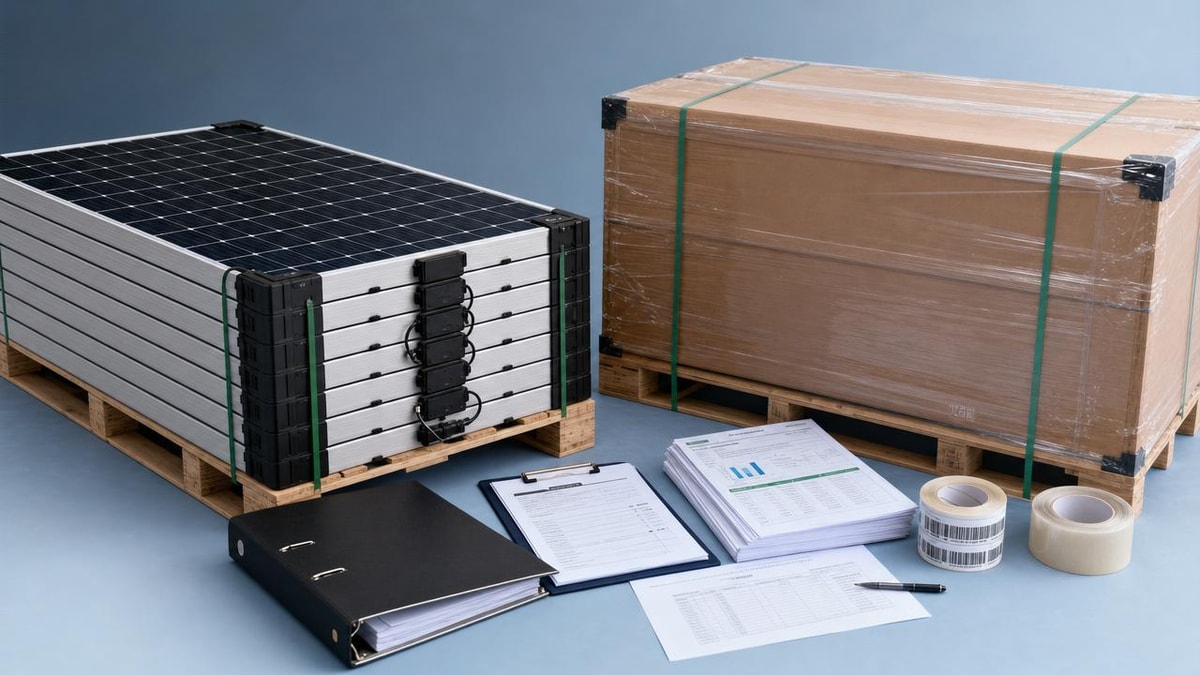
- What packaging method is used for battery transport and long-distance warehousing?
- How are spare units, warranty claims, and replacement shipments handled?
How Different Buyer Roles Should Evaluate Price
Portable power station costs should be reviewed through role-specific priorities. Operators usually focus on runtime, portability, outlet mix, and recharge speed. Technical evaluators emphasize inverter waveform, BMS behavior, battery cycle assumptions, and safety features. Commercial evaluators compare total delivered cost, service obligations, and supplier responsiveness. Financial approvers look at payback logic, asset life, and risk concentration.
For quality and safety managers, the lowest-cost unit can create the highest downstream burden if it overheats under continuous load, performs poorly in cold conditions, or lacks stable shutdown behavior. A portable power station used around healthcare technology, test instruments, or sensitive electronics should be reviewed for output consistency and environmental suitability, not just list price.
Project leaders should align specification to actual duty profile. A 300Wh to 700Wh platform may be enough for communication devices, wireless chargers, and sensor kits for 6 to 12 hours. A 1kWh to 2kWh system may be more appropriate for field laptops, compact tools, mobile diagnostic equipment, or temporary backup needs over an 8- to 24-hour cycle. Overspecification inflates capex; underspecification creates operational interruption.
The best purchasing process usually combines technical scoring, commercial scoring, and application testing. Even a short 3-step validation process can reduce poor-fit procurement decisions: document review, live load test, and recharge verification under realistic operating conditions.
Recommended B2B evaluation framework
- Define the actual load profile: average wattage, surge wattage, runtime target, and recharge window.
- Estimate lifecycle usage: emergency standby, weekly field deployment, or daily operational cycling.
- Model total ownership cost: purchase, transport, installation readiness, maintenance, and replacement risk.
- Validate with one pilot batch before full-volume procurement if annual demand exceeds 50 to 100 units.
This framework is especially useful for companies sourcing across advanced manufacturing, green energy service operations, smart electronics deployment, and mobile support environments where portable power stations serve as a flexible infrastructure layer rather than a consumer gadget.
Common pricing mistakes to avoid
- Comparing battery capacity without checking usable AC output and conversion loss.
- Ignoring recharge speed when equipment must return to service within one shift.
- Overlooking weight and portability in applications involving stairs, remote sites, or frequent transport.
- Approving based on sample performance without confirming production-level consistency and documentation quality.
FAQ: Portable Power Station Cost Questions Buyers Ask in 2026
How much more should buyers expect to pay for faster charging?
As a working rule, models with significantly faster AC charging may cost 10% to 25% more than slower-charging units in the same capacity band. The premium often reflects improved thermal controls, higher-grade power electronics, and more extensive firmware protection. For teams that redeploy equipment within the same day, the extra cost may be justified by lower downtime.
Is a larger portable power station always better value?
Not necessarily. Larger systems can offer lower nominal cost per Wh, but they also add weight, transport constraints, and higher replacement exposure. If the actual load is under 200W and runtime needs are 4 to 6 hours, a smaller system may be more efficient operationally. Value depends on fit, not size alone.
Do solar-ready units always cost more?
Usually yes, but the premium can be moderate or substantial depending on the input design. A unit with basic solar compatibility may add limited cost, while a model with wider MPPT range, higher voltage acceptance, and optimized solar charging efficiency can carry a more noticeable premium. For off-grid or hybrid backup use, the added cost may reduce fuel or generator dependency over time.
What is the best way to compare supplier quotations?
Use a normalized comparison sheet that includes capacity, continuous output, surge rating, recharge speed, battery cycle range, safety protections, warranty period, lead time, and delivered cost. If possible, compare at least 3 suppliers on the same application profile rather than on marketing descriptions.
In 2026, portable power station costs are shaped by much more than battery size. Battery chemistry, charging speed, solar integration, inverter quality, safety engineering, and global logistics all affect the final number buyers see. The most effective sourcing approach is to connect technical specifications with duty cycle, service life, and total landed cost rather than focusing on a single purchase price.
For procurement directors, engineers, and commercial teams working across green energy, smart electronics, advanced manufacturing, and mobile backup applications, the right portable power station is the one that balances performance, compliance, and lifecycle economics. To evaluate current market options with stronger confidence, contact TradeNexus Pro to get tailored sourcing insight, compare solution paths, and explore more practical procurement strategies.
Get weekly intelligence in your inbox.
No noise. No sponsored content. Pure intelligence.
 May 02, 2026Commercial EV Charging Installation Costs Beyond the HardwareCommercial EV Charging Installation Costs Beyond the Hardware
 May 02, 2026Portable EV Charging Solutions: Where They Actually FitPortable EV Charging Solutions: Where They Actually Fit
 May 02, 2026Why Automotive Aluminum Extrusions Fail at Joining PointsWhy Automotive Aluminum Extrusions Fail at Joining Points
 May 02, 2026Sheet Metal Bending Services in the USA: What Drives Lead TimeSheet Metal Bending Services in the USA: What Drives Lead Time
 May 02, 2026Cost-Effective Factory Automation Often Starts Smaller Than ExpectedCost-Effective Factory Automation Often Starts Smaller Than Expected
 May 02, 2026Choosing a Solar Panels Wholesale Distributor Without Price TrapsChoosing a Solar Panels Wholesale Distributor Without Price Traps
 May 02, 2026High Efficiency PV Modules: When the Premium Makes SenseHigh Efficiency PV Modules: When the Premium Makes Sense
 May 02, 2026Why Data Centers Are Rethinking ESS Backup StrategyWhy Data Centers Are Rethinking ESS Backup Strategy
 May 02, 2026Do Agricultural PV Modules Need Different Frame Designs?Do Agricultural PV Modules Need Different Frame Designs?
 May 02, 2026How to Vet an OEM Machined Parts Supplier in GermanyHow to Vet an OEM Machined Parts Supplier in Germany
 May 02, 2026Custom Metal Fabrication for Aerospace: Cost vs CertificationCustom Metal Fabrication for Aerospace: Cost vs Certification
 May 02, 2026What Slows Rapid Prototyping for Automotive Parts MostWhat Slows Rapid Prototyping for Automotive Parts Most
 May 02, 2026Rapid Prototyping Choices That Cut Delays in Consumer ElectronicsRapid Prototyping Choices That Cut Delays in Consumer Electronics
 May 02, 2026Why Aerospace Parts Need More Than Tight Lathe TurningWhy Aerospace Parts Need More Than Tight Lathe Turning
 May 02, 2026What Fireproof Technology Really Changes in Lithium BatteriesWhat Fireproof Technology Really Changes in Lithium Batteries
 May 02, 2026Are Grid-Tied Hybrid Inverters Enough for Unstable Supply?Are Grid-Tied Hybrid Inverters Enough for Unstable Supply?
 May 02, 2026What a Solar Panels Wholesale Price List Does Not ShowWhat a Solar Panels Wholesale Price List Does Not Show
 May 02, 2026How Long Life Cycle Batteries Lower Replacement CostsHow Long Life Cycle Batteries Lower Replacement Costs
 May 02, 2026Lathe Turning Tolerances That Matter in Industrial MachineryLathe Turning Tolerances That Matter in Industrial Machinery
 May 02, 2026ESS for Commercial Buildings: Sizing Mistakes to AvoidESS for Commercial Buildings: Sizing Mistakes to Avoid
 May 02, 2026Warehouse Robotics Bottlenecks That Slow Automation ROIWarehouse Robotics Bottlenecks That Slow Automation ROI
 May 02, 2026Where Smart Manufacturing Pays Off First in Auto PlantsWhere Smart Manufacturing Pays Off First in Auto Plants
 May 02, 2026Marine Aluminum Extrusions: What Corrosion Ratings MissMarine Aluminum Extrusions: What Corrosion Ratings Miss
 May 02, 2026Plastic Injection Molding Machine Specs That Affect OutputPlastic Injection Molding Machine Specs That Affect Output
 May 02, 2026What Limits 5 Axis Milling Accuracy for Medical Devices?What Limits 5 Axis Milling Accuracy for Medical Devices?
 May 02, 2026How to Compare a Die Casting Parts Manufacturer in ChinaHow to Compare a Die Casting Parts Manufacturer in China
 May 02, 2026Why Oil and Gas Projects Still Rely on Steel ForgingWhy Oil and Gas Projects Still Rely on Steel Forging