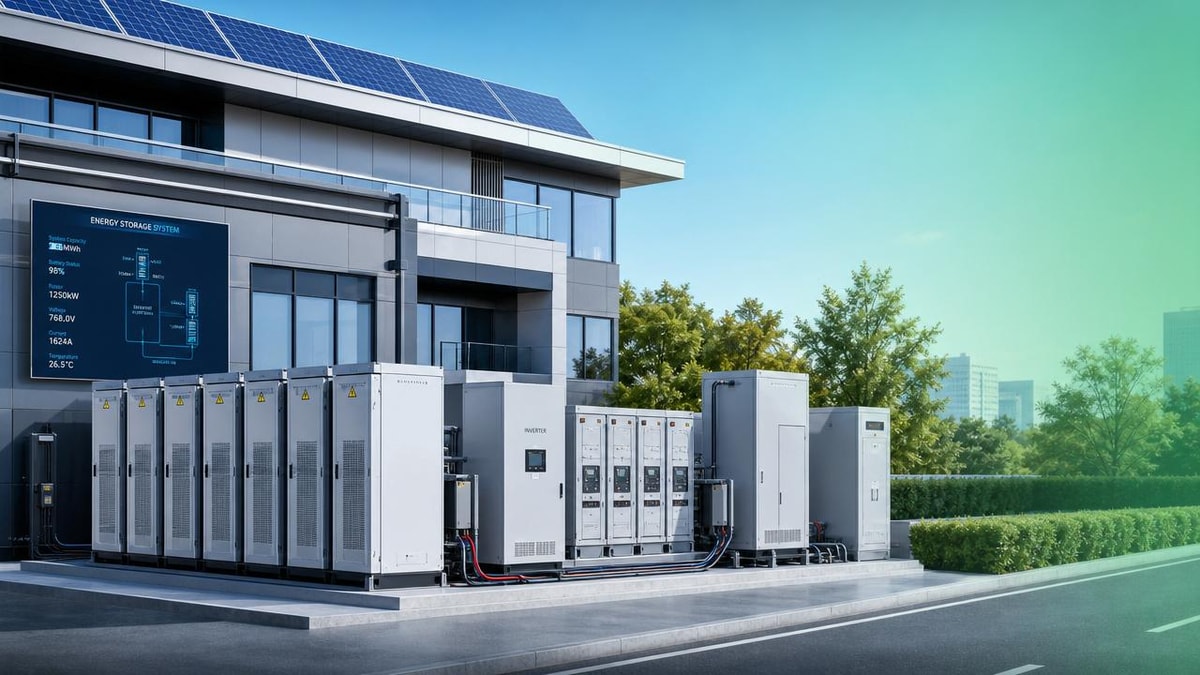
Smart Charging Solutions That Fix Peak Load at EV Stations
As EV demand accelerates, peak load is becoming a costly bottleneck for operators and project leaders. This article explores how EV charging stations smart charging solutions can balance power distribution, reduce infrastructure strain, and improve site efficiency. For engineering and project management teams, understanding these strategies is essential to building scalable, reliable charging networks.
Why Scenario Differences Matter More Than the Technology Label
For project managers, the real question is rarely whether smart charging is useful. The more practical question is which version of EV charging stations smart charging solutions fits a specific site, utility constraint, traffic pattern, and investment model. A highway fast-charging hub, a workplace parking lot, a logistics depot, and a mixed-use retail site all experience peak demand very differently. If teams treat them as identical, they often oversize transformers, misjudge charger utilization, or create bottlenecks that only appear after commissioning.
Peak load is not just an electrical issue. It affects capital expenditure, permitting timelines, service-level commitments, future expansion, and even user satisfaction. In some projects, the problem is a short but intense demand spike when multiple DC fast chargers operate simultaneously. In others, the issue is a long-duration evening load driven by fleet returns or residential-adjacent behavior. Smart charging solutions work best when they are matched to the actual load profile rather than sold as a one-size-fits-all control layer.
This is especially relevant for enterprise decision-makers served by TradeNexus Pro, where infrastructure choices must support operational resilience and measurable business outcomes. In that context, EV charging stations smart charging solutions should be assessed as a site strategy, not only as a charger feature.
Where Peak Load Problems Usually Appear First
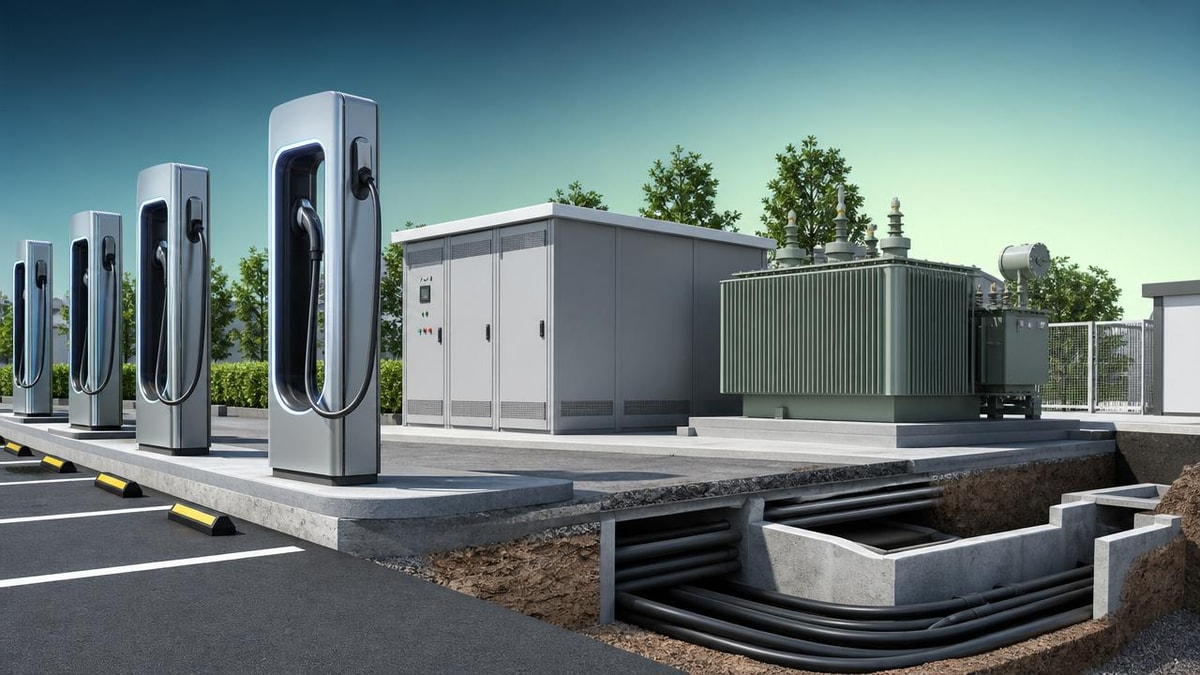
Peak load stress tends to appear in projects with one or more of the following characteristics: limited grid capacity, clustered user arrival times, aggressive fast-charging deployment, or expansion plans that outgrow the original electrical design. Project leaders should identify these triggers early because they shape whether load balancing, scheduled charging, battery buffering, or energy management integration is the right response.
- Sites with high charger concurrency, especially public fast-charging corridors
- Facilities with strict demand charges or limited utility upgrade options
- Fleet depots where vehicles return during narrow operational windows
- Commercial real estate projects sharing capacity with HVAC, refrigeration, or production loads
- Phased rollouts where future charger additions are expected within 12 to 36 months
In each of these cases, EV charging stations smart charging solutions can reduce infrastructure strain, but the implementation logic changes by scenario. Some sites need dynamic load allocation in real time. Others benefit more from tariff-aware scheduling or site-level energy orchestration.
Scenario Comparison: What Different Sites Need From Smart Charging
The table below helps engineering teams compare common deployment environments and the type of EV charging stations smart charging solutions that typically create the most value.
Scenario 1: Public Fast-Charging Sites Need Real-Time Control, Not Simple Limits
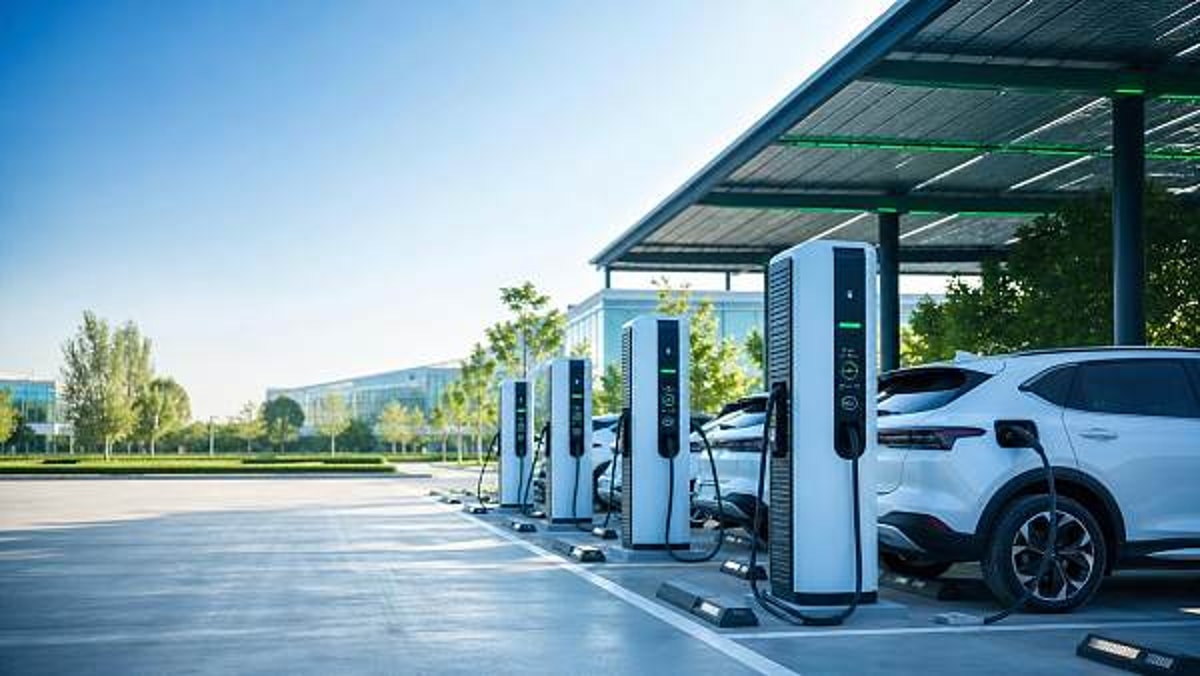
At public DC fast-charging locations, demand volatility is the central challenge. Vehicles may arrive in waves, and users expect rapid turnaround. A fixed power cap across all chargers may protect the feeder, but it can damage queue performance and reduce revenue during high-traffic periods. In this setting, EV charging stations smart charging solutions should prioritize dynamic power distribution based on active sessions, charger occupancy, and minimum service thresholds.
Project teams should examine whether the control system can reallocate unused capacity between chargers in seconds rather than minutes. They should also verify support for demand charge management, because monthly utility penalties can erode the business case even when energy throughput looks strong. If the site expects expansion, modular controls and battery energy storage compatibility become important. For corridor projects, the best solution is often the one that preserves customer-facing charging speed while keeping the site under a firm import limit.
Scenario 2: Workplace and Campus Charging Benefit From Flexible Scheduling
Office parks, university campuses, hospitals, and similar long-dwell environments usually do not need every vehicle charged at maximum power immediately. Here, EV charging stations smart charging solutions create value by spreading load over several hours and aligning charging with lower-cost periods or available on-site solar generation.
The key design decision is fairness versus urgency. Some organizations prefer equal access, while others prioritize role-based users, visitor turnover, or late-arriving vehicles. Smart charging software should therefore support scheduling windows, user groups, and target state-of-charge rules. For project managers, the gain is often substantial: more charging ports can be installed behind the same electrical capacity if power is intelligently staggered.
Another advantage in this scenario is easier integration with sustainability goals. When charging demand is flexible, sites can better synchronize with rooftop PV, carbon reporting objectives, and internal energy policies. That makes workplace charging one of the most suitable environments for lower-cost, scalable EV charging stations smart charging solutions.
Scenario 3: Fleet Depots Require Operational Guarantees Above All Else
Fleet charging is different because the business risk is tied to vehicle readiness. Buses, delivery vans, service vehicles, and municipal fleets typically return according to shift logic, not consumer behavior. If too many assets plug in simultaneously, a depot can hit a severe peak, but simply throttling chargers without operational rules may leave critical vehicles undercharged by departure time.
In this scenario, EV charging stations smart charging solutions should be evaluated against dispatch schedules, route energy requirements, and fleet management data. Priority-based charging, departure-time optimization, and exception handling are more important than generic load balancing claims. Some depots also need coordination with refrigeration, maintenance equipment, or warehouse processes that compete for electrical capacity overnight.
For engineering leaders, the right question is not only how much connected load exists, but how much synchronized charging demand appears within the shortest operational window. Solutions that can convert this demand into staged, rule-based charging are usually more valuable than simply adding more grid capacity.
Scenario 4: Commercial and Mixed-Use Sites Must Protect Core Building Loads
Retail centers, hotels, residential-commercial complexes, and industrial parks often face a more complicated challenge: EV load is only one part of the site’s energy picture. HVAC, elevators, refrigeration, and process equipment may already create strong peaks. In these environments, EV charging stations smart charging solutions need to be building-aware, not charger-only.
A practical approach is to set site-level power ceilings and dynamically adjust charging capacity according to total building demand. During hot afternoons or production peaks, EV charging power can be reduced temporarily to avoid service disruptions or costly demand spikes. This is where integration with an energy management system becomes especially useful. Project teams should also confirm whether local electrical codes, tenant agreements, or backup power requirements limit how aggressively loads can be shifted.
How to Judge Which Smart Charging Strategy Fits Your Project
Before selecting vendors or finalizing specifications, project leaders should assess a few site-specific questions. These questions help prevent mismatch between business goals and system architecture.
- Is the main risk utility upgrade cost, demand charge exposure, customer wait time, or fleet readiness?
- Are charging sessions short and urgent, or long and flexible?
- Will EV load compete with other mission-critical building loads?
- Is phased expansion expected, and can the control platform scale with added chargers?
- Does the site need solar, storage, or fleet software integration from day one or later phases?
These questions move the discussion from product features to deployment suitability. For many organizations, that shift is where the best ROI decisions are made.
Common Misjudgments That Create Expensive Rework
One common mistake is assuming nameplate charger power equals continuous site demand. Actual usage may be much lower or, in some fast-charge scenarios, more concentrated than expected. Another frequent error is treating all users as equal when the site actually has priority classes, such as fleet vehicles, premium users, or short-stay visitors.
Teams also underestimate data and control interoperability. If EV charging stations smart charging solutions cannot communicate well with building systems, tariff data, or fleet schedules, their theoretical benefits often remain unrealized. Finally, some projects optimize only for today’s installation cost and forget the expansion path. A cheaper system that cannot support future load orchestration may lead to redesign, stranded assets, or utility renegotiation later.
FAQ for Project Managers Evaluating EV Charging Stations Smart Charging Solutions
Can smart charging avoid a utility service upgrade?
In many cases, yes. If the site has flexible charging windows or diversified usage, smart charging can keep total demand within existing capacity. However, very high-throughput fast-charging hubs may still need service upgrades, storage, or both.
Which sites see the fastest payback?
Workplace, fleet, and mixed-use sites often achieve clear savings because they can reduce demand charges, defer infrastructure upgrades, and raise charger count without proportionally increasing electrical capacity.
Is dynamic load balancing enough on its own?
Not always. Dynamic balancing is useful, but some scenarios also require scheduling, user prioritization, storage coordination, or building energy integration to fully solve peak load constraints.
A Practical Next Step for Scalable Charging Projects
The strongest EV infrastructure plans begin with a scenario-based load assessment, not a charger catalog. For project management teams, that means mapping user behavior, site constraints, business objectives, and expansion assumptions before selecting EV charging stations smart charging solutions. When the charging strategy reflects the real operating scenario, teams can reduce peak load risk, improve asset utilization, and build a more defensible investment case.
For organizations navigating complex procurement or global deployment decisions, a platform such as TradeNexus Pro can add value by surfacing expert analysis, technology comparisons, and supply-side intelligence across green energy and related sectors. The next step is to validate your charging scenario, identify the limiting factor behind peak demand, and align the smart charging architecture with how the site will actually operate over time.
Get weekly intelligence in your inbox.
No noise. No sponsored content. Pure intelligence.
 May 02, 2026Commercial EV Charging Installation Costs Beyond the HardwareCommercial EV Charging Installation Costs Beyond the Hardware
 May 02, 2026Portable EV Charging Solutions: Where They Actually FitPortable EV Charging Solutions: Where They Actually Fit
 May 02, 2026Why Automotive Aluminum Extrusions Fail at Joining PointsWhy Automotive Aluminum Extrusions Fail at Joining Points
 May 02, 2026Sheet Metal Bending Services in the USA: What Drives Lead TimeSheet Metal Bending Services in the USA: What Drives Lead Time
 May 02, 2026Cost-Effective Factory Automation Often Starts Smaller Than ExpectedCost-Effective Factory Automation Often Starts Smaller Than Expected
 May 02, 2026Choosing a Solar Panels Wholesale Distributor Without Price TrapsChoosing a Solar Panels Wholesale Distributor Without Price Traps
 May 02, 2026High Efficiency PV Modules: When the Premium Makes SenseHigh Efficiency PV Modules: When the Premium Makes Sense
 May 02, 2026Why Data Centers Are Rethinking ESS Backup StrategyWhy Data Centers Are Rethinking ESS Backup Strategy
 May 02, 2026Do Agricultural PV Modules Need Different Frame Designs?Do Agricultural PV Modules Need Different Frame Designs?
 May 02, 2026How to Vet an OEM Machined Parts Supplier in GermanyHow to Vet an OEM Machined Parts Supplier in Germany
 May 02, 2026Custom Metal Fabrication for Aerospace: Cost vs CertificationCustom Metal Fabrication for Aerospace: Cost vs Certification
 May 02, 2026What Slows Rapid Prototyping for Automotive Parts MostWhat Slows Rapid Prototyping for Automotive Parts Most
 May 02, 2026Rapid Prototyping Choices That Cut Delays in Consumer ElectronicsRapid Prototyping Choices That Cut Delays in Consumer Electronics
 May 02, 2026Why Aerospace Parts Need More Than Tight Lathe TurningWhy Aerospace Parts Need More Than Tight Lathe Turning
 May 02, 2026What Fireproof Technology Really Changes in Lithium BatteriesWhat Fireproof Technology Really Changes in Lithium Batteries
 May 02, 2026Are Grid-Tied Hybrid Inverters Enough for Unstable Supply?Are Grid-Tied Hybrid Inverters Enough for Unstable Supply?
 May 02, 2026What a Solar Panels Wholesale Price List Does Not ShowWhat a Solar Panels Wholesale Price List Does Not Show
 May 02, 2026How Long Life Cycle Batteries Lower Replacement CostsHow Long Life Cycle Batteries Lower Replacement Costs
 May 02, 2026Lathe Turning Tolerances That Matter in Industrial MachineryLathe Turning Tolerances That Matter in Industrial Machinery
 May 02, 2026ESS for Commercial Buildings: Sizing Mistakes to AvoidESS for Commercial Buildings: Sizing Mistakes to Avoid
 May 02, 2026Warehouse Robotics Bottlenecks That Slow Automation ROIWarehouse Robotics Bottlenecks That Slow Automation ROI
 May 02, 2026Where Smart Manufacturing Pays Off First in Auto PlantsWhere Smart Manufacturing Pays Off First in Auto Plants
 May 02, 2026Marine Aluminum Extrusions: What Corrosion Ratings MissMarine Aluminum Extrusions: What Corrosion Ratings Miss
 May 02, 2026Plastic Injection Molding Machine Specs That Affect OutputPlastic Injection Molding Machine Specs That Affect Output
 May 02, 2026What Limits 5 Axis Milling Accuracy for Medical Devices?What Limits 5 Axis Milling Accuracy for Medical Devices?
 May 02, 2026How to Compare a Die Casting Parts Manufacturer in ChinaHow to Compare a Die Casting Parts Manufacturer in China
 May 02, 2026Why Oil and Gas Projects Still Rely on Steel ForgingWhy Oil and Gas Projects Still Rely on Steel Forging