MRI Machine Components: OEM or Aftermarket?
When sourcing MRI machine components, buyers often face a critical choice: OEM or aftermarket? For procurement teams, operators, and decision-makers in healthcare technology, this decision affects cost, compliance, uptime, and long-term performance. As remote patient monitoring, portable ultrasound scanners, smart glucometers, digital blood pressure monitors, wearable ECG monitors, and telemedicine carts reshape care delivery, understanding component sourcing strategy becomes essential for managing risk and maximizing equipment value.
In practice, the OEM versus aftermarket decision is rarely just about unit price. It influences preventive maintenance cycles, replacement lead times, system compatibility, image quality stability, service documentation, and regulatory confidence across hospitals, imaging centers, distributors, and third-party service organizations.
MRI systems are capital-intensive assets with long operating lives that often span 7 to 15 years. During that period, even a single failed coil interface, gradient amplifier subassembly, cooling component, power module, or patient table part can create expensive downtime. For buyers evaluating parts strategy, the right question is not simply which option is cheaper, but which option fits the risk profile, service model, and lifecycle plan of the equipment fleet.
Understanding MRI Machine Components and Why Source Strategy Matters
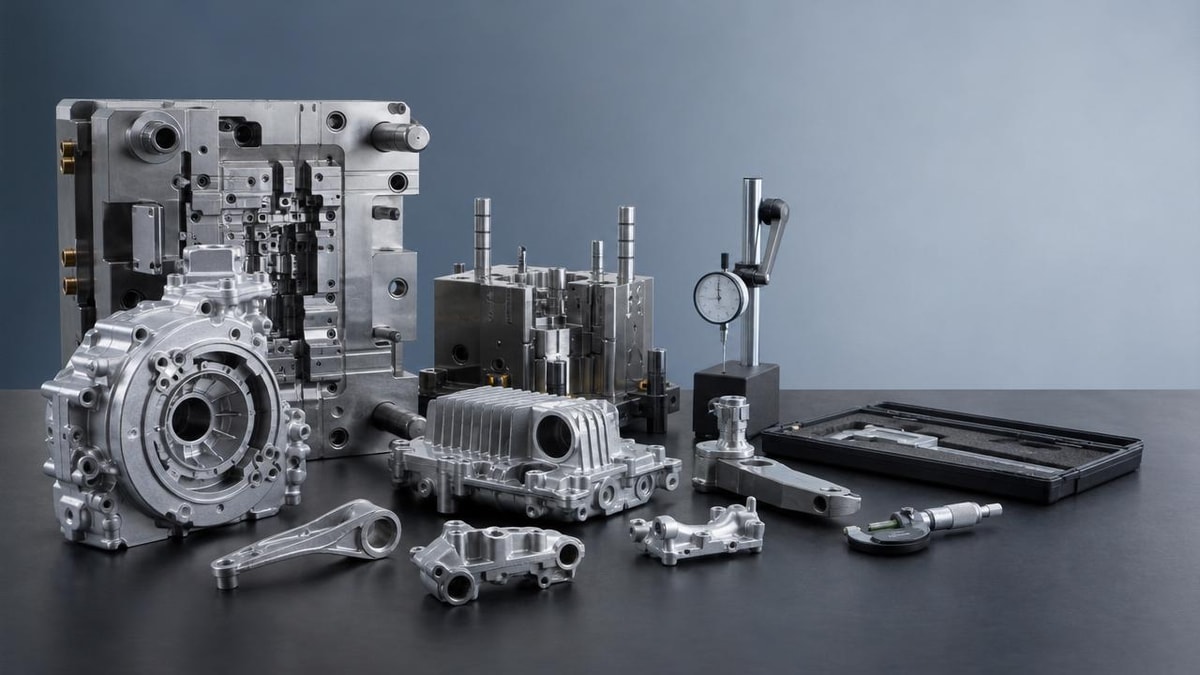
[[IMG:img_01]]MRI machine components cover a wide range of assemblies and consumable-adjacent parts. Common categories include RF coils and coil connectors, gradient subsystem components, power supplies, cooling fans, chiller-related parts, table motion components, patient handling accessories, control boards, displays, cables, and shielding-related hardware. Not all of these parts carry the same technical or regulatory risk.
For procurement teams, source strategy matters because component criticality differs across the system. A cosmetic panel or standard fan may present lower performance risk than a signal-sensitive coil element, high-voltage board, or software-linked control module. In many facilities, 3 to 5 categories account for the majority of unplanned service events, so spend analysis should be matched with failure impact, not purchase price alone.
Operators and biomedical teams are also affected. If a replacement part introduces calibration drift, intermittent communication errors, or fitment issues, daily throughput can suffer. In a center running 15 to 30 scans per day, even 1 day of downtime can disrupt scheduling, patient referrals, and revenue forecasts. That is why sourcing decisions must align with uptime targets and internal service capability.
A useful framework is to classify parts into three groups: mission-critical, performance-sensitive, and routine support items. Mission-critical items usually require the highest documentation and compatibility confidence. Performance-sensitive items may be suitable for qualified aftermarket sourcing if test records are robust. Routine support items often offer the broadest opportunity for cost control.
Typical MRI component categories by sourcing risk
The table below helps buyers distinguish where OEM sourcing is often preferred and where vetted aftermarket options may be practical.
The key takeaway is that MRI spare parts should not be purchased under a single blanket policy. A tiered sourcing model usually creates the best balance between savings and system reliability.
OEM Components: Where They Deliver Strongest Value
OEM components are produced by the original equipment manufacturer or through its authorized production and distribution chain. Their main advantage is confidence in design intent, revision control, and compatibility. For parts tied closely to image acquisition, safety logic, or proprietary interfaces, that confidence can reduce troubleshooting time and lower the chance of repeat failures.
For quality managers and financial approvers, OEM sourcing can also simplify internal approval. Documentation is usually easier to obtain, and service teams can often reference manufacturer manuals, firmware alignment notes, or known service bulletins. In regulated healthcare environments, this can shorten the review cycle by several days and reduce disputes over responsibility when performance issues appear after replacement.
Another advantage is lifecycle consistency. In many fleets, MRI systems are upgraded in phases rather than replaced all at once. A site may operate units from different installation years, and part revisions can vary. OEM supply channels are often better positioned to match serial number ranges, software dependencies, and approved replacement pathways, especially for equipment that has undergone 2 or more service updates.
The trade-off is cost and, in some cases, lead time. OEM pricing can be 20% to 80% higher than aftermarket alternatives depending on part category, inventory age, and exclusivity. Lead times may range from 3 to 10 business days for stocked items and 2 to 6 weeks for less common assemblies. For facilities without backup imaging capacity, those delays can outweigh the comfort of brand-origin parts.
When OEM is usually the safer choice
- When the part directly affects image formation, calibration integrity, or patient safety functions.
- When the equipment is under service agreement terms that require manufacturer-approved parts.
- When internal compliance teams require the shortest possible documentation chain for audit review.
- When the installed system is less than 5 years old and long-term warranty or residual value remains important.
OEM benefits beyond the invoice line
Buyers sometimes underestimate indirect savings. If an OEM part reduces installation uncertainty by 2 service hours, avoids a second site visit, or prevents 1 lost scanning day, the total cost difference may narrow quickly. This is especially relevant for enterprise imaging networks managing multiple locations where technician travel and scheduling complexity are high.
For distributors and resellers, OEM parts can also support premium positioning in tenders where documentation quality, traceability, and support responsiveness carry significant scoring weight. In these cases, the higher upfront cost may improve win rates and reduce post-sale claims.
Aftermarket Components: Cost Advantages, Risks, and Best-Fit Scenarios
Aftermarket MRI components are supplied outside the original manufacturer channel. They may be newly manufactured equivalents, refurbished assemblies, tested-used parts, or reverse-engineered replacements. Their strongest appeal is budget efficiency. In many categories, a qualified aftermarket part can reduce acquisition cost by 15% to 50%, and in selected legacy systems the savings may be even higher.
This option is especially attractive for mature fleets, independent service organizations, and buyers maintaining older systems where OEM support has become slower or more expensive. For scanners that are 8 to 12 years old, aftermarket availability can extend useful life and postpone capital replacement. That matters in markets where reimbursement pressure and capital expenditure controls are limiting equipment refresh cycles.
However, the risk profile varies sharply between suppliers. A reliable aftermarket source should provide inspection records, compatibility confirmation, warranty terms, and a clear statement of whether the part is new, refurbished, or tested-used. Without this transparency, buyers may face hidden issues such as connector mismatch, inconsistent thermal tolerance, shortened service life, or incomplete packaging protection in transit.
The most common mistake is treating all aftermarket offers as equivalent. Price-driven sourcing without validation can create rework costs that exceed the original savings. A lower-cost board that fails after 90 days, or a mechanical part that requires on-site adjustment beyond tolerance, can interrupt patient scheduling and strain service teams.
Decision factors for comparing OEM and aftermarket MRI parts
A structured comparison helps cross-functional teams align technical, financial, and operational priorities before issuing a purchase order.
For many organizations, the most effective model is hybrid procurement: OEM for high-risk components and qualified aftermarket for selected non-critical or mature-platform parts. This preserves budget without exposing the fleet to avoidable technical uncertainty.
How Procurement Teams Should Evaluate MRI Spare Parts Suppliers
A strong sourcing decision depends as much on supplier discipline as on part origin. Procurement managers, project leads, and distributor partners should use a qualification checklist that goes beyond price and stock status. In most B2B healthcare technology settings, 5 evaluation areas matter most: traceability, compatibility, testing evidence, warranty terms, and response speed.
Traceability starts with basic details: part number, revision level, system compatibility, condition classification, and packaging method. For higher-value items, buyers should also request service history if refurbished, test scope if electronically validated, and shipping protection details for sensitive assemblies. This reduces ambiguity before the part reaches the site.
Warranty terms deserve careful reading. A 30-day functional warranty may be inadequate for parts that require scheduling, engineer travel, and post-installation observation. In many cases, 90 to 180 days is a more practical range. Buyers should confirm whether warranty covers only replacement or also labor-related support, advanced exchange options, or failure analysis feedback.
Lead time and logistics are equally important. A supplier with a lower part price but a 14-day dispatch window may be less competitive than one shipping in 24 to 72 hours. For international trade, customs documentation, export packaging, and serial tracking can materially affect true downtime cost.
A practical 6-point supplier qualification checklist
- Verify exact part number and revision compatibility against the installed MRI model and software environment.
- Confirm whether the part is new, refurbished, or tested-used, and request the associated test summary.
- Review warranty coverage, return process, and response time for replacement approval.
- Check packing standards for sensitive electronics, cooling-related items, and fragile mechanical assemblies.
- Assess delivery timing, export readiness, and availability of emergency shipment within 1 to 3 business days.
- Document total cost of downtime, not only purchase cost, before comparing offers.
Questions finance and compliance teams should ask
Financial approvers should ask whether the lower-cost option reduces total maintenance spend over a 12-month period or only lowers one invoice. Compliance reviewers should ask whether the sourcing path leaves a clear audit trail. If either answer is uncertain, the apparent savings may be fragile.
For enterprise groups managing multiple imaging sites, vendor consolidation can also be a decision factor. Using 2 to 3 well-vetted suppliers across a region may improve forecasting, simplify approvals, and shorten repeat ordering cycles for common MRI replacement parts.
Implementation, Maintenance Planning, and Common Sourcing Mistakes
The part purchase itself is only one stage in the lifecycle. Effective implementation includes pre-install verification, fitment review, installation planning, performance checks, and post-replacement observation. Facilities that treat sourcing and installation as separate events often miss preventable risks. A coordinated process can cut repeat service calls and reduce system disruption.
A practical implementation window often follows 4 stages over 1 to 7 days depending on part complexity: documentation review, inbound inspection, installation, and validation. For a high-impact component, validation should include error log review, mechanical stability check, and scan-quality confirmation under normal workload. Even routine components benefit from structured sign-off.
Maintenance teams should also create a replacement priority matrix. Parts with high failure impact but limited shelf life may require local stocking, while bulky or low-failure items can remain on call-off supply. This is especially useful for regional service networks supporting several hospitals or imaging centers from one spare parts hub.
One common mistake is buying a lower-cost part without confirming surrounding system condition. A replacement fan may fail early if airflow obstruction, dust load, or ambient temperature remains unresolved. Similarly, repeated board issues may reflect power instability rather than defective parts. Root-cause discipline matters as much as component selection.
Common mistakes and recommended controls
The table below highlights operational errors that frequently erode the value of MRI aftermarket or OEM purchasing strategies.
The strongest organizations build sourcing into a broader maintenance strategy. They separate emergency buys from planned replacements, monitor failure patterns quarterly, and adjust OEM versus aftermarket ratios based on real field experience rather than assumptions.
FAQ for buyers, engineers, and healthcare technology managers
How do I decide which MRI parts should always remain OEM?
Start with components that affect imaging integrity, core control logic, or patient safety. If failure could stop scanning immediately, trigger calibration drift, or create complex troubleshooting, OEM is often the safer baseline. Many teams define 10% to 20% of their parts list as “OEM-preferred critical items.”
Are aftermarket MRI parts suitable for older systems?
Often yes, especially for systems beyond 7 years in service where OEM lead times or prices have become less favorable. The key is supplier validation. Buyers should request condition disclosure, test documentation, and a realistic warranty, ideally 90 days or longer for higher-value electronic parts.
What is a reasonable lead time expectation?
For stocked items, 24 to 72 hours to dispatch is common. Cross-border orders may add 3 to 7 days depending on customs and documentation. Specialized or low-volume assemblies can take 2 to 6 weeks, so critical-site planning should identify backup options before failure occurs.
Which metric matters more: unit price or downtime cost?
For most imaging providers, downtime cost is the more strategic metric. If a part saves 30% on purchase price but causes 1 additional lost scan day, the financial outcome may turn negative. Procurement should compare full incident cost, including labor, freight, scheduling disruption, and service revisit probability.
Choosing the Right OEM-Aftermarket Mix for Long-Term Equipment Value
The most effective MRI parts strategy is usually not an either-or decision. It is a policy framework that matches part criticality, equipment age, compliance needs, and service capacity. Newer systems, mission-critical modules, and highly documented hospital environments may justify a stronger OEM position. Aging fleets, budget-sensitive networks, and non-critical part categories often benefit from qualified aftermarket sourcing.
For procurement directors and enterprise decision-makers, the goal is to create predictable uptime at a controllable total cost. That means defining sourcing rules in advance, maintaining an approved supplier list, and reviewing part performance over 6- to 12-month intervals. Data from failures, returns, and lead times should shape future buying behavior.
For operators, engineers, and quality teams, clarity matters just as much as cost. When everyone understands which MRI machine components require OEM control and which can shift to aftermarket alternatives, service planning becomes faster and less reactive. The result is better coordination across purchasing, maintenance, and finance.
TradeNexus Pro supports B2B buyers and healthcare technology stakeholders with deeper market visibility across supply chains, sourcing models, and industrial decision criteria. If you are evaluating MRI spare parts, comparing OEM and aftermarket options, or building a smarter procurement framework for imaging equipment, contact us to get a tailored sourcing perspective, review supplier strategies, and explore more healthcare technology solutions.
Get weekly intelligence in your inbox.
No noise. No sponsored content. Pure intelligence.
 May 02, 2026Commercial EV Charging Installation Costs Beyond the HardwareCommercial EV Charging Installation Costs Beyond the Hardware
 May 02, 2026Portable EV Charging Solutions: Where They Actually FitPortable EV Charging Solutions: Where They Actually Fit
 May 02, 2026Why Automotive Aluminum Extrusions Fail at Joining PointsWhy Automotive Aluminum Extrusions Fail at Joining Points
 May 02, 2026Sheet Metal Bending Services in the USA: What Drives Lead TimeSheet Metal Bending Services in the USA: What Drives Lead Time
 May 02, 2026Cost-Effective Factory Automation Often Starts Smaller Than ExpectedCost-Effective Factory Automation Often Starts Smaller Than Expected
 May 02, 2026Choosing a Solar Panels Wholesale Distributor Without Price TrapsChoosing a Solar Panels Wholesale Distributor Without Price Traps
 May 02, 2026High Efficiency PV Modules: When the Premium Makes SenseHigh Efficiency PV Modules: When the Premium Makes Sense
 May 02, 2026Why Data Centers Are Rethinking ESS Backup StrategyWhy Data Centers Are Rethinking ESS Backup Strategy
 May 02, 2026Do Agricultural PV Modules Need Different Frame Designs?Do Agricultural PV Modules Need Different Frame Designs?
 May 02, 2026How to Vet an OEM Machined Parts Supplier in GermanyHow to Vet an OEM Machined Parts Supplier in Germany
 May 02, 2026Custom Metal Fabrication for Aerospace: Cost vs CertificationCustom Metal Fabrication for Aerospace: Cost vs Certification
 May 02, 2026What Slows Rapid Prototyping for Automotive Parts MostWhat Slows Rapid Prototyping for Automotive Parts Most
 May 02, 2026Rapid Prototyping Choices That Cut Delays in Consumer ElectronicsRapid Prototyping Choices That Cut Delays in Consumer Electronics
 May 02, 2026Why Aerospace Parts Need More Than Tight Lathe TurningWhy Aerospace Parts Need More Than Tight Lathe Turning
 May 02, 2026What Fireproof Technology Really Changes in Lithium BatteriesWhat Fireproof Technology Really Changes in Lithium Batteries
 May 02, 2026Are Grid-Tied Hybrid Inverters Enough for Unstable Supply?Are Grid-Tied Hybrid Inverters Enough for Unstable Supply?
 May 02, 2026What a Solar Panels Wholesale Price List Does Not ShowWhat a Solar Panels Wholesale Price List Does Not Show
 May 02, 2026How Long Life Cycle Batteries Lower Replacement CostsHow Long Life Cycle Batteries Lower Replacement Costs
 May 02, 2026Lathe Turning Tolerances That Matter in Industrial MachineryLathe Turning Tolerances That Matter in Industrial Machinery
 May 02, 2026ESS for Commercial Buildings: Sizing Mistakes to AvoidESS for Commercial Buildings: Sizing Mistakes to Avoid
 May 02, 2026Warehouse Robotics Bottlenecks That Slow Automation ROIWarehouse Robotics Bottlenecks That Slow Automation ROI
 May 02, 2026Where Smart Manufacturing Pays Off First in Auto PlantsWhere Smart Manufacturing Pays Off First in Auto Plants
 May 02, 2026Marine Aluminum Extrusions: What Corrosion Ratings MissMarine Aluminum Extrusions: What Corrosion Ratings Miss
 May 02, 2026Plastic Injection Molding Machine Specs That Affect OutputPlastic Injection Molding Machine Specs That Affect Output
 May 02, 2026What Limits 5 Axis Milling Accuracy for Medical Devices?What Limits 5 Axis Milling Accuracy for Medical Devices?
 May 02, 2026How to Compare a Die Casting Parts Manufacturer in ChinaHow to Compare a Die Casting Parts Manufacturer in China
 May 02, 2026Why Oil and Gas Projects Still Rely on Steel ForgingWhy Oil and Gas Projects Still Rely on Steel Forging