Why Digital Blood Pressure Readings Vary
Why do digital blood pressure monitors show different results within minutes? For healthcare buyers, operators, and decision-makers, understanding these variations is essential when evaluating remote patient monitoring tools alongside smart glucometers, wearable ECG monitors, portable ultrasound scanners, and telemedicine carts. This article explains the key factors behind fluctuating readings and what they mean for accuracy, user confidence, and smarter procurement decisions.
Digital blood pressure readings vary for two broad reasons: normal physiological changes in the body and avoidable measurement inconsistencies caused by device use, cuff fit, posture, timing, or product quality. For most buyers and operators, the key question is not whether readings ever vary, but whether the variation stays within a clinically reasonable range, follows a repeatable pattern, and comes from a monitor that has been properly validated. That distinction matters for patient safety, user trust, workflow efficiency, and procurement decisions.
Why digital blood pressure readings can change within minutes
A digital blood pressure monitor does not measure a fixed body state. Blood pressure naturally shifts from moment to moment based on breathing, stress, body position, recent movement, talking, hydration, caffeine, temperature, pain, and even full bladder status. As a result, two readings taken a few minutes apart may both be correct within the context of changing physiology.
For healthcare technology evaluators and clinical users, this is an important baseline: variation does not automatically mean the monitor is inaccurate. What matters is whether the device consistently produces readings that align with proper measurement conditions and accepted validation standards.
Common short-term causes of changing digital blood pressure readings include:
- Body position changes: Crossing legs, unsupported back, or an arm held too high or too low can alter results.
- Recent activity: Walking, climbing stairs, or even rushing to sit down can raise pressure temporarily.
- Talking during measurement: Conversation can increase systolic readings.
- Emotional stress: Anxiety, discomfort, or “white coat” effects can influence readings even at home.
- Improper rest time: Taking a reading immediately after sitting down often gives a different result than measuring after five minutes of rest.
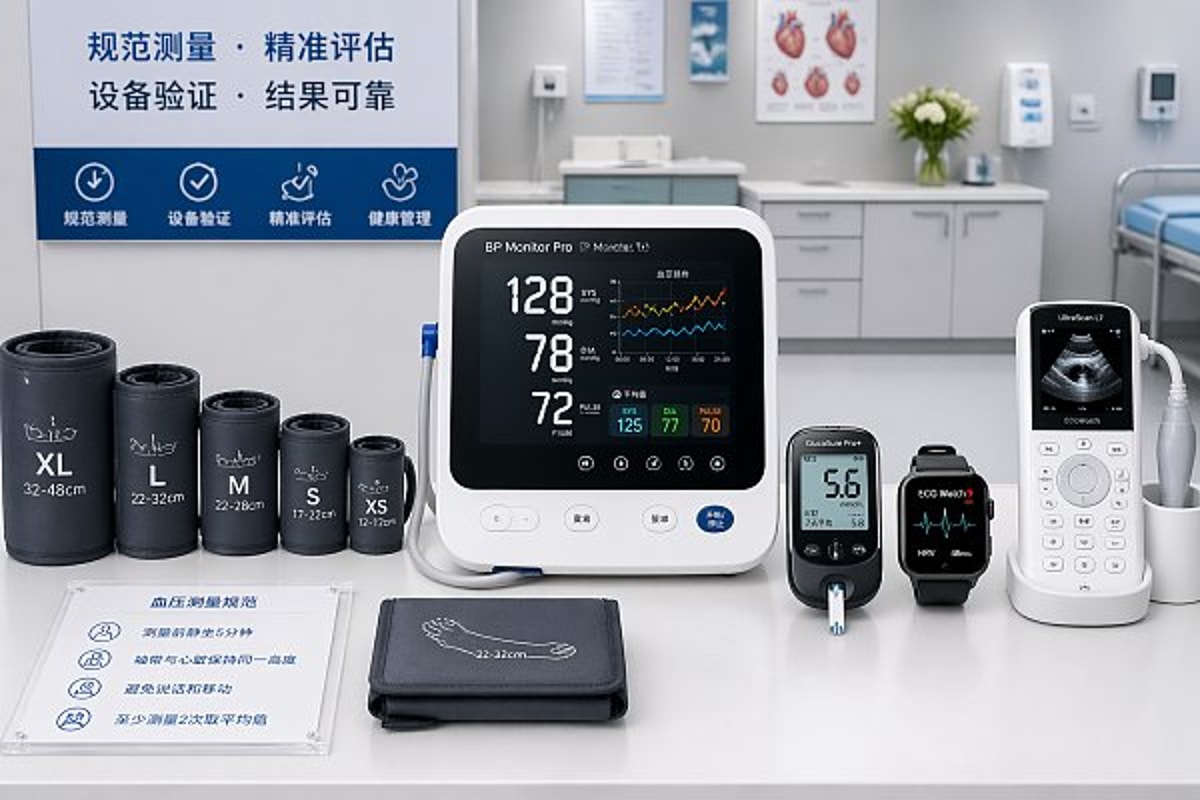
- Cuff placement or cuff size issues: A cuff that is too loose, too tight, or the wrong size is one of the most common avoidable causes.
- Measurement timing: Blood pressure follows daily patterns and may differ in the morning, afternoon, and evening.
In practice, this means procurement teams should avoid judging a blood pressure device by a single reading event. A more useful evaluation looks at repeated measurements under controlled conditions.
When variation is normal and when it signals a problem
Some variation is expected. If a user takes two or three readings one minute apart after resting, small differences are common. Many clinical workflows recommend averaging multiple readings for exactly this reason. That approach reduces the impact of momentary fluctuations and gives a better picture of the user’s true blood pressure status.
However, variation may signal a problem when:
- Readings swing widely without any change in conditions
- Results are consistently inconsistent across repeated tests
- The device frequently produces implausible values
- Readings differ substantially from validated clinical measurements
- Different operators obtain very different results on the same user using the same workflow
For business evaluators, this distinction has direct operational impact. If variability comes mostly from user technique, the solution may be training, clearer instructions, and better user interface design. If variability comes from poor sensor performance, weak algorithms, or low manufacturing consistency, the issue is product quality and supplier selection.
What buyers and operators should check before blaming the monitor
Before concluding that a digital blood pressure monitor is unreliable, buyers and front-line users should review the most common controllable factors. This is especially relevant in home monitoring programs, telehealth deployments, outpatient settings, and multi-user care environments where technique can vary.
1. Cuff size and fit
A cuff that does not match arm circumference can distort readings significantly. For procurement teams, this means cuff range options are not a minor accessory issue; they are a core accuracy requirement.
2. Measurement protocol
The user should sit quietly for at least five minutes, with feet flat on the floor, back supported, and arm at heart level. Measurements should ideally be taken at the same time of day under similar conditions.
3. User movement and speech
Movement during inflation or talking during the test can create artificial variation. Devices for older adults or home users should have clear prompts and motion warnings where possible.
4. Device validation status
A clinically validated blood pressure monitor offers more confidence than a generic device with unclear testing history. Buyers should look for recognized validation pathways and supporting documentation.
5. Calibration and maintenance policy
Even digital devices require quality control over time. Institutional buyers should confirm whether the supplier provides calibration guidance, service intervals, and post-sale support.
6. Intended use environment
A monitor that performs adequately in a quiet clinic may behave differently in transport, shared care settings, or home environments with inconsistent user behavior.
How reading variability affects procurement and business decisions
For enterprise decision-makers, the issue is larger than measurement science. Blood pressure reading consistency influences patient adherence, clinician confidence, support workload, product returns, and long-term program outcomes.
If users frequently see unexplained differences, they may stop trusting the device. That can undermine remote patient monitoring programs, increase customer service volume, and reduce the value of connected healthcare investments. In contrast, a well-validated monitor paired with strong onboarding and clear instructions can improve compliance and reduce friction.
When evaluating suppliers, decision-makers should ask:
- Has the monitor been clinically validated under recognized standards?
- What cuff sizes are available, and how are they matched to users?
- Does the interface guide proper measurement behavior?
- Are repeat reading and averaging functions built in?
- Can the system flag abnormal measurement conditions such as motion or irregular heartbeat?
- What training materials are available for operators and end users?
- How does the product integrate with broader telemedicine or remote monitoring workflows?
For distributors, resellers, and sourcing teams, these questions also help reduce commercial risk. Products that appear cost-effective at purchase may generate hidden costs later through complaints, inconsistent field performance, or quality concerns.
Best practices for more consistent digital blood pressure results
Whether the audience is a home user, clinic operator, quality manager, or procurement lead, a few best practices can significantly improve consistency:
- Use the correct cuff size every time
- Take readings after five minutes of quiet rest
- Keep the arm supported at heart level
- Avoid talking, texting, or moving during measurement
- Measure at the same times each day when trending data
- Take two or three readings and use the average when appropriate
- Compare device performance against a trusted clinical reference when onboarding programs
- Train staff and users with simple, repeatable instructions
For healthcare technology procurement, consistency is usually the result of both device quality and process quality. A good monitor alone does not guarantee good data if the workflow is weak. Likewise, perfect technique cannot fully compensate for a poorly validated product.
What a smart evaluation framework looks like for healthcare buyers
In a market increasingly filled with connected health devices, blood pressure monitors should be evaluated in the same disciplined way as smart glucometers, wearable ECG monitors, portable ultrasound scanners, and telemedicine carts. That means balancing unit price with validation evidence, usability, support, interoperability, and deployment context.
A practical framework includes:
- Clinical credibility: validation, testing evidence, and quality certifications
- User reliability: ease of correct use, motion alerts, readable display, multilingual instructions
- Operational fit: suitability for home care, clinic use, chronic disease programs, or enterprise fleets
- Data value: repeat measurement logic, averaging, app integration, trend visibility
- Supportability: service response, training resources, replacement policy, documentation quality
- Total cost of ownership: accessories, maintenance, returns, onboarding burden, and compliance risk
This approach helps organizations move beyond the simplistic question of “Why are the readings different?” to the more useful question: “Is this product trustworthy and operationally suitable for our users and care model?”
Conclusion
Digital blood pressure readings vary because blood pressure itself changes constantly and because measurement conditions are not always identical. In many cases, small differences between readings are normal. The real issue for healthcare buyers, operators, and decision-makers is whether the monitor delivers clinically credible, repeatable results when used properly.
For smarter procurement and stronger user outcomes, focus on validated devices, correct cuff selection, consistent measurement protocols, and supplier transparency. When those elements are in place, reading variation becomes manageable, explainable, and far less likely to undermine confidence in the device or the broader remote monitoring program.
Get weekly intelligence in your inbox.
No noise. No sponsored content. Pure intelligence.
 May 02, 2026Commercial EV Charging Installation Costs Beyond the HardwareCommercial EV Charging Installation Costs Beyond the Hardware
 May 02, 2026Portable EV Charging Solutions: Where They Actually FitPortable EV Charging Solutions: Where They Actually Fit
 May 02, 2026Why Automotive Aluminum Extrusions Fail at Joining PointsWhy Automotive Aluminum Extrusions Fail at Joining Points
 May 02, 2026Sheet Metal Bending Services in the USA: What Drives Lead TimeSheet Metal Bending Services in the USA: What Drives Lead Time
 May 02, 2026Cost-Effective Factory Automation Often Starts Smaller Than ExpectedCost-Effective Factory Automation Often Starts Smaller Than Expected
 May 02, 2026Choosing a Solar Panels Wholesale Distributor Without Price TrapsChoosing a Solar Panels Wholesale Distributor Without Price Traps
 May 02, 2026High Efficiency PV Modules: When the Premium Makes SenseHigh Efficiency PV Modules: When the Premium Makes Sense
 May 02, 2026Why Data Centers Are Rethinking ESS Backup StrategyWhy Data Centers Are Rethinking ESS Backup Strategy
 May 02, 2026Do Agricultural PV Modules Need Different Frame Designs?Do Agricultural PV Modules Need Different Frame Designs?
 May 02, 2026How to Vet an OEM Machined Parts Supplier in GermanyHow to Vet an OEM Machined Parts Supplier in Germany
 May 02, 2026Custom Metal Fabrication for Aerospace: Cost vs CertificationCustom Metal Fabrication for Aerospace: Cost vs Certification
 May 02, 2026What Slows Rapid Prototyping for Automotive Parts MostWhat Slows Rapid Prototyping for Automotive Parts Most
 May 02, 2026Rapid Prototyping Choices That Cut Delays in Consumer ElectronicsRapid Prototyping Choices That Cut Delays in Consumer Electronics
 May 02, 2026Why Aerospace Parts Need More Than Tight Lathe TurningWhy Aerospace Parts Need More Than Tight Lathe Turning
 May 02, 2026What Fireproof Technology Really Changes in Lithium BatteriesWhat Fireproof Technology Really Changes in Lithium Batteries
 May 02, 2026Are Grid-Tied Hybrid Inverters Enough for Unstable Supply?Are Grid-Tied Hybrid Inverters Enough for Unstable Supply?
 May 02, 2026What a Solar Panels Wholesale Price List Does Not ShowWhat a Solar Panels Wholesale Price List Does Not Show
 May 02, 2026How Long Life Cycle Batteries Lower Replacement CostsHow Long Life Cycle Batteries Lower Replacement Costs
 May 02, 2026Lathe Turning Tolerances That Matter in Industrial MachineryLathe Turning Tolerances That Matter in Industrial Machinery
 May 02, 2026ESS for Commercial Buildings: Sizing Mistakes to AvoidESS for Commercial Buildings: Sizing Mistakes to Avoid
 May 02, 2026Warehouse Robotics Bottlenecks That Slow Automation ROIWarehouse Robotics Bottlenecks That Slow Automation ROI
 May 02, 2026Where Smart Manufacturing Pays Off First in Auto PlantsWhere Smart Manufacturing Pays Off First in Auto Plants
 May 02, 2026Marine Aluminum Extrusions: What Corrosion Ratings MissMarine Aluminum Extrusions: What Corrosion Ratings Miss
 May 02, 2026Plastic Injection Molding Machine Specs That Affect OutputPlastic Injection Molding Machine Specs That Affect Output
 May 02, 2026What Limits 5 Axis Milling Accuracy for Medical Devices?What Limits 5 Axis Milling Accuracy for Medical Devices?
 May 02, 2026How to Compare a Die Casting Parts Manufacturer in ChinaHow to Compare a Die Casting Parts Manufacturer in China
 May 02, 2026Why Oil and Gas Projects Still Rely on Steel ForgingWhy Oil and Gas Projects Still Rely on Steel Forging