Where Collaborative Robots Still Need Extra Safety Planning
Collaborative robots are reshaping production lines, but their promise of safe human-machine interaction does not eliminate every risk. For quality control and safety management teams, understanding where collaborative robots still require extra safety planning is essential to preventing incidents, maintaining compliance, and protecting workflow reliability. This article explores the hidden gaps, practical safeguards, and decision points that matter most in real-world industrial environments.
Understanding What Collaborative Robots Can and Cannot Guarantee
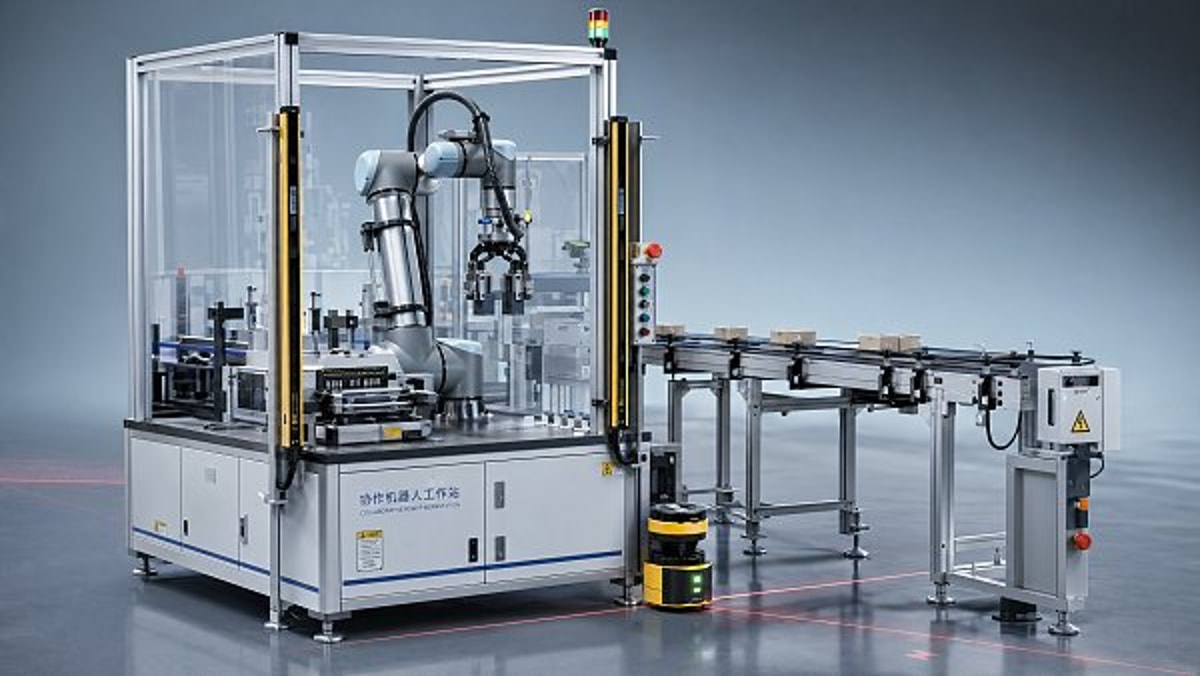
Collaborative robots are designed to work closer to people than traditional industrial robots, often without the fully fenced cells that have defined factory automation for decades. In sectors such as advanced manufacturing, healthcare technology packaging, smart electronics assembly, and warehouse support, collaborative robots are valued for flexibility, smaller footprints, and faster changeovers. Typical payloads range from about 3 kg to 25 kg, while many systems operate at lower speeds during human interaction and higher speeds during isolated cycles.
For safety managers, the key point is simple: a collaborative robot is not automatically a safe application. The arm may include force limits, speed monitoring, or hand-guiding functions, yet the actual installation also includes end effectors, grippers, tooling, sharp parts, moving workpieces, pallets, conveyors, and software logic. A safe robot can become part of an unsafe system if hazard analysis stops at the robot datasheet instead of the full task.
Quality control personnel face a parallel issue. When collaborative robots are introduced to improve consistency, they often interact with variable materials, mixed-SKU production, or manual inspection points. Those factors create process deviations that can change safety conditions shift by shift, especially in plants running 2 to 3 shifts per day. A risk that is acceptable during a dry test can become unacceptable when actual line speed, operator fatigue, or product variation enters the picture.
Why the label “collaborative” is often misunderstood
The term collaborative usually refers to defined operating principles, not to universal freedom from guarding. In practice, safety planning may still require area scanners, light curtains, pressure-sensitive mats, mechanical stops, reduced speed zones, or segmented access control. The system must be validated according to the task, not according to marketing language. This distinction matters most in mixed human-robot environments where tasks change every 6 to 12 months.
Internationally recognized standards such as ISO 10218 and ISO/TS 15066 are often used as reference points for robot safety and collaborative operation. However, these documents do not remove the employer’s duty to assess pinch points, tool geometry, payload inertia, restart behavior, maintenance access, and foreseeable misuse. For safety teams, the strongest planning habit is to treat collaborative robots as one safety component inside a broader machine system.
Core limits that require extra planning
- Force and power limits apply under defined conditions, but contact severity changes with tool shape, body region, and robot speed.
- A rounded arm may be safe enough in one motion path, yet the attached screwdriver, cutter, suction frame, or fixture may introduce new hazards.
- Software changes, recipe updates, and new SKUs can alter stopping distance, path overlap, and interaction timing within hours.
- Maintenance mode, manual recovery, and cleaning access often create higher risk than normal automatic production.
For enterprise decision-makers using intelligence platforms like TradeNexus Pro, this is also a supply chain issue. Integrators, tooling suppliers, safety component vendors, and plant teams must align on the same risk assumptions. When one supplier defines safety based on nominal robot settings and another defines it based on complete workstation behavior, a compliance gap can remain hidden until commissioning or, worse, until an incident occurs.
Why Quality and Safety Teams Are Paying Closer Attention
The growing use of collaborative robots is being driven by labor variability, demand for traceable quality, and the need to automate medium-volume tasks without building fully enclosed robotic cells. In electronics, packaging, kitting, screwdriving, loading, and light material handling, collaborative robots can reduce repetitive strain and stabilize takt time. Yet the same flexibility that makes them attractive also creates more frequent changeovers, often between 5 and 20 product variants in one production week.
For safety management, this means risk is no longer static. A collaborative robot installed for one low-force pick-and-place task may later be repurposed for adhesive dispensing, tray loading, test handling, or part presentation. Each change affects speed, reach envelope, collision severity, and operator behavior. If management treats redeployment as a simple programming event instead of a partial revalidation event, the protection concept may lag behind the application reality.
For quality control teams, safety and quality often intersect in hidden ways. Operators who lose trust in collaborative robots may bypass intended workflows, stand in awkward zones, or manually stabilize parts during cycle motion. At the same time, poorly planned safety slowdowns can produce inconsistent cycle timing, which affects adhesive cure windows, test dwell times, or handoff consistency. In short, a weak safety plan can create both incident risk and process drift.
Common operational pressures behind safety gaps
The following overview highlights where collaborative robots are often introduced and what safety planners should examine beyond the base robot specification.
The pattern is consistent across industries: collaborative robots add value, but the practical risks usually arise from adjacent equipment, human behavior, and production variability. For that reason, many safety plans fail not because they ignore robotics, but because they underestimate workstation complexity. In real facilities, 70% to 80% of the challenge is often in integration details rather than in the robot arm itself.
This is especially relevant in globally distributed supply chains. A system designed in one region, integrated in a second, and installed in a third may pass through several engineering assumptions. Procurement and safety leaders should therefore request a clear responsibility map covering robot OEM settings, end effector risk controls, software validation, operator training, and post-change review timing.
Where Collaborative Robots Still Need Extra Safety Planning
The highest-risk misconception is assuming that collaborative robots remove the need for layered safeguards. In fact, several common scenarios still require additional protection, administrative controls, or process redesign. These scenarios are not rare edge cases; they appear regularly in multi-product plants, shared workstations, and retrofit projects where line constraints force close human-machine spacing.
High-inertia tasks and changing payloads
A collaborative robot carrying a 10 kg load at moderate speed does not present the same risk profile as the same arm moving empty at low speed. Added grippers, vacuum manifolds, trays, and product mass increase momentum and can extend stopping behavior. If payloads vary between 2 kg and 12 kg across recipes, the safety assumptions need to account for the worst credible case, not just the default setup used during acceptance testing.
Dropped-load scenarios also deserve explicit review. Vacuum loss, partial gripping, unstable cartons, or uneven molded parts can create impact hazards outside the direct robot path. This matters in packaging, battery component handling, and logistics support where operators may step into the handoff area every 30 to 90 seconds.
End effectors, sharp tools, and pinch zones
Many collaborative robots perform safely until a tool is attached. Screwdrivers, dispensing needles, cutters, clamp fingers, and custom fixtures can introduce concentrated forces or laceration hazards that the arm’s collaborative design does not neutralize. Even simple two-finger grippers can create pinch points at the jaws, at the fixture edge, or between the robot wrist and nearby structures.
For quality teams, this issue often appears during process optimization. A gripper may be modified to improve part stability or cycle rate, but the new finger length changes reach geometry and entrapment zones. If that update is not reviewed by safety management, the station may still look unchanged while the actual contact risk has increased.
Manual intervention, recovery, and maintenance modes
A large share of incidents involving collaborative robots does not happen during normal cycle execution. It happens during reset, fault recovery, sensor cleaning, part unjamming, or manual jogging. These moments compress attention, reduce patience, and tempt users to bypass sequence logic. If recovery events occur even 2 to 5 times per shift, they deserve the same design attention as primary production.
Manual guidance can also create false confidence. The operator may feel safe because the robot is in a teach or reduced-speed mode, but nearby equipment may still be energized, and a second motion source such as a conveyor or turntable may continue moving. Safety planning must therefore cover the entire energy state of the cell, not only the collaborative robot axis motion.
Restricted spaces and poor line-of-sight
Collaborative robots are often selected because floor space is limited. However, tight layouts can increase risk if operators cannot clearly see the arm approach, or if escape paths are obstructed by racks, totes, feeders, or machine frames. In stations narrower than roughly 1.2 m to 1.5 m, even a low-speed robot can create uncomfortable proximity that encourages unsafe body positioning.
The following table summarizes frequent conditions where collaborative robots need stronger planning controls than teams may initially expect.
For safety managers, the practical lesson is that collaborative robots should be assessed as dynamic systems. The more variables a station has—tool changes, product changes, operator touchpoints, or narrow access—the more likely extra planning is needed. A robot that appears low risk in one quarter may become a higher-risk asset after three engineering changes and one productivity upgrade.
A Practical Framework for Safer Deployment and Ongoing Control
The strongest safety programs treat collaborative robots as part of a lifecycle, not a one-time installation. That lifecycle begins with concept review, continues through commissioning, and remains active after every significant process change. For many sites, a quarterly review cycle and a mandatory reassessment after any tooling or recipe change are reasonable minimum controls.
Risk assessment should follow the task, not the brochure
The first step is defining the real task envelope. That includes the robot, end effector, payload range, adjacent equipment, operator approach path, maintenance access, cleaning steps, and foreseeable misuse. Safety professionals should observe at least one full production cycle, one changeover sequence, and one fault recovery sequence. These three views usually reveal different hazards that static design reviews miss.
Next, validate assumptions with realistic settings. If the line will run at 18 cycles per minute in production, do not accept a safety test performed at half speed unless the speed reduction is enforced by design. Likewise, if operators interact while wearing gloves, carrying trays, or turning to read screens, those physical constraints need to be reflected in the assessment.
Checklist areas that deserve documented evidence
- Tooling review: finger geometry, sharp edges, retained energy, and failure modes such as vacuum loss or part ejection.
- Motion review: maximum speed, stopping distance, collaborative mode boundaries, and safe restart behavior.
- Human interaction review: operator standing zones, handoff timing, visibility, and frequency of manual intervention.
- Change management review: triggers for reassessment, approval workflow, and version control for safety-relevant software parameters.
Training and behavior control matter as much as hardware
Even well-designed collaborative robots can become hazardous when users improvise. Short, role-based training is usually more effective than a one-time generic briefing. Operators need to know where they may stand, what normal robot behavior looks like, how to recover faults safely, and when to stop work and escalate. Maintenance personnel need additional instruction on reduced-speed modes, stored energy, and the difference between convenience shortcuts and approved reset procedures.
Sites with stronger safety performance often reinforce training with visual controls updated every 6 to 12 months. Floor markings, approach indicators, simplified lockout instructions, and clearly labeled mode changes reduce ambiguity. For quality leaders, this also supports repeatability by keeping manual actions within validated boundaries instead of drifting into informal habits.
Finally, measure leading indicators rather than waiting for incidents. Useful metrics include fault recovery frequency per shift, number of unauthorized parameter changes, near-miss reports in shared zones, and percentage of stations reviewed after engineering change. These indicators provide early warning that collaborative robots are operating outside their original safety assumptions.
What This Means for Cross-Border Sourcing, Integration, and Governance
In global B2B environments, collaborative robots are rarely sourced, integrated, and operated by one team alone. Procurement may select the robot vendor, a system integrator may define the cell, a tooling supplier may build the end effector, and plant EHS may approve operation. When these functions are split across countries or business units, safety planning can become fragmented unless responsibilities are clearly documented.
This is where industry intelligence becomes practical rather than theoretical. Decision-makers need visibility into how different sectors handle validation windows, spares strategy, changeover frequency, and local compliance expectations. A collaborative robot used for light inspection support in one region may face very different line speeds, operator density, or maintenance maturity in another. Governance should therefore standardize review checkpoints even when local implementation differs.
For example, multinational operations often benefit from a 5-step governance model: preselection review, design risk assessment, commissioning validation, post-ramp audit within 30 to 60 days, and reapproval after major process change. This structure helps quality and safety managers compare installations on the same basis, even when equipment brands, plant layouts, or production profiles vary.
Why structured market insight helps safer decisions
TradeNexus Pro focuses on the exact sectors where collaborative robots are scaling fastest: advanced manufacturing, green energy, smart electronics, healthcare technology, and supply chain SaaS-enabled operations. For teams evaluating global deployment, that matters because safety planning depends not only on machine design but also on supplier capability, integration maturity, and process volatility across the wider supply chain.
A better decision is usually made when procurement, engineering, quality, and EHS work from the same market intelligence. That includes understanding lead time ranges for safety components, likely tooling revisions, integration constraints, and the operational realities of each target sector. In collaborative robotics, incomplete coordination is one of the fastest ways to create a safety gap that appears only after installation.
Why Choose Us
If your team is assessing collaborative robots for production, inspection, packaging, or material handling, TradeNexus Pro helps you move beyond surface-level automation claims. We provide focused B2B intelligence across the industries where collaborative robots are most relevant, helping quality control leaders, safety managers, procurement directors, and plant decision-makers evaluate risk, supplier fit, and deployment readiness with greater confidence.
You can contact us for practical support around supplier screening, application scenario review, integration considerations, delivery cycle expectations, safety-related sourcing questions, and technology comparison across sectors. We also help teams frame discussions around tooling configuration, workflow suitability, validation checkpoints, and cross-border implementation concerns before expensive mistakes are built into a project.
If you are planning a collaborative robot project or revalidating an existing workstation, contact us to discuss application parameters, end-effector selection, deployment timelines, customized industry insight, certification-related considerations, sample workflow review, and quotation-oriented supplier conversations. The right safety plan begins with the right information, and that is where a specialized industry platform adds measurable value.
Get weekly intelligence in your inbox.
No noise. No sponsored content. Pure intelligence.
 May 02, 2026Commercial EV Charging Installation Costs Beyond the HardwareCommercial EV Charging Installation Costs Beyond the Hardware
 May 02, 2026Portable EV Charging Solutions: Where They Actually FitPortable EV Charging Solutions: Where They Actually Fit
 May 02, 2026Why Automotive Aluminum Extrusions Fail at Joining PointsWhy Automotive Aluminum Extrusions Fail at Joining Points
 May 02, 2026Sheet Metal Bending Services in the USA: What Drives Lead TimeSheet Metal Bending Services in the USA: What Drives Lead Time
 May 02, 2026Cost-Effective Factory Automation Often Starts Smaller Than ExpectedCost-Effective Factory Automation Often Starts Smaller Than Expected
 May 02, 2026Choosing a Solar Panels Wholesale Distributor Without Price TrapsChoosing a Solar Panels Wholesale Distributor Without Price Traps
 May 02, 2026High Efficiency PV Modules: When the Premium Makes SenseHigh Efficiency PV Modules: When the Premium Makes Sense
 May 02, 2026Why Data Centers Are Rethinking ESS Backup StrategyWhy Data Centers Are Rethinking ESS Backup Strategy
 May 02, 2026Do Agricultural PV Modules Need Different Frame Designs?Do Agricultural PV Modules Need Different Frame Designs?
 May 02, 2026How to Vet an OEM Machined Parts Supplier in GermanyHow to Vet an OEM Machined Parts Supplier in Germany
 May 02, 2026Custom Metal Fabrication for Aerospace: Cost vs CertificationCustom Metal Fabrication for Aerospace: Cost vs Certification
 May 02, 2026What Slows Rapid Prototyping for Automotive Parts MostWhat Slows Rapid Prototyping for Automotive Parts Most
 May 02, 2026Rapid Prototyping Choices That Cut Delays in Consumer ElectronicsRapid Prototyping Choices That Cut Delays in Consumer Electronics
 May 02, 2026Why Aerospace Parts Need More Than Tight Lathe TurningWhy Aerospace Parts Need More Than Tight Lathe Turning
 May 02, 2026What Fireproof Technology Really Changes in Lithium BatteriesWhat Fireproof Technology Really Changes in Lithium Batteries
 May 02, 2026Are Grid-Tied Hybrid Inverters Enough for Unstable Supply?Are Grid-Tied Hybrid Inverters Enough for Unstable Supply?
 May 02, 2026What a Solar Panels Wholesale Price List Does Not ShowWhat a Solar Panels Wholesale Price List Does Not Show
 May 02, 2026How Long Life Cycle Batteries Lower Replacement CostsHow Long Life Cycle Batteries Lower Replacement Costs
 May 02, 2026Lathe Turning Tolerances That Matter in Industrial MachineryLathe Turning Tolerances That Matter in Industrial Machinery
 May 02, 2026ESS for Commercial Buildings: Sizing Mistakes to AvoidESS for Commercial Buildings: Sizing Mistakes to Avoid
 May 02, 2026Warehouse Robotics Bottlenecks That Slow Automation ROIWarehouse Robotics Bottlenecks That Slow Automation ROI
 May 02, 2026Where Smart Manufacturing Pays Off First in Auto PlantsWhere Smart Manufacturing Pays Off First in Auto Plants
 May 02, 2026Marine Aluminum Extrusions: What Corrosion Ratings MissMarine Aluminum Extrusions: What Corrosion Ratings Miss
 May 02, 2026Plastic Injection Molding Machine Specs That Affect OutputPlastic Injection Molding Machine Specs That Affect Output
 May 02, 2026What Limits 5 Axis Milling Accuracy for Medical Devices?What Limits 5 Axis Milling Accuracy for Medical Devices?
 May 02, 2026How to Compare a Die Casting Parts Manufacturer in ChinaHow to Compare a Die Casting Parts Manufacturer in China
 May 02, 2026Why Oil and Gas Projects Still Rely on Steel ForgingWhy Oil and Gas Projects Still Rely on Steel Forging