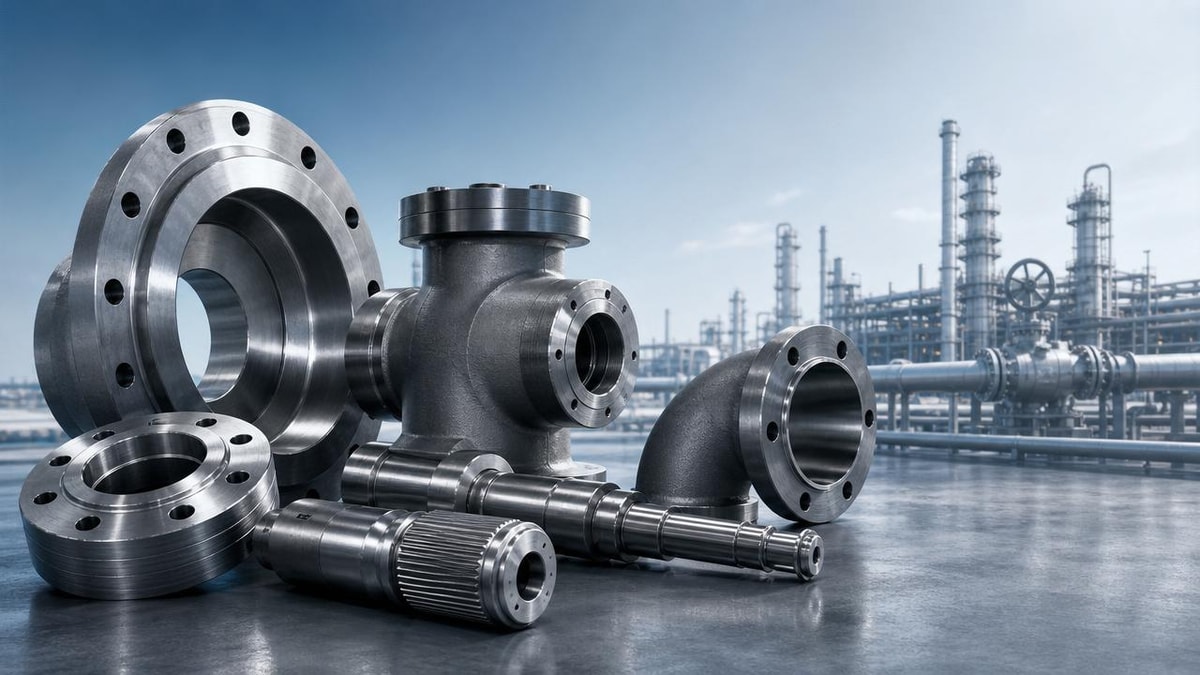
Does ISO 9001 Certified Machining Help With Supplier Approval?
For business evaluators, supplier approval depends on proven process control, traceability, and risk reduction. ISO 9001 certified machining can strengthen a supplier’s credibility by showing a structured quality management system, consistent production standards, and a commitment to continuous improvement. But does certification alone speed approval, or are buyers looking for more? This article examines how it influences qualification decisions.
What ISO 9001 Certified Machining Means in Supplier Evaluation
In practical terms, iso 9001 certified machining refers to machining operations managed under a documented quality management system aligned with ISO 9001 requirements. For business evaluators, this does not automatically prove that every part is perfect, every machine is advanced, or every shipment is low risk. What it does show is that the supplier has formalized how it controls processes, records nonconformities, handles corrective actions, trains personnel, and monitors performance over time.
That distinction matters because supplier approval is rarely based on one indicator. In most industrial sourcing environments, evaluators review at least 5 to 8 dimensions before onboarding a machining source: quality system maturity, technical capability, traceability, delivery performance, cost stability, capacity, communication, and regulatory fit. ISO 9001 certification helps most directly with the first 3 of those dimensions, while only indirectly supporting the others.
For sectors covered by TradeNexus Pro, such as advanced manufacturing, green energy, smart electronics, healthcare technology, and supply chain SaaS-enabled procurement networks, the question is not whether certification is useful. The more relevant question is how much it reduces approval friction. In many cases, it shortens the initial screening stage by 1 to 3 review cycles, especially when the buyer needs evidence of documented controls before issuing RFQs or trial orders.
Why buyers use it as an early signal
A formal certification gives evaluators a recognizable baseline. It suggests that management reviews happen on a defined schedule, internal audits are performed periodically, controlled documents exist, and process deviations are not handled informally. This is especially relevant when the evaluator is comparing suppliers across multiple countries, where factory visit opportunities may be limited to 1 audit window per quarter or even less.
However, the value of iso 9001 certified machining is strongest at the system level, not at the product level. A supplier may have certification and still lack the tolerancing capability, material control, validation discipline, or packaging rigor required for a specific program. That is why experienced approval teams treat the certificate as a threshold enhancer rather than a final decision driver.
In broad industrial sourcing, certification often works like a filter. It can move a supplier from “needs more justification” to “eligible for deeper technical review.” For a buyer managing dozens of potential suppliers, that shift is significant because it reduces the burden of proving basic governance from scratch.
Core areas certification usually supports
- Document control for drawings, revisions, work instructions, and inspection criteria.
- Corrective action handling for defects, customer complaints, and recurring process drift.
- Training records and role definition for operators, inspectors, and production supervisors.
- Traceability procedures for materials, batches, job travelers, and inspection status.
- Management review and internal audit routines, often on monthly, quarterly, or annual cycles.
These elements are relevant because supplier approval depends on repeatability. Evaluators are not only asking whether a sample passed. They are asking whether the supplier can hold the same standard across 100 parts, 10,000 parts, or 12 months of repeat orders.
Why ISO 9001 Certified Machining Gets Attention Across Industries
Cross-sector procurement teams increasingly rely on standardized approval signals because supplier networks have become more global, more digital, and more compressed in lead time. A buyer sourcing machined housings for smart electronics, fixtures for healthcare technology, or precision brackets for green energy systems may not use the same part specifications, but they often use similar approval logic: reduce variability, document accountability, and prevent avoidable disruptions.
In that context, iso 9001 certified machining becomes a practical reference point. It helps when buyers need to compare 3 to 6 machining suppliers quickly during a sourcing event. It also supports enterprise governance, since internal approval committees often require some recognized quality framework before approving a new source for production, especially where annual spend exceeds typical pilot thresholds.
The growing importance of digital supplier management platforms has reinforced this trend. Procurement teams now collect structured supplier data, audit records, response times, and quality indicators in a more systematic way. A certification alone will not determine ranking, but it often improves profile completeness and lowers the perception of foundational quality risk during early-stage qualification.
Typical industry concerns behind the approval question
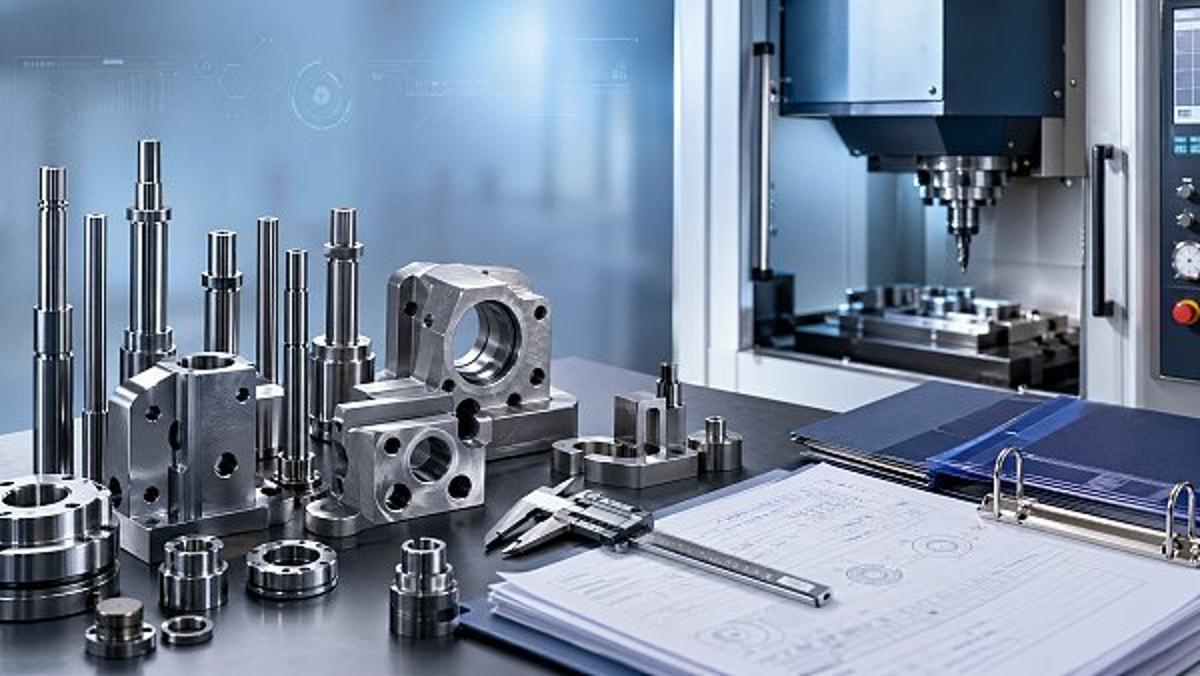
The concern is not abstract. When a machining supplier lacks process discipline, the downstream impact can be expensive: delayed PPAP-style reviews, undocumented material substitutions, inconsistent inspection records, or repeated dimensional escapes. Even a low single-digit defect rate can become operationally serious if the parts are used in assemblies with tight fit, sterilization, electrical shielding, or field reliability requirements.
The table below shows how different sectors commonly interpret the value of iso 9001 certified machining during supplier approval.
This overview shows why the certification receives attention across industries, but it also shows its limits. The benefit is mostly in quality system assurance. If the sourcing requirement includes special processes, regulated materials, ultra-tight tolerances, or industry-specific standards, buyers will still request additional evidence beyond the certificate.
Where industry pressure is increasing
Over the last several procurement cycles in many sectors, approval teams have tightened expectations around traceability, supplier responsiveness, and documented change control. A machining supplier that can respond to a drawing revision within 24 to 72 hours, update controlled documents properly, and preserve inspection history over a multi-year retention period will usually be viewed more favorably than one relying on informal shop-floor knowledge.
This is where iso 9001 certified machining aligns with broader supply chain resilience goals. It is not only about compliance language. It is about reducing the chance that hidden process variation turns into field failures, rework cost, line stoppage, or supplier replacement later.
How It Influences Approval Decisions in Real Supplier Qualification
For business evaluators, the practical impact of certification appears at several checkpoints. The first is pre-qualification, where a buyer screens suppliers before sharing detailed drawings. The second is onboarding review, where quality, engineering, and procurement align on whether the supplier should move forward. The third is production release, where sample results, documentation, and commercial readiness are checked together.
At the pre-qualification stage, iso 9001 certified machining often improves acceptance odds because it reduces uncertainty around baseline controls. At the onboarding stage, it supports audit conversations by showing there is already a documented framework to review. At the production stage, however, buyers usually care more about actual outputs: first article results, material certificates, process capability indicators where relevant, and on-time sample delivery.
That means certification can accelerate approval, but usually only when other factors are reasonably aligned. If capacity is unclear, communication is slow, or sample quality fails, the approval process still stalls. In other words, certification is an enabler, not a substitute for execution.
Approval areas most affected by certification
The following comparison reflects how evaluators commonly separate the direct and indirect value of iso 9001 certified machining during qualification.
The strongest impact is therefore on confidence, not on proof of every capability. Evaluators should read the certificate as evidence that the supplier has built a management structure. They should not read it as a guarantee that the supplier can hold a ±0.01 mm tolerance, manage passivation correctly, or package cleanroom-related components appropriately without further verification.
A practical qualification sequence
- Confirm certificate validity, scope, and whether machining activities are clearly covered.
- Review core quality procedures, especially nonconformance control, document revision, and traceability.
- Assess technical fit through drawings, tolerance bands, material experience, and sample history.
- Check operational factors such as lead times, minimum order levels, and inspection reporting format.
- Use a pilot order or first article stage before assigning high-volume or high-risk production.
This sequence is useful because it balances system assurance with real production evidence. In many organizations, that is the difference between a fast but risky onboarding and a disciplined approval that protects long-term supply continuity.
What Business Evaluators Should Check Beyond the Certificate
An experienced evaluator will always go beyond the headline. The most common mistake in reviewing iso 9001 certified machining suppliers is assuming that certification quality equals machining quality. In reality, two suppliers may both be certified, yet differ greatly in process capability, quoting discipline, engineering support, or response speed during issue resolution.
A stronger approval approach is to treat certification as one layer in a multi-layer assessment. For example, a supplier may have an orderly quality system but weak preventive maintenance discipline, limited CMM access, or long subcontracting chains for heat treatment and surface finishing. Those issues can materially affect approval risk even when the certificate is valid.
When sourcing across international markets, evaluators should also consider language clarity, escalation ownership, and data responsiveness. If the supplier takes 5 to 7 business days to answer basic technical questions, the certification will not offset the operational friction that appears later during engineering changes or urgent delivery recovery.
High-value review points for machining suppliers
- Scope alignment: confirm the certification scope matches CNC machining, turning, milling, or related operations relevant to the parts being sourced.
- Metrology readiness: ask what inspection equipment is available and how often calibration status is reviewed.
- Traceability depth: determine whether traceability is by batch, lot, serial, or traveler record, and how long records are retained.
- Sub-supplier control: review how outsourced steps such as coating, anodizing, or heat treatment are managed.
- Change control: verify how drawing revisions, process changes, and material substitutions are approved and communicated.
Warning signs despite certification
There are also clear warning signs. If a supplier cannot provide sample inspection formats, gives vague answers about nonconforming product containment, or has no structured response for customer complaints within 48 to 72 hours, evaluators should look carefully at execution maturity. Certification without operational transparency can create a false sense of security.
Another concern is overreliance on a single quality manager or owner. A resilient supplier should be able to show process continuity across shifts, vacations, and growth periods. If quality knowledge lives in one person rather than in a controlled system, approval risk remains elevated.
For many business evaluators, the best evidence combines documentation with behavior: timely records, consistent answers, disciplined issue closure, and sample performance that matches the documented process story. That combination is far more persuasive than the certificate alone.
Practical Value of ISO 9001 Certified Machining in Approval Strategy
When used properly, iso 9001 certified machining supports a more efficient approval strategy. It can reduce initial ambiguity, improve supplier comparability, and give internal stakeholders a common language for discussing risk. This is especially useful for enterprises managing multi-country sourcing programs, where procurement, quality, and engineering teams may each weigh approval criteria differently.
The key is to place certification in the right position within the sourcing model. It works well as an entry signal, a confidence builder, and a governance support mechanism. It works poorly as a stand-alone proof of manufacturing excellence. Buyers that understand this distinction usually make faster and more defensible supplier decisions.
For a standard commercial machining project, certification may be enough to move a supplier into sampling. For higher-risk programs, such as tight-tolerance assemblies, medical-adjacent components, or long-life industrial systems, the buyer will still need a broader qualification package. That may include first article inspection, process flow review, material documentation, packaging validation, and periodic performance checks over the first 3 to 6 months of supply.
How to use it in a balanced approval model
A balanced model typically assigns certification meaningful but not dominant weight. Some teams use a scoring approach in which quality system evidence represents one section, while technical fit, commercial reliability, and logistics readiness make up the rest. The exact weighting varies by company, but the principle is consistent: no single document should override real capability evidence.
That approach also improves cross-functional alignment. Procurement gains a defensible shortlist, engineering sees technical proof, and quality teams retain control over risk screening. In a global B2B environment where sourcing speed matters, that alignment can shorten decision time without weakening standards.
So, does iso 9001 certified machining help with supplier approval? Yes, often meaningfully. But it helps most when buyers use it as part of a structured approval framework rather than as a shortcut around technical and operational diligence.
Why Choose Us for Supplier Intelligence and Qualification Support
TradeNexus Pro supports business evaluators who need more than surface-level supplier claims. Our industry-focused B2B intelligence approach helps procurement directors, supply chain managers, and enterprise sourcing teams assess machining suppliers in a wider context that includes quality system signals, market positioning, sector relevance, and practical approval considerations.
If you are reviewing iso 9001 certified machining suppliers, we can help you structure the evaluation around what actually matters for approval: certification scope, technical suitability, delivery expectations, traceability needs, and supplier risk indicators. This is especially useful when you are comparing multiple suppliers across advanced manufacturing, green energy, smart electronics, healthcare technology, or broader industrial sourcing categories.
Contact us if you need support with supplier shortlisting, machining capability screening, certification requirement review, RFQ preparation, sample evaluation criteria, lead time confirmation, or quote comparison logic. We can also help you refine approval checklists for custom parts, recurring production programs, and multi-region procurement decisions where documented quality and operational reliability both matter.
Get weekly intelligence in your inbox.
No noise. No sponsored content. Pure intelligence.
 May 02, 2026Commercial EV Charging Installation Costs Beyond the HardwareCommercial EV Charging Installation Costs Beyond the Hardware
 May 02, 2026Portable EV Charging Solutions: Where They Actually FitPortable EV Charging Solutions: Where They Actually Fit
 May 02, 2026Why Automotive Aluminum Extrusions Fail at Joining PointsWhy Automotive Aluminum Extrusions Fail at Joining Points
 May 02, 2026Sheet Metal Bending Services in the USA: What Drives Lead TimeSheet Metal Bending Services in the USA: What Drives Lead Time
 May 02, 2026Cost-Effective Factory Automation Often Starts Smaller Than ExpectedCost-Effective Factory Automation Often Starts Smaller Than Expected
 May 02, 2026Choosing a Solar Panels Wholesale Distributor Without Price TrapsChoosing a Solar Panels Wholesale Distributor Without Price Traps
 May 02, 2026High Efficiency PV Modules: When the Premium Makes SenseHigh Efficiency PV Modules: When the Premium Makes Sense
 May 02, 2026Why Data Centers Are Rethinking ESS Backup StrategyWhy Data Centers Are Rethinking ESS Backup Strategy
 May 02, 2026Do Agricultural PV Modules Need Different Frame Designs?Do Agricultural PV Modules Need Different Frame Designs?
 May 02, 2026How to Vet an OEM Machined Parts Supplier in GermanyHow to Vet an OEM Machined Parts Supplier in Germany
 May 02, 2026Custom Metal Fabrication for Aerospace: Cost vs CertificationCustom Metal Fabrication for Aerospace: Cost vs Certification
 May 02, 2026What Slows Rapid Prototyping for Automotive Parts MostWhat Slows Rapid Prototyping for Automotive Parts Most
 May 02, 2026Rapid Prototyping Choices That Cut Delays in Consumer ElectronicsRapid Prototyping Choices That Cut Delays in Consumer Electronics
 May 02, 2026Why Aerospace Parts Need More Than Tight Lathe TurningWhy Aerospace Parts Need More Than Tight Lathe Turning
 May 02, 2026What Fireproof Technology Really Changes in Lithium BatteriesWhat Fireproof Technology Really Changes in Lithium Batteries
 May 02, 2026Are Grid-Tied Hybrid Inverters Enough for Unstable Supply?Are Grid-Tied Hybrid Inverters Enough for Unstable Supply?
 May 02, 2026What a Solar Panels Wholesale Price List Does Not ShowWhat a Solar Panels Wholesale Price List Does Not Show
 May 02, 2026How Long Life Cycle Batteries Lower Replacement CostsHow Long Life Cycle Batteries Lower Replacement Costs
 May 02, 2026Lathe Turning Tolerances That Matter in Industrial MachineryLathe Turning Tolerances That Matter in Industrial Machinery
 May 02, 2026ESS for Commercial Buildings: Sizing Mistakes to AvoidESS for Commercial Buildings: Sizing Mistakes to Avoid
 May 02, 2026Warehouse Robotics Bottlenecks That Slow Automation ROIWarehouse Robotics Bottlenecks That Slow Automation ROI
 May 02, 2026Where Smart Manufacturing Pays Off First in Auto PlantsWhere Smart Manufacturing Pays Off First in Auto Plants
 May 02, 2026Marine Aluminum Extrusions: What Corrosion Ratings MissMarine Aluminum Extrusions: What Corrosion Ratings Miss
 May 02, 2026Plastic Injection Molding Machine Specs That Affect OutputPlastic Injection Molding Machine Specs That Affect Output
 May 02, 2026What Limits 5 Axis Milling Accuracy for Medical Devices?What Limits 5 Axis Milling Accuracy for Medical Devices?
 May 02, 2026How to Compare a Die Casting Parts Manufacturer in ChinaHow to Compare a Die Casting Parts Manufacturer in China
 May 02, 2026Why Oil and Gas Projects Still Rely on Steel ForgingWhy Oil and Gas Projects Still Rely on Steel Forging