When Steel Forging Fails in Heavy Machinery Applications
When steel forging for heavy machinery fails, the consequences reach far beyond downtime—triggering safety incidents, quality disputes, and costly supply chain disruptions. For quality control and safety managers, understanding why forged components crack, deform, or underperform is essential to preventing risk at the source. This article examines the root causes, warning signs, and practical controls that matter most in high-load industrial applications.
In sectors such as mining equipment, construction machinery, port handling systems, wind power assemblies, and industrial drive trains, forged steel parts often carry cyclic loads, shock loads, and temperature variation for 8 to 20 hours per day. When a forged shaft, ring, gear blank, pin, or coupling fails early, the issue is rarely isolated to a single defective part. It usually reveals a weakness in material selection, process control, inspection discipline, supplier qualification, or field maintenance.
For quality and safety managers, steel forging for heavy machinery should be treated as a risk-managed system rather than a simple sourcing category. The practical goal is not only to buy compliant parts, but to reduce non-conformance rates, improve traceability, and prevent high-consequence failures before components reach full-service loads.
Why Forged Steel Components Fail Under Heavy Machinery Loads
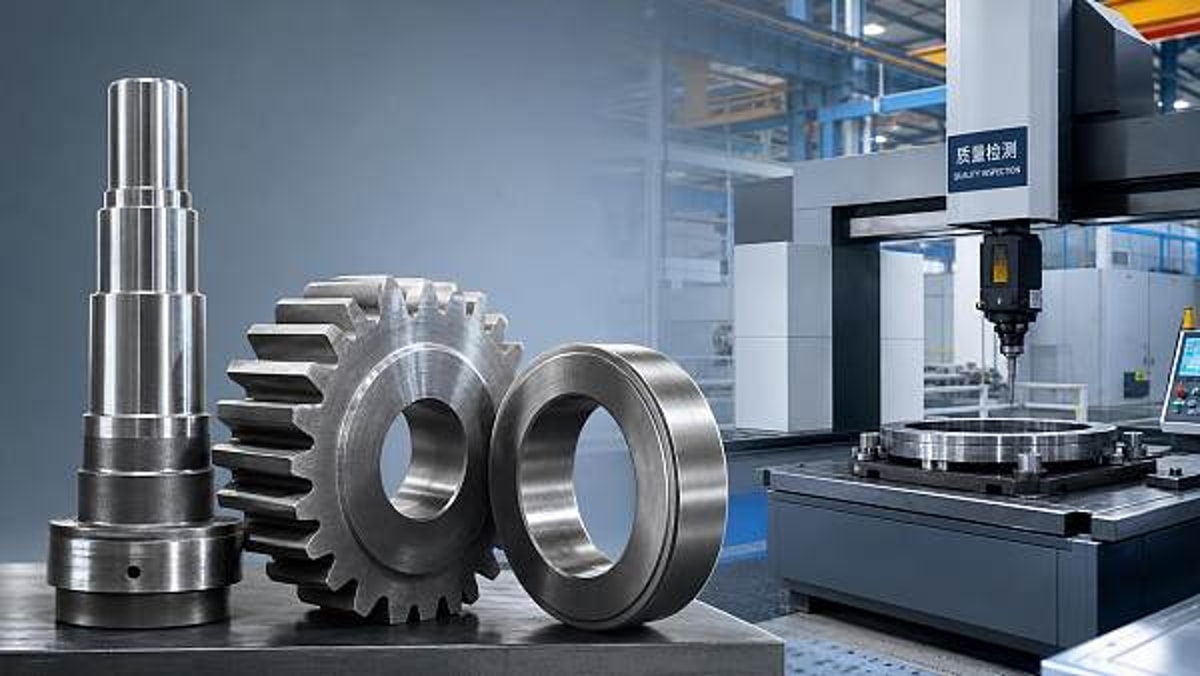
Steel forging for heavy machinery is widely chosen because forged grain flow, density, and impact resistance generally outperform many cast or machined-from-bar alternatives. Yet even with these advantages, failure can occur within the first 100 operating hours, after 6 to 12 months of fatigue loading, or during overload events if the forging route is not tightly controlled.
Most failures fall into 4 broad categories: metallurgical defects, process-induced defects, design-service mismatch, and inspection escape. Quality teams that classify incidents this way can shorten root-cause investigations and avoid repeating the same corrective action across different suppliers.
Metallurgical Defects That Start Below the Surface
Subsurface discontinuities are especially dangerous in steel forging for heavy machinery because they may remain invisible during basic visual checks. Common issues include non-metallic inclusions, centerline segregation, hydrogen-related cracking, coarse grain structure, and improper hardness distribution. In a high-load pin or crank element, even a small inclusion cluster can become the origin point for fatigue cracking after thousands of stress cycles.
Heat treatment errors are another recurring cause. If quenching is uneven or tempering is insufficient, the part may show hardness values outside the intended range, such as 28–32 HRC when the application requires 34–40 HRC, or the reverse. Excess hardness can improve wear resistance but sharply reduce toughness, increasing brittle fracture risk in low-temperature or impact-loaded conditions.
Process Defects Introduced During Forging and Finishing
Forging laps, underfill, internal bursts, scale entrapment, and die mismatch are common manufacturing-related defects. These are not cosmetic concerns. In heavy machinery applications, a lap aligned with the stress direction may function like a pre-existing crack. Machining can also worsen the problem if excessive stock removal cuts into disturbed grain flow or exposes a near-surface defect.
Temperature control during forging matters more than many buyers realize. If the billet is forged outside the recommended window, for example 50–120°C below target, formability changes and internal strain rises. If it is overheated, grain growth and decarburization can compromise final performance. For safety-sensitive components, these errors should be treated as process deviations requiring containment, not routine variation.
Service Conditions That Exceed Original Assumptions
A forging may fully meet drawing and hardness requirements but still fail because real service conditions exceed the assumed design envelope. Typical mismatches include shock loads 20% to 40% above design basis, poor lubrication, abrasive contamination, misalignment, and repeated overload starts. In cranes, excavators, rolling systems, and large conveyors, these factors often accelerate wear and fatigue at the same time.
This is why quality teams should review not only incoming inspection records, but also actual duty cycles, lubrication intervals, ambient temperature, and maintenance history. A supplier cannot compensate for incorrect installation preload or chronic off-axis loading in the field.
Common Failure Signatures Seen in Industrial Use
- Beach marks or progressive crack growth indicating fatigue
- Sharp, crystalline fracture surfaces associated with brittle failure
- Plastic deformation, bending, or upset geometry after overload
- Surface spalling and pitting in contact-stressed interfaces
- Localized discoloration from friction heat or inadequate lubrication
- Hardness variation greater than acceptable internal specification limits
The table below summarizes the most frequent failure modes in steel forging for heavy machinery and the practical signals that quality and safety managers should capture during investigation.
A key conclusion is that visible breakage is often the final event, not the first event. In many investigations, the actionable evidence appears earlier as hardness drift, ultrasonic indications, repeated fit-up problems, or rising vibration levels over 2 to 6 inspection cycles.
Critical Inspection and Control Points for Quality and Safety Teams
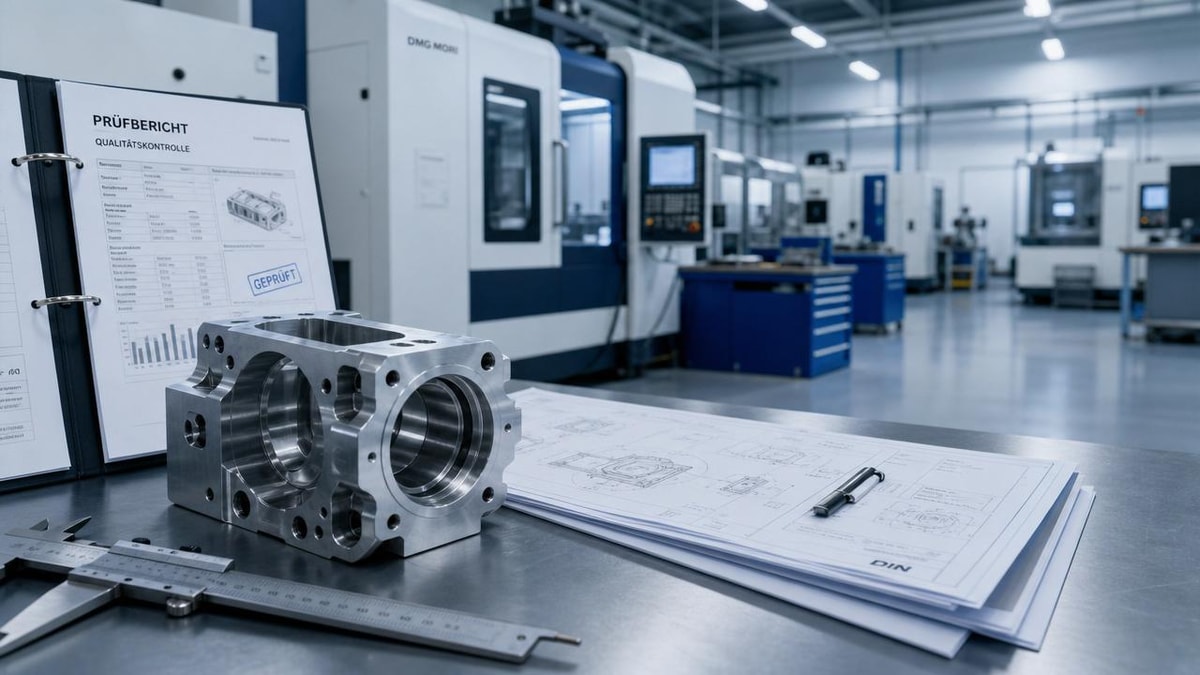
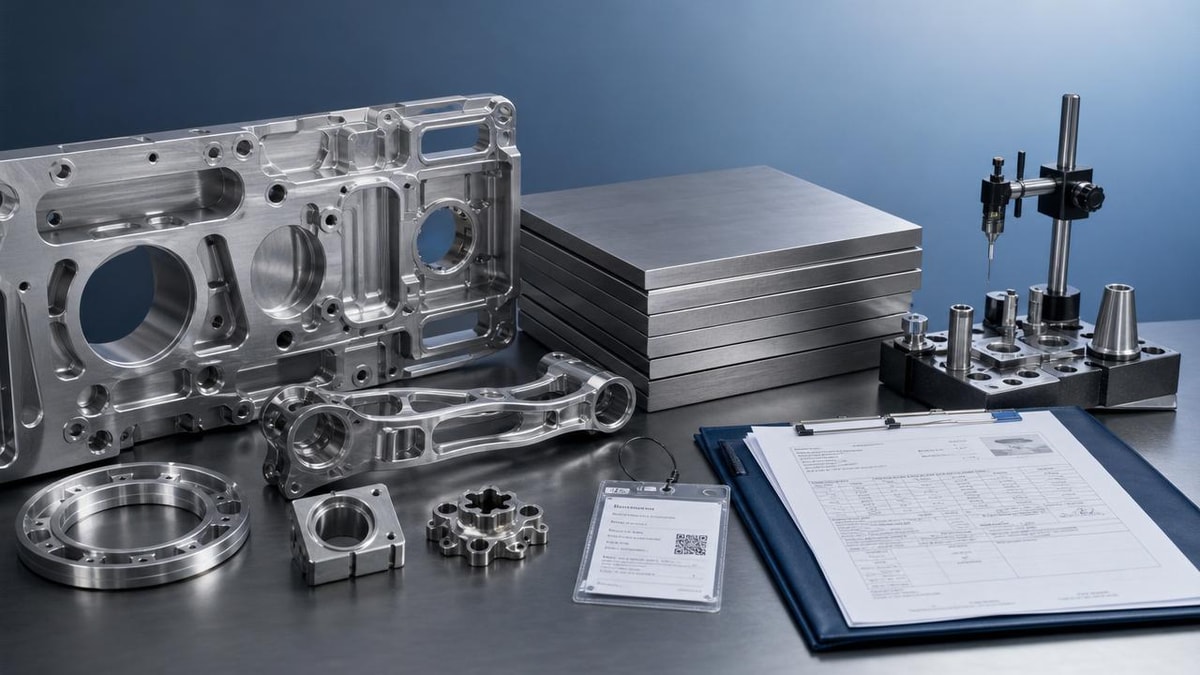
Effective prevention starts with a control plan that covers the entire chain from raw material to field feedback. For steel forging for heavy machinery, relying on final dimensional inspection alone is not enough. A robust quality system should include at least 6 checkpoints: material verification, forging process monitoring, heat treatment control, non-destructive testing, dimensional validation, and traceability review.
Incoming Material and Mill-Level Verification
Before production begins, buyers should confirm heat number traceability, chemical composition, and intended mechanical property range. For critical components such as large shafts, couplings, and ring forgings, the review should also address cleanliness expectations and whether the steel grade is suited for through-hardening or surface-hardening routes. A mismatch at this stage can invalidate every later inspection result.
As a practical rule, critical forgings above 200 mm section thickness often need more scrutiny because section size affects cooling rate and through-thickness properties. QC teams should define whether the acceptance basis is based on core hardness, surface hardness, impact toughness, or all three.
In-Process Forging and Heat Treatment Controls
Many preventable defects originate between heating, deformation, and cooling. Safety managers should ensure the supplier records actual process values rather than nominal settings. Useful process evidence includes furnace charge time, forging temperature window, reduction ratio, die condition, transfer time to quench, quench media condition, and tempering duration. A missing log can be as serious as a failed test because it breaks confidence in process repeatability.
For heavy-duty parts, even a 10% to 15% variation in cooling severity can shift microstructure enough to affect impact performance. If the component works in dynamic or low-temperature service, destructive test coupons and periodic macro-etch review may be justified every batch or every agreed production lot.
Minimum Control Checklist
- Verify steel grade, heat number, and certificate consistency.
- Confirm forging reduction ratio and process route are documented.
- Review heat treatment records for time, temperature, and quench controls.
- Apply NDT method appropriate to geometry: UT, MT, PT, or a combination.
- Check hardness at multiple zones, not a single point only.
- Validate dimensions, machining allowance, and stress-concentrating radii.
The following matrix can help procurement, QA, and EHS teams decide which controls are essential based on component criticality and service severity.
The table shows that not every forged part needs the same inspection depth. However, any component whose failure could cause dropped loads, personnel exposure, fire, or drivetrain seizure should move into the highest control category, even if annual volume is low.
How to Strengthen Supplier Qualification and Procurement Decisions
In many organizations, the technical discussion around steel forging for heavy machinery starts too late, after pricing has already narrowed supplier options. That creates avoidable tension between cost targets and safety requirements. Procurement, quality, and operations should align on 4 decision areas before release: process capability, inspection discipline, documentation quality, and responsiveness to non-conformance.
Questions Buyers Should Ask Before Approval
A capable forging supplier should be able to explain its process route in practical detail, including material sourcing logic, forging sequence, heat treatment path, NDT coverage, and corrective action workflow. If responses remain generic after 2 or 3 technical exchanges, the buyer should treat that as a warning sign. Premium pricing alone does not guarantee process discipline.
- What is the typical lead time for first article and repeat production: 3–5 weeks or 8–12 weeks?
- Which defects are screened by UT versus MT or PT?
- How is hardness mapped across section thickness?
- What records remain available for 12 months, 24 months, or longer?
- How are rejected lots contained, segregated, and re-evaluated?
Balancing Price, Risk, and Total Cost of Ownership
The lowest purchase price can become the highest operating cost if a forged component causes unscheduled shutdown, emergency replacement freight, or legal exposure after an incident. For quality and safety managers, the relevant metric is total risk-adjusted cost. A 5% to 12% higher unit price may be justified if it delivers stronger traceability, lower defect escape risk, and more stable field performance over a 2- to 5-year lifecycle.
This is especially important in global supply chains where replacement lead times for large forgings can exceed 6 to 14 weeks. In that context, preventing one critical failure may protect production continuity far more than any short-term savings achieved at sourcing stage.
Practical Procurement Red Flags
- Certificates do not match part marking or heat number.
- Only final inspection data is available, with no process history.
- NDT scope is unclear for thick or safety-relevant geometries.
- Hardness or impact data is presented without test location details.
- Supplier cannot explain previous rejection patterns and corrective actions.
Field Monitoring, Failure Response, and Continuous Improvement
Even strong incoming controls cannot eliminate all risk. Heavy machinery operates in changing environments, and steel forging for heavy machinery should remain under monitored service conditions throughout its lifecycle. A structured response plan helps organizations move from reactive replacement to predictive risk control.
What to Track During Service
Field data should be reviewed at scheduled intervals such as every 250, 500, or 1,000 operating hours depending on duty severity. Useful indicators include vibration trend, temperature rise, lubrication contamination, dimensional drift at wear zones, recurring alignment corrections, and any crack indications discovered during maintenance shutdowns.
When a forged part shows unusual wear or deformation, remove it from the “maintenance issue only” category until metallurgy and loading history are reviewed together. Many recurring incidents are caused by interaction between part quality and service conditions, not one factor alone.
A 5-Step Failure Response Workflow
- Quarantine affected parts and identify related batch or lot numbers.
- Document fracture surface, wear pattern, and installation orientation within 24 hours.
- Compare actual service conditions against design assumptions and maintenance records.
- Perform NDT and, where needed, laboratory examination for hardness and microstructure.
- Close the loop with supplier CAPA, revised inspection, and updated maintenance instructions.
Organizations that apply a repeatable workflow usually reach better containment decisions within 48 to 72 hours and reduce the chance of releasing similar stock back into service. This matters most where interchangeable forged parts are used across multiple machines or sites.
When steel forging for heavy machinery fails, the lesson is rarely limited to a broken component. It often points to a gap in specification clarity, process discipline, inspection depth, or field control. For quality control and safety managers, the most effective strategy is to connect metallurgy, supplier performance, and operating conditions into one practical risk model.
TradeNexus Pro supports enterprise buyers, supply chain teams, and industrial decision-makers with deeper analysis of manufacturing risk, sourcing quality, and cross-border supplier evaluation. If your team is reviewing forged component failures, tightening supplier standards, or planning a more resilient procurement strategy, now is the right time to get a tailored solution path.
Contact us today to discuss your sourcing challenges, request a customized evaluation framework, or learn more solutions for safer and more reliable steel forging for heavy machinery.
Get weekly intelligence in your inbox.
No noise. No sponsored content. Pure intelligence.
 May 02, 2026Commercial EV Charging Installation Costs Beyond the HardwareCommercial EV Charging Installation Costs Beyond the Hardware
 May 02, 2026Portable EV Charging Solutions: Where They Actually FitPortable EV Charging Solutions: Where They Actually Fit
 May 02, 2026Why Automotive Aluminum Extrusions Fail at Joining PointsWhy Automotive Aluminum Extrusions Fail at Joining Points
 May 02, 2026Sheet Metal Bending Services in the USA: What Drives Lead TimeSheet Metal Bending Services in the USA: What Drives Lead Time
 May 02, 2026Cost-Effective Factory Automation Often Starts Smaller Than ExpectedCost-Effective Factory Automation Often Starts Smaller Than Expected
 May 02, 2026Choosing a Solar Panels Wholesale Distributor Without Price TrapsChoosing a Solar Panels Wholesale Distributor Without Price Traps
 May 02, 2026High Efficiency PV Modules: When the Premium Makes SenseHigh Efficiency PV Modules: When the Premium Makes Sense
 May 02, 2026Why Data Centers Are Rethinking ESS Backup StrategyWhy Data Centers Are Rethinking ESS Backup Strategy
 May 02, 2026Do Agricultural PV Modules Need Different Frame Designs?Do Agricultural PV Modules Need Different Frame Designs?
 May 02, 2026How to Vet an OEM Machined Parts Supplier in GermanyHow to Vet an OEM Machined Parts Supplier in Germany
 May 02, 2026Custom Metal Fabrication for Aerospace: Cost vs CertificationCustom Metal Fabrication for Aerospace: Cost vs Certification
 May 02, 2026What Slows Rapid Prototyping for Automotive Parts MostWhat Slows Rapid Prototyping for Automotive Parts Most
 May 02, 2026Rapid Prototyping Choices That Cut Delays in Consumer ElectronicsRapid Prototyping Choices That Cut Delays in Consumer Electronics
 May 02, 2026Why Aerospace Parts Need More Than Tight Lathe TurningWhy Aerospace Parts Need More Than Tight Lathe Turning
 May 02, 2026What Fireproof Technology Really Changes in Lithium BatteriesWhat Fireproof Technology Really Changes in Lithium Batteries
 May 02, 2026Are Grid-Tied Hybrid Inverters Enough for Unstable Supply?Are Grid-Tied Hybrid Inverters Enough for Unstable Supply?
 May 02, 2026What a Solar Panels Wholesale Price List Does Not ShowWhat a Solar Panels Wholesale Price List Does Not Show
 May 02, 2026How Long Life Cycle Batteries Lower Replacement CostsHow Long Life Cycle Batteries Lower Replacement Costs
 May 02, 2026Lathe Turning Tolerances That Matter in Industrial MachineryLathe Turning Tolerances That Matter in Industrial Machinery
 May 02, 2026ESS for Commercial Buildings: Sizing Mistakes to AvoidESS for Commercial Buildings: Sizing Mistakes to Avoid
 May 02, 2026Warehouse Robotics Bottlenecks That Slow Automation ROIWarehouse Robotics Bottlenecks That Slow Automation ROI
 May 02, 2026Where Smart Manufacturing Pays Off First in Auto PlantsWhere Smart Manufacturing Pays Off First in Auto Plants
 May 02, 2026Marine Aluminum Extrusions: What Corrosion Ratings MissMarine Aluminum Extrusions: What Corrosion Ratings Miss
 May 02, 2026Plastic Injection Molding Machine Specs That Affect OutputPlastic Injection Molding Machine Specs That Affect Output
 May 02, 2026What Limits 5 Axis Milling Accuracy for Medical Devices?What Limits 5 Axis Milling Accuracy for Medical Devices?
 May 02, 2026How to Compare a Die Casting Parts Manufacturer in ChinaHow to Compare a Die Casting Parts Manufacturer in China
 May 02, 2026Why Oil and Gas Projects Still Rely on Steel ForgingWhy Oil and Gas Projects Still Rely on Steel Forging