How Far Should Supply Chain Traceability Go at the Item Level?
How far should supply chain traceability extend at the item level before complexity outweighs control? For quality and safety leaders, the answer shapes recall speed, compliance confidence, and brand protection. This article examines where item-level visibility delivers measurable value, where it creates operational friction, and how to build a traceability strategy that is both practical and future-ready.
Why quality and safety teams should use a checklist before expanding supply chain traceability
For quality control and safety managers, the question is rarely whether supply chain traceability matters. The real question is where to stop. Item-level traceability can strengthen root-cause analysis, reduce quarantine scope, and support tighter compliance reporting, but each added serialization point also increases data capture, exception handling, and system integration work. In many organizations, the wrong level of granularity adds 20% to 40% more scanning activity without a proportional reduction in operational risk.
A checklist-based approach is useful because traceability decisions are often made under pressure: a new customer asks for digital product history, a regulator tightens documentation expectations, or a recall reveals a blind spot between lot-level and item-level records. Without a structured review, businesses may overbuild traceability for low-risk SKUs while underinvesting in critical control points such as relabeling, repacking, field returns, and multi-tier supplier handoffs.
For cross-industry operations spanning advanced manufacturing, healthcare technology, smart electronics, green energy components, and supply chain software ecosystems, the practical answer is usually risk-tiered traceability. Not every item requires a digital identity from raw material receipt to end-of-life disposition. However, a defined subset of items often does. The checklist below helps determine when item-level supply chain traceability creates measurable value and when lot, batch, or shipment-level control is sufficient.
First-screen checklist: confirm these five questions before going deeper
- Does a single defective unit create a safety event, regulatory exposure, or field-service disruption that cannot be contained at batch level?
- Does the product pass through 3 or more transformation, relabeling, calibration, or configuration steps where identity can be lost or altered?
- Is the expected recall window less than 24 to 72 hours, requiring rapid unit isolation rather than broad warehouse holds?
- Do customers, auditors, or channel partners require serial history, provenance evidence, or service event records tied to a unique unit?
- Can current systems capture and reconcile item-level events with acceptable error rates, typically under 1% to 2% scan mismatch in routine operations?
If the answer is “yes” to three or more of these questions, item-level supply chain traceability deserves serious consideration. If only one condition applies, many firms can achieve strong control with lot-level genealogy plus tighter exception management. The point is to align precision with risk, not to serialize everything by default.
Core decision checklist: when item-level supply chain traceability is justified
The most reliable decision framework combines risk severity, process complexity, and recoverability. Quality and safety teams should evaluate not only the product itself, but also how often it changes hands, how often labels are replaced, and how expensive a false-positive recall becomes. A high-volume low-risk item may not justify unique serialization, while a medium-volume configurable device often does.
The table below provides a practical judgment standard for determining how far supply chain traceability should go. It is especially helpful when one site handles multiple product families with different compliance and service profiles.
This comparison shows a common pattern: item-level supply chain traceability is most valuable when errors are expensive to isolate later. In those environments, a serialized identity acts as a control mechanism, not just a reporting tool. It narrows investigation time, links component genealogy to finished goods, and supports targeted action rather than broad operational disruption.
Use these judgment standards in order
- Start with hazard and exposure: estimate the impact of one failed unit reaching the customer or user.
- Map identity-loss points: count every scan, print, relabel, kitting, and repack event across the flow.
- Test recall scope: compare the number of units affected under batch traceability versus item traceability.
- Review data readiness: confirm ERP, MES, WMS, QMS, and supplier feeds can store event history over at least 12 to 36 months where needed.
- Set a threshold: reserve full item-level control for products above a defined risk, value, or compliance score.
A useful rule is that if item-level traceability cuts the potential recall population by more than 50% and the data capture burden is operationally manageable, the business case becomes much stronger. If the reduction is marginal, better process discipline at lot level may deliver a faster return.
Where unique unit history usually matters most
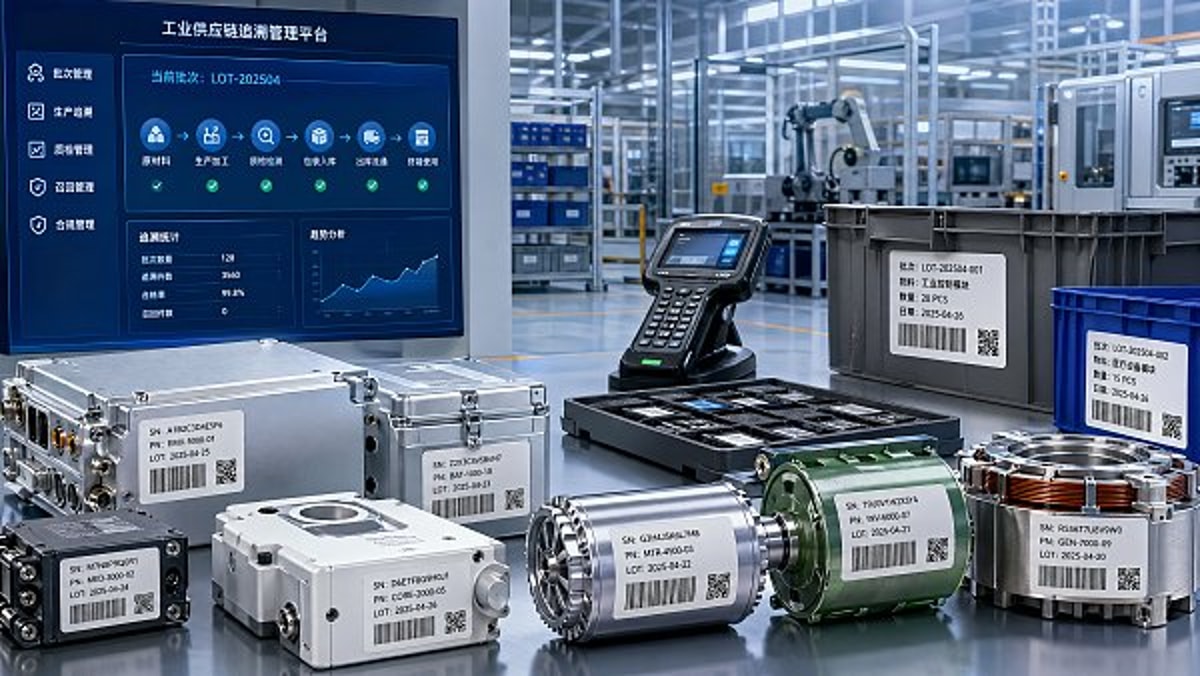
Quality and safety teams should give priority to products with calibration records, embedded software, serviceable assemblies, high-value spare parts, regulated labeling, or field replacement obligations. These factors increase the need to know not only where a product went, but also exactly which unit received which process, component, and revision at what time.
Scenario checklist: how traceability depth changes by product and operating model
Not all sectors need the same traceability depth. The right model depends on risk profile, unit value, maintenance burden, and how products move across suppliers, plants, and distributors. For this reason, a scenario-based checklist helps prevent overgeneralization. It allows quality leaders to apply supply chain traceability in proportion to real-world exposure rather than broad policy language.
The following table outlines practical differences by use case. These are not fixed rules, but they provide a strong starting point for cross-functional reviews involving procurement, operations, quality, and IT.
The table highlights a key principle: the more a unit has its own technical identity, service history, or compliance burden, the more likely item-level supply chain traceability is justified. In contrast, stable commodity inputs with low safety impact often perform well under batch controls if incoming inspection and supplier qualification are strong.
Three operating models to compare
Many organizations benefit from defining three traceability tiers rather than choosing one model for all products. This makes deployment more practical over a 6- to 18-month roadmap and gives teams a clear escalation path when risk increases.
- Tier 1: Shipment and lot level. Best for low-risk consumables and standard inputs. Focus on supplier lot, receipt date, warehouse location, and outbound customer mapping.
- Tier 2: Process-linked batch genealogy. Best for products with multiple subassemblies or staged processing. Track which batches feed which work orders and outputs.
- Tier 3: Item-level event history. Best for configurable, serviceable, regulated, or safety-sensitive units. Capture serial identity, test records, configuration state, and chain-of-custody changes.
For quality and safety teams, the strongest operating model is usually hybrid. It limits high-detail data capture to the 10% to 30% of products where unit-level history materially changes the response outcome. That selective approach often produces better compliance discipline than forcing a universal standard that operations cannot sustain.
Risk checklist: the hidden failure points that weaken item-level control
Item-level supply chain traceability can fail even when serialization exists. The most common problems are not strategic; they are operational. A serial number can be printed but never scanned at rework. A pallet can be broken down without preserving parent-child relationships. A replacement label can overwrite the original identifier. These gaps create a false sense of control, which is often more dangerous than having a simpler but reliable batch-level system.
Quality and safety managers should treat the following points as high-priority audit items. If two or more are unresolved, traceability depth may need to be redesigned before expansion.
High-risk gaps to audit immediately
- Rework loops are not connected to the original unit record, making defect history incomplete or misleading.
- Contract manufacturers use different label syntax, date formats, or event timing, creating reconciliation delays of several hours or even days.
- Returns, repairs, and swaps are logged in service systems but not synchronized back to the quality or ERP environment.
- Supplier sub-tier data is available only as PDF or email attachments rather than machine-readable records.
- Barcode quality, scanner placement, or operator workflow causes recurring no-read rates above an acceptable threshold.
Another overlooked issue is retention policy. Some businesses can capture unit-level events but cannot retrieve them quickly after 12 months because systems archive records inconsistently across plants or vendors. For sectors with long product life cycles, a 24- to 84-month retrieval horizon may be more relevant than the initial scan event itself. Traceability is only useful if records remain linked, searchable, and defensible over time.
Warning signs that complexity is outweighing control
If operators create workarounds, if exception queues grow every week, or if serial genealogy cannot be reconciled during mock recalls in under 2 to 4 hours, the design may be too complex for the process maturity of the site. In those cases, simplifying data capture at selected nodes can improve actual control more than adding new fields or more aggressive serialization rules.
A practical test is to run a quarterly mock recall covering at least one supplier issue, one internal rework event, and one customer return. If the team can isolate affected units, confirm affected customers, and release unaffected stock with confidence, the traceability model is likely fit for purpose. If not, the problem usually lies in execution architecture rather than in the traceability concept itself.
Execution checklist: how to build practical, future-ready supply chain traceability
The most effective implementations begin with a narrow objective, not an enterprise-wide data ambition. For example, your first goal might be to reduce recall scope by 30%, cut investigation time from 2 days to 4 hours, or link finished goods to top-risk components across 5 critical process nodes. Clear objectives make system design, supplier onboarding, and audit criteria much easier to manage.
Quality and safety teams should also define the minimum viable data set before selecting tools or integration models. More data is not automatically better. In many use cases, unit identifier, supplier lot, process timestamp, station ID, operator or device ID, and disposition status are enough to create strong operational traceability.
Implementation steps in the right order
- Segment products by risk, serviceability, regulatory burden, and recall economics.
- Map the process from supplier receipt to customer delivery, including every relabel, merge, split, or rework event.
- Define mandatory capture points, keeping the count focused, often 4 to 8 high-value events rather than every movement.
- Standardize identifiers and event naming across internal sites and external partners.
- Run pilot mock recalls and exception drills before broad rollout.
- Measure scan compliance, data latency, and genealogy completeness every month for the first 90 to 180 days.
The table below can be used as a working implementation checklist. It helps teams connect business goals to practical execution requirements without overcomplicating the design.
These targets are operationally realistic for many organizations and help keep supply chain traceability grounded in measurable outcomes. The goal is not perfect visibility across every movement on day one. The goal is dependable control where quality, safety, and business continuity are most exposed.
What to prepare before contacting partners or technology providers
- A product segmentation list showing which SKUs need lot, hybrid, or item-level supply chain traceability.
- A current-state process map with known identity-loss points and manual workarounds.
- Target response times for mock recall, complaint investigation, and containment release.
- Supplier data expectations, including identifier format, event timing, and document retention period.
- System constraints across ERP, MES, WMS, QMS, labeling, and service platforms.
When these inputs are ready, implementation conversations become more productive. Teams can evaluate solution fit based on actual process needs rather than generic software features or broad compliance claims.
Why choose us for strategic traceability planning and next-step evaluation
TradeNexus Pro supports procurement leaders, supply chain managers, and enterprise decision-makers who need a sharper view of where traceability investments create real control. For quality and safety teams, that means more than general commentary. It means access to sector-specific intelligence across advanced manufacturing, green energy, smart electronics, healthcare technology, and supply chain SaaS, with a focus on practical decision points that affect recall readiness, supplier coordination, and operational resilience.
If your organization is reviewing how far supply chain traceability should go, we can help frame the right questions before major rollout. That may include identifying suitable item-level use cases, comparing lot versus serial strategies, assessing supplier data readiness, reviewing likely integration touchpoints, and clarifying what information quality teams should gather first.
Contact us if you need support discussing traceability scope, solution selection, rollout priorities, expected delivery timelines, customization needs, documentation expectations, or budget-oriented planning. A focused conversation around your product categories, risk profile, and operating model can make the difference between traceability that looks comprehensive on paper and traceability that works under real recall pressure.
Get weekly intelligence in your inbox.
No noise. No sponsored content. Pure intelligence.
 May 02, 2026Commercial EV Charging Installation Costs Beyond the HardwareCommercial EV Charging Installation Costs Beyond the Hardware
 May 02, 2026Portable EV Charging Solutions: Where They Actually FitPortable EV Charging Solutions: Where They Actually Fit
 May 02, 2026Why Automotive Aluminum Extrusions Fail at Joining PointsWhy Automotive Aluminum Extrusions Fail at Joining Points
 May 02, 2026Sheet Metal Bending Services in the USA: What Drives Lead TimeSheet Metal Bending Services in the USA: What Drives Lead Time
 May 02, 2026Cost-Effective Factory Automation Often Starts Smaller Than ExpectedCost-Effective Factory Automation Often Starts Smaller Than Expected
 May 02, 2026Choosing a Solar Panels Wholesale Distributor Without Price TrapsChoosing a Solar Panels Wholesale Distributor Without Price Traps
 May 02, 2026High Efficiency PV Modules: When the Premium Makes SenseHigh Efficiency PV Modules: When the Premium Makes Sense
 May 02, 2026Why Data Centers Are Rethinking ESS Backup StrategyWhy Data Centers Are Rethinking ESS Backup Strategy
 May 02, 2026Do Agricultural PV Modules Need Different Frame Designs?Do Agricultural PV Modules Need Different Frame Designs?
 May 02, 2026How to Vet an OEM Machined Parts Supplier in GermanyHow to Vet an OEM Machined Parts Supplier in Germany
 May 02, 2026Custom Metal Fabrication for Aerospace: Cost vs CertificationCustom Metal Fabrication for Aerospace: Cost vs Certification
 May 02, 2026What Slows Rapid Prototyping for Automotive Parts MostWhat Slows Rapid Prototyping for Automotive Parts Most
 May 02, 2026Rapid Prototyping Choices That Cut Delays in Consumer ElectronicsRapid Prototyping Choices That Cut Delays in Consumer Electronics
 May 02, 2026Why Aerospace Parts Need More Than Tight Lathe TurningWhy Aerospace Parts Need More Than Tight Lathe Turning
 May 02, 2026What Fireproof Technology Really Changes in Lithium BatteriesWhat Fireproof Technology Really Changes in Lithium Batteries
 May 02, 2026Are Grid-Tied Hybrid Inverters Enough for Unstable Supply?Are Grid-Tied Hybrid Inverters Enough for Unstable Supply?
 May 02, 2026What a Solar Panels Wholesale Price List Does Not ShowWhat a Solar Panels Wholesale Price List Does Not Show
 May 02, 2026How Long Life Cycle Batteries Lower Replacement CostsHow Long Life Cycle Batteries Lower Replacement Costs
 May 02, 2026Lathe Turning Tolerances That Matter in Industrial MachineryLathe Turning Tolerances That Matter in Industrial Machinery
 May 02, 2026ESS for Commercial Buildings: Sizing Mistakes to AvoidESS for Commercial Buildings: Sizing Mistakes to Avoid
 May 02, 2026Warehouse Robotics Bottlenecks That Slow Automation ROIWarehouse Robotics Bottlenecks That Slow Automation ROI
 May 02, 2026Where Smart Manufacturing Pays Off First in Auto PlantsWhere Smart Manufacturing Pays Off First in Auto Plants
 May 02, 2026Marine Aluminum Extrusions: What Corrosion Ratings MissMarine Aluminum Extrusions: What Corrosion Ratings Miss
 May 02, 2026Plastic Injection Molding Machine Specs That Affect OutputPlastic Injection Molding Machine Specs That Affect Output
 May 02, 2026What Limits 5 Axis Milling Accuracy for Medical Devices?What Limits 5 Axis Milling Accuracy for Medical Devices?
 May 02, 2026How to Compare a Die Casting Parts Manufacturer in ChinaHow to Compare a Die Casting Parts Manufacturer in China
 May 02, 2026Why Oil and Gas Projects Still Rely on Steel ForgingWhy Oil and Gas Projects Still Rely on Steel Forging